My wife, Ann, is a committed environmentalist. She has been so for the entire 52 years I’ve known her.
I also am an environmentalist, but not one so devoted that anyone has wondered whether I “should be committed,” as in “locked in a psychiatric ward.” I am confident a lot of people have had such thoughts about Ann.
I have seen those thoughts on the faces of restaurant waiters when she tells them she would rather waste the uneaten portion of her meal than accept a plastic foam “doggy bag.” I have seen the expression on the faces of grocery clerks when she refuses their plastic bags and walks to her Prius like a circus juggler, balancing six oranges, three cans of organic beans and a dozen cage-free eggs in her arms.
I wish I could tell you my commitment to action matches hers. I wish I could tell you I am willing, like Ann, to walk two miles in search of a recycling receptacle for an aluminum can some jerk discarded on the sidewalk. I wish I could tell you I would never be led by my laziness to squirt toxic chemicals on a weed rather than just bending over to pull it up.
Fact is, I believe, as she does, that human beings are gradually making the Earth uninhabitable. But, my actions too often drift toward those of the self-centered, irresponsible, gasoline-powered, toss-it-in-the-trash, convenience-addicted majority, rather than the moral minority.
This gap between my heartfelt beliefs and my occasional backslides into unholy practices makes living with an environmental saint uncomfortable at times. In the words of Mark Twain: “Few things are harder to put up with than the annoyance of a good example.”
Among Ann’s annoying good examples is her dedication to composting. She believes anything that can rot can be coaxed back to life by using it to enrich the soil. A half-eaten peanut butter sandwich can become a daffodil or a zucchini squash or a walnut and should be encouraged to do so.
Nothing goes down our garbage disposal. She places food scraps and anything else with the ability to decompose in a container in the kitchen. Then she mixes the rot-worthy mess in the backyard with scoops of mulched leaves and lets the bacteria and worms go to work turning it into organic fertilizer.
I love the beauty of turning what I used to call “slop” into a spiritual and life-sustaining process, in harmony with the natural rhythms of the universe. However, I must confess to putting a few orange or apple peels down the much abhorred garbage disposal when she is out of the house and I can’t find the slop container — occasionally.
These composting infidelities make me feel guilty and I quickly confess my sins, although Ann has never really asked me to take part in the composting ritual. She just smiles at me and goes on silently making compost and being an oppressively good example.
Years ago she asked me to vow, if she died first, to dispose of her remains in an organic way. She wanted to be buried, coffin-less, in the garden. Even though I did not know the legal ramifications of such a request, I agreed. I even added, for approval, over a glass of wine and some promising sweet talk, that I would bury her with a post-hole digger to save space. She was romantically motivated.
Now she tells me she read recently — in this very newspaper — that Washington State has approved legislation allowing “natural organic reduction” (think composting) of human remains as an alternative to cremation. The procedure mixes the body with wood chips and straw inside a biodegradable bag. Eventually, the bereaved get two wheelbarrows of rich soil to spread on their lawn or garden in remembrance of their loved one.
Seems odd to me, but no less so than my long-standing wish to have my ashes spread across the Indiana University football field after a win over Ohio State. She tells me composting would avoid the air pollution of a cremation as well as the expense of storing my body several decades waiting for a victory.
She has a valid point. She always has a valid point. That’s why she is so annoying.
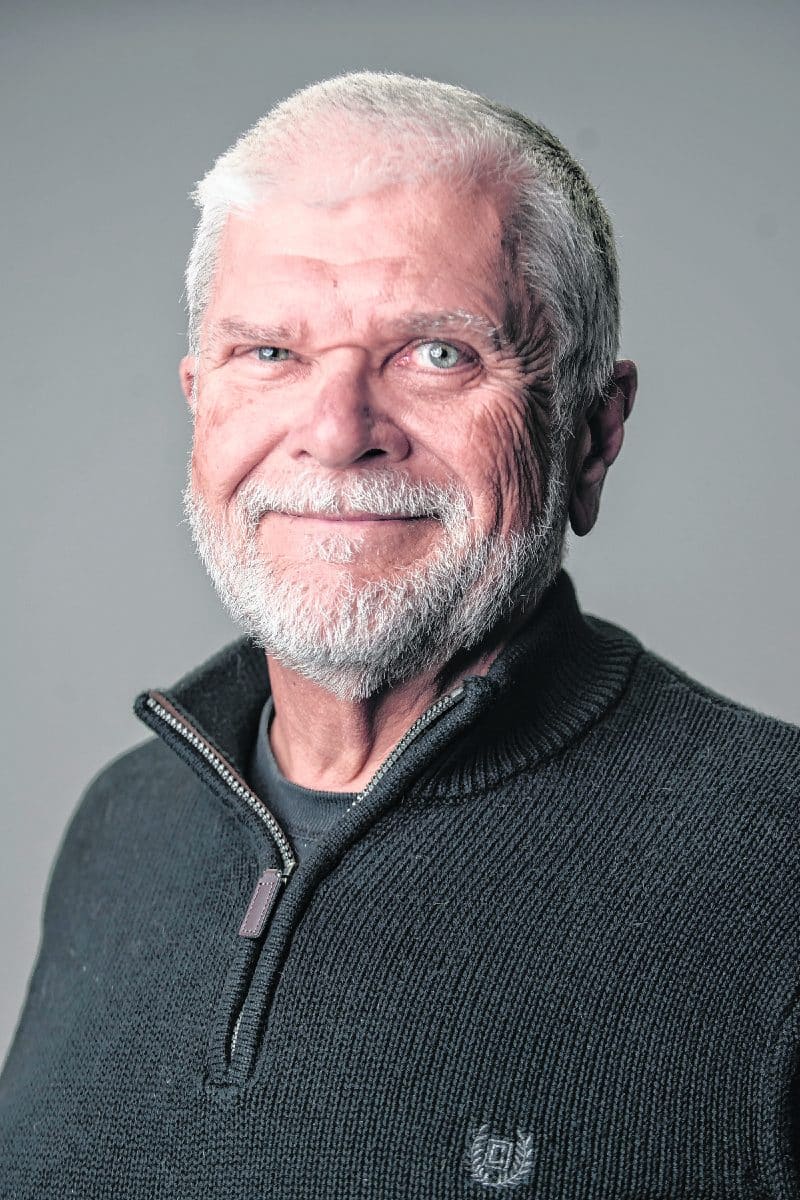
Bud Herron is a retired editor and newspaper publisher who lives in Columbus. He served as publisher of The Republic from 1998 to 2007. His weekly column appears on the Opinion page each Sunday. All opinions expressed are those of the writer. Contact him at editorial@therepublic.com.