A retired businessman is being challenged by a Cummins Inc. engineer in his effort to win a third term on the Columbus City Council.
Republican Frank Miller, 66, who served as council president in 2017 and 2018, is competing against Democrat Michael Schoumacher, 31, for the District 4 council seat in the Nov. 5 municipal election. Both men were unopposed for the council seat in the primary in May.
Both candidates were asked their positions on topics that impact the entire city of Columbus, as well as a few subjects within their own district.
Riverfront project
[sc:text-divider text-divider-title=”Story continues below gallery” ]
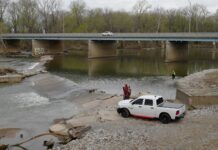
Miller and Schoumacher agree the current low-head dam near the Robert Stewart Bridge must be removed. Continued erosion of the existing dam could uncover contaminants from a former city dump, Schoumacher said.
The conceptual plan for the proposed $8.6 million Riverfront project calls for removal of the low-head dam, several overlooks of the East Fork White River downtown, connections to the People Trail system and an in-water recreation area.
They also agree that if East Fork White River is allowed to flow too rapidly through that area, it could greatly lower the water levels at Round Lake in Mill Race Park.
While Miller says he favors safety improvements and connect elements of the People Trails, he has heard a number of constituents opposing the recreational elements of the plan.
“There’s a lot going on in the city right now, and we have a lot of good projects,” Miller said. “But how much money is there to cover all of these items (in the Riverfront plan)?”
Schoumacher says he can’t argue about spending 75% of a proposed $6 million for essential public safety concerns and protecting the environment.
While the Democrat wishes more public input had been sought before a project designer was hired, Schoumacher says he appreciates city leaders who strive to improve their community, rather than just maintain the status quo.
“What I like about Columbus is that it never does the bare minimum,” Schoumacher said. “We are always looking for opportunities to make our community better.”
Transparency
If elected, Schoumacher said he plans to make civic engagement a priority with monthly sit-down meetings with constituents, as well as maintaining communication through email and social media, to keep local residents updated on what’s going on in local government.
“We need to consider it our job to reach people and let them know what we are working on,” Schoumacher said. “Nobody is doing a bad job of that now, but we can always improve.”
While Miller says he understands public concern on transparency, there also has to be some limits — especially regarding mayoral or council committee meetings.
“If every single meeting is made public, and I’m just spit-balling ideas, a news report could make it sound like I’m advocating something that, in reality, I’m just asking questions about,” Miller said.
Council members need to have a working arena where those who serve on committees should feel free to speak outside the box without feeling they are “being pigeonholed,” Miller said.
Any meeting that contains a quorum of city council members should be open to the public and the press, Miller said.
FairOaks Mall project
As a member of the FairOaks Design Committee, Miller said he supports the city’s plans to convert most of the now nearly-empty FairOaks Mall into an indoor sports tourism complex, as well as offices for the Columbus Parks Dept.
The economics of investing in FairOaks, rather than renovating Donner Center, is good, Miller said.
Miller said he denies assertions that acquiring the mall is only about making money off sports tourism. The incumbent said features will be added that will attract community members.
“We intend to listen to the surveys taken during two public meetings,” Miller said. “That means providing a place to walk, to play pickleball, to exercise — and also to socialize.”
Schoumacher said more public input should have been sought before the mall was purchased. If the public is willing to participate in design meetings, Schoumacher believes the acquisition will provide more recreational options whenever the weather turns bad.
He added that his experience as a project manager should be helpful in keeping the FairOaks project on-time and on-budget.
Columbus Municipal Airport AirPark
One of the most distinguished figures within the 4th District is the Columbus AirPark, which has undergone a substantial amount of development during the last 30 years.
But that has led to questions regarding what type of growth is appropriate in the airport area, and how much should the city continue to invest in that growth.
“If you pardon the airport pun, I think the sky is the limit on what can be done at the AirPark,” Schoumacher said. “One thing I like is that the city already owns most of the land, so property can be developed more cost-efficiently.”
The current retail slump may discourage brick and mortar retail outlets from being built, Schoumacher said. But he believes there are now enough residents who either live or work in the AirPark area that at least some additional restaurants are warranted.
Miller said he would like to see the expansion of more educational facilities such as IUPUC and Ivy Tech Community College. If there are new retail businesses created in the AirPark area, they should focus largely on serving the needs of the students, he suggested.
When it comes to financially supporting and promoting the AirPark, Miller says the area has become self-sustaining, due largely to the nearby farm fields it owns. While the city should encourage development in the airport area, Miller believes the AirPark has now become financially-capable of handling its own development and promotions.
Rocky Ford Road project
Few recent developments in Columbus have generated as much controversy than the addition of wide bicycle lanes on Rocky Ford Road.
Miller and Schoumacher say they have heard negative comments from their neighbors regarding wide bicycle lanes on both side of Rocky Ford from Central Avenue to Talley Road.
While Miller says he was initially against the changes, he believes the road reconfiguration did achieve the planned effect of slowing down vehicular traffic on Rocky Ford. However, that road was among a number of local streets such as Central Avenue and 17th Street that were expanded years ago to handle heavier traffic, he said.
“If we are going to take every expanded road and add bike lanes, where will our thoroughfares be?” Miller asked. “We need ways to accommodate bicyclists, but why should we be choosing the busiest streets in town to add bike lanes?”
Compromises must not only be made to accommodate both bicycle and traffic flow, but those compromises must be done the right way, Miller said.
While campaigning door-to-door, Schoumacher discovered the wide bicycle lanes on Rocky Ford were the number one topic on most people’s minds, he said.
When federal funding to reconfigure Rocky Ford was first being sought, city experts “read the signs wrong” when they expected most future growth would be on the north side, Schoumacher said. Instead, most of the city’s growth has taken place on the far west side, he said.
Since the reconfiguration has not resulted in additional accidents or traffic backups, the wide bike lanes did not cause any harm, Schoumacher said. He suggested that Rocky Ford be viewed as a lesson that we can learn from.
“We need to keep this lesson in mind to ensure we don’t overbuild again,” Schoumacher said. “I don’t want to throw good money after bad by trying to replicate what was done on Rocky Ford Road again.
[sc:pullout-title pullout-title=”Frank Miller ” ][sc:pullout-text-begin]
Age: 66
Occupation: Retired as owner of Prestige Printing. Previous owned R.E.M. & Associates Business Consulting
Previous government service: Completing his second term on the Columbus City Council.
Community affiliations: As a council member, he serves on 11 different boards and committees that include Solid Waste Management District Board, the Economic Development Corp. Board, the Substance Abuse Funding Board and the FairOaks Project Design Committee. Miller served as council president in 2017 and 2018.
Education: Graduated from Horace Mann High School in Gary in 1971. Earned his bachelor degree in graphic arts printing management from Ball State University in 1975
Family: Wife, Jenny, three adult daughters
[sc:pullout-text-end][sc:pullout-title pullout-title=”Michael Schoumacher ” ][sc:pullout-text-begin]
Age: 31
Occupation: Cummins Inc. engineer
Previous government service: none
Community affiliations: Member of the board of directors of the Just Friends Adult Day Care. Has completed United Way training on community service, and attended a public safety academy
Education: Graduated from White Station High School in Memphis, Tennessee, in 2006. Received a bachelor of science degree from Rose-Hulman Institute in Terre Haute and later earned a master of business administration degree from Indiana University.
Family: wife, Denise, one daughter with another child due in January.
[sc:pullout-text-end]