Come fall, we here in Indiana start noticing a change in the creatures we see outside. Taken as a whole, they’re a motley crew. You might even call them odd.
Some are way too-leggy for their body size, some jump when we’re expecting them to crawl, and all of them are sure to give you a start if come upon suddenly. Take for instance the following:
Assasin bug: The name says it all. If it feels threatened (or hungry), it uses its sharp beak as a weapon to stab its victims. Look, but don’t get too close.
Agriope aurantia, or yellow garden spider: The long legs on this fellow ramp up the scary factor in spades. I met up with one last fall tucked in among blackberry bushes. Somehow it started vibrating its web to scare me off. It worked.
[sc:text-divider text-divider-title=”Story continues below gallery” ]
Rhapidophoridae or camel cricket: If you have an unfinished basement or root cellar, you may have encountered more than one of these critters. They’re like shift-shapers, looking kind of, but not really, like a spider, inviting closer inspection, then bam! It jumps at you, like a cricket! A bad combination if your skin crawls at the mere sight of a bug. Getting chills yet?
Wolf spider (Hogna species): Wolf spiders build a tunnel-like lair. Its dwelling is more likely to be spotted than the spider itself. Nocturnal, it only hunts at night. If you’ve never seen a close-up image of this dude with its six eyes, brace yourself.
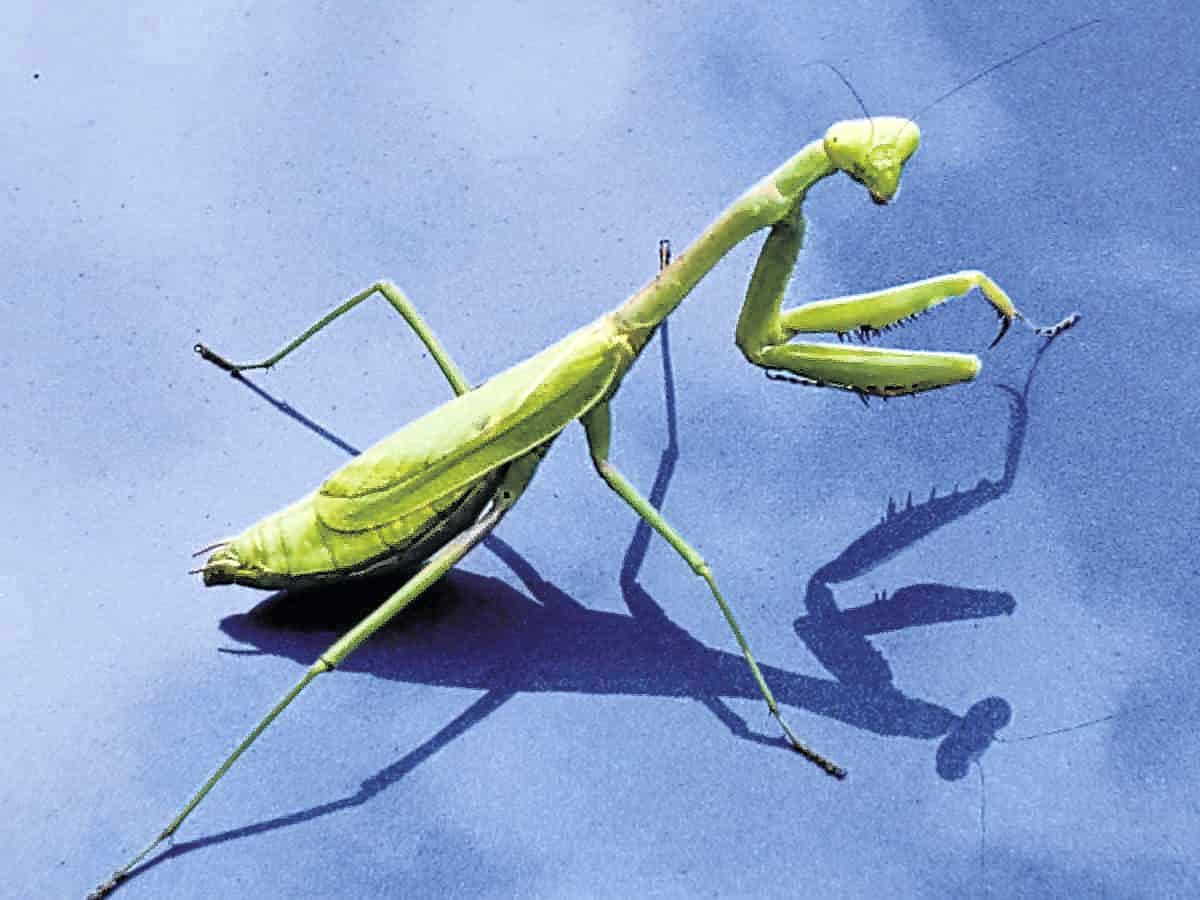
Praying mantis: I love the praying mantis, always have. Granted, the eyes can be unsettling to the uninitiated. One might feel uncomfortable trying to make eye contact with those two compound eyes perched on either side of a triangular face. But they are slim, wasp-waisted — I’d even call them elegant. It’s the female of the species whose habits are unsettling. She may or may not eat her mate, during or after mating, by first decapitating him. Tough room, eh?
None of these creatures with which we share the planet — or backyard — intend any harm to humans. They’re just hunting for food, raising families and living their lives alongside us. No need to be scared. They’re all beautiful, in their own unique ways, and many of them are beneficial to gardeners by naturally eliminating plant-destroying pests.
This fall, a praying mantis took up residence in a pot of begonias I had on the patio. It seemed to enjoy eating begonia petals, and used its front legs to delicately pull off bite-sized pieces from a single petal. It got used to my watering the plants and it didn’t seem to mind much if it got a bit of a shower. Begonia petals weren’t its favorite choice of entrée, of course. A blue-bottle fly that liked begonias, too, came too close one day and met its end between those spiny front legs. Forever nature’s child — just ask my mom, who wanted a girly-girl and got me instead — I watched the whole thing.
The fly was just as delicately polished off as the flower petals — starting with its head.
Becky Pinto has been a Master Gardener since 2002 and the Master Gardener newsletter editor since 2005. She’s a Silver Level Master Gardener, based on cumulative volunteer hours served in the program. All opinions expressed are those of the writer. Send comments to therepublic.com.