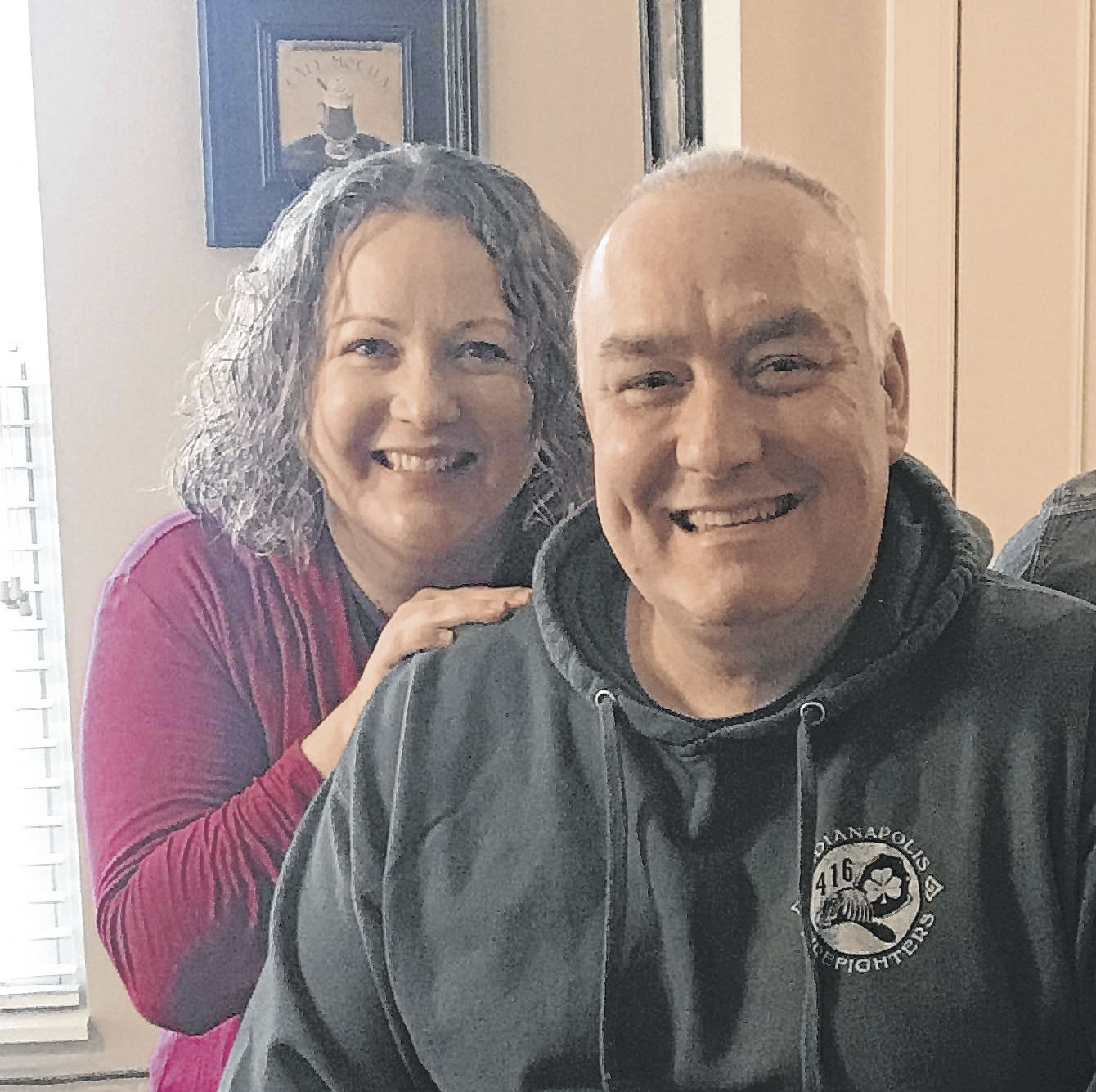
By Andy Bell-Baltaci | Daily Journal
For The Republic
EDINBURGH — If he had waited two more days to go to the hospital, he might have died.
That’s what a doctor at Franciscan Health Indianapolis, just north of the Johnson County line, told Edinburgh Fire Chief Mike Herron in November, when he was in the hospital battling COVID-19, a virus that has killed more than 5,000 Hoosiers so far.
It started during the first week of November, when Herron developed a cough and had some difficulty breathing. It was Nov. 5, a Thursday, when those issues worsened enough for him to drive to the emergency room. He was sent home that night, but Amanda Stevenson-Holmes, Herron’s step-daughter, stopped by CVS and got him a pulse oximeter, which can be worn on the finger to monitor pulse and oxygen levels.
Herron, 52, was in the middle of a move, and quarantined himself in the home he soon plans to sell as a precautionary measure, Stevenson-Holmes said.
Although she is not related to Herron biologically, he’s served as a father figure to her since she was 10 years old.
“He’s been in my life since I was 10 and was instrumental in raising me to become the person I am today,” Stevenson-Holmes said. “He’s the Edinburgh fire chief, and he’s been a firefighter, paramedic and public servant most of his life. He’s one of the most selfless people you will ever meet.”
Herron’s career spans almost 30 years. He was also the chief of the Franklin Fire Department and deputy chief of the Bargersville Community Fire Department, she said.
After the initial trip to the emergency room, Herron spent the weekend in his home that was once filled with family, but now just him, quarantining and keeping an eye on the number that appeared on the screen of his oximeter. If the number was less than 90, it meant his condition was taking a turn for the worse.
“You don’t want to go back to the hospital. That’s the worst-case scenario,” Stevenson-Holmes said.
That Sunday, three days after his initial trip to the hospital, that number dropped to 81. It was time to go back, and Stevenson-Holmes’ mother made the decision, one that might have saved his life.
For more on this story, see Monday’s Republic.