COLUMBUS, Ind. — Precautions are continuing to ensure another widespread outbreak of COVID-19 doesn’t occur at the Bartholomew County Jail, although a two-week quarantine lockdown there has been lifted.
Signs of the outbreak emerged Jan. 23, when testing by state health officials showed 91 of the jail’s 211 inmates tested positive for COVID-19. The number increased the next day by another 39 cases, and 117 more Jan. 25.
That total, which reflected nearly half the inmates and four employees, prompted an immediate quarantine lockdown on Jan. 25.
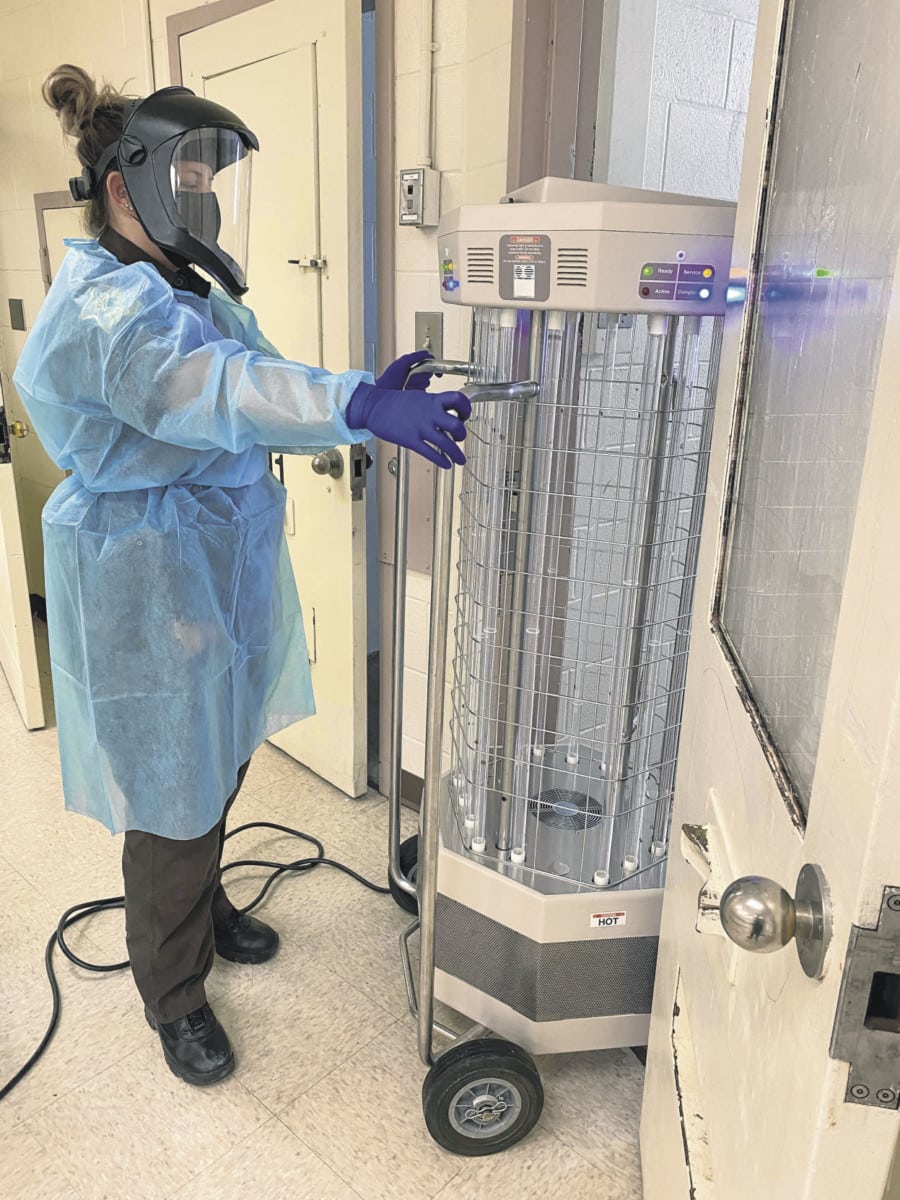
For the next two weeks, inmates were required to wear protective masks at all times except during meals, while correctional officers were ordered to wear full personal protective equipment when in the company of inmates, Deputy Jail Commander Capt. Tyler Stillabower said.
But since the lockdown was lifted on Feb. 8, jail staff have not found anyone displaying symptoms of the virus, Bartholomew County Sheriff Matt Myers said. About 25% of the jail staff had been vaccinated within three days after the lockdown ended, he said.
“The way this was handled was really excellent because we had them all tested at the same time,” Myers said. “I think it was the right thing to do. We took the approach of locking everyone down like they all had the virus.”
Now that this ordeal is behind him, Myers, who has recovered from COVID-19 himself, said he’s just glad nobody became extremely sick, nor had to be hospitalized.
New directives implemented after the lockdown include a requirement that all new inmates be quarantined in either a male block or female block on the jail’s second floor, Stillabower said.
If a quarantined person displays any symptom that possibly might be caused by the virus during a two-week period, they are moved to another block for a third consecutive week. It is only then that they are placed with the majority of other inmates if they test negative, Stillabower said.
“Yes, we took some extra steps, but we already had everything in place in terms of protocols, sanitation, and safety,” Stillabower said. “We’ve been very proactive since Day 1 of the pandemic.”
In an effort to protect both inmates and staff, the jail has changed some policies, added equipment including special filters in the jail’s ventilation systems, and even added special lighting capable of eliminating some of the airborne virus, Myers said.
Only a few minor challenges emerged during the lockdown. Two inmates who were examined at Columbus Regional Hospital are still in quarantine at the jail while officials await their test results, Myers said. If results come back negative, he said the inmates will rejoin the general jail population.
Also during the lockdown, six inmates judged to be at high-risk for getting COVID because of diabetes or other health problems received treatment at Columbus Regional Hospital, Myers said. Five of the inmates received a treatment to boost their immune system and lower their risk of getting the virus, while a fifth inmate older than age 65 was vaccinated, the sheriff said.
Inmate reduction
But perhaps the biggest challenge during the lockdown was the growth of the jail population to 238 — which prompted several steps to be taken to reduce the number of inmates, Myers said.
Decisions regarding early release are made by law enforcement working with judges, prosecutors and probation officers in a team effort, Myers said. As a team, they worked to release non-violent, low-level offenders, as well as people who are within 30 days of their release date,the sheriff said.
“But we don’t want to put anybody back on the streets that could commit another offense or hurt somebody,” the sheriff said. “Public safety will always come first over any other factor.”
As of Thursday, the jail population was reduced to 208 inmates, jail officials said.
“I think a lot of people are hurting, out-of-work, isolated and depressed, so I don’t see drug usage going down soon” Myers said. “If a person has committed crimes against other people, they aren’t getting out of jail. But if it’s possession of drugs, they are more likely to be released.
But the sheriff emphasized these decisions will not be made lightly and those dealing in narcotics shouldn’t expect a similar break.
Although the lockdown has been lifted, the ban on visitors continues, and each inmate is given 15 minutes a week to call family at no charge. Any cost associated with the calls is paid out of the jail commissary fund, jail officials said. Most meetings with attorneys and their clients continue to be done via Home Wav and telephone conference, Myers said.
The jail isn’t alone in its restrictions. Every county-owned building has been closed to the general public since last spring. And the Bartholomew County commissioners office went on quarantine Tuesday after two commissioners, Larry Kleinhenz and Tony London, tested positive for the virus.
Going ‘above and beyond’
Correction officers deserve to be commended for “going above and beyond” during the lockdown, Stillablower said.
Since day rooms in each jail pod are off-limits during lockdowns, essential needs of each inmate has to be taken care of on a one-to-one basis, Stillabower said. In addition, he said extensive sanitation efforts must be undertaken on a daily basis throughout the facility.
There are concerns among jail staff that they could bring the virus home to their families after work at the facility.
“I am sure it is going through their minds,” Stillabower said. “It’s only human to be concerned.”
Keeping concerns in check, as well as performing additional duties, undoubtedly raised the stress level of many correction officers, he said.
While many jail employees may deserve to be lauded, the same cannot be said about rumor mongers, Myers said.
“Social media and gossip have become one of our biggest problems,” the sheriff said. “Probably because 99.5% of it is false.”
Several inmates are exaggerating about jail conditions to family members because they think it might help them get released quickly, Myers say. When those family members repeat the often ridiculous false claims — such as one or more inmates dying of COVID-19 in the jail — to administrators, it doesn’t help get an inmate out and takes precious time away from those already overburdened in their jobs, he said.
“It comes down to this,” Myers said. “If you aren’t sure about your allegation, can’t back up what you are saying, and don’t have credible sources, then keep your mouth shut.”