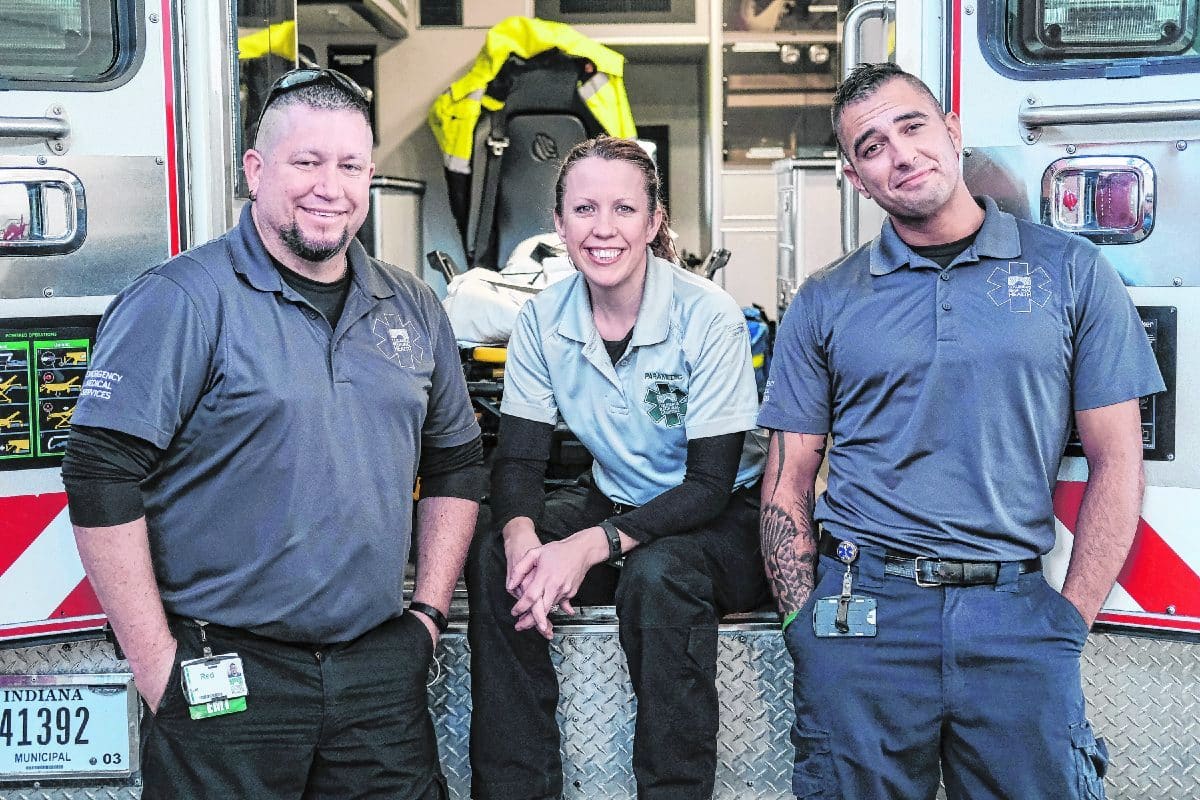
A new statewide endeavor is underway to provide the most isolated Hoosiers the COVID-19 vaccine that might save their lives.
The Homebound Hoosiers vaccination program identifies and registers residents unable to leave their homes. If they qualify, emergency medical technicians (EMTs) and paramedics are sent to administer the COVID-19 vaccine in the homebound person’s residence.
Several state agencies, including the Agencies on Aging, are registering elderly or disabled shut-ins for the service. Others include the Family and Social Services Administration, the Indiana Department of Homeland Security and the Indiana State Department of Health.
Registration information is sent to the Bartholomew County Health Department’s Nursing Division, but they only receive first names and a phone number, nursing division director Amanda Organist said.
[sc:text-divider text-divider-title=”Story continues below gallery” ]
After searching various sources for vaccine left over from an inoculation site, the county health department will pass information to Columbus Regional Hospital’s EMS base on Central Avenue, CRH spokeswoman Kelsey DeClue said.
When and if the hospital site has leftover vaccine, EMTs and paramedics will go to the residence of the homebound person, administer the vaccine, and stay long enough to ensure there are no adverse reactions, DeClue said. An appointment for a second shot can be made at that time, she said.
For the EMTs and paramedics, the Homebound Hoosiers program provides a chance to arrive at a community resident’s home when there is no emergency.
“Normally, nobody is happy to see an ambulance come to their house,” DeClue said. “But this is different.”
Homebound Hoosiers allows first responders to see people on good days, instead of just bad, CRH ambulance service manager Adam Hoskins said. They get to spend time with people who are grateful because they are receiving a form of protection that could potentially save their lives, he said.
Some of the EMS staff also have a personal motivation for their participation. On Nov. 15, one of their own, Scott Gordon, became the first EMT/paramedic in Bartholomew County to die of COVID-19 complications.
The 56-year-old Gordon was at a high risk of contracting COVID-19 due to a number of factors including his job responsibilities and his own health factors, Hoskins said. If a vaccine had been available before Gordon contracted the disease, he definitely would have received it, he said.
Inoculating high-risk people who can’t leave their house and suffer from health problems provides a sense of satisfaction to medical first-responders because they are giving other vulnerable people a better opportunity for survival that Gordon had, he said.
“It’s a heart-warming and uplifting experience,” DeClue said. “They are happy to jump at the chance.”
What the numbers show
Demand for the vaccines is extremely high. Thrive Alliance, which includes the Area 11 Agency on Aging, has fielded 1,764 COVID vaccine calls from homebound residents, according to outreach and community relations manager Sue Lamborn. Area 11 includes Bartholomew, Brown, Decatur, Jackson and Jennings counties.
From those calls, there were 1,312 homebound residents who scheduled an appointment to receive their first dose, Lamborn said. However, there were also 409 individuals (23% of all calls) who declined the vaccine, she said.
While a number of people are hesitant about receiving the COVID-19 vaccine, tests show the Pfizer and Moderna injections are 94% to 95% effective, Hoskins said. In contrast, “flu shots only have 40 to 45% efficacy, and everybody pushes them,” he said.
An The Associated Press poll released Feb. 28 shows one third of all American adults say they either don’t want the vaccine or are undecided about when they will receive a vaccination. Those numbers are especially high among Republicans, young people and certain minority populations, the poll states.
There are also requirements for the Homebound Hoosiers program. The requirements include that a person can only qualify for homebound shots if he or she is physically unable to visit a vaccination clinic, or does not have family or friends to help them register and travel to the clinic, Lamborn said.
Of the 1,312 homebound individuals who requested the vaccine, the vast majority had someone to drive them to a vaccination site, Lamborn said. While only 43 were determined to be qualified to receive in-home shots, inoculations in the program are only given when there is a surplus of vaccine after an immunization clinics concludes.
Hot commodity
With demand high and supply scarce, leftover vaccine is very rare, both Organist and Hoskins said.
“Any time we have any extra vaccine, which usually means somebody didn’t show up or we found an extra dose in a vile, we definitely are going to use it,” Organist said. The Bartholomew County Health Department still follows protocols and prioritizes the oldest person requesting the vaccine, she said.
But perhaps the biggest reason why Homebound Hoosiers is off to a slow start is because it has only been in existence since Feb. 10.
“Hardly anyone knows about this program,” Hoskins said.
As of March 2, there were 12 patients who received a vaccine by the hospital’s EMS personnel, Hoskins said. Statewide, the in-home program has served about 1,200 residents in all of Indiana’s 92 counties last month. T
For the moment, the laws of supply and demand are not helping to bring people into the program, Hoskins said.
“(Vaccines) are a hot commodity, and everybody wants to get theirs now,” he said.
To illustrate his point, one vaccination clinic was accidentally left off the webpage listing all local clinics for a brief period of time. But when that clinic was placed on the internet, all openings were filled within a half hour, Organist said.
The Johnson & Johnson’s one-dose vaccine is already being shipped, with a full rollout expected next month. As more vaccine becomes available, the rate of in-home vaccinations is expected to rise in the coming weeks, state officials said.
The Homebound Hoosier program is already gaining regional and national attention as a model for success in vaccinating home-bound residents, according to a statement from the Indiana Department of Homeland Security. The Federal Emergency Management Agency and the Centers for Disease Control and Prevention have already contacted state authorities to discuss the program and how to duplicate it elsewhere.
[sc:pullout-title pullout-title=”Vaccination process” ][sc:pullout-text-begin]
Homebound Hoosiers vaccination process:
- Homebound individuals can register with the local Area Agency on Aging by calling 866-644-6407. The District 11 agency serves Bartholomew, Brown, Decatur, Jackson and Jennings counties.
- Local health departments will identify and locate available vaccine.
- Individual is contacted to set up an appointment.
- Vaccine is administered. On-site monitoring occurs.
- EMS personnel provides checklist and completes documentation.
- Second vaccine is scheduled on site.
[sc:pullout-text-end]