Cummins Inc. has started removing about three dozen trees near its corporate headquarters in downtown Columbus as part of a project to replace them over the next few years.
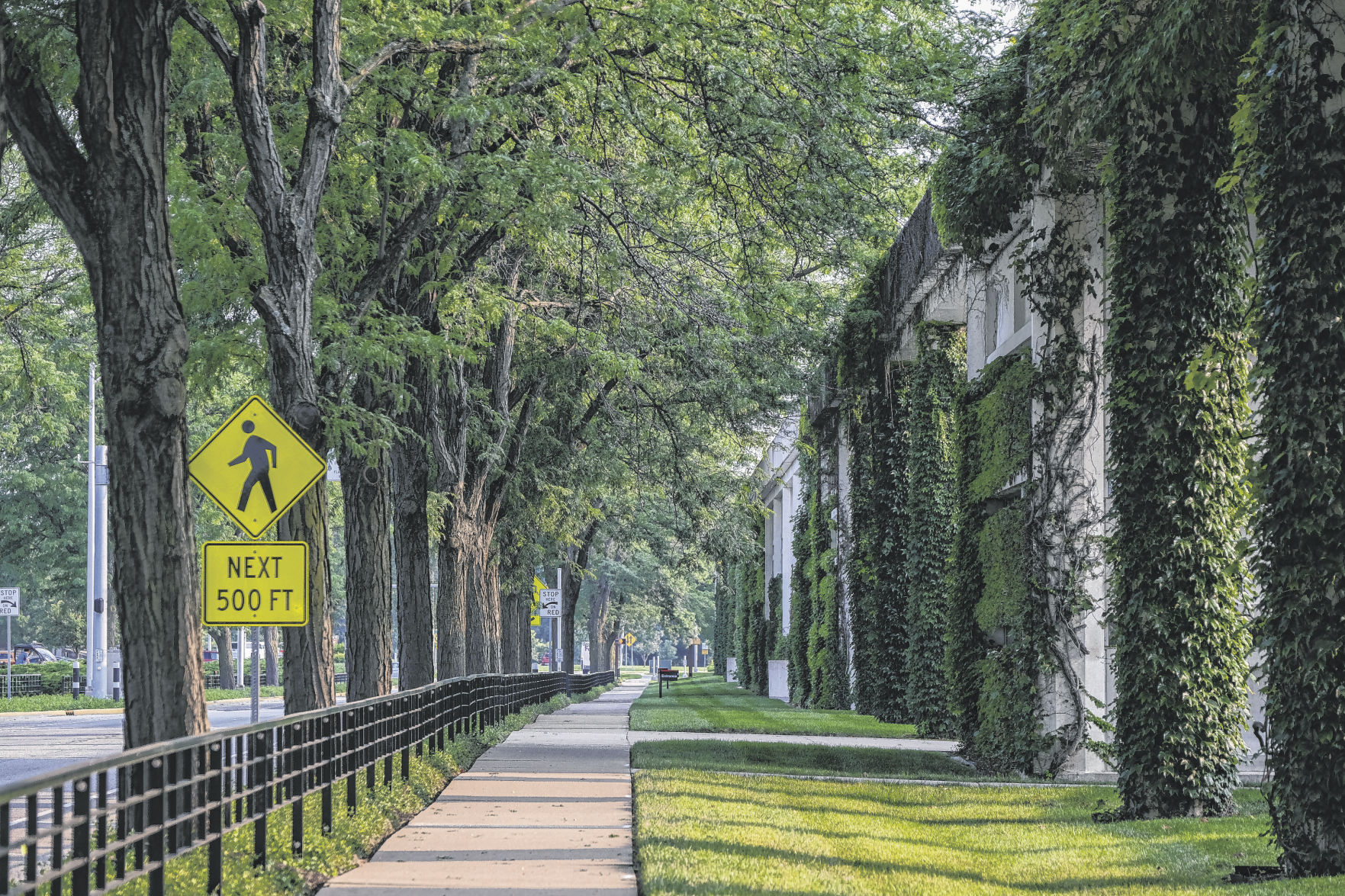
The 37 honey locust trees, located along Brown, Fifth and Eighth Streets, were planted about 30 years ago and are reaching the end of their lifespan in urban environments, said Cummins spokeswoman Katie Zarich.
The Columbus-based company has already started removing some of the trees along Brown Street “for safety and aesthetic reasons” and plans to remove more this summer and plant new trees this fall, Zarich said.
“Many trees were already removed due to their health,” Zarich said. “We’ll be removing more along Brown Street this summer, and then planting new trees this fall, when the conditions for planting are optimal.”
Cummins plans to replace the 37 trees with 51 2.5-inch caliper honey locust trees.
Honey locust trees, which are native to central North America, often have thorns and can reach a full height of about 66 to 100 feet, with bright green leaves that turn yellow in the fall, according to Red-tail Land Conservancy, an Indiana-based non-profit.
The fruits of the tree is a flat pod that usually meaures about 6 inches to a little over 7.5 inches long and matures in early fall. The tree also can produce a “strongly scented cream color flower” in late spring, according to Red-tail Land Conservancy.
However, most honey locust trees that are sold for landscaping are seedless and thornless, according to Purdue University.
“At this time, more than 30% of the trees on Brown Street have already been removed for safety and aesthetic reasons,” Zarich said.