By Andy East | The Republic
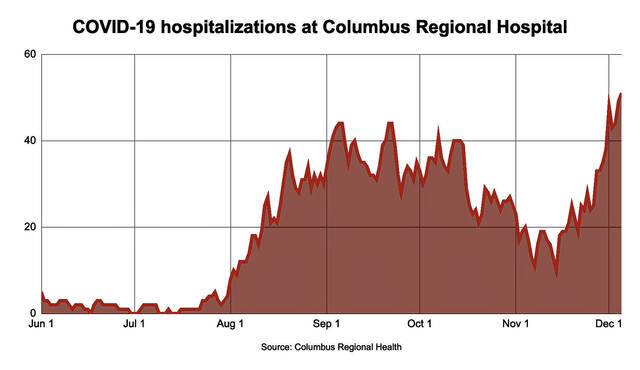
COVID-19 hospitalizations at Columbus Regional Hospital continued rising over the weekend, surpassing 50 for the first time in nearly 11 months.
On Sunday, there were 51 people hospitalized with COVID-19 at CRH — tied for the highest daily total since Jan. 9 and up from 10 hospitalizations just three weeks ago.
The all-time record is 59 coronavirus hospitalizations on Dec. 2, 2020 — before safe and effective vaccines were widely available. The vast majority of those currently hospitalized are not vaccinated.
By Monday morning, hospitalizations had ticked down to 46 — including one child — though hospital officials said that number would likely rise over the course of the day.
Four patients with COVID-19 were listed in critical condition Monday morning.
“Some of what we’re seeing … is those who gathered over Thanksgiving, and we’ just expect to continue to see that compound because of the launch of the holiday season and people are gathering intermittently,” said CRH spokeswoman Kelsey DeClue.
“It’s just very alarming,” she added.
The increase in coronavirus hospitalizations over the weekend came just days after the hospital said officials had been scrambling to reconfigure space and increase capacity to keep up with soaring coronavirus cases, rising emergency room visits and a deluge of patients with more complex conditions.
Officials described the efforts as “a quest to find any and every bed available.”
It also comes as concerns mount over how a pandemic that has killed 190 Bartholomew County residents is going to evolve over the winter — particularly with holiday gatherings, travel, pandemic fatigue, low vaccination rates in the Columbus area and high levels of community spread.
Nearly 32,000 eligible Bartholomew County residents have yet to get vaccinated, according to state figures.
The latest surge in local hospitalizations, which officials have attributed to the delta variant, mirrors trends seen in much of the state.
COVID-19 hospitalizations in Indiana have doubled over the past month, reaching just over 2,400 on Dec. 2, according to the Indiana Department of Health.
CRH, for its part, had anticipated a resurgence of the virus in the fall and winter, but the current surge has proven more severe than expected, hospital official said.
“This is higher than we expected several months ago even knowing that it was coming,” DeClue said.