Smith
VERNON — A judge set to preside over a murder trial later this month involving a man who authorities claimed had a “hit list” that included local officials has denied a motion to remove herself from the case. In doing so, the judge also wrote that it was doubtful the accused man actually had a hit list.
Jennings Circuit Judge Murielle Bright on Wednesday denied a motion filed that same day on behalf of accused killer William S. Smith that asked Bright to recuse herself.
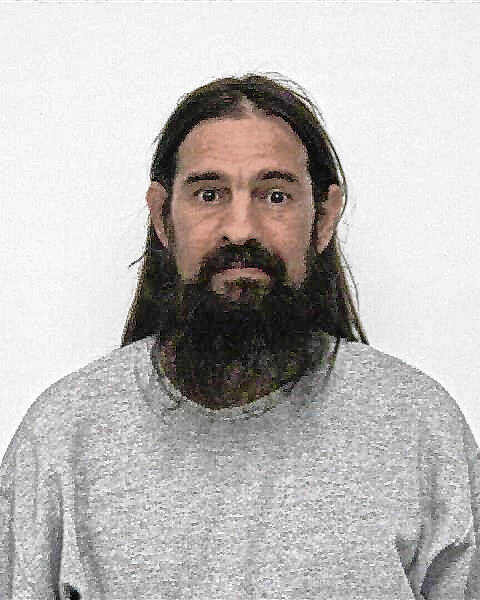
Smith, 47, is charged with fatally stabbing Robert Dale Boyd, 56, on May 11, 2021, court records state. Smith is scheduled to stand trial beginning Feb. 27 on charges of murder and felony counts of robbery resulting in serious bodily injury, arson, obstruction of justice and possession of methamphetamine, as well as misdemeanor resisting law enforcement.
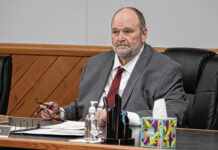
On Wednesday, Smith’s public defender, Benjamin Loheide of Columbus, filed a motion asking Bright to disqualify or recuse herself from the case because she is the daughter of former Jennings Circuit Judge Jon Webster, who allegedly had been one of the people named on Smith’s purported hit list.
Webster also had filled in as a special judge earlier in Smith’s case.
Loheide argued that rules in the Indiana Code of Judicial Conduct require a judge to recuse from “any proceeding in which the judge’s impartiality might reasonably be questioned,” including “a personal bias or prejudice concerning a party or a party’s lawyer, or personal knowledge of facts that are in dispute in the proceeding.”
“A reasonable person would expect an individual to have an emotional response if their father was included on an alleged hit list of people someone wanted to kill,” Loheide wrote. “… Should Judge Bright preside over this defendant’s case, any hypothetical conviction would likely not withstand appellate scrutiny, needlessly causing an expensive and emotionally taxing repeated murder trial.”
In her order denying the motion to recuse, Bright wrote that it was filed too late and could have been rejected on that basis alone. “However, since this issue may be one raised on appeal, IF there is a conviction and appeal is taken, the Court will address it further.”
Bright wrote that in a court hearing on Tuesday, the prosecution and defense “acknowledged that there is no actual physical (or electronic format) hit list. That the only mention of (Smith) having a hit list came from the statement of an ex-girlfriend … who does not have a good relationship” with Smith.
Smith, the judge wrote, “denies the existence of any hit list. Thus, where Judge Webster might be on this hit list is even more disputed.”
Bright also noted in her order that Loheide did not raise the issue of potential bias while defending Smith when Webster served as a special judge in the case from Aug. 8, 2022 to Nov. 2, 2022.
“… (A)n objective standard would have been that Defendant would have filed this (motion) … when Judge Webster was actually the presiding judge in Jennings Circuit Court himself or even more preferred as soon as there was any mention of Judge Webster being on a hit list that may or may not have existed in (Smith’s) head,” Bright wrote.
“… The existence of a hit list is disputed and therefore, will not be given any weight by the Court as a factor in sentencing IF there is a conviction. There is no opportunity for the Court to exert bias or prejudice in this cause,” her order concluded.
These are the latest developments in a case that Loheide in his motion to recuse noted has a “very unusual set of circumstances.” These include the fact that Bright initially ruled that Smith was mentally unfit to stand trial.
Bright ordered Smith committed to a state mental hospital in November 2021, but he remained in the Jennings County Jail for another six months before he was transferred to Logansport State Hospital for treatment and evaluation.
In August, the hospital and the Indiana Division of Mental Health and Addiction certified that Smith was then mentally fit to stand trial. That same month, Bright ordered a jury trial to begin Feb. 27 and told counsel there would be no continuances.
More than two dozen prosecution witnesses may be called to testify against Smith, including another man who, like Smith, also lived in the residence where Boyd also lived in the 100 block of West Walnut Street in North Vernon.
Jennings County Prosecutor Brian Belding has filed notice with the court that he intends to submit forensic and lab evidence, including fingerprints on the knife that Smith is accused of using and DNA evidence that the prosecution will argue proves beyond a reasonable doubt that Smith killed Boyd.
Authorities say other witnesses observed Smith with “a lot of blood on his person” the morning of the killing, and that when Smith was asked about it, he claimed it was from a cut on his leg. Smith then allegedly asked those witnesses for a ride to a relative’s home, but the witnesses declined.
Authorities also say Smith was seen fleeing from the Boyd residence with a duffel bag containing items belonging to the victim — items authorities say were found when Smith was arrested in the afternoon of Boyd’s killing.