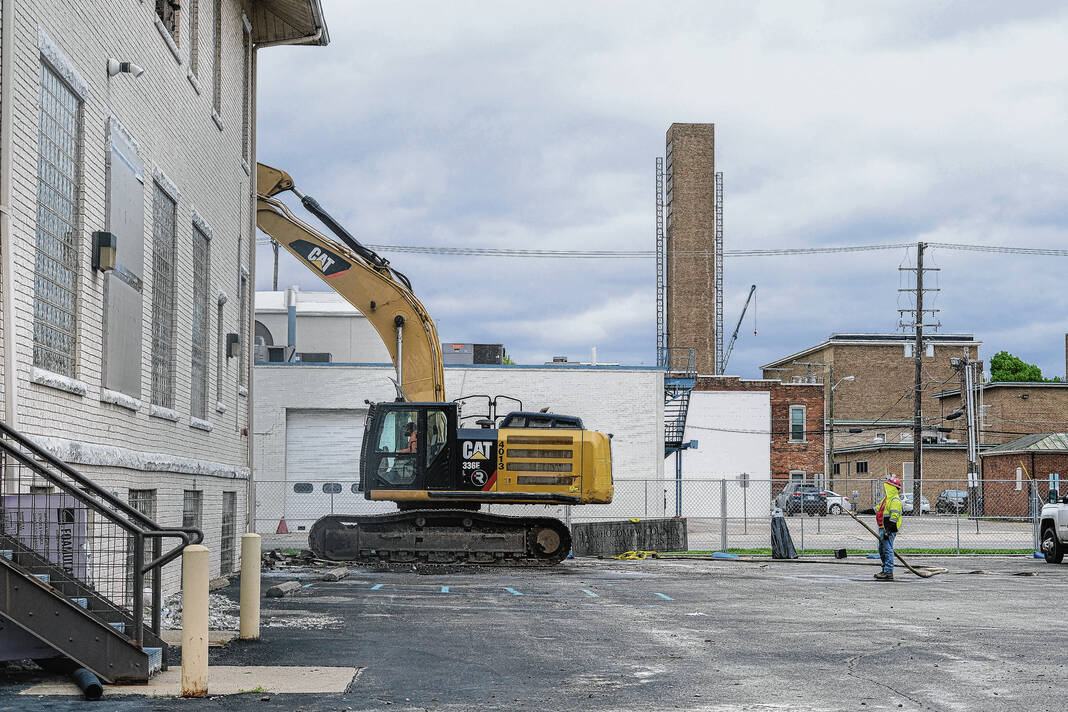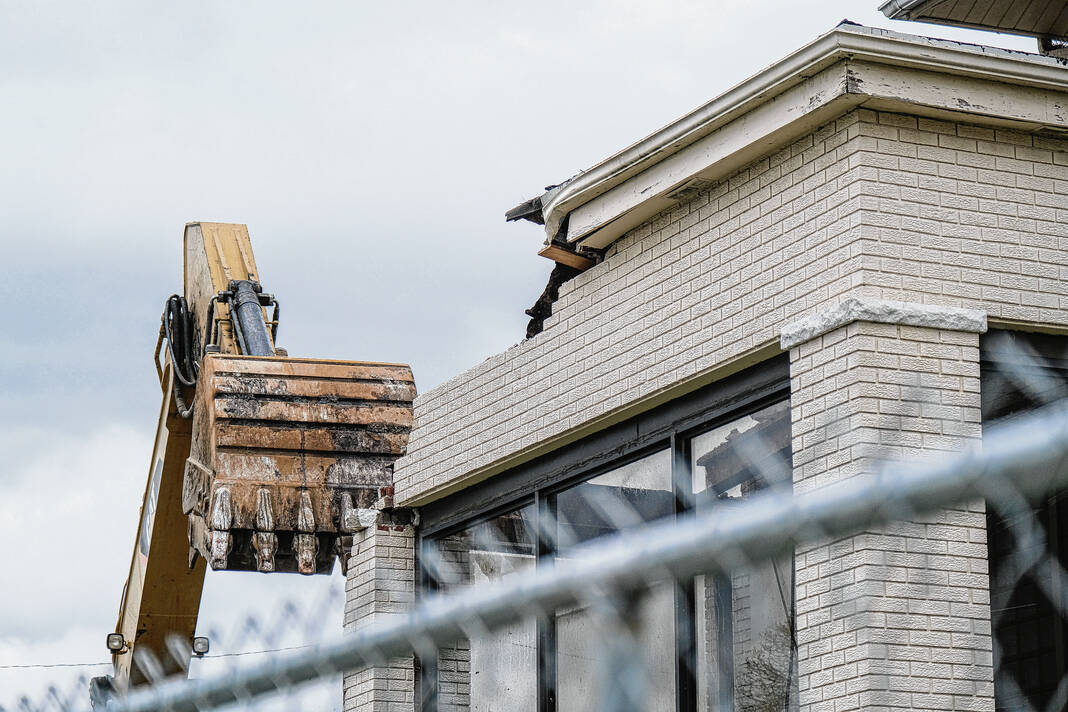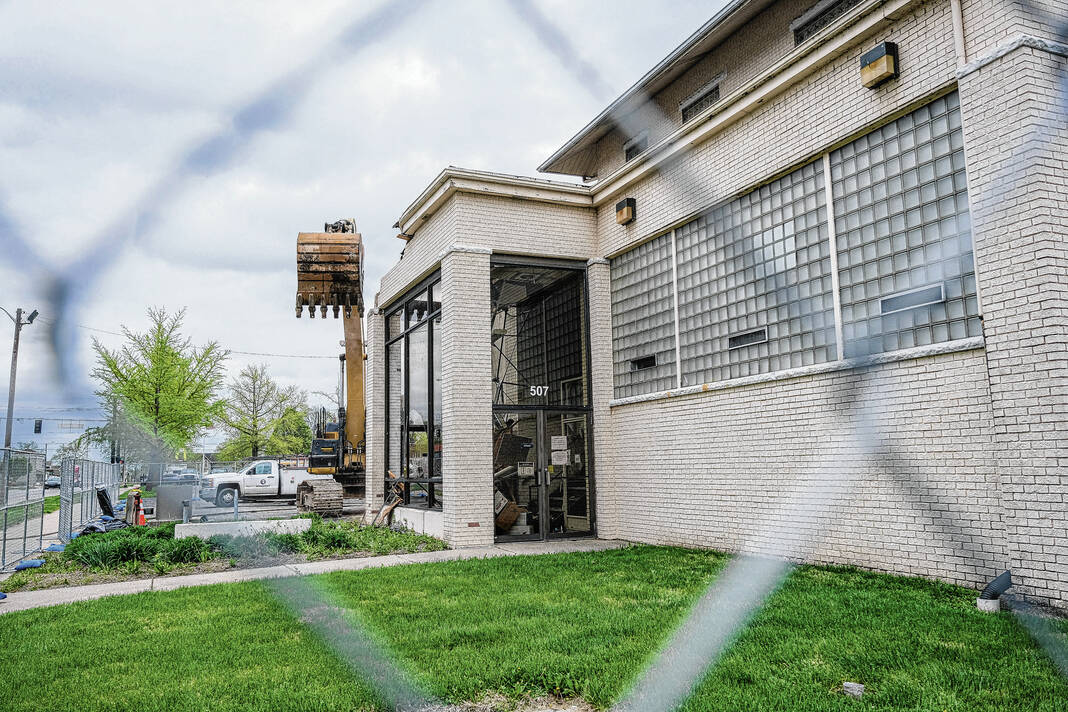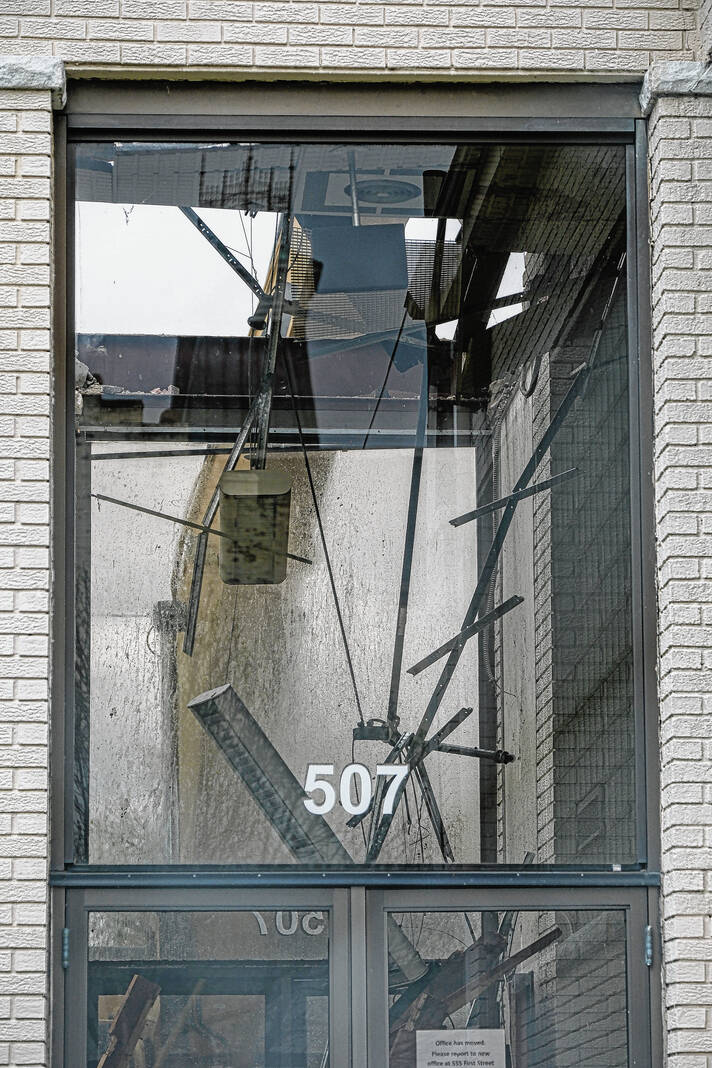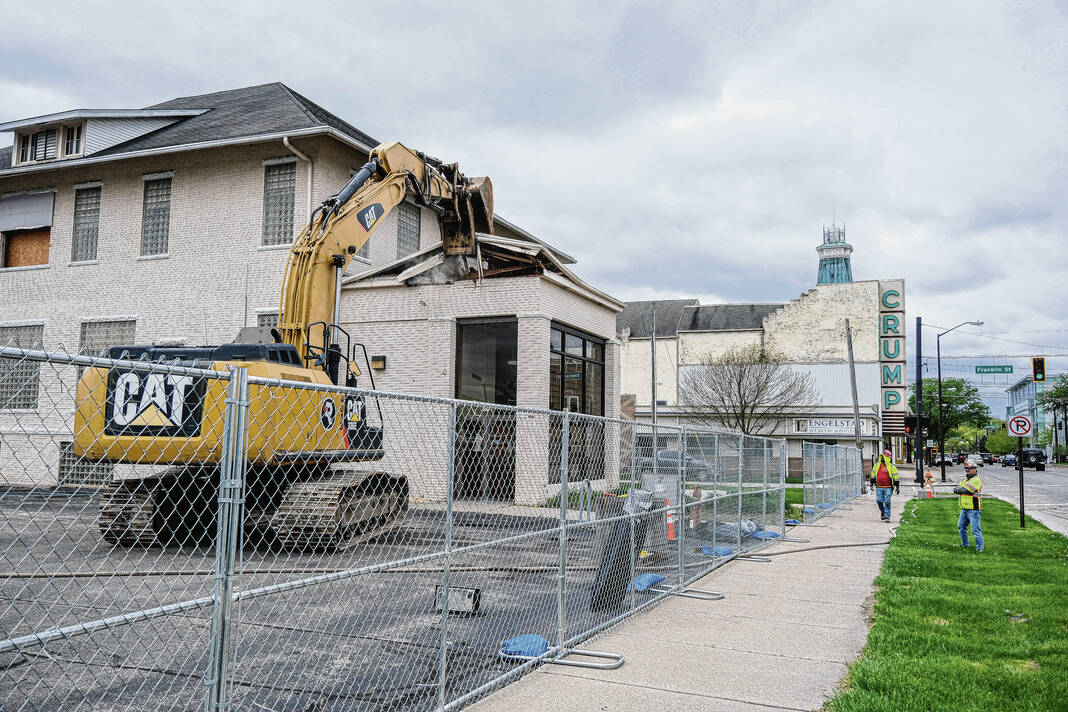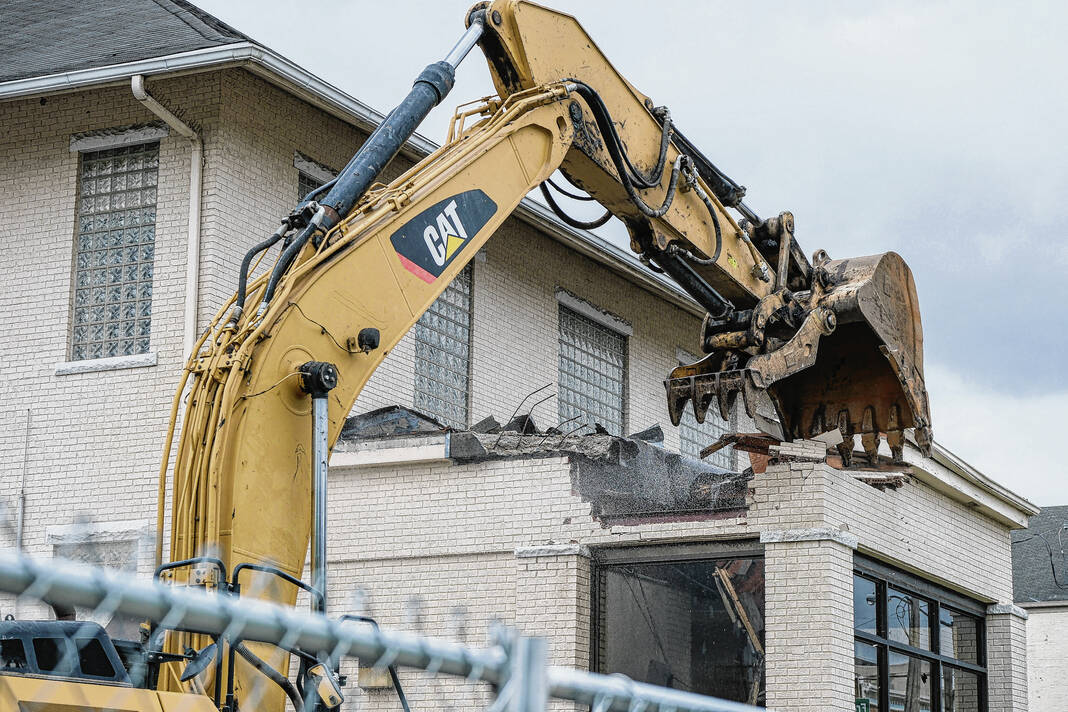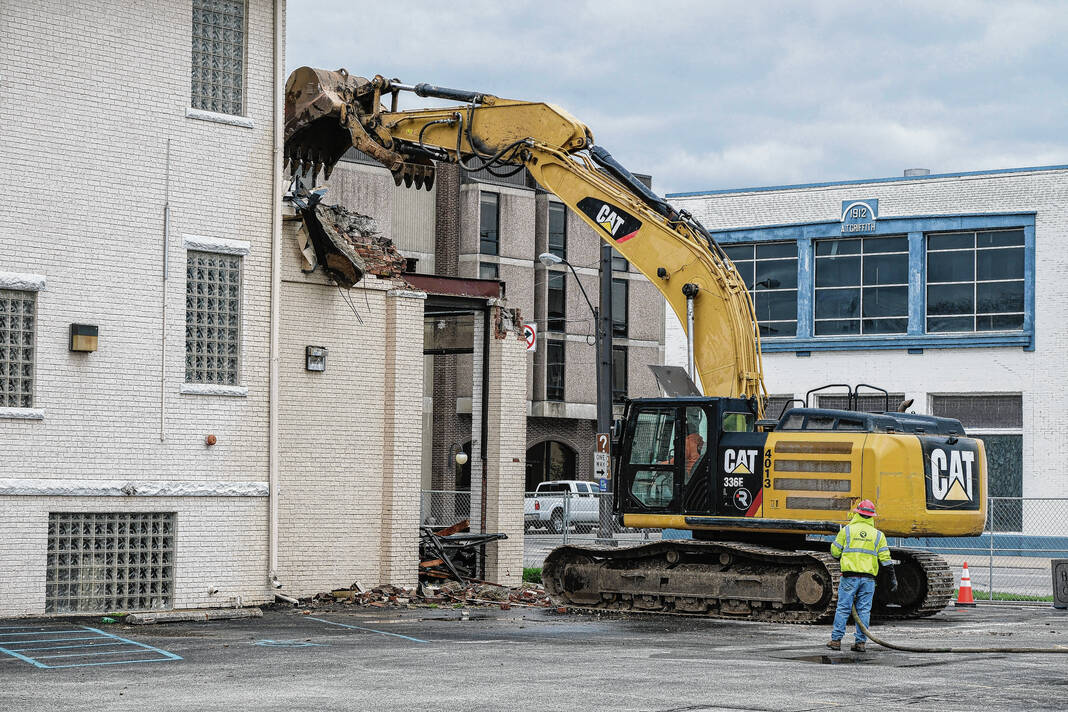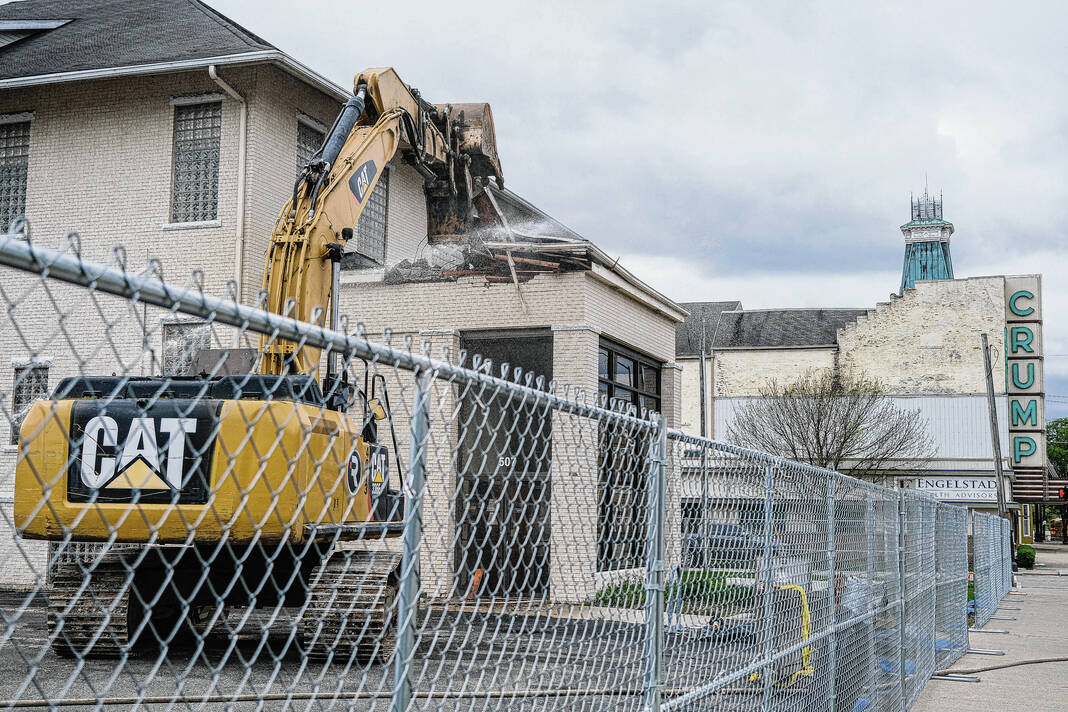
Mike Wolanin | The Republic A crew begins demolition on the old court services building in Columbus, Ind., Monday, April 17, 2023.
A building with more than 100 years of history in downtown Columbus is coming down to make way for a new chapter.
Demolition of the former Bartholomew County court services building at 507 Third St. began Monday. The Columbus Redevelopment Commission has engaged Renascent, Inc for the work, which is the latest step in the city’s plan to build a hotel and conference center on the block surrounded by Second, Franklin, Third and Lafayette streets.
“We’re just excited to see something happening on site,” said Redevelopment Director Heather Pope. “We’ve been talking about it for so long.”
According to Anthony Larsen with Renascent, demolition is expected to take about three weeks. Pope said that once demolition is finished, the property will become a gravel parking lot that county employees can use until construction starts.
The redevelopment commission acquired the former court services building and the surrounding downtown block through a property-swap agreement with Bartholomew County.
The commission purchased property at 555 First St., demolished an existing structure, and contributed $1.5 million to the construction of the new Bartholomew County court services building at the site. The county picked up the remainder of the cost, which was approximately $2 million.
Under the deal, the county received the new court services building and a small parking lot. In return, the city received the county-owned block surrounded by Second, Franklin, Third and Lafayette streets. Once the former court services building is gone, redevelopment officials plan to utilize the empty block to build the hotel conference center.
The commission’s agreement with the county also includes allowing county employees to park up to 100 vehicles, on weekdays, in a new parking garage that will be part of the hotel conference center development.
Sprague Hotel Developers, the city’s development partner, previously put the project on hold in 2020 due to the impact of the COVID-19 pandemic on the hospitality industry.
Pope said that the city is still in discussions with the Spragues, and she provided them a project agreement to review in August.
“They were working with their architects and engineers and nailing down the right brand that they felt would be successful to our community and so working through all of that,” she said. “And so we continue to have conversations with them at this point.”
At present, Pope does not have an estimate for the total cost of the project.
In January, the commission had a special meeting to approve hiring architecture firm atelierRISTING to prepare architect and engineering documents for just the parking garage.
At the time, Vice President and Design Principal Steve Risting estimated that the garage’s construction could cost $12 to $15 million based on an estimate of $30,000 per space and 400 to 500 spaces. This did not include the cost of other site improvements such as preparation, drainage and landscaping.
According to Pope, Risting has since reported cost estimates that are higher than his previous calculations, so the city is working with him to see what they can do to reduce the price while still providing a sufficient number of spaces.
The cost of building the hotel and conference center, not including the garage, has been projected at $43 to $44 million, according to Rob Hunden with Hunden Strategic Partners.
The firm was hired by the commission to update to their previous market and feasibility study for the project and presented their findings in June of 2022. They recommended that the city should move forward with the development and also consider expanding its scope.
Hunden said at that time that the estimated cost includes an $11.8 million financing gap that would require some form of public subsidy or grant. The gap does not factor in the cost of land.
A $5 million Regional Economic Acceleration and Development Initiative grant will fund a portion of the project, according to redevelopment officials.
Pope said that the endeavor dates back to the community losing the Clarion Hotel and Conference Center that had been Columbus’s largest hotel, which had 253 guest rooms and a ballroom that could hold up to 1,000 people. It closed in June of 2017 and was later demolished.
“We had heard anecdotally, and then when the Envision Columbus document was completed, that we were missing that piece for a community this size,” said Pope.