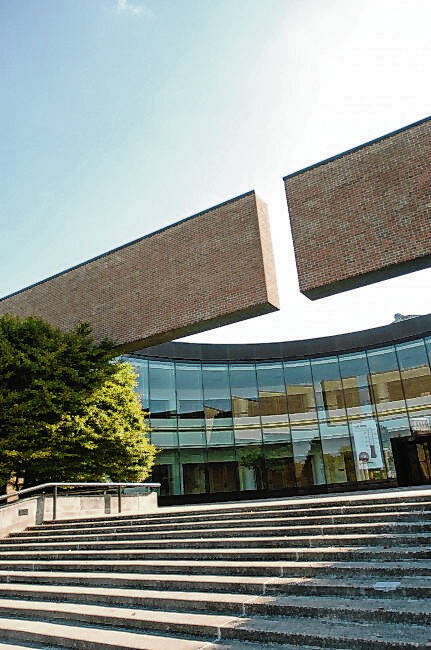
Republic file photo
The exterior of Columbus City Hall in downtown Columbus.
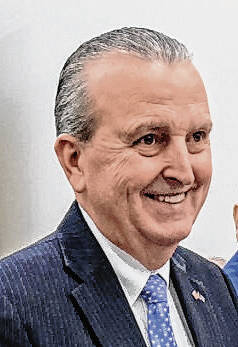
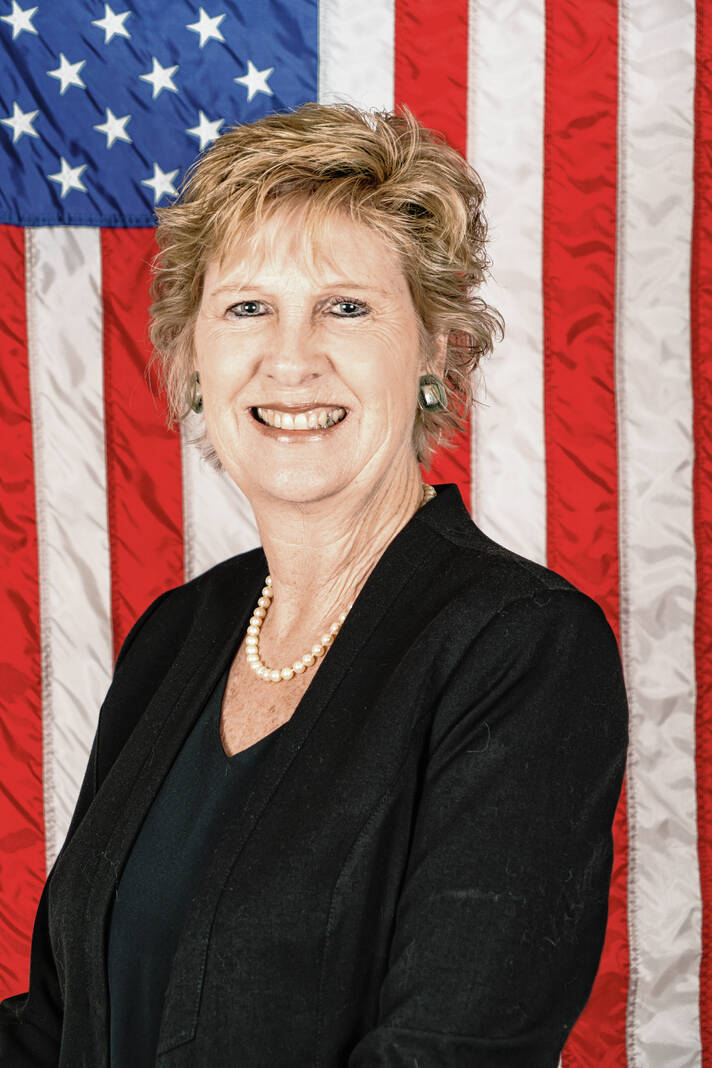
The two candidates seeking the Republican nomination for Columbus mayor in the May 2 primary agree economic development would be a priority for their administrations.
However, the two candidates — Mary Ferdon, the city’s executive director of administration and community development, and Milo Smith, former Indiana state representative for District 59 — outlined different approaches as the community emerges from the coronavirus pandemic amid low unemployment while the local labor force continues to rebound.
Ferdon said her strategy would include a holistic combination of efforts to boost job creation and retention, workforce development and provide “an environment where employers and employees want to live and do business.”
That environment, Ferdon said, would include a well-trained workforce, low tax rates, quality public services, housing, transportation and a city with amenities that serve the public interest, pointing to the NexusPark project as an example of an amenity that is expected to benefit the public and drive economic growth in the sports tourism sector.
Smith said one of his main goals would be to address the need for “more shovel-ready industrial land” that is available for development, stating multiple times during an interview that he would take on a role as a “cheerleader” to encourage new companies to set up shop or local employers to expand.
“I think we need more shovel-ready industrial land available, and I don’t mean land that is developed by the city, but land that is developed by a local investor like we did down at Walesboro,” Smith said.
Infrastructure
Both candidates highlighted the importance of infrastructure in their economic development strategies.
Ferdon said that having a “strong” Columbus Redevelopment Commission plays a key role in economic development, saying she would plan to work with the commission to fund infrastructure projects for business recruitment and growth and expansion opportunities, including improvements made to Fourth Street and State Street and plans to redevelop the downtown riverfront.
She also said she would work with the Greater Columbus Economic Development Corp., Columbus Area Chamber of Commerce, employers, small businesses and entrepreneurs to gauge what infrastructure is needed for businesses to be successful, including identifying property “within the city that would be appropriate and be good spaces for new industries to be built.”
Ferdon emphasized the importance of what she described as “creating a community that is attractive for people to live and for businesses to grow.”
“A strong park and trail system, a vibrant downtown, good schools, a good medical system are all really important economic development tools for creating a community that is attractive for people to live and for businesses to grow,” Ferdon said. “I recognize that and want to make sure that continues.”
“I know that we need to increase our housing availability and have flexibility in transit options. So those are two areas that I will put effort into making sure that they happen,” she added.
Smith said his administration would focus on getting more land ready for commercial or industrial development, stating more work needs to be “up front” because “it just takes so long to develop land and get the infrastructure in and the water, the sewer and the roads.”
When asked how he would encourage more land to be developed for commercial or industrial use, Smith said he would do so by “being a cheerleader, talking to all the investors and trying to let them know what the purpose of developing new industrial or commercial land would be and let them know, ‘we’re going to work really hard, my administration will, to bring new businesses and help local businesses expand.’”
Smith also expressed optimism that increased commercial and industrial development would result in a growing workforce in Columbus.
“I’ve been talking to some local industry leaders — small and large — and I said, ‘if I’m elected mayor, I’m going to be a cheerleader encouraging you to expand your business right here in Columbus, Indiana.’ You might say, ‘Well, you don’t have enough of an employee base.’ Well, Honda built in Greensburg, Indiana, and they were able to fill those jobs.”
“So, if you build it, they’ll come,” Smith added, referring to employees.
Diversification
Both candidates also said they would work to diversify Columbus’ economy, which is heavily reliant on automotive manufacturing.
Local officials have said in the past that a more diversified economy would bring more stability to the labor force as many industries are cyclical in nature and one industry may be experiencing a downturn while another is going through an upturn.
Officials at the Greater Columbus Economic Development Corp. have said in the past that they have identified four sectors of the economy — engineering and research and development, pharmaceutical manufacturing, defense and aerospace components and cybersecurity that they should target for expansion opportunities in Columbus.
Ferdon said her administration would work with the Greater Columbus (Indiana) Economic Development Corp. to identify “good partners to the industry that we have” to diversify the local economy, mentioning a recent push toward the food and beverage industry.
“Often times, once you get one type of business, then others come because you’re providing the infrastructure that they need,” Ferdon said. “Our close proximity to I-65 is always helpful in that way. It’s just making sure that we let other industries know what we have available.”
Smith said his administration would want to attract “anything that has to do with high-tech” but wouldn’t “single out one type of industry” over another. However, he said he would prefer environmentally-friendly companies over “coal-burning industries.”
“I’d put every person wanting to move to Columbus at the top of my list, trying to encourage them to come and to create good-paying jobs,” Smith said.
Business diplomacy
Both candidates said they would likely plan to continue going to overseas trade missions to recruit potential employers who want to set up shop in Columbus and maintain relationships with current local employers that have operations or are based in other parts of the world.
A total of 24 Japanese companies operate in Columbus — including Toyota Material Handling, NTN Driveshaft and Enkei America Inc. — collectively employing about 6,000 people, economic development officials said earlier.
Beyond that, there are local employers that are based in India, China, Germany, Switzerland, France, Saudi Arabia and Canada, according to a list of major employers by the Greater Columbus Economic Development Corp.
“We have a strong relationship with a number of employers who have facilities in Japan, China and India,” Ferdon said. “(That is) something I will continue to do with not only the Economic Development Board but other community leaders because those relationships are really important. We’ve a lot of great foreign investment in this community and we want continue that.”
Smith said he “would continue to (go on overseas trade missions) if I thought it was an advantage, and I would evaluate that each year.”
“I wouldn’t overshadow the economic development leaders we have in this community and the state of Indiana, but I would go if I thought it would benefit their efforts,” Smith said.