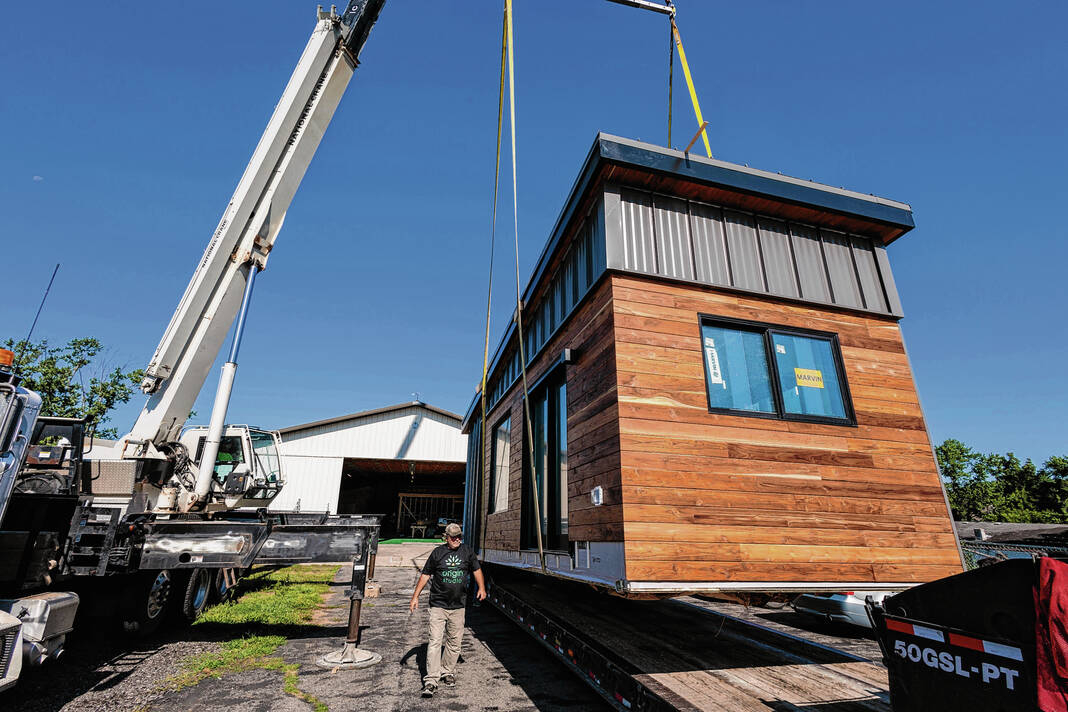
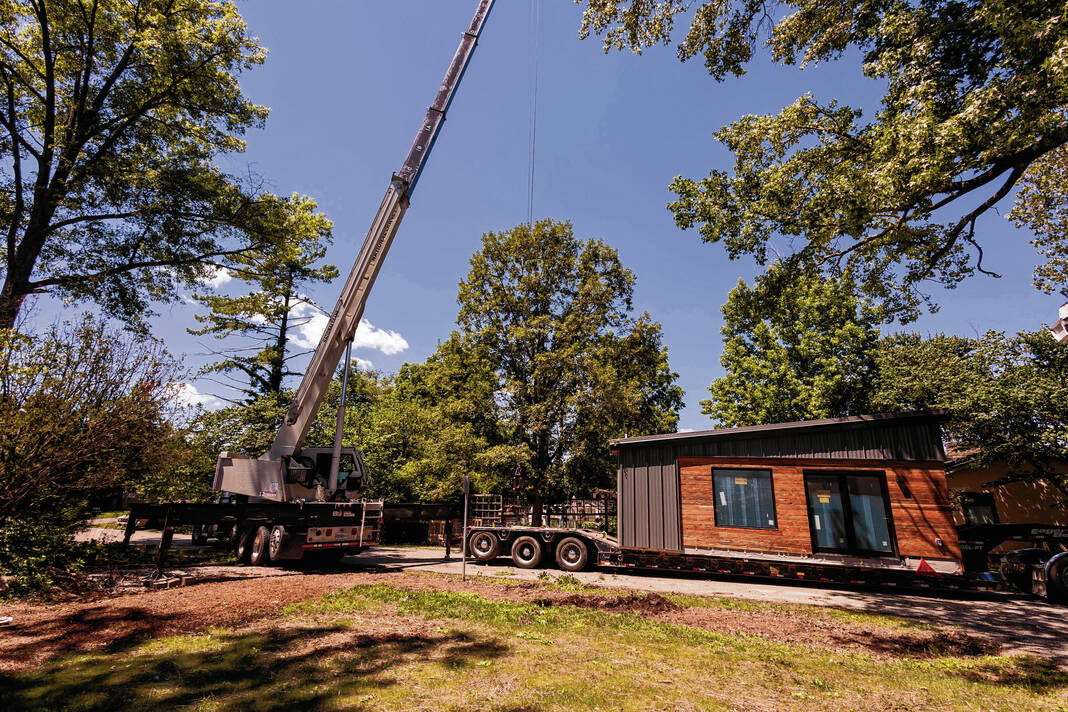
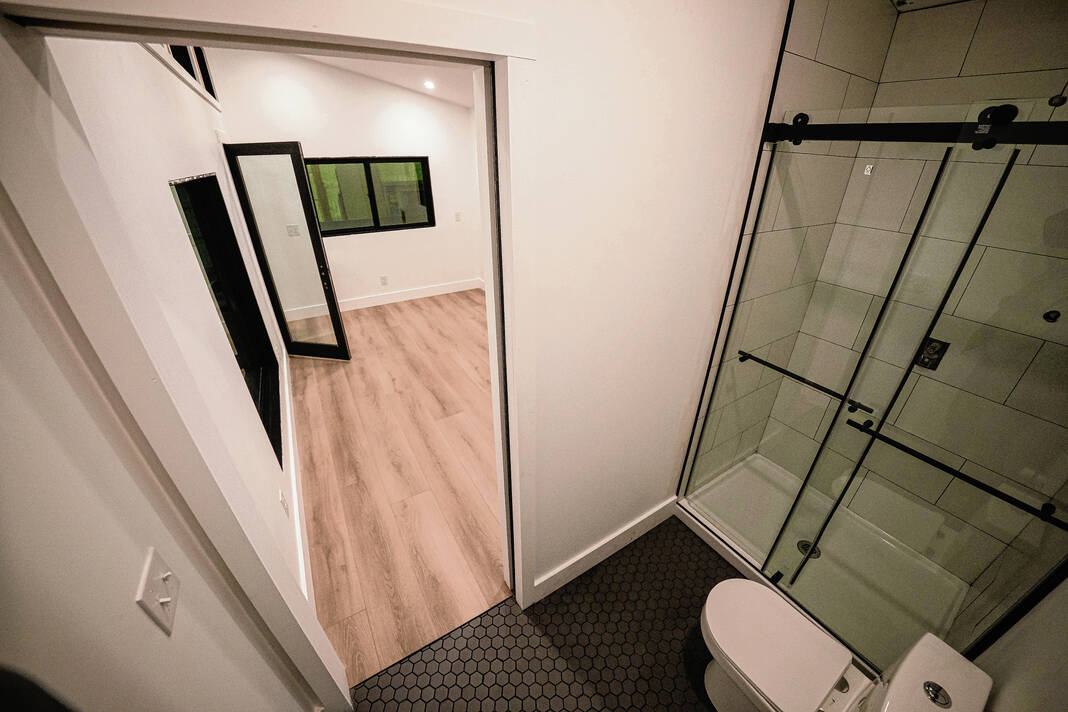
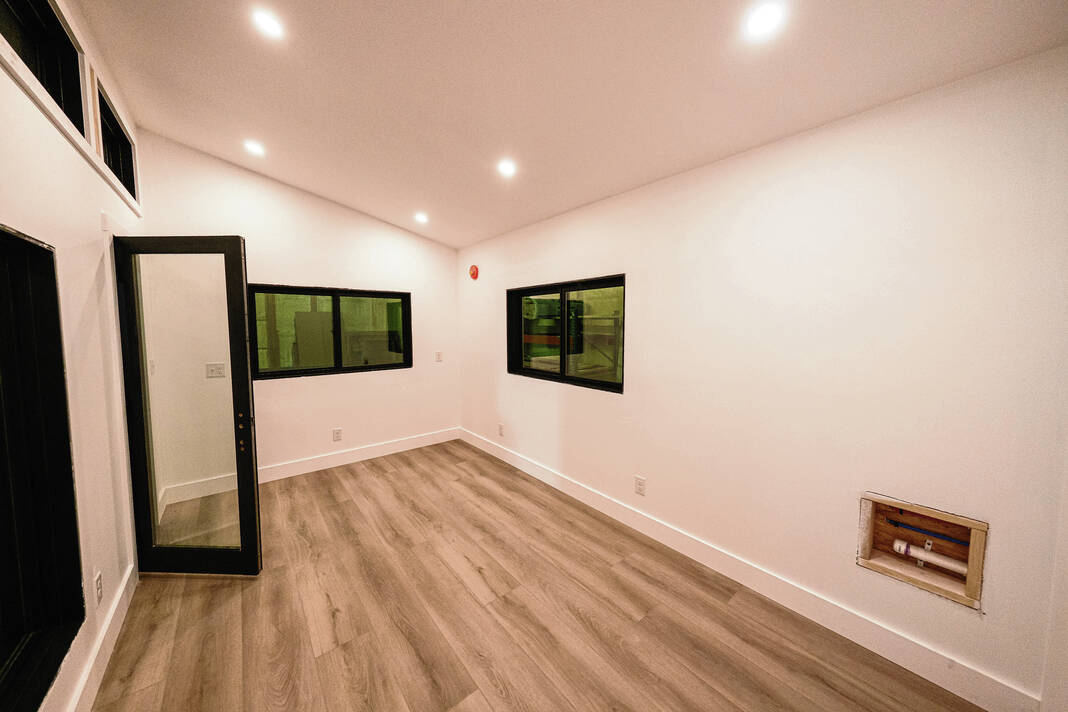
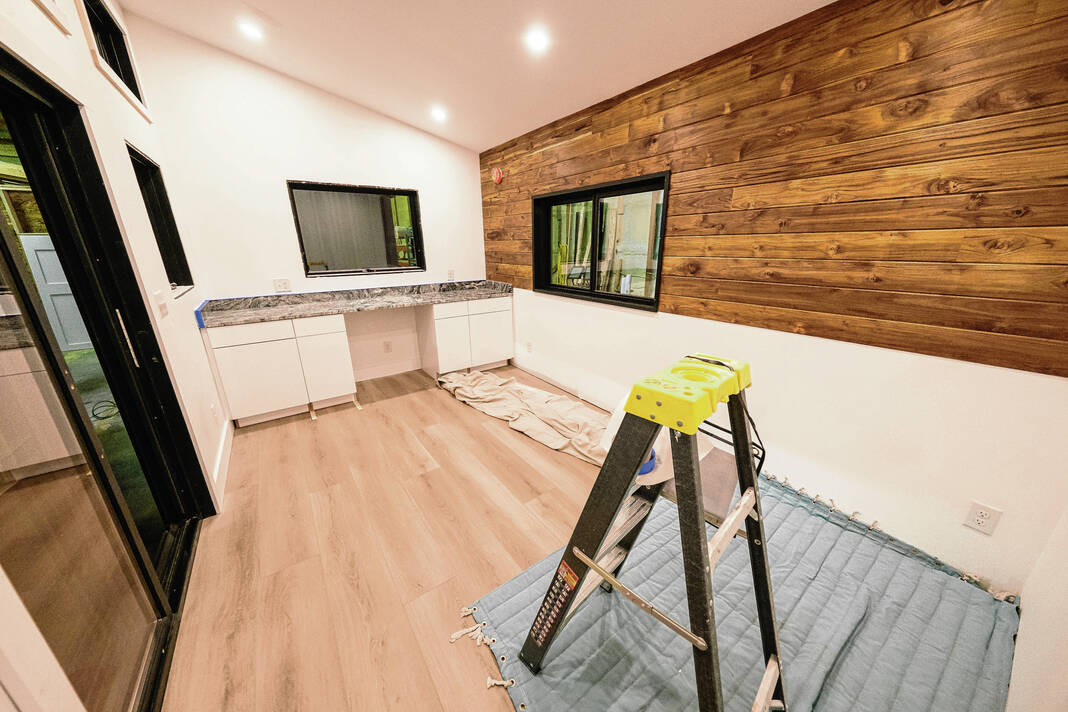
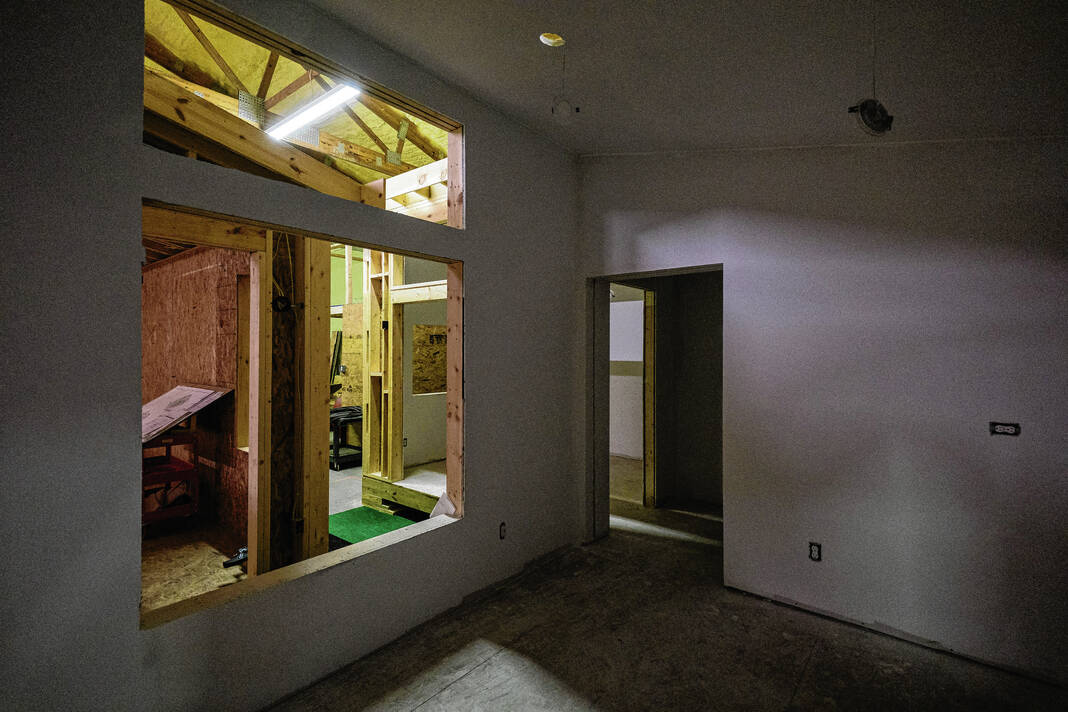
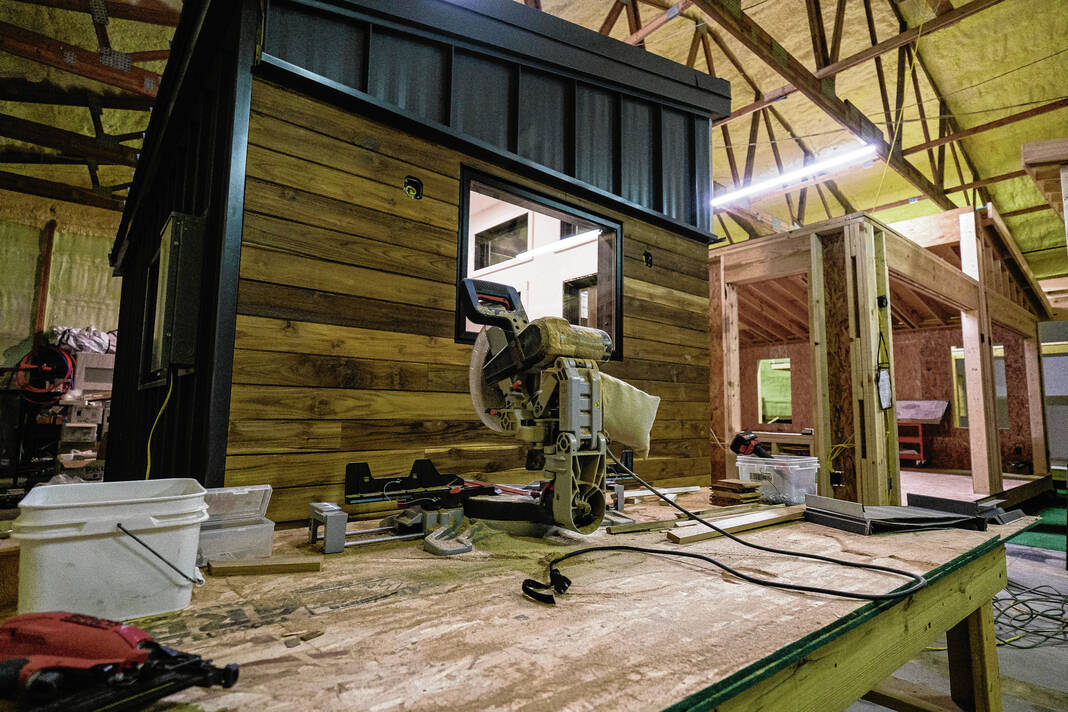
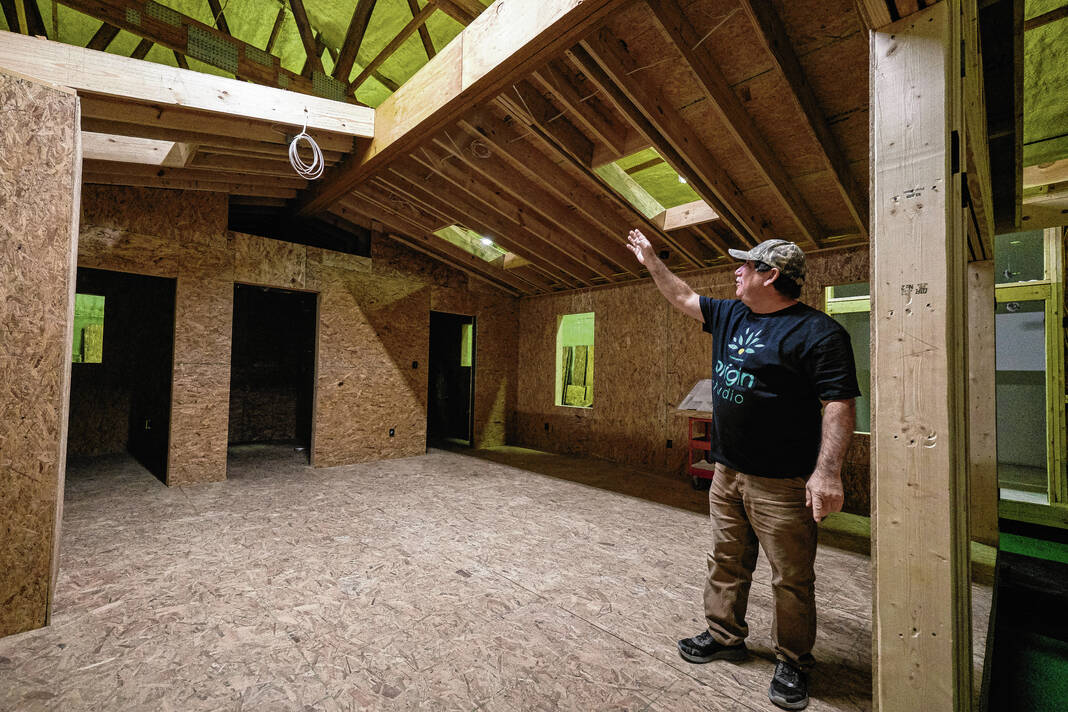
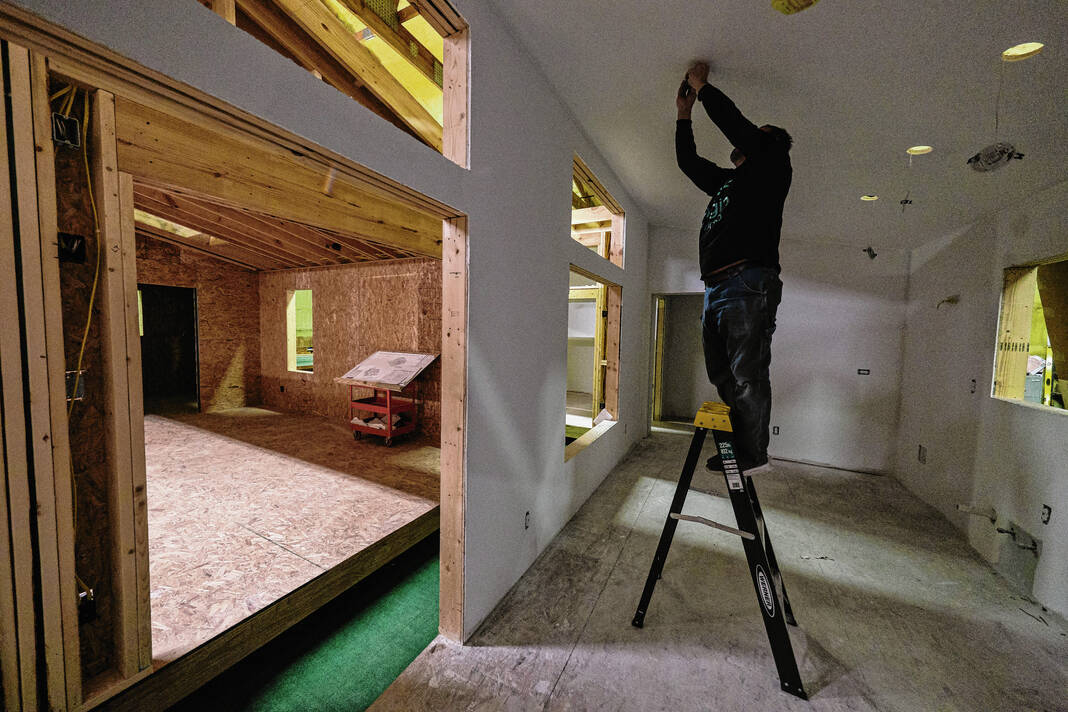
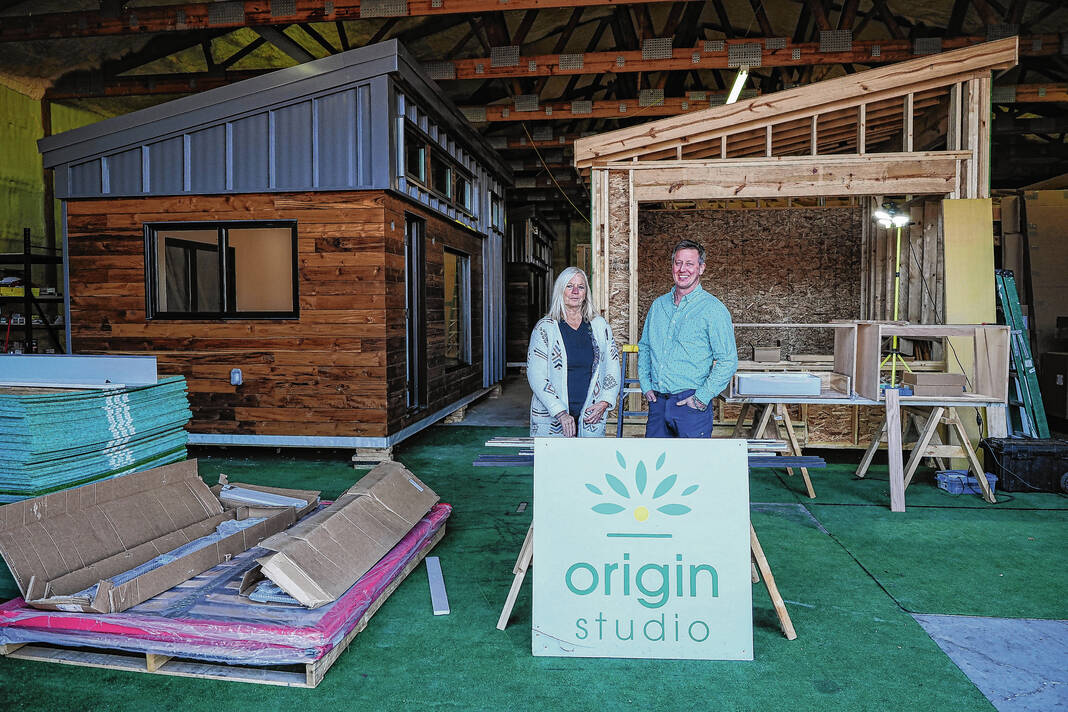
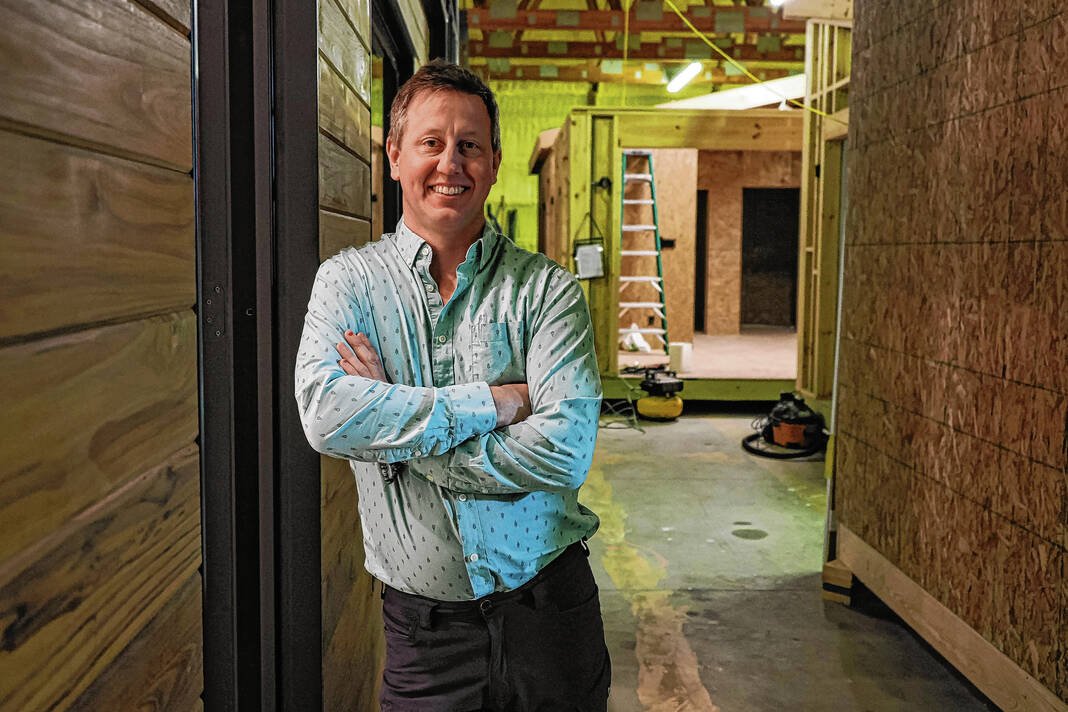
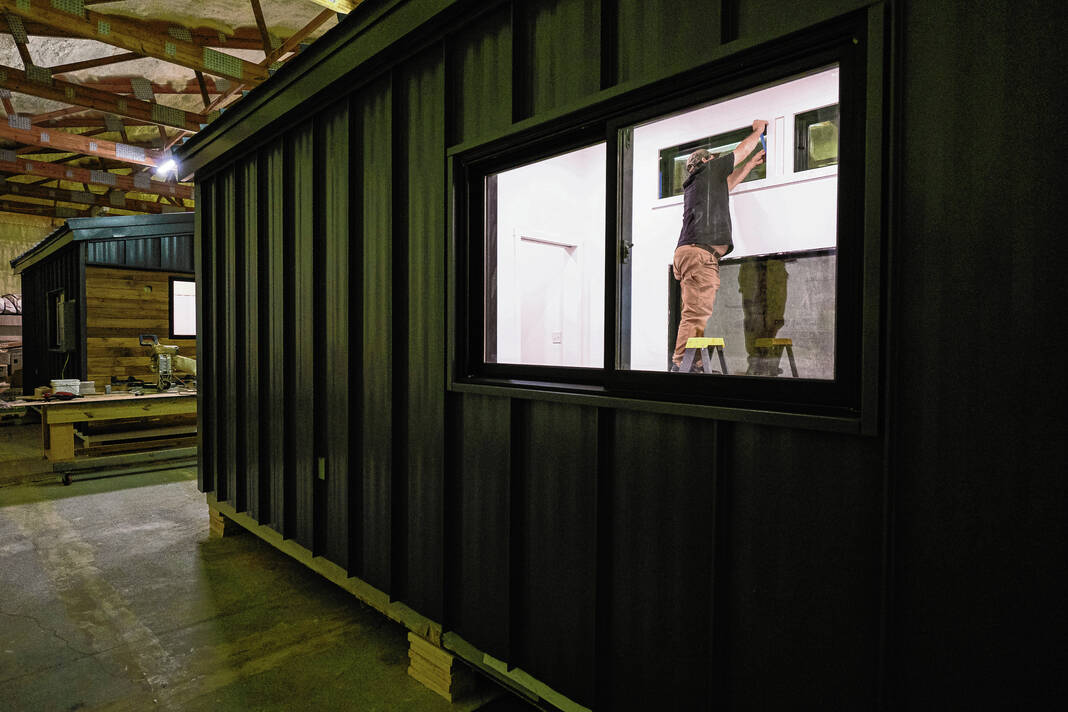
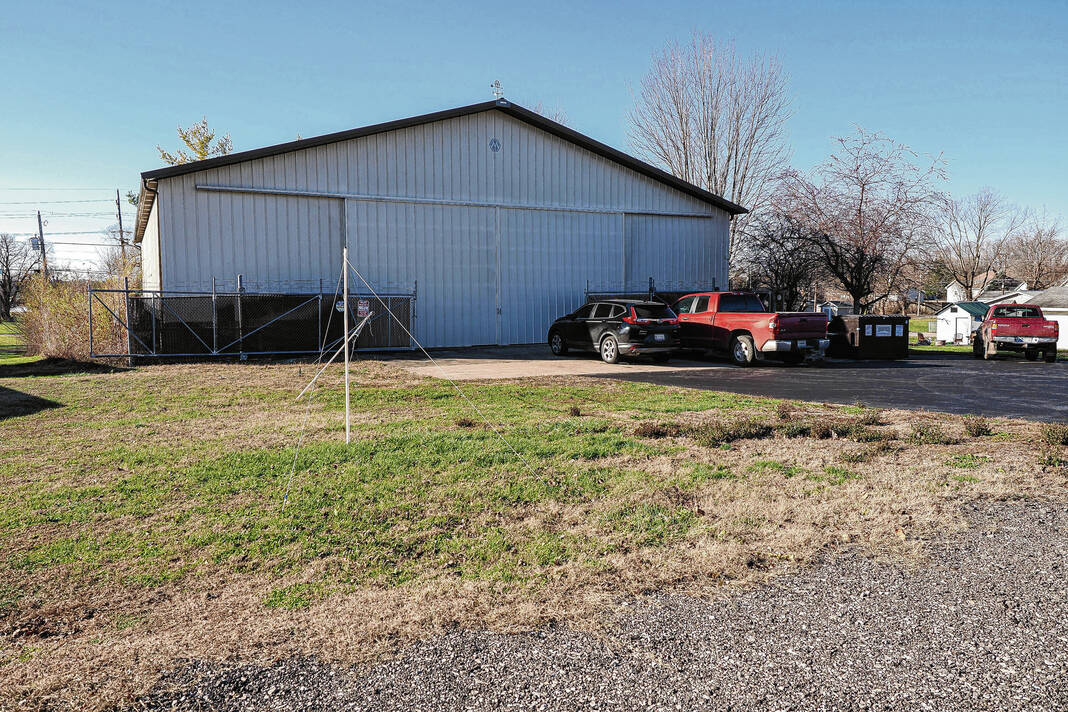
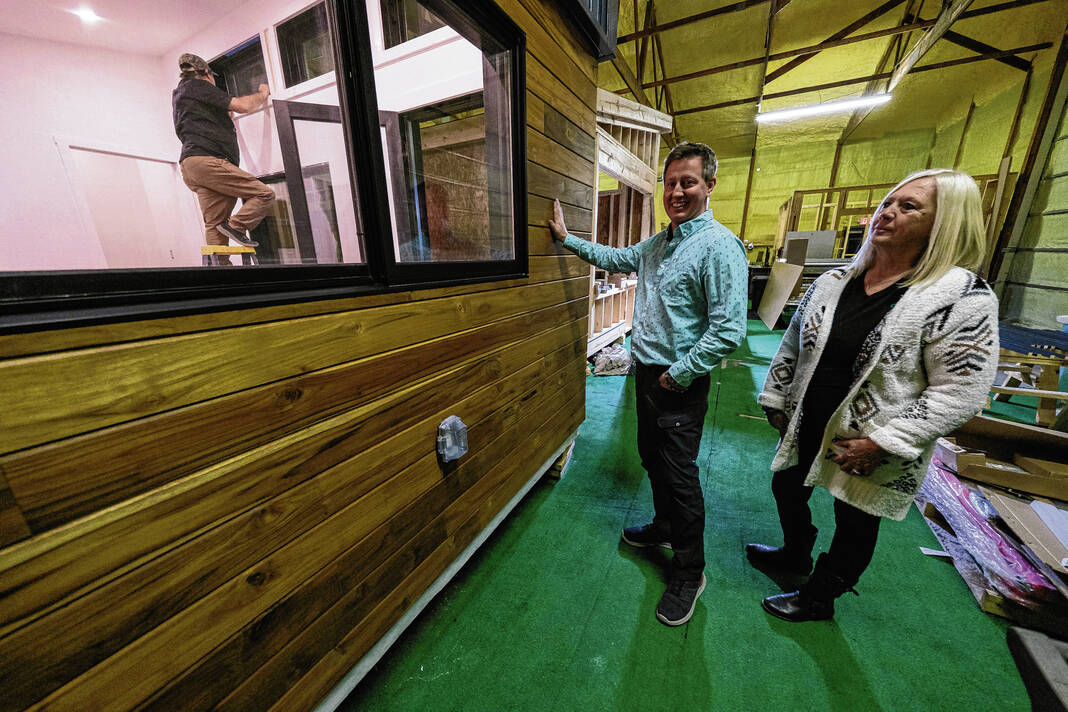
Mike Wolanin | The Republic A view of the workshop where ORIGIN STUDIO designs and builds tiny homes in Columbus, Ind., Thursday, Dec. 5, 2024.
A company on the east side of Columbus is hoping to make a big splash with an alternative housing solution that an increasing number of people and cities across the country are turning to amid tight housing markets.
Founded in 2022 by longtime urban planner Brian English, ORIGIN STUDIO manufacturers a range of Accessory Dwelling Units, or ADUs, which tend to be smaller homes that are separate from the main house on the property.
The company currently is leasing a 6,000-square-foot production facility on Hope Avenue near the Foundation for Youth where it builds and ships the ADUs to customers, many who live in California. The company also sources building materials locally from around a dozen different vendors.
“Nobody knows about us here,” English told The Republic. “…April 2023 is when we started our lease here on Hope Avenue and started production on the first unit. …We’ve done 12 units so far, and we’re aiming to start producing and selling two units a month.”
ORIGIN STUDIO’s website lists several models of ADUs ranging from around 200 to 760 square feet at base prices between just under $80,000 for a 200-square-foot unit to a 760-square-foot, two-bedroom model at around $216,000, though the total costs could vary depending on customer specifications. Those figures do not include the cost of site work.
By comparison, the median size of a new, single-family home sold in 2021 was 2,273 square feet, according to the U.S. Census Bureau. The median sale price of single-family home in California, where most of the company’s customers are located, was $839,000 in October, according to Redfin.
Proponents say ADUs tend to be low-impact and energy-efficient and can add housing to a neighborhood while causing less disruption than constructing new apartment buildings, according to The Associated Press.
And ADUs are getting a new look in today’s tight housing market.
Currently, about 90% of ORIGIN STUDIO’s customers are in California, with nearly the rest of their customers in New York state and Massachusetts. So far, the company has sold one unit in Indiana, to a customer in Bloomington.
“Most of our clients are purchasing them for parents or children, and so there’s this increase in intergenerational households,” English said. “…Nobody wants to move into a nursing home anymore because of all that happened there (during the COVID-19 pandemic). So, people are looking for different solutions of where their parents are going to live while they’re aging.”
“Every customer I talk to is trying to figure out housing and space,” English added. “…Like with kids who are graduating from college for their ability to afford a down payment is really difficult unless you have family resources. So, that’s the other inquiry I get a lot is sort of building for kids who are just getting out of college, starting a job, needing a place to stay.”
English, who has worked on housing projects in more than 20 countries, said he got the idea to start the business during the COVID-19 pandemic, when “we were all stuck at home.” He started by building modular offices for people who needed more space at home.
English said he built the first one in his driveway in Massachusetts for someone who responded to an ad he placed in his daughter’s preschool newsletter.
Then, he said he started seeing “tons of demand” for ADUs in California and expanded from just making home offices to small homes with a full bathroom and a kitchen.
At around the same time, English and his family moved to Bloomington after his wife accepted a job at Indiana University.
“Then, I thought, ‘Okay, now I’m closer to the rest of the country. Let’s go for it and start producing these things and shipping them,’” English said. “So, that is how we ended up in Indiana.”
English said he chose to locate the production facility in Columbus because of the available space, affordability and “because it’s central to so many roadways.”
“I looked everywhere in the area,” English said. “Bloomington doesn’t have a whole lot of availability for the space we need. Indianapolis was the other option I looked at, and everything was more expensive. Columbus has a lot of spaces, and it’s way more affordable than Indianapolis.”
English said IU Kelley School of Business is partnering with him in the upcoming spring semester to bring in 250 MBA students for case competitions to try to “help us solve different parts of operations, marketing, etc.”
He also said he hopes to engage with students at the Indiana University J. Irwin Miller Architecture Program in Columbus at some point in the future.
“I think what’s been really cool about the company is everyone recognizes housing is a big issue,” English said. “…I think a lot of people get excited about it because everyone wants to see more housing being produced. …I think that’s why IU wants to partner with us, too, because they’re looking at businesses that are solving a socioeconomic issue.”