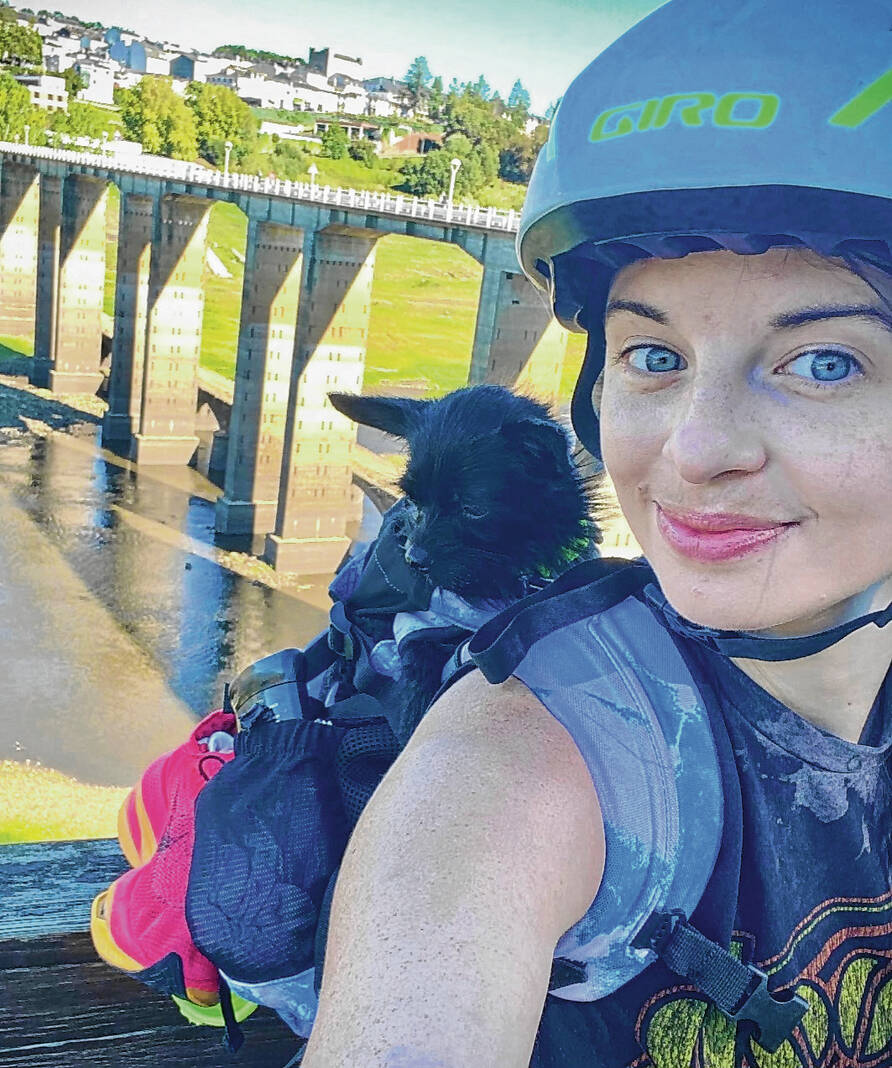
Fry
A professor once jokingly told me Indiana is called the Crossroads of America because people just want to pass through it. I did not entirely disagree. After all, I had elected to go to school out of my home state. Indiana might be referred to as “fly-over state” in the breadbasket region by some, but it has a rich history of information sharing and connectivity.
In 1896, the United States Congress voted for the first trial program of free rural mail delivery. Two weeks after the first routes began in West Virginia on Oct. 1, 1896, routes for Hope and Hartsville, Indiana were added. Residents in rural areas may still bemoan lags in postal delivery (or the lack of “Amazon Fresh” in a particular zip code), but it was not all that long ago that you would have to travel to pick up your mail. Now there are routes far outside of Hope and Hartsville: the Indiana Rural Letter Carrier’s Association was established in 1903, and recently held their annual convention in Brown County.
While the Hope and Hartsville routes have changed since their inception, they are the longest running rural routes in Indiana. You can learn more about this important piece of Hoosier history at the Yellow Trail Museum in Hope, which also partnered with Bartholomew County Public Library to create an online exhibition dedicated to Indiana’s first rural letter carriers. If you can’t make it to the museum, at 644 Main St. in Hope, you can visit https://yellowtrailmuseum.omeka.net/ to explore the artifacts and history of rural mail delivery.
Mail in the 21st century isn’t always in a paper envelope though, and Bartholomew County has continued its legacy of pushing forward connectivity for residents. During the COVID pandemic, a time when many crucial professional and educational developments were moving to online platforms, the Bartholomew County Public Library received a grant to provide technology and connectivity for users.
While the federal grant has ended, anyone coming into the library can still make use of free internet, public computers, scanning and faxing. On brand with the crossroads of the Hoosier state, the library has made it a mission to serve as a community crossroads for users in all stages of lifelong learning. Patrons can request materials through a network of libraries that share resources, and expanded technology has been implemented to help users and staff communicate across different languages, fostering more inclusion in the community space.
So, while maybe your mail was delayed this morning, you have a host of programs, public services and workers to thank for helping Hoosiers stay connected—to each other, to other neighborhoods and to changing technologies. The crossroads are a legacy to be proud of.
Carissa Fry is a reference assistant at the Bartholomew County Public Library. Library Lines is a column written by Bartholomew County Library staff members about library resources. Send comments to editorial@therepublic.com.