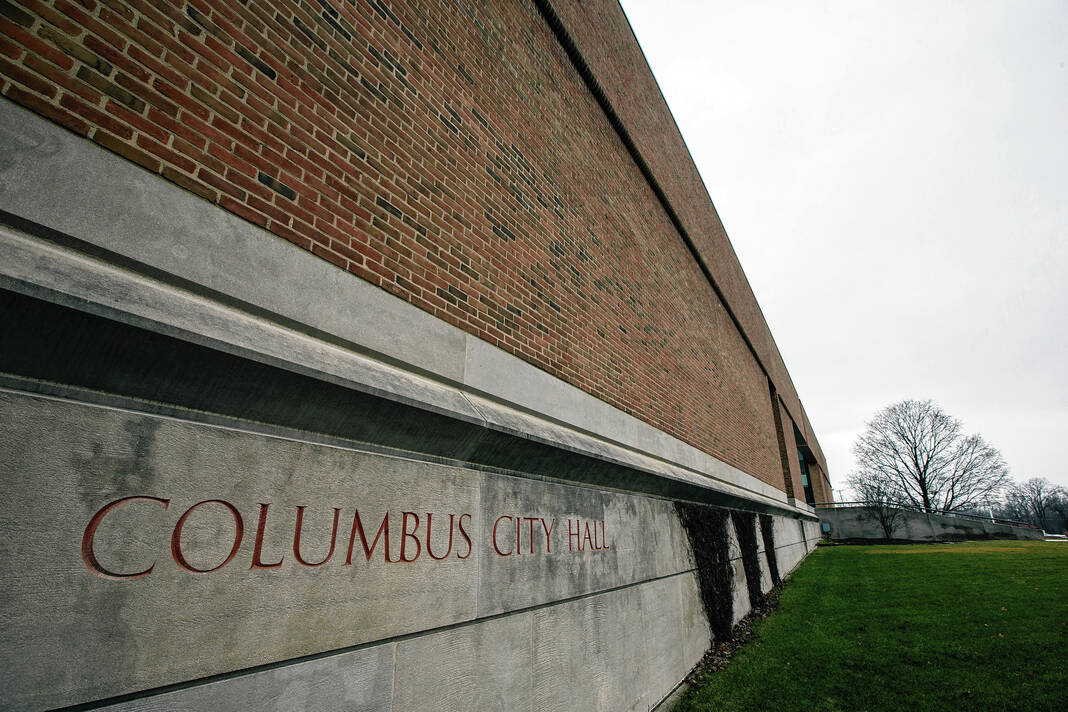
COLUMBUS, Ind. — Columbus City Council members on Tuesday night gave initial approval to an agreement they indicated they would consent to back in July that was a large contributor to making a 110-unit affordable housing development coming to Columbus possible, and set up an accompanying fund the developer will pay into that can only be used for further affordable housing initiatives.
The council passed the first reading of an ordinance authorizing a payment in lieu of taxes (PILOT) agreement with TWG Development for their Flats on 14th project, expected to cost $29.1 million and to be located on three parcels on property previously owned by Columbus Pallet Corp., across the street from Central Park Place.
With the PILOT, TWG will claim tax savings towards their total development costs. It’s the first time the city has used an agreement like it, according to community development, made possible after a statute allowing for it went into effect in 2021.
They also passed the first reading of an ordinance to establish an affordable housing fund, required by state statute as part of the PILOT agreement. Ordinances must be passed on two readings to be officially approved. The first reading of both were given the green light unanimously 9-0, but only after lengthy discussion.
But a couple of council members— namely, Chris Bartels, R-District 1 and Kent Anderson, R-District 5— said they felt as though they weren’t properly informed of some of the specifics of what the agreement would mean from the administration and asked if there were a way to back out and find another avenue.
Administration officials and the developer indicated doing so could put the tax credit award and project itself in jeopardy. Anderson and Bartels emphasized they were supportive of the project and more affordable housing, but believed the accompanying agreement adds “another layer of bureaucracy” in the form of an 11-member advisory committee that would oversee the fund and wished for a different mechanism to support the project like a tax abatement of 75% or greater over 10 years.
Under the terms of the PILOT, TWG is required to make a $33,000 payment that will go into the affordable housing fund starting in 2027. That amount will increase 3% annually and will be paid across 15 years. The total amount to be paid will be $613,764 over that period of time.
The money in the affordable housing fund can only be used for specific purposes, outlined by the law. After the 15 years are over, TWG could come back and ask for another PILOT agreement or the money in the fund would go back to the original tax basis, according to the developer.
Half of the money in the fund would go towards the production, rehabilitation or purchase of housing units for very low income households. The other half would go a nonprofit, public housing authority, unit of government, or a private development entity as determined by the advisory board.
Things the fund can be used for specifically includes providing financial assistance to individuals who make 80% of area median income (AMI) or less for rent and to pay expenses associated with administering the fund.
In addition, the fund can be used to provide grants for the development, rehabilitation or financing of affordable housing for those whose income is at or below 80% AMI “including the elderly, persons with disabilities and homeless individuals and families.”
As part of the affordable housing fund, it’s required that an 11-member housing fund advisory committee be created that would implement spending the funds. Decisions the board would make about spending would still be subject to final approval by the Columbus City Council.
That board would be made up of a representatives for the interest of low income families, owners of subsidized multi-family communities and financial institutions, to name a few. Six of the positions would be appointed by the mayor, with the rest appointed by the council. The five other members “must be nominated to the legislative body after a general call for nominations from township trustees, community development corporations, neighborhood associations, community based organizations, and other social services agencies,” according to Indiana Code. The board likely wouldn’t convene until there’s a few payments in the fund, meaning that may not happen until 2030 or 2031, according to community development.
During the council meeting on July 16, 2024, members approved a resolution indicating they would agree to the PILOT agreement in support of Flats on 14th.
That was to bolster TWG’s application to the Indiana Housing & Community Development Authority (IHCDA) in their quest for 4% federal low-income tax credits (LIHTC) along with affordable and workforce state tax credits (AWHTC), which they did receive in November. The process for acquiring the 4% tax credits was extremely competitive, with only one project in each of five regions in Indiana receiving them. Columbus is in the southeast region and there were 18 applications for the 4% credits across the state.
This story will be updated.