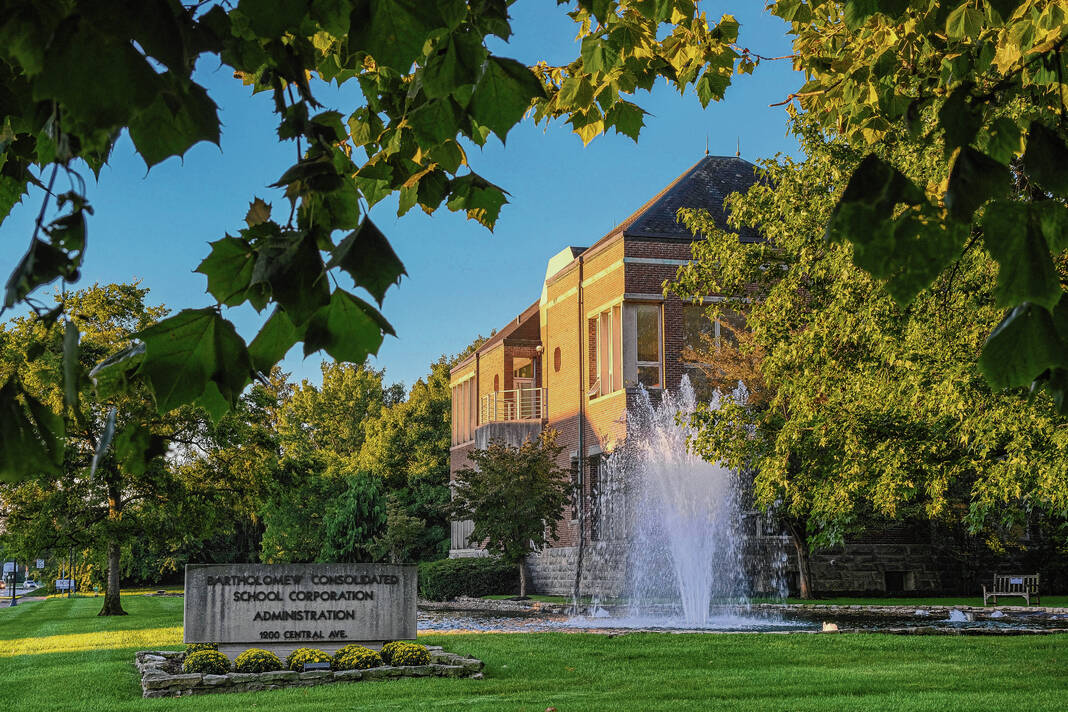
Bartholomew Consolidated School Board members approved a spending plan for next school year totaling about $163 million.
School board members unanimously approved the budget, along with a group of resolutions that set the maximum budget, tax rate and tax levy for 2026.
BCSC’s budget for 2026 is $162,959,040, down 3.3% from the previous budget after several years of continued increases. The proposed advertised tax rate is $1.0039 for every $100 of assessed value.
The budget is now submitted to the Department of Local Government and Finance (DLGF), who will return with a certified property tax rate sometime around the beginning of next year.
Nearly 98% of the $91.5 million education fund goes towards teacher salaries and benefits. The education fund — which pays for things that support in-class instruction like teacher salaries — is down over $1.65 million in state tuition support because of a 220-student drop in enrollment.
BCSC and all school districts across the state are dealing with the impacts of Senate Enrolled Act (SEA) 1, passed this past legislative session. More specifically, the bill’s property tax provisions mean that districts will see a reduced amount of property tax revenue the districts can collect within their operations fund.
BCSC Treasurer Jamie Brinegar said previously that there is $3.6 million in property tax cap losses within the operations fund in 2026, a 50% increase from the previous year as a result of SEA 1.
The operations fund budget comes primarily from property taxes and pays for district facilities, buses and support services. The operations fund spending plan is $34 million, down 12.4% from 2025. Overall revenue into the operations fund is down about $1.4 million or 4.2%
The debt service fund, which takes into account $72 million in bonds issued as part of Envision 2030, as well as a $2.5 million general obligation bond the board approved, is $20.3 million, down about $3 million from last year.
An 11% bump in the referendum operating fund to $10.7 million is mostly a result of increases triggered by teacher retention as they reach additional steps in the district’s salary table, BCSC officials said.
A $265,634 increase in the ‘support staff salary/benefits’ line item within the referendum operating fund is to pay for the district’s new school security officers (SSO). A professional services line item increase within the referendum operating budget of over $100,000 is to pay for an additional school resource officer (SRO), bringing BCSC’s total of SROs to six.
School board member Logan Schulz, District 6, noted the district has been “very conservative as it comes to estimating interest revenue,” saying he believes that’s “wise” generally, but wondered if the district was building its cash reserves through interest that could go towards things like pre-K, the expansion of the community eligibility provision, and summer band camp, for example.
“We’ve had clear areas where we’ve said, ‘We don’t have the funds,’ but this budget represents, again, a likely interest overrun in terms of interest revenue,” Schulz said. ““Have we ever looked at earmarking these overruns as a contingency rather than putting them in interest bearing accounts that just continue to build out that cash reserves?”
“I think it would be wise at the end of March to say, if it runs, then let’s have that discussion,” Schulz said. “Rather than have a whole discussion about where we’re short on revenue, let’s put some of that additional revenue that we don’t see in our budget that’s likely to come (towards other areas).”
Major noted the budget being down $6 million from last year and asked how that tangibly impacted employment or programs.
“Less money means we have either less people or we have less services,” Major said. “And I never got an answer to that. I’d like to understand a little bit about what it is that we’re not going to provide to the community because we have less money.”
Phillips said the district cut a position that previously had been covered 100% by a grant “under the wellness umbrella” where the employee did drug prevention training and wellness work in the district. He also said the capital expenditures plan — which pays facility-improvement items like painting and carpeting — is down from $2 million to $480,000.
Otherwise, the district did not cut any other programs or non-grant funded positions as of now.
Phillips previously mentioned that other Indiana public school districts of similar size have “dramatically reduced some staffing in specific areas, mainly targeting outside the classroom for obvious reasons,” and credited their financial standing as a reason BCSC has not had to do the same at this time.