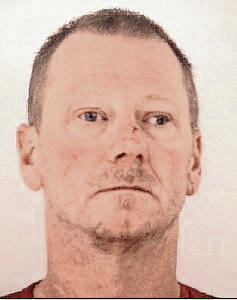
A local man convicted of murder in the death of Ashlevy E. Neville, 40, at her home near Azalia in 2023 has a scheduled appeals hearing before the Indiana Supreme Court at 11 a.m. Dec. 9
Neville died after being shot in the head, strangled, and having a plastic grocery bag duct-taped over her face, according to court documents. In October 2024, a jury convicted Anthony Wayne Carter of Neville’s murder.
Prosecutors sought a sentence for life imprisonment without the possibility of parole (LWOP). It alleged the following as qualifying aggravators: (1) that Carter was on probation for two unrelated, prior, felony convictions at the time he killed Neville; and (2) that he tortured Neville while she was still alive. The jury recommended the life imprisonment without the possibility of parole sentence, and the Bartholomew Superior Court sentenced Carter accordingly. Carter now directly appeals to the Indiana Supreme Court under Appellate Rule 4(A)(1).
During his sentencing hearing, Carter slouched back in his chair and cocked his head to the side in what appeared to be a display of defiance.
When Judge James Worton began asking him questions, the defendant from Indianapolis would remain silent for four or five seconds before making a short reply.
But when he was asked if he was satisfied in the way public defender Greg Long represented him, Carter accused Long of refusing his request for a fast and speedy trial. He also said Long did not follow through with filing motions or issuing subpoenas for evidence the defendant had requested.
Worton later responded that Carter had never filed any complaint in the court about his dissatisfaction of representation. In regard to the complaint about not arguing for a fast and speedy trial, Long said it was only a matter of needing time to prepare the defense.
Carter then turned his attention on the Bartholomew County prosecutor. The defendant claimed Lindsey Holden-Kay had put on an “elaborate, sensational mass production” designed to make him seem like a monster, which he insisted he was not.
The defendant also accused Holden-Kay of omitting parts of interviews that would have shown the jury he was guilty of reckless homicide, rather than murder.
While addressing the victim’s family, Carter repeatedly referring to the act of taking a gun into the bedroom where Neville was sleeping and shooting her as “my stupid mistake.”
Holden-Kay said members of the victim’s family did not wish to speak because it would renew their pain and sense of loss.
Carter’s third verbal attack was focused on Detective Kevin Abner of the Bartholomew County Sheriff’s Dept. He accused Abner of feigning concern for Carter and others during interviews that took place shortly after the murder.
“You were so fake it wasn’t even funny,” Carter said to Abner, who was sitting next to Holden-Kay. “In everything you did, you thought you were so smart.”
But Carter was actually the one feigning concern when he repeatedly claimed he wanted to end the defendant’s suffering, the judge said. He claimed that after she was shot, he was showing mercy by placing a plastic bag around the wounded woman’s head and using duct tape to secure it.
In reality, Carter wanted to prolong the victim’s suffering, rather than end it, Worton said. In October, the jury cited the torture to the victim as a key reasons why they recommended life without parole.
The judge also noted that Carter made several disparaging comments about the victim during questioning. A number of the comments that Worton read in court indicated the defendant was trying to make himself out to be the victim.
As the judge began to describe his shock with the way the bag was methodically secured to the victim’s head, Carter began to verbally lash out at the judge.
“Were you there?” Carter asked Worton. “No, you weren’t.”
He then accused Worton of being guilty of the exclusions of evidence he claimed were committed by Holden-Kay.
As Worton attempted to take back control of the proceedings, Carter kept talking loudly over him. At that point, the judge called for the eight guards posted in and around the courtroom to take the defendant back to jail.
Carter would see and hear the remainder of the hearing via Zoom video conferencing, Worton said.
“I don’t give a (expletive) what your opinion is,” Carter shouted at the judge moments before he was taken into the hall. “You weren’t there!’
“While you are going out, I’ll tell you that you are sentenced to life in prison,” Worton responded.
When the hearing resumed with Carter present through video conferencing, the judge said none of Carter’s actions during the night of the murder showed he wanted to end Neville’s suffering.
“You’re wrong,” Carter said as he began talking loudly over the judge’s voice again. The last thing that Carter told Worton before his mic was muted was: “Why is a cop a judge?”
It was a reference to Worton’s career in law enforcement before he earned his law degree, passed the bar and was elected judge.
While Worton kept his composure throughout the ordeal, he did have one last observation about Carter and his extensive criminal record that goes back to 1986.
“I’ve never seen a person more deserving of life in prison without parole,” the judge said.
Following the hearing, Holden Kay did not appear surprised about Carter’s behavior.
“Today we were able to see the real Anthony Carter,” the prosecutor said. “Sadly, so did Ashley.”