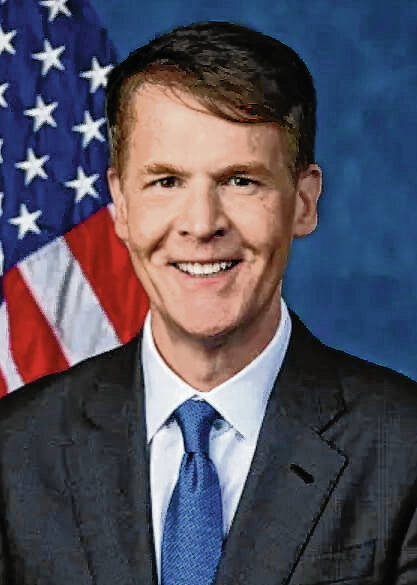
Shreve
Rep. Jefferson Shreve, R-Ind., is voicing criticism of the Affordable Care Act just weeks before expanded subsidies under the law that have lowered private insurance costs for thousands of Bartholomew County residents are set to expire.
Shreve’s comments come as the White House has been circulating a draft proposal to keep the assistance in place for two more years, The Associated Press reported. The draft plan suggests that President Donald Trump is open to extending a provision of the Obama-era healthcare law as his administration and congressional Republicans search for a broader policy solution to a fight that has long flummoxed the party.
This year, 3,516 Bartholomew County residents received the subsidies under the ACA — about 4% of the county’s population — according to the U.S. Centers for Medicare and Medicaid, which tracks enrollment.
“The Affordable Care Act has never delivered on its promise of affordability,” Shreve said in a statement to The Republic. “Too many families — here in Bartholomew County and beyond — are still getting squeezed by high premiums and rising deductibles. In Congress, I’m focused on practical, long-term reforms that actually reduce healthcare costs and give Hoosiers more control over their coverage — not just temporary solutions that mask the underlying problems.”
Shreve’s staff were unable to provide more details about what specific “long-term reforms” the first-term congressman envisions as an alternative to the ADA, also known as “Obamacare,” stating, “That’s what’s being discussed and developed as we speak.”
The subsidies were at the heart of the Democrats’ demands in the government shutdown fight that ended earlier this month, according to wire reports. Most Democratic lawmakers had insisted on a straight extension of the tax credits, which expire at the end of the year as a condition of keeping the government open.
Under the White House’s potential plan, eligibility for the subsidies, which were put in place during the COVID-19 pandemic to help people afford health care coverage, would be capped at 700% of the federal poverty level, according to two people with knowledge of the proposal. The people spoke to The Associated Press on condition of anonymity to discuss a White House proposal that is in draft form.
The baseline tax credits that were originally part of the Affordable Care Act were capped at 400% of the federal poverty level, but that cut-off was suspended because of the temporary COVID-era credits that allowed middle- and higher-income people to benefit from subsidies too, according to wire reports.
The White House would also require those on Obamacare, regardless of the type of coverage, to pay some sort of premium for their Obamacare plans, according to wire reports. That would effectively end zero-premium plans for those with lower incomes, addressing a concern from Republicans that the program has enabled fraud. One option is a requirement that everyone pay 2% of their income, or at least $5 per month, for lower-tier plans.
Even as the White House’s proposal remains in flux, the notion of extending any part of President Barack Obama’s signature legislative achievement is likely to rankle conservatives who have sought to repeal and replace the law for well over a decade.
“Until President Trump makes an announcement himself, any reporting about the administration’s health care positions is mere speculation,” White House spokesman Kush Desai said Monday.
White House press secretary Karoline Leavitt told reporters on Monday afternoon that Trump “is very much involved in these talks” and that he is “focused on unveiling a health care proposal that will fix the system and will bring down costs for consumers.”
But there are signs that parts of the nascent White House plan could get buy-in from Democrats. New Hampshire Sen. Maggie Hassan, one of eight members of the Senate Democratic caucus who voted to reopen the government earlier this month, said it “represents a starting point for serious negotiations.”
In 2017, Trump fell short in a push to dismantle the Affordable Care Act, an embarrassing defeat for Republicans who had just seized control of all levers of power in Washington, according to wire reports. The GOP has failed to coalesce around a unified health care proposal since, and the expiration of the pandemic-era subsidies gives Trump and his party an opportunity to put their own stamp on the issue.
As the White House worked quietly on its plan, led by the Domestic Policy Council, key lawmakers on Capitol Hill have drafted their own proposals. For instance, Florida Sen. Rick Scott, Louisiana Sen. Bill Cassidy and others have proposed various ideas for redirecting the program’s spending on federal subsidies into health savings accounts that enrollees could use to shop for plans or defray out-of-pocket costs. Scott’s plan has been discussed with the White House multiple times since it was released Thursday, according to a person familiar not authorized to discuss the private conversations.
The draft of the White House plan would allow those in lower-tier plans, such as the bronze-level or catastrophic plans, to put money into health savings accounts, according to wire reports.
Americans shopping for Obamacare coverage have already faced the sticker shock of price hikes, because the window for selecting next year’s coverage began Nov. 1. Without congressional action, the average subsidized enrollee will face more than double their current cost in premiums next year, according to an analysis by the health care research nonprofit KFF.
For instance, a family of four in Bartholomew County with a household income of $60,000 would see premiums increase by $225 per month next year to insure a married couple without the expanded subsidies, according to a calculator by KFF.