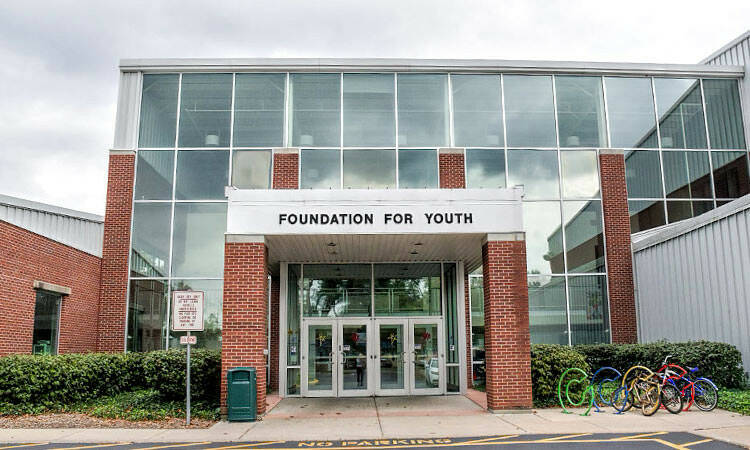
The Republic file image
An exterior view of Foundation for Youth in Columbus, Indiana.
City officials on Tuesday approved a memorandum of understanding between the city and Foundation For Youth (FFY) that spells out the different responsibilities each entity will have over the next four years as part of the partnership.
Columbus Board of Public Works and Safety members approved a facility operating agreement between FFY, the city and Columbus Parks and Recreation that more clearly outlines the responsibilities parks staff will have at FFY’s facility at 405 Hope Avenue. It includes an updated renegotiation of who pays what share of the utilities and updates the way FFY can make capital requests.
Eric Frey, executive director of administration, said the agreement, which will last from Jan. 1, 2026 to Dec. 31, 2029, was drawn up over the course of the past year.
“It needed to be updated for correctness of a lot of what parks is doing, but also kind of renegotiating percentages of utilities,” Frey said. “And the goal would be gradually to have FFY, as far as maintenance and utilities, inevitably take over the facility in its whole.”
Under the agreement, FFY retains ownership of the facility at 405 Hope Ave., but the city pays for occupancy costs, as has been the case. Foundation for Youth will also continue to lease the Columbus Gymnastics Center to the parks and recreation department at no additional cost to the city.
The parks department is in charge of the day-to-day maintenance of the facility, and utility costs will be shared equally between the city and FFY.
The city also agreed to donate spare computers to FFY and some other minor IT-related items.
The biggest change is to how FFY can go about seeking capital from the city for different projects.
In the past, FFY would receive capital dollars only if the parks department had some leftover.
Now, FFY is required to present its annual capital needs to the parks department and Frey, who will approve certain projects based on availability of funds.
“This way, they can put in a specific request, and we can utilize EDIT (economic development income tax) or Community Development Block Grant (funds),” Frey said. “We have some other resources we can actually plug in there on a much more strategic basis instead of, like, if you’re lucky, you get some money.”