Indiana’s elected prosecutors stand united in opposition to legislative proposals that would strip constitutional authority from duly elected prosecutors.
Rep. Andrew Ireland, R-Indianapolis, has chosen to focus attacks on so-called “rogue prosecutors,” suggesting that the challenges facing our criminal justice system stem from an individual prosecutor exercising prosecutorial discretion. These attacks oversimplify complex, systemic issues, and mislead the public. Public safety is a shared responsibility and will not be improved by eliminating prosecutorial discretion or impeaching elected prosecutors.
We are grateful for the attention the General Assembly is paying to strengthened public safety policy, and we outline below a handful of steps the legislature can take during this session.
First, the legislature should expand mandatory minimum executed sentences to include all violent crimes such as strangulation and rape and child molesting as Level 3 felonies. The justice system’s first obligation is to ensure accountability for those who choose to commit acts of violence. While Indiana has many strong judges dedicated to public safety, recent trends show that some judges do not approach violent crime with the seriousness it demands. In some cases, judges have imposed sentences that fail to reflect the severity of the crime, undermine deterrence, and erode public confidence in the justice system.
Expanded mandatory minimum sentences for all violent offenses serve as a safeguard against this inconsistency. Victims and law enforcement should not be left to wonder whether a dangerous offender will receive a slap on the wrist or a punishment that truly matches their crime. Mandatory minimums for violent crimes ensure that regardless of the personal philosophies of individual judges, these crimes will always result in meaningful punishment, and they create uniformity, predictability, and accountability in our justice system.
Second, we ask the legislature to continue to support preventive detention and pass a resolution as it did with Senate Joint Resolution No. 1 during the 2023 Session. Currently, Indiana law provides that all offenders are entitled to post bonds, regardless of their crimes or criminal history, with the limited exception of those charged with murder or treason. Far too often, violent offenders are released on their own recognizance, or with a low bond by judges, putting communities at further risk. Preventive detention will allow the justice system to hold violent offenders without bond pending trial when clear threats to public safety exist, a necessary step to restore confidence in our justice system and protect innocent citizens.
Third, we ask the legislature to help prosecutors hold violent juveniles accountable by restoring direct filing of certain adult charges. Juveniles illegally carrying handguns has undermined community safety. Currently, these offenses cannot be directly filed as adult charges, and as a result, the most dangerous juvenile offenders are emboldened as the law does not hold them fully accountable. Juvenile gun violence is not a theoretical problem; it is a daily reality in our communities. Armed, violent juvenile offenders should be treated as adults because when judges keep these cases in juvenile court it ends the wrong message to both the offenders and to victims.
Fourth, we request the legislature expand “truth in sentencing.” Too many convicted felons receive time cuts that dramatically reduce their sentences because of the way the Indiana Department of Correction has operated and doled out Case Plan Credit Time. We ask the legislature to remove or severely limit the DOC’s discretion in handing out credit time without rehabilitation, education, or other earned efforts. For example, the DOC has given out significant time cuts for activities such as journaling or other insignificant aspects of a case plan. The Case Plan Credit Time program has resulted in numerous convicted felons receiving up to two actual years off their sentences. Time cuts should only be granted when an offender has made meaningful efforts toward rehabilitation. We ask the legislature to rein in these practices that make the Indiana Department of Corrections a revolving door for violent offenders.
Fifth and finally, prosecutors must be provided proper funding to do our jobs, and we ask the legislature to help us do so. The prosecutor, in everything the prosecutor does, enforces state law. A prosecutor is not answerable to county authorities, nor does a prosecutor exercise county power. The prosecutor’s only connection with the county (or counties) in the prosecutor’s circuit is that the county funds the operation of the office. Prosecutors in all communities across our state are asking for a lifeline from the legislature to help provide the resources necessary to effectively fight crime.
A recent study shows that Indiana’s prosecutors are roughly 385 attorneys short of what is required to effectively prosecute crime. The clear evidence of severe staffing shortages that strain our ability to handle growing caseloads and continually expanding discovery call out for solutions. Specifically, prosecutors are asking the legislature to raise court costs to help provide funding necessary to fill vacant positions and attract qualified deputy prosecutors. Providing additional funding for prosecutors’ offices will move the needle on tackling violent crime.
Indiana’s prosecutors remain committed to protecting our communities and ensuring justice for victims. But we cannot do it alone. We look forward to partnering with the Indiana General Assembly and ask for help to invest in the staffing and resources prosecutors need and enact effective laws and sanctions to effectively combat crime.
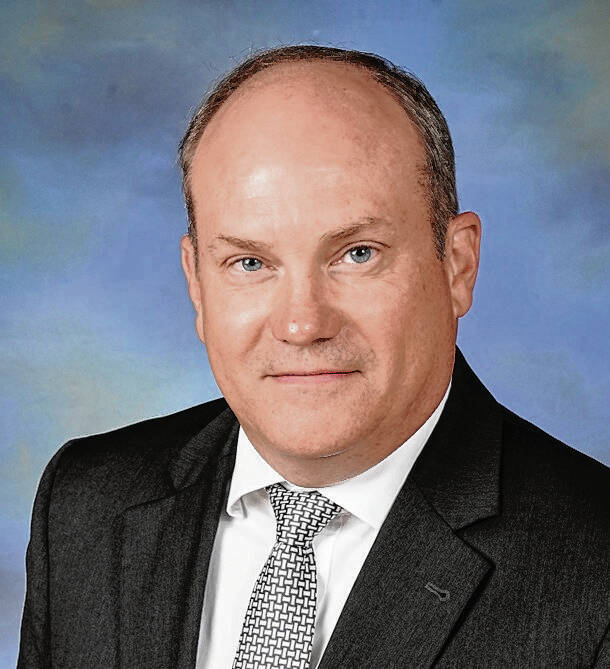
Bill Hartley is the Wabash County prosecutor, and is also the president of the Association of Prosecuting Attorneys. This op/ed was also signed by prosecutors around the state, including Lindsey Holden-Kay, Bartholomew County, Theodore F. Adams, Brown County, Nathan W. Harter, Decatur County, Lance Hamner, Johnson County and Brad B. Landwerlen, Shelby County. Send comments to editorial@therepublic.com.