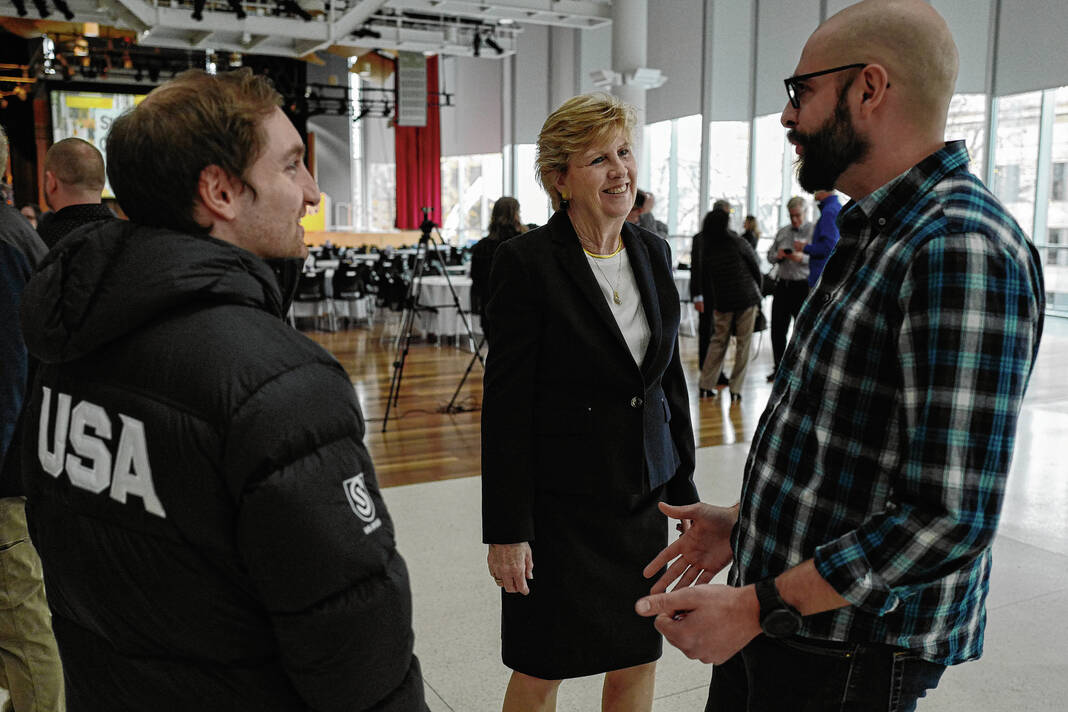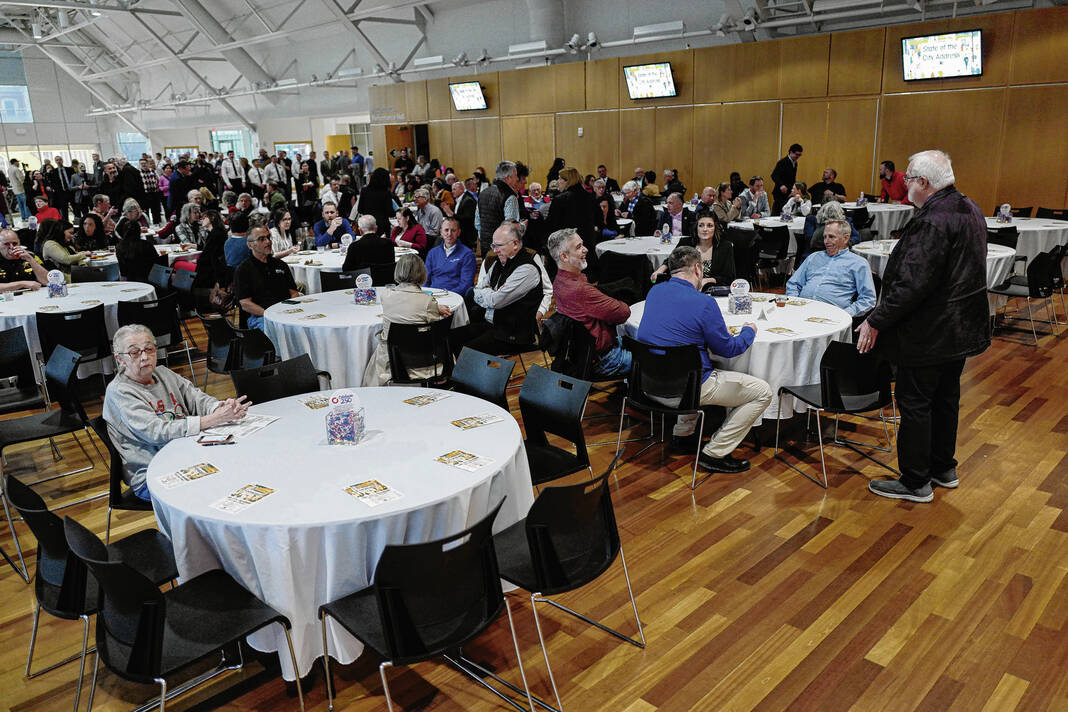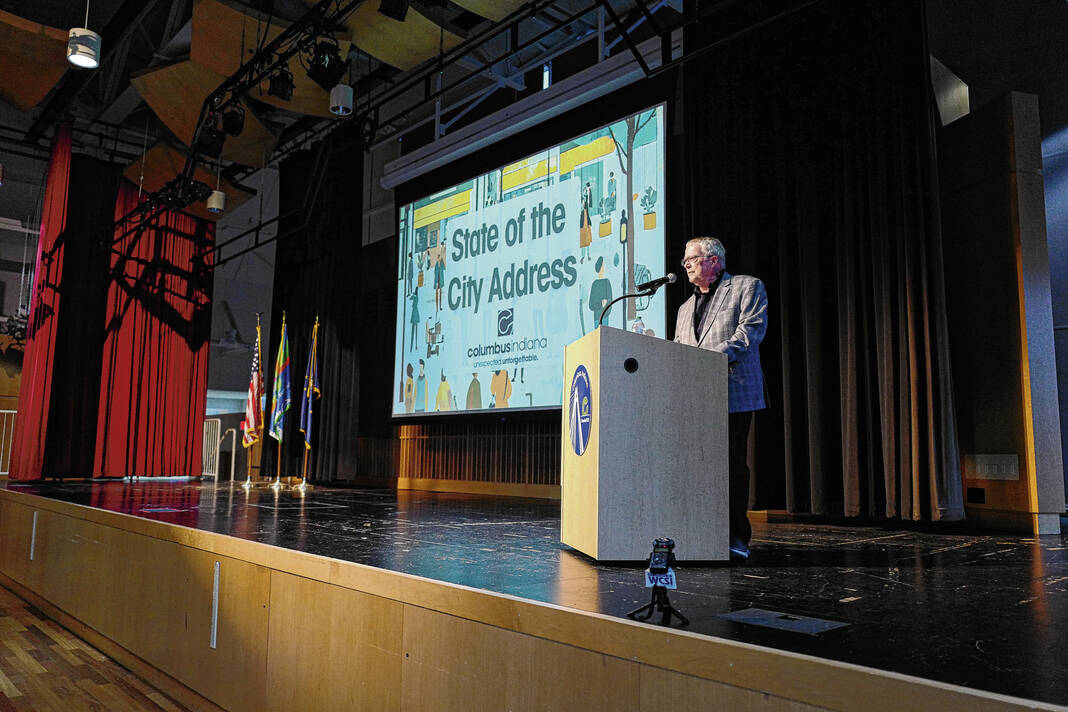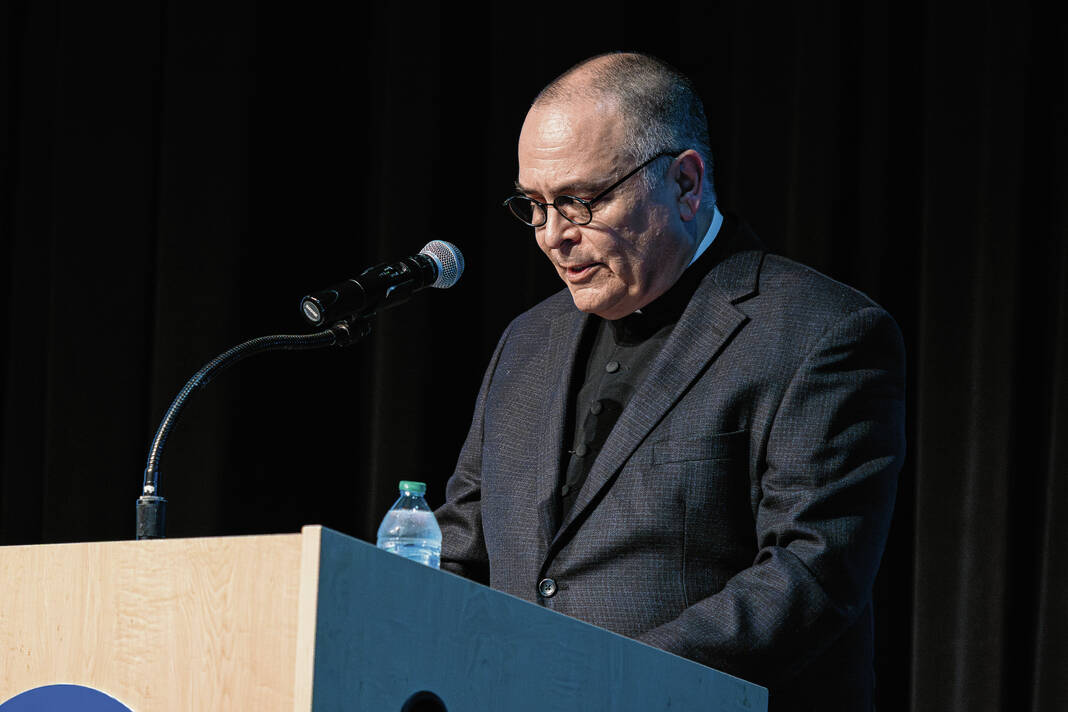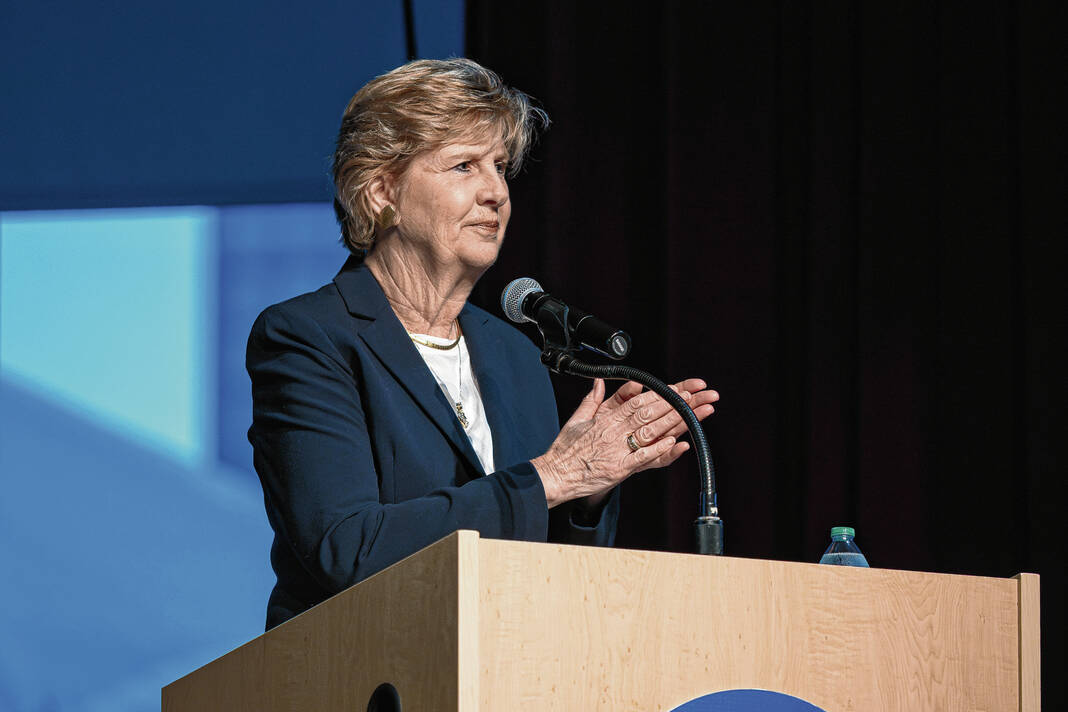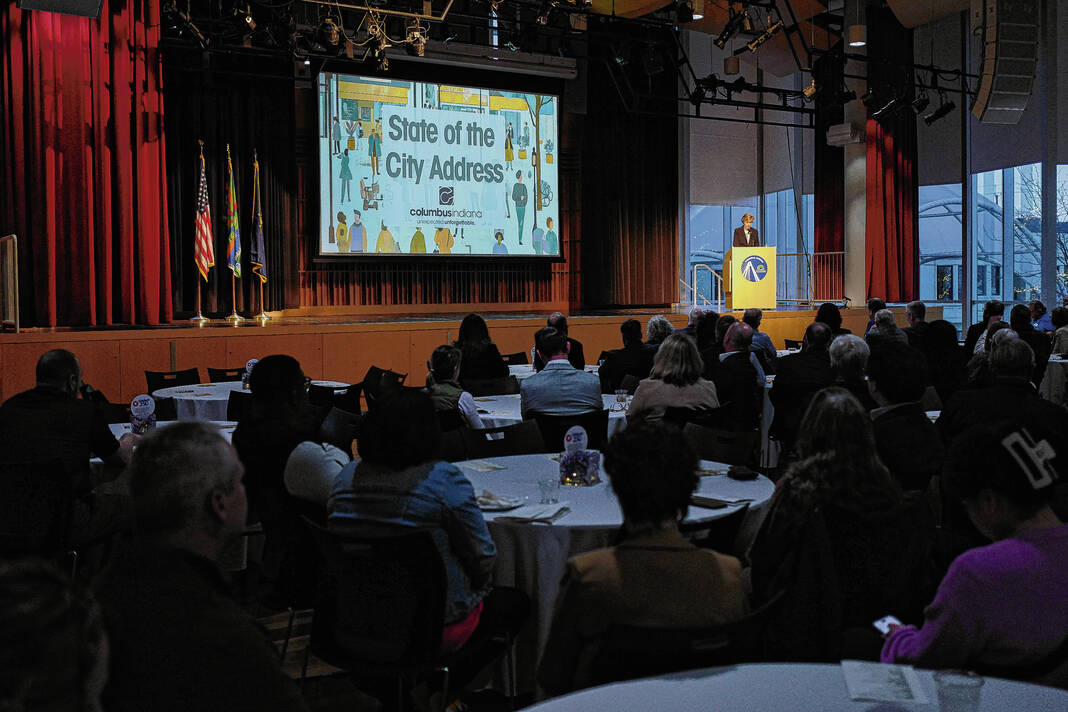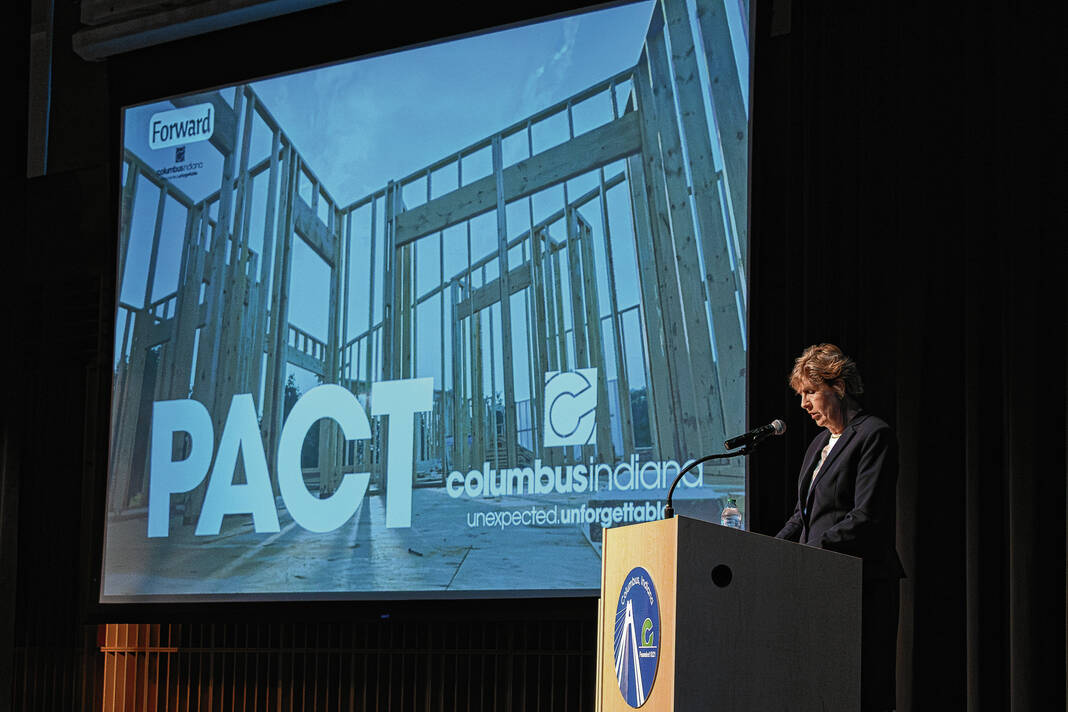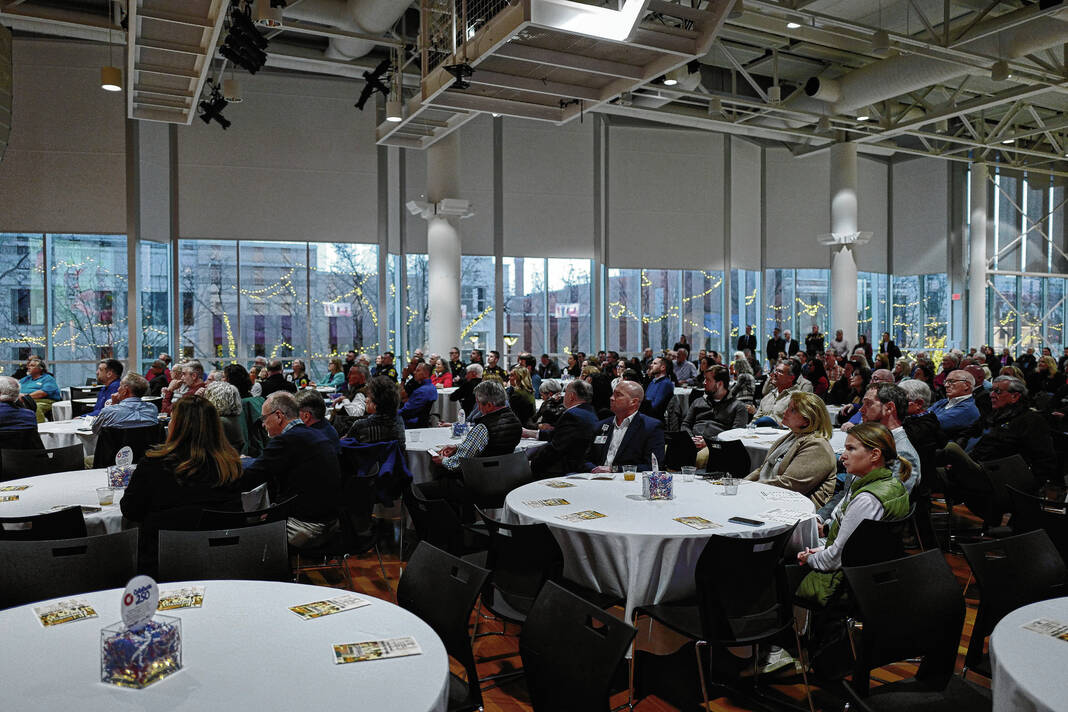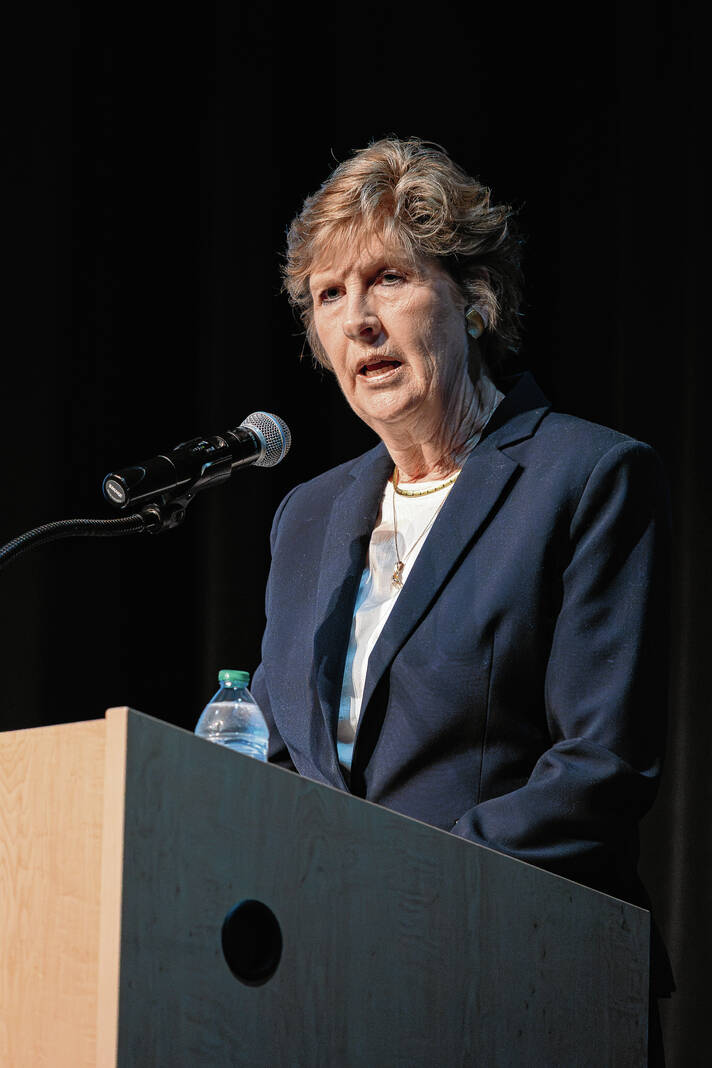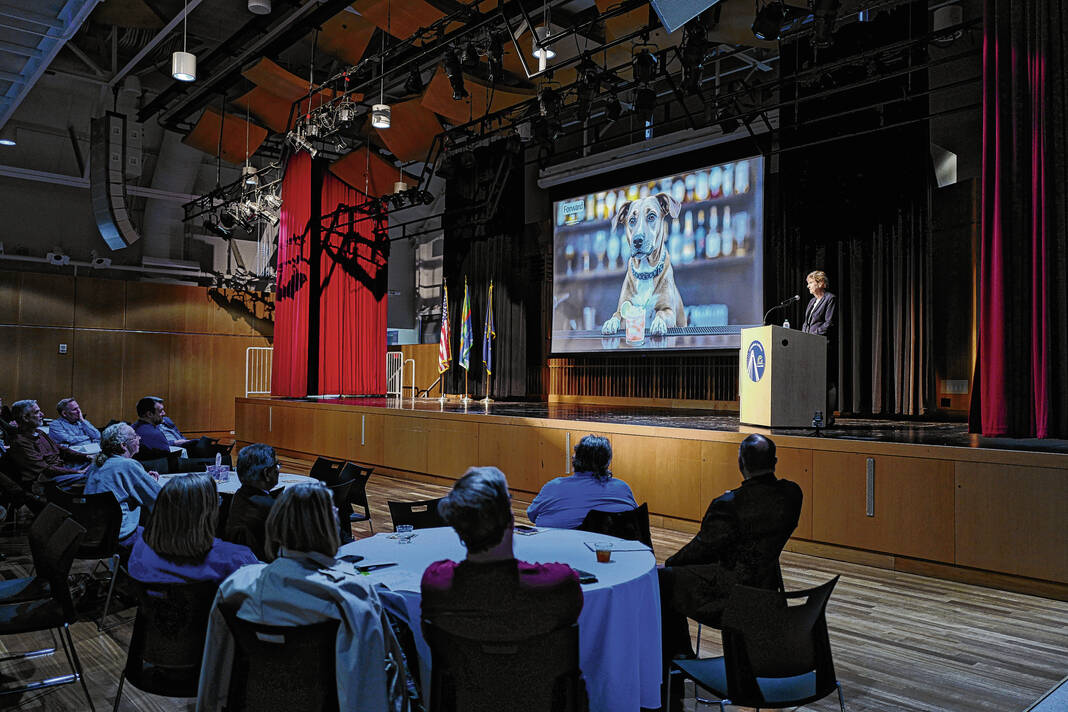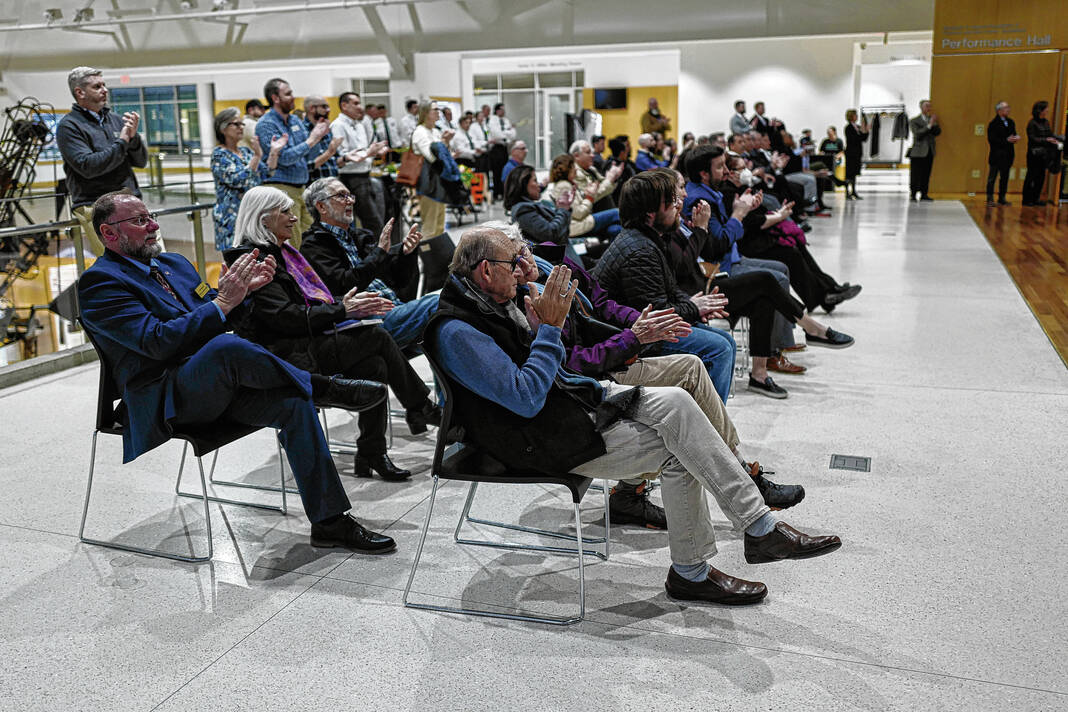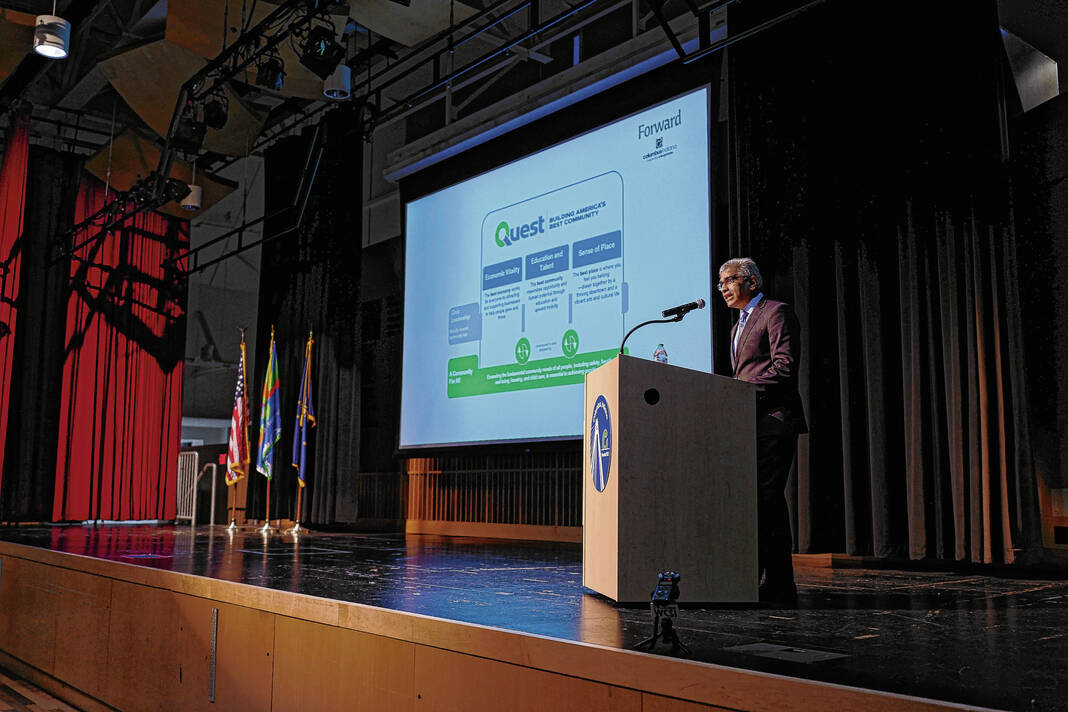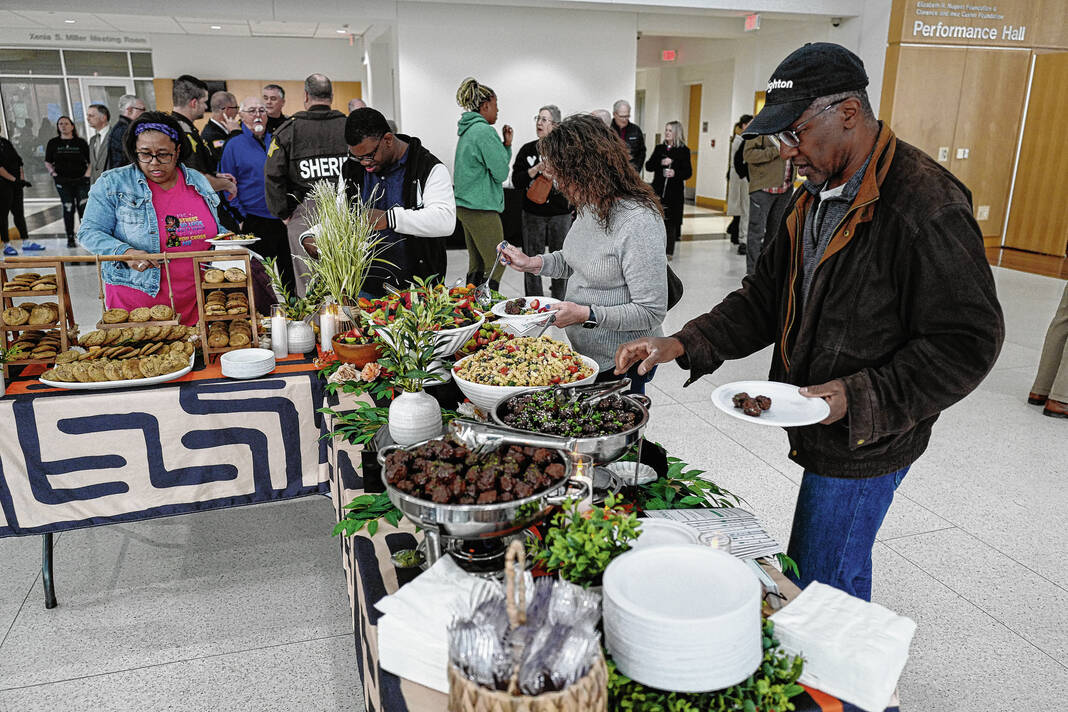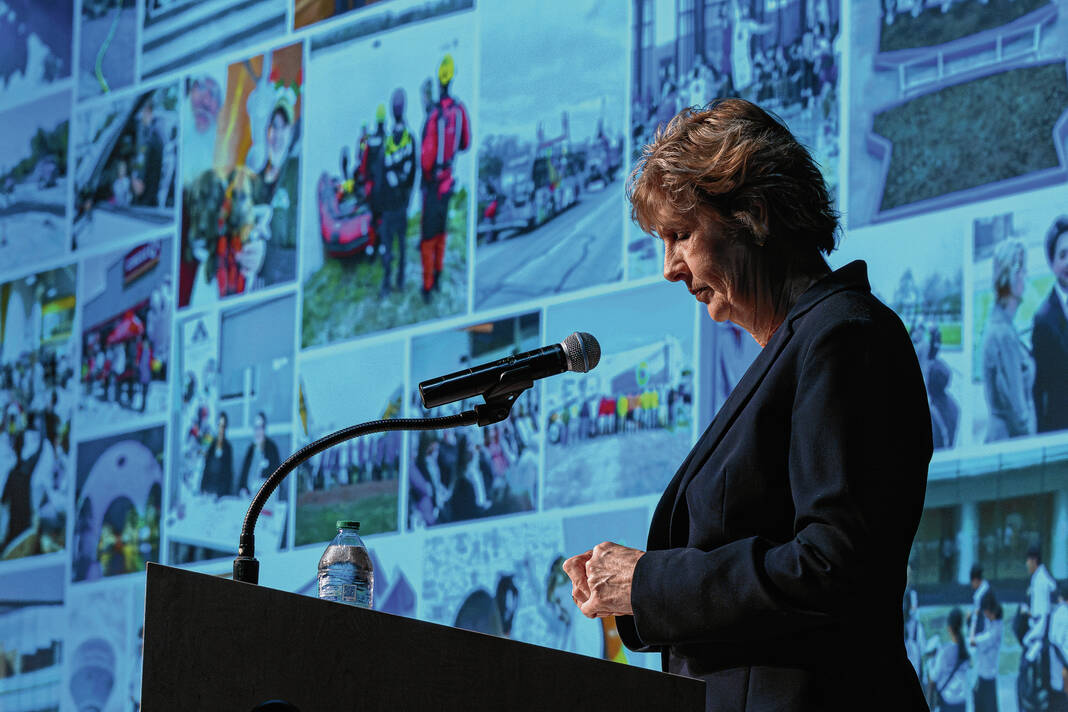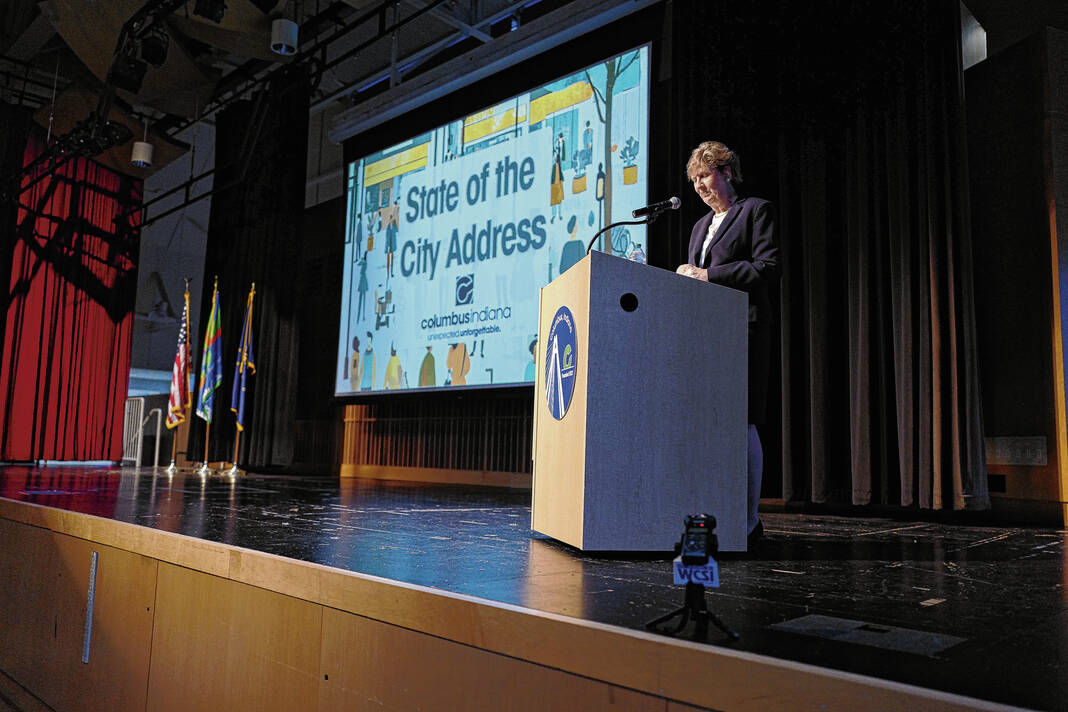
Mike Wolanin | The Republic Columbus Mayor Mary Ferdon delivers the State of the City address at The Commons in Columbus, Ind., Tuesday, Feb. 10, 2026.
Columbus Mayor Mary Ferdon delivered her remarks on the state of the city for the third time Tuesday night, capping an eventful 2025 and looking towards 2026 as her first term passes the halfway mark.
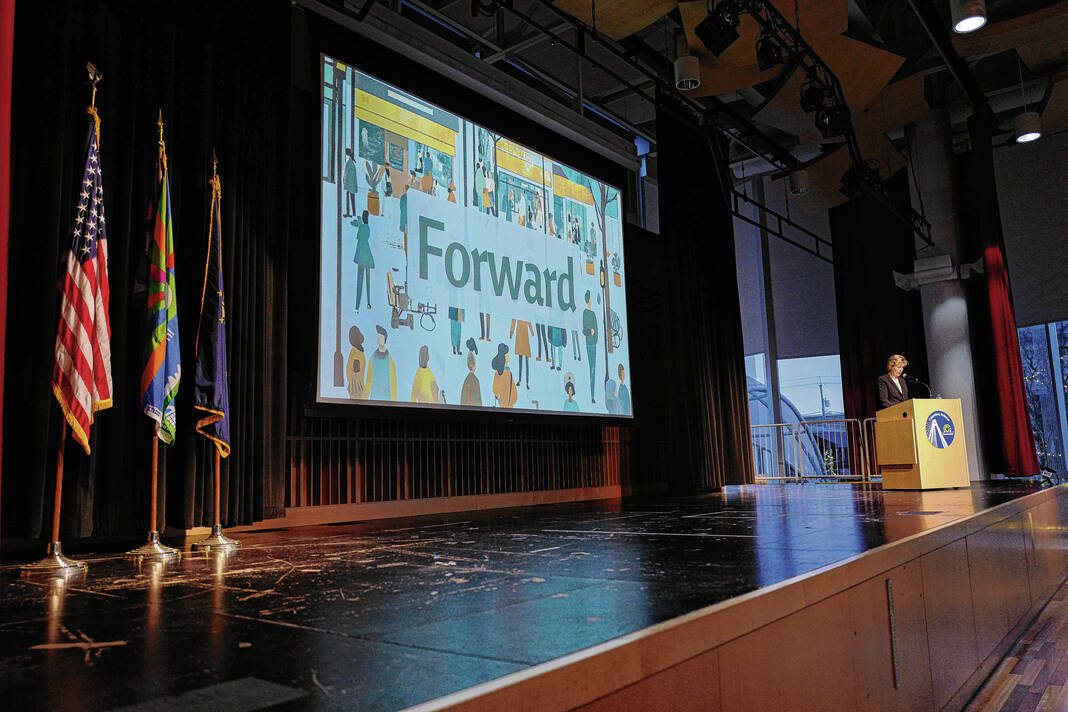
The state of the city is strong, the mayor said standing at a lectern inside The Commons, and she marked the evening’s theme as looking “forward” to what’s to come for the community on housing, homelessness, economic development, redevelopment and transportation, among other areas.
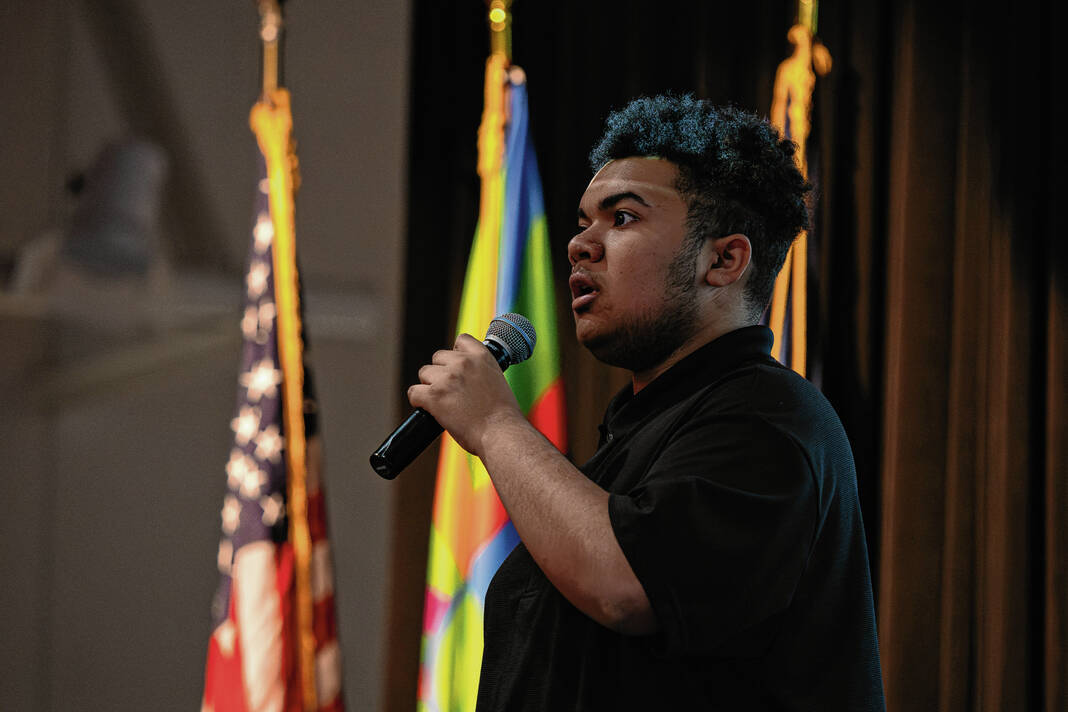
The mayor began after a short introduction from City Council President Frank Miller, a rendition of the national anthem by CSA New Tech Sophomore Alaijah Hill, and a welcome to council members.
“Our word of choice is forward,” the mayor said. “It seems appropriate with the wide and varied list of projects and initiatives we’ve launched or are in the planning stages of, many of which we will discuss tonight.”
Some of those are the city’s new downtown strategic plan, Columbus Downtown 2030, plans for a new shelter for Columbus Animal Care Services, the homelessness initiative in partnership with United of Bartholomew County, the riverfront project, housing initiatives, a ColumBUS revamp and a new visioning process for the year 2050 in Quest.
Public safety, housing, homelessness
The mayor at the top of her speech centered on public safety, mentioning how the Columbus Police Department earlier this year received its reaccreditation through the Commission on Accreditation for Law Enforcement Agencies (CALEA).
Ferdon called the designation “the goal standard for law enforcement” and said only 5% of law enforcement agencies in the country are accredited through CALEA.
On the housing front, the first year of Ferdon’s term saw the completion of the city’s first housing study in more than a decade, which laid the foundation for continued housing growth, the mayor said.
In the past year, there have been a number of notable housing developments that continued making their way through the city government process. They include two affordable housing projects in the first phase of the Haw Creek Meadows project (64 workforce units) and Flats on 14th (110-units), along with the 120-unit mixed-use development at 11th and Washington streets, 52 market-rate units in front of Cummins parking garage along Washington Street, plus up to 250 new single-family homes on the westside near what will be BCSC’s new elementary school, Maple Grove.
Two specific outgrowths of the housing study launched in 2025: Providing Affordable Construction & Transformation (PACT) and the expanded Columbus Housing Improvement Program, called CHIP 2.0.
PACT uses federal funding to incentivize small local developers to build single-family homes on in-fill lots at final selling prices less than $300,000.
Two homes were completed through PACT in 2025 and another eight have been approved for funding through the program, which the city has invested $460,000 into through 2026.
CHIP 2.0 is an expansion of the separate CHIP program, and is aimed at supporting local homeownership for low- to moderate-income families in need of essential home improvements like roof repairs, HVAC fixes, or ADA modifications.
Through CHIP 2.0, 28 rental units were substantially rehabbed, preserving “much-needed affordable housing,” the mayor said.
But the biggest housing success of all in 2025 was the community-wide effort to relocate 100 households from the now-demolished Villas Apartment after its contract with the U.S. Department of Housing and Urban Development that subsidized rent for its residents was set to expire, Ferdon said.
In partnership with United Way of Bartholomew County, and with support from city council, Ferdon’s administration helped launch a homelessness initiative in 2024, supplied by $500,000 in federal American Rescue Plan (ARP) funding.
The $500,000 was directed towards funding four homelessness-specific initiatives, including a rental assistance and homeless response team, supportive housing, eviction prevention and a street social worker program.
United Way has worked with 328 individuals experiencing homelessness, and been able to house 136 of those and help 203 get jobs to increase their income.
“237 of those individuals were able to get medical insurance, which as we all know, is a key element of stability,” the mayor said. “And perhaps the most critical, they helped prevent 192 from losing their homes to begin with – which stabilizes families and prevents the trauma of losing your home.”
The mayor emphasized the multi-faceted complexity of homelessness, but said its something her administration will continue to prioritize addressing.
Columbus Downtown 2030, other city initiatives
Columbus Downtown 2030, the city’s new strategic plan for downtown, laid out a potential blueprint for what the future may look like, garnering 61 recommendations through the work of consultant Sasaki and community input.
Three action teams, made up of 40 volunteers, are focused on activating Washington, Fourth and Fifth Streets; creating a strong connection to Mill Race Park; boosting pedestrian experiences; increasing housing downtown; and redeveloping downtown sites including the Crump and former Sears Building.
The city is putting a focus on short-term implementation to show the results of the plan are in use. One example is the Sears Indoor Winter Market, which will end its pilot-run of dates on Saturday.
The mayor also touched on the effort to bring about a new, much-needed facility for Columbus Animal Care Services to be dubbed the Wendy H. Elwood Animal Care Services Center. Ground-breaking will take place on the new facility in the spring.
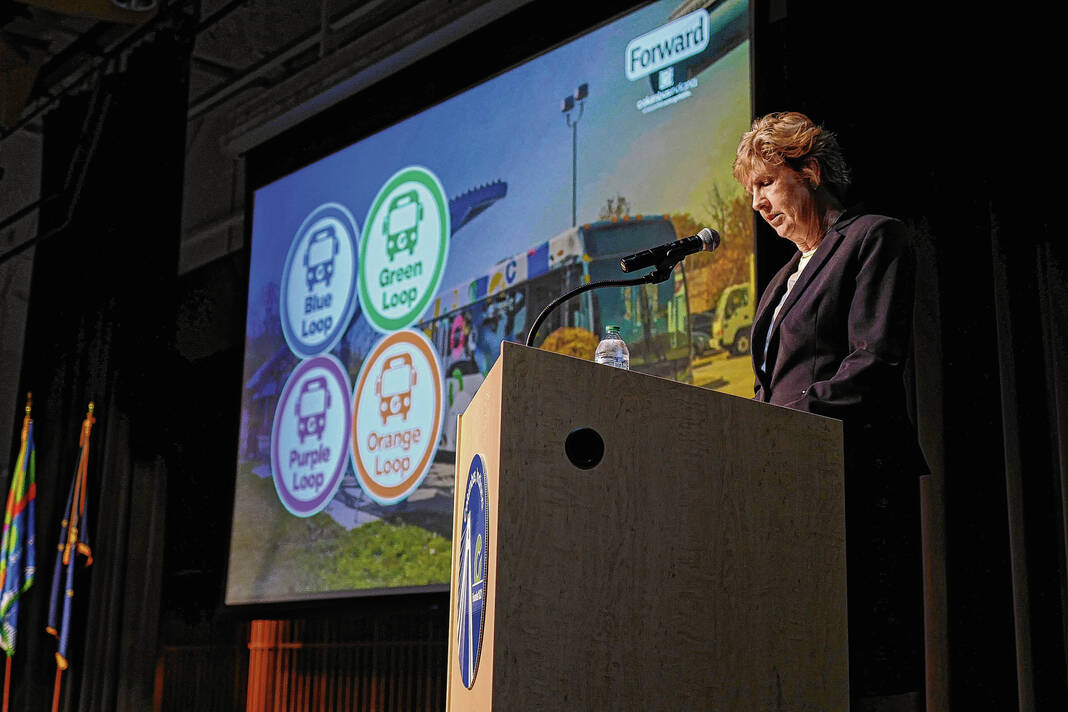
Ferdon during her first state of the city talked about how the city’s transit system will get a refresh, and that will officially be rolled out in March as the ColumBUS system transitions from routes to a color-coded loop system, relocates several transit stations and makes changes to existing routes.
This includes connecting Walesboro and Taylorsville to the ColumBUS network starting on April 6.
In addition, the mayor said the city this summer will start piloting Demand Response micro-transit, “our version of city-run rideshare, providing a fee-based point-to-point service to connect customers and communities.”
Last year also saw the biggest progress to date on the city’s riverfront project, which had been delayed because of rising material costs, regulatory permitting, and a slimming down of the project scope.
The mayor talked about steady progress the project has made in recent months, including the stabilization and relandscaping of the banks, removal of trees, and the start of a connection to the People Trail from Mill Race Park to Water Street, along with the construction of a plaza west of Upland. The dangerous low-head dam is expected to be removed sometime this fall.
The mayor also talked about ongoing city projects including the relocation of the department of public works to a new facility on Arcadia Drive, updates to master plans at Donner Center and Mill Race Park and a project that hopes to slow traffic and improve safety for pedestrians along Second Street.
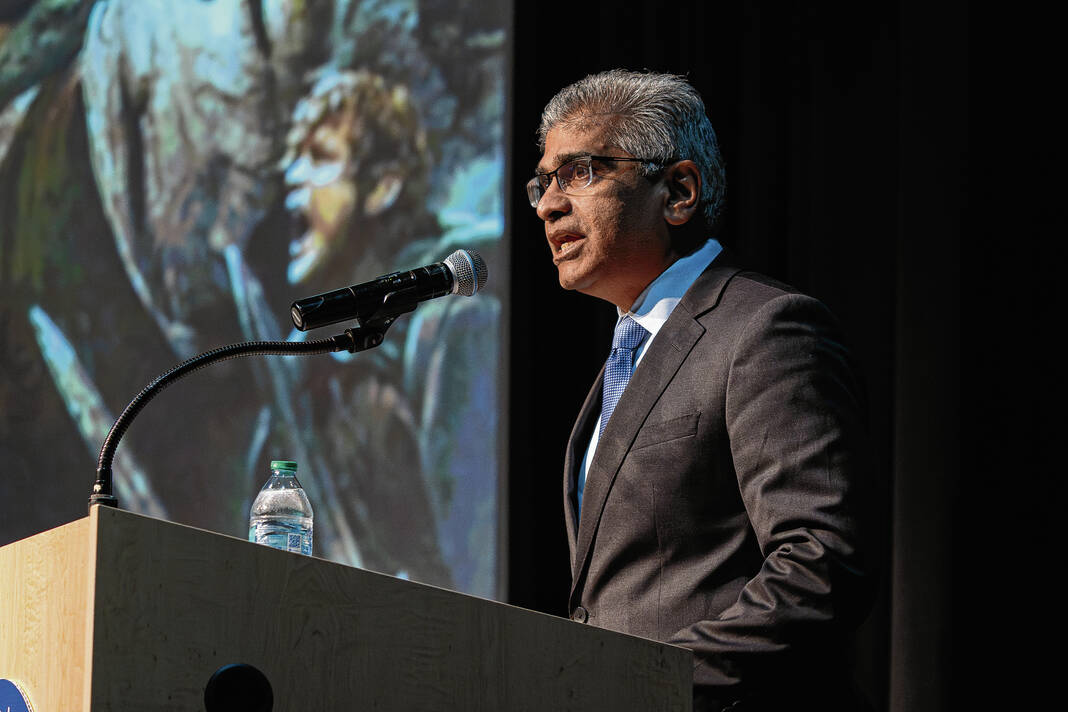
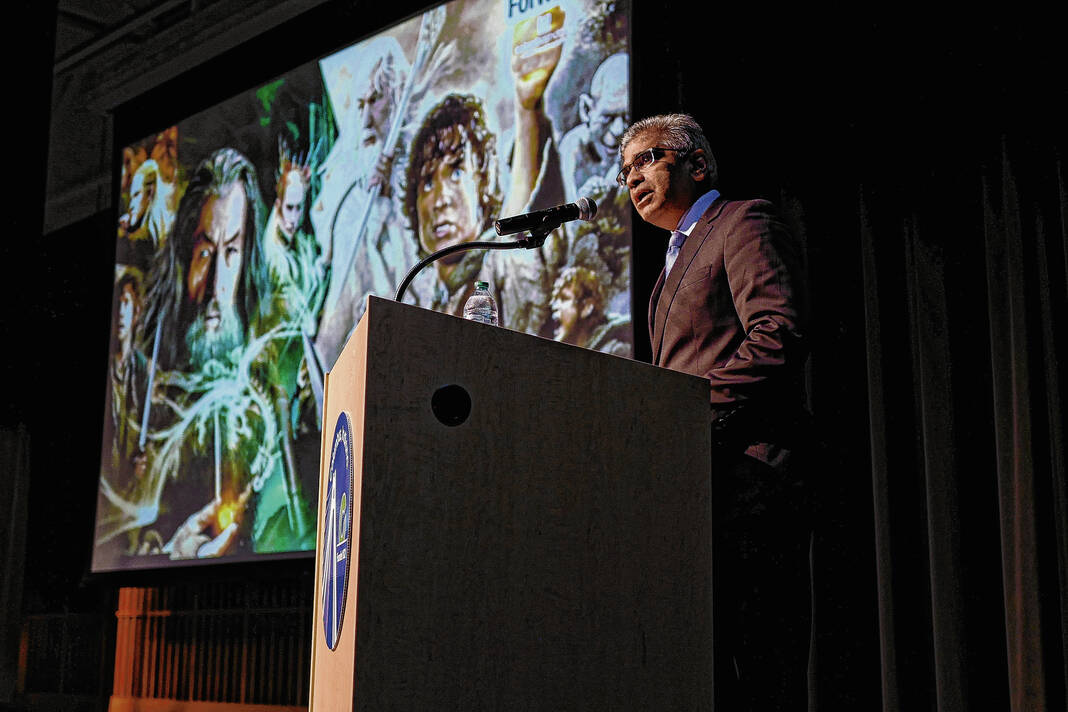
After Srikanth Padmanabhan, a retired Cummins executive and community leader, gave an overview of Quest, a visioning process that looks to adopt a shared vision of the future of Columbus out to 2050, the mayor left off by recognizing the United States’ semiquincentennial — or 250th birthday this July by invoking the founders.
“What we are commemorating, the government created 250 years ago, was in President George Washington’s words ‘A great experiment,’” Ferdon said. “Self governance was new and untried, and our founders understood the fragility of trying to piece together diverse views; to allow freedom for the individual without impinging on rights of others.”
“I believe the people of Columbus strive to uphold the best ideals of our nation and that will always be our primary strength.”