Aaron Miller
Over the past few weeks, thousands of high school students across Indiana have walked out of class to protest ICE and the violent deaths of Alex Pretti and Renee Good at the hands of government agents. I, for one, am glad to see young people express their opinions.
There has been too much apathy in the democratic process. Too many people have tuned out, tired of the partisan fighting and the cynicism. Voter turnout, especially among young people, is traditionally low. So I am encouraged when young people take a stand on a political issue. They are trying to make the world a better place. Even if I do not happen to agree with protesting students on a particular issue, I am still encouraged to see students take their rights and responsibilities as citizens seriously. Protesting and engaging in the democratic process is certainly a far better choice of activity than what some young people choose to do.
They are angry and frustrated. Many are not old enough to vote. They don’t know what else to do than to speak up and say something. And make sure we pay attention.
Protesting is an American tradition. Popular protests have been a part of the American democratic process since before the beginning of our nation. And young people are often dissatisfied with how the older folks have made a mess of things. They are eager to show us a better path. I say more power to them. Young protesters have led to important changes in our nation’s history, most notably on issues like Civil Rights, the environment, women’s rights, and against the war in Vietnam. It’s also no surprise that young people are rebelling against the older generations and the way we have done things so far. That also seems to be an American tradition.
We adults haven’t exactly created a utopia in recent years. Whether it is the environment, the economy, the dysfunctional political climate, government spending, violence, or a myriad of other issues, the grownups in the room have managed to make a fine mess of things.
These high school students are about to graduate into adulthood. They are going to have to confront the problems we’ve created. I am fine if they want to speak up now and draw attention to issues that are important to them.
In the landmark 1969 Supreme Court decision Tinker v. Des Moines Independent Community School District, the court found “It can hardly be argued that either students or teachers shed their constitutional rights to freedom of speech or expression at the schoolhouse gate.” In other words, students are entitled to the same freedoms that adults enjoy under the First Amendment. The court found that school administrators could not ban or censor students’ expressions or speech just because they did not agree with the students or wanted to avoid a spectacle or negative attention. Administrators could, however, prohibit student protests and expressions if they “materially and substantially interfere with the requirements of appropriate discipline in the operation of the school.” This can make student protests complicated for teachers, administrators, and parents.
Without a doubt, for many of these students, there will be consequences for their actions. Some schools have issued warnings to potential students and detailed what those consequences might be. That’s part of the democratic process, too. Our rights don’t guarantee that we can say whatever we want without consequences. So if a student is willing to walk out and protest, they have to consider those consequences. That’s part of the calculation.
There are many times that I have said something and wish that I hadn’t and other times when I kept my mouth shut and wish that I could go back and say something. Learning how to make that decision and figuring out when and where to take a stand on issues you care about is a part of growing up.
It seems to me that the crowd that is fearful that schools are ideologically indoctrinating students is the same group that are upset that students are showing independent thought and are willing to express themselves.
We want schools to teach students civics, history, and critical thinking skills. Well, let’s let them learn about these things in real life and in real time. They will probably remember lessons learned from a peaceful protest better than listening to a lecture from a dusty history professor like me.
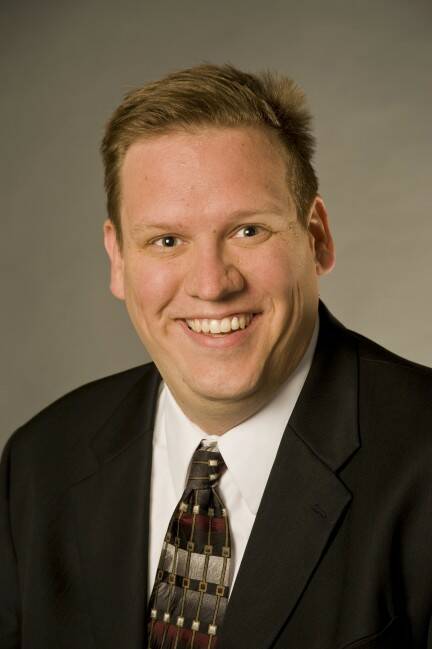
Aaron Miller is a community columnist for The Republic. Send comments to editorial@therepublic.com.