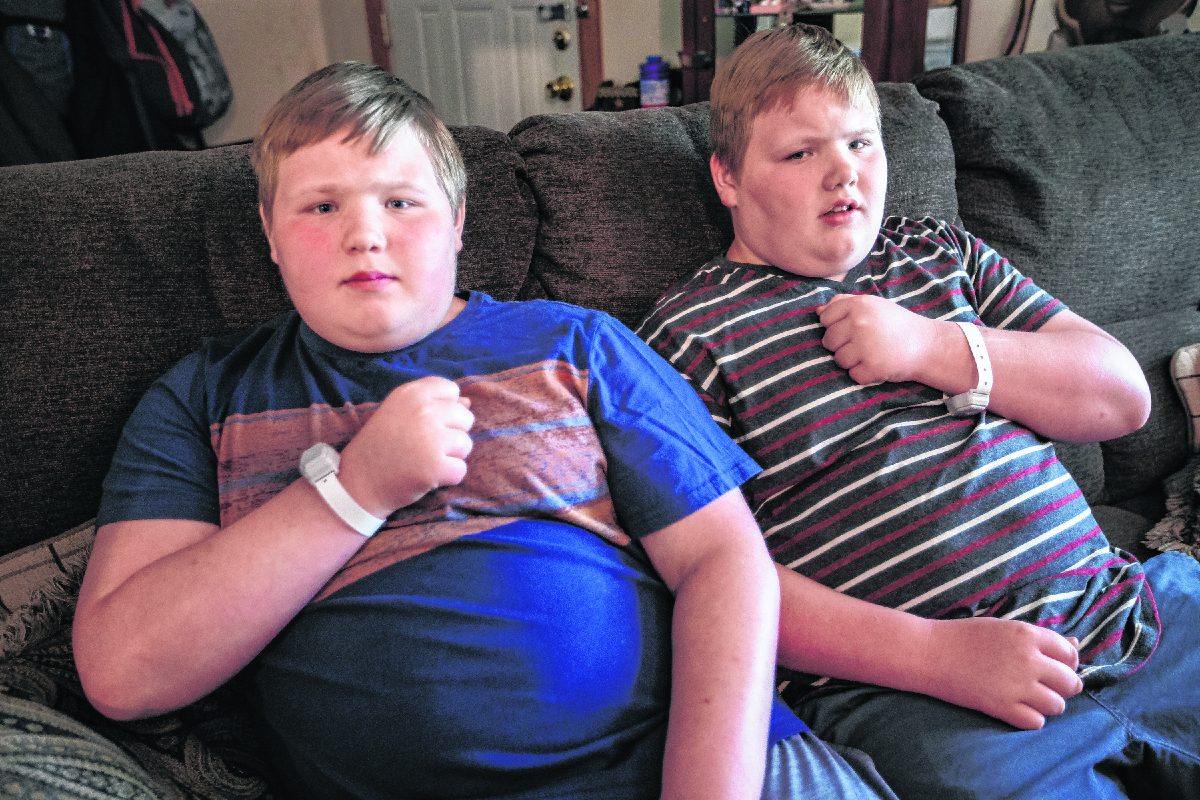
Families of children and adults who have autism, Alzheimer’s disease or Down syndrome deal with a variety of health concerns on a daily basis about their loved ones. But one issue the families face that people may not be aware of is the tendency of these individuals to wander off and become lost.
When that happens, it puts their safety at risk.
Thankfully, there is a local effort to help with such a situation. A branch of the Bartholomew County Sheriff’s Department, called TRIAD, has started a Project Lifesaver program to assist in finding individuals prone to wandering off from home.
Project Lifesaver is a 20-year-old national program that uses radio frequency to pinpoint a lost person’s location.
TRIAD used a $29,000 grant from the Custer-Nugent Foundation to purchase 50 transmitters that are attached to bracelets worn on a person’s wrist. Receivers that are stored at the sheriff’s and fire departments can be used to track the missing persons.
This program is a wonderful new resource for families who worry about loved ones wandering off and potentially getting into dangerous situations.
We applaud the sheriff’s department for pursuing this program and making it available to local residents.