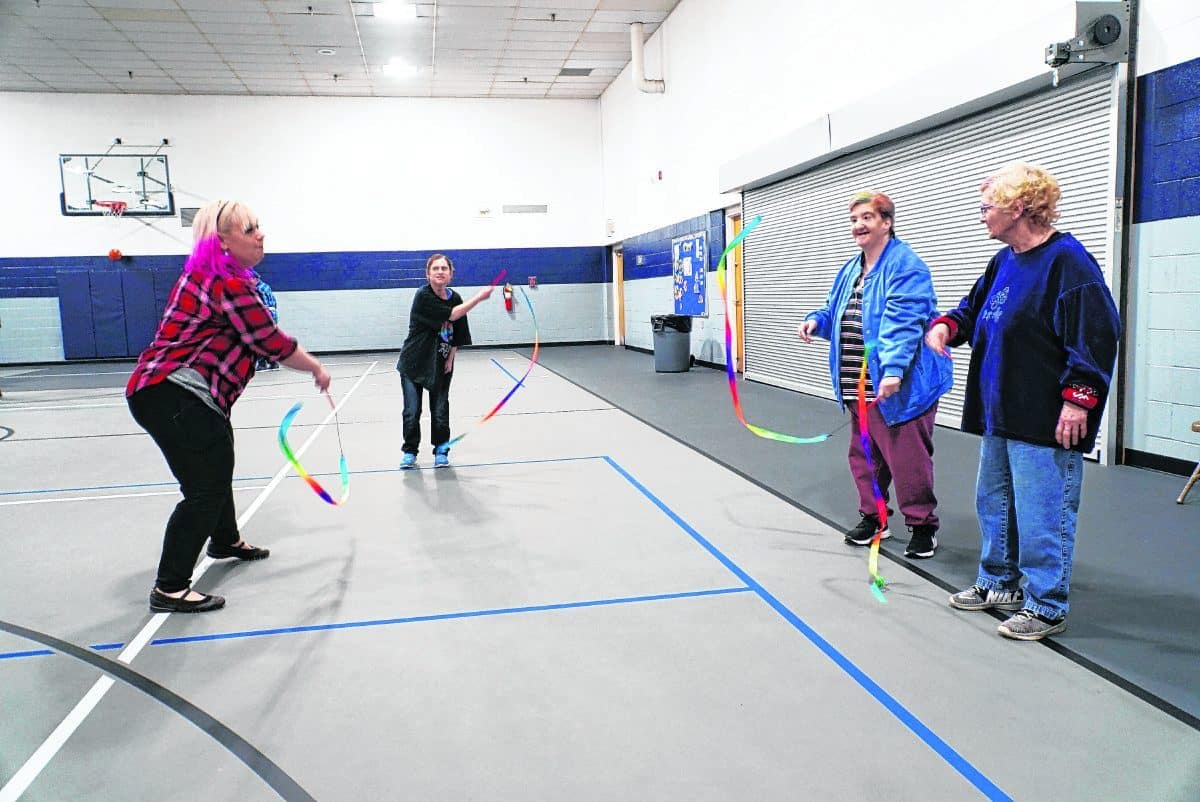
A Columbus-based nonprofit helping individuals with mental, physical and emotional disabilities is bracing for tough financial times ahead.
Developmental Services Inc. Chief Executive Officer Shane Burton used those words to describe the challenges his regional organization is facing.
The nonprofit is finding it increasingly difficult to hire and retain direct service providers — employees who provide the direct care and support directly, Burton said.
In Indiana, those caregivers have an average base salary of $11.21 per hour, about the same amount starting workers make at fast food restaurants or large box stores, Burton said.
[sc:text-divider text-divider-title=”Story continues below gallery” ]
The top fear among agencies such as DSI is that if unsuitable persons are hired, it increases the possibility of abuse and neglect of Indiana’s most vulnerable residents, Burton said. But that fear doesn’t change the fact that the agency, over its regional coverage area, needs another 110 employees just to bring staffing levels back to normal, Burton said.
DSI will have to look for and expand on all sources of funding, DSI Chief Operating Officer Mel Fields said.
A number of officials in some areas outside Bartholomew County that are served by DSI don’t understand the financial limitations, Fields said.
“But if we are able to get additional dollars through grants or county dollars, that’s really big to us,” Fields said.
State funding challenges
About 85% of DSI programming is funded by the Indiana Medicaid program. A few years ago, state lawmakers increased funding for services to disabled children, but most of that money was earmarked for independent therapists, Burton said.
For the administrative side of DSI, the lawmakers set aside a one-time bonus of $6,000. Apart from that, administrators are operating with the same amount of money they had in 2010, Burton said.
Meanwhile, the cost of insurance, building maintenance, facilities, utilities, health insurance, benefits and other administrative expenses have continued to rise over the last decade, Burton said. There’s also a state mandate that DSI clients spend much of their time out in their communities, which is more costly than providing in-house services, he added.
A few years ago, Medicaid provided nonprofits such as DSI a 5% rate rate increase. It came with the stipulation that most of the money be provided to raise the pay of direct service providers. While Burton said his organization gave all of the money to those providers, the salary boost did nothing to increase the staff numbers.
The 2019 biennial budget approved in the Indiana General Assembly last year contained no additional money for DSI, Burton said. That included a request for more funding for Vocational Rehabilitation Services, which helps people with disabilities obtain or retain employment. About 500 families served by DSI request those types of services, Burton said.
Other challenges
It’s not only declining state dollars that are causing problems, according to DSI staff members.
Revenue from some important local funding streams dropped 60% this year, Burton said. Although he preferred not to identify what groups reduced their financial support, he did say funding from the United Way dropped from $100,000 five years ago to nothing for 2020.
“We have a lot of respect for Developmental Services Inc., and believe they provide a valuable service to the community,” said United Way of Bartholomew County executive director Mark Stewart.
But each certified United Way agency is scored by a committee of 50 community members with a criteria that includes number of people served, outcomes achieved, community need, and level of community collaboration, Stewart said.
The United Way committee’s score that resulted in a drop in funding for DSI was largely due to limited financial resources, as well as intensive competition among social service agencies, he said.
Losing that funding has left the DSI no alternative but to start decreasing expenses, Burton said. One cost-cutting effort has been to join what is called the Strategic Indiana Provider Network, which involves 10 agencies sharing as many resources as possible for bulk purchasing.
But since that effort alone won’t even come close to bridging financial gaps, the next step for Indiana nonprofits that serve the disabled may be mergers and acquisitions, Burton said.
Burton said DSI officials are not bitter over the financial challenges.
He praised the state’s Intellectual and Developmental Disabilities Task Force that advanced 26 of 34 recommendations suggested in 2018.
“Despite all this talk about a $2 billion state surplus, we realize the state has a budget and, like all of us, needs to prioritize,” Burton said. “They are also pushing for things that, from a philosophical standpoint, I am 100% on board with.”
Fields also expressed his gratitude to state lawmakers and Indiana’s Medicaid program.
“The state does a lot of great things for us, but in social services, we will never have enough to do everything we want to do,” Fields added.
Burton says he also wants to maintain realistic expectations. He estimates that DSI would need at least $4 million to have an impact on retaining staff — an amount that is unrealistic to expect from the state, Burton said.
So the best that DSI can hope for is that Medicaid officials take unspent funds and allocate them as one-time financial boosts to agencies, Fields said.
Finding support
Although Burton says it’s important to acknowledge fiscal challenges, he feels it’s not in the best interest of DSI to focus on diminishing or disappearing revenue streams.
“We’d rather focus on how grateful we are for whatever support we receive,” he said.
Organizations that have recently provided DSI with grants include the Columbus Regional Health Foundation and the Cummins Foundation, as well as the Heritage Fund — the Community Foundation of Bartholomew County.
But the most significant contributor to DSI this year is Bartholomew County government, Burton said. Last year, the county provided the organization $110,000 to provide services to disabled local residents, according to the county auditor’s office.
From Fields’ perspective, the best path is to create more partnerships and relationships that bring in more local residents and groups with gifts and skills that they can share with clients.
Burton says it’s also important that administrators continue to establish positive relationships with employees, in order to increase morale and reduce turnover.
[sc:pullout-title pullout-title=”Timeline” ][sc:pullout-text-begin]
Developmental Services Inc. has grown to be the largest non-profit in Indiana that provides services for individuals with mental, physical and emotional disabilities.
1975 – United Developmental Services, inc. and Opportunity Center merged to form Developmental Services, Inc. (DSI). he nonprofit initially served 390 clients in Bartholomew, Jackson, Jennings, Decatur and Brown counties.
1980 – DSI opened the Comprehensive Training Center with a mix of public and private funds.
1980 – Construction was started for Decatur Training Center of Highway 421 in Greensburg.
1984 – Jeff/Switzerland Arc merged with DSI and became known as Sandstone Industries in Madison.
1984 – Jennings Rehabilitation Industries moved to State Road 7 in Scipio.
2008 – DSI acquired Raintree Programs and expanded into Henry County.
2012 – DSI acquired Spectrum Industries and expanded into Vigo County.
2017 – DSI acquired Four Rivers and expanded into Green, Sullivan, Daviess and Martin counties.
With 850 employees, the Columbus-based organization operates in 48 counties, mostly in the southern half of the state. Currently, DSI has 10 group homes and six complexes of affordable housing. With a budget of $30 million, DSI serves as many as 3,300 individuals.
[sc:pullout-text-end][sc:pullout-title pullout-title=”DSI in Bartholomew County ” ][sc:pullout-text-begin]
Developmental Services Inc. is headquartered at 2920 10th St. in Columbus.
With 275 employees in the Columbus area, the budget for DSI’s Bartholomew County operations was $6.2 million during fiscal year 2019.
It is projected that 518 clients in Bartholomew County will be served during the current fiscal year for individual support services, education and enrichment, respite and transportation.
[sc:pullout-text-end]