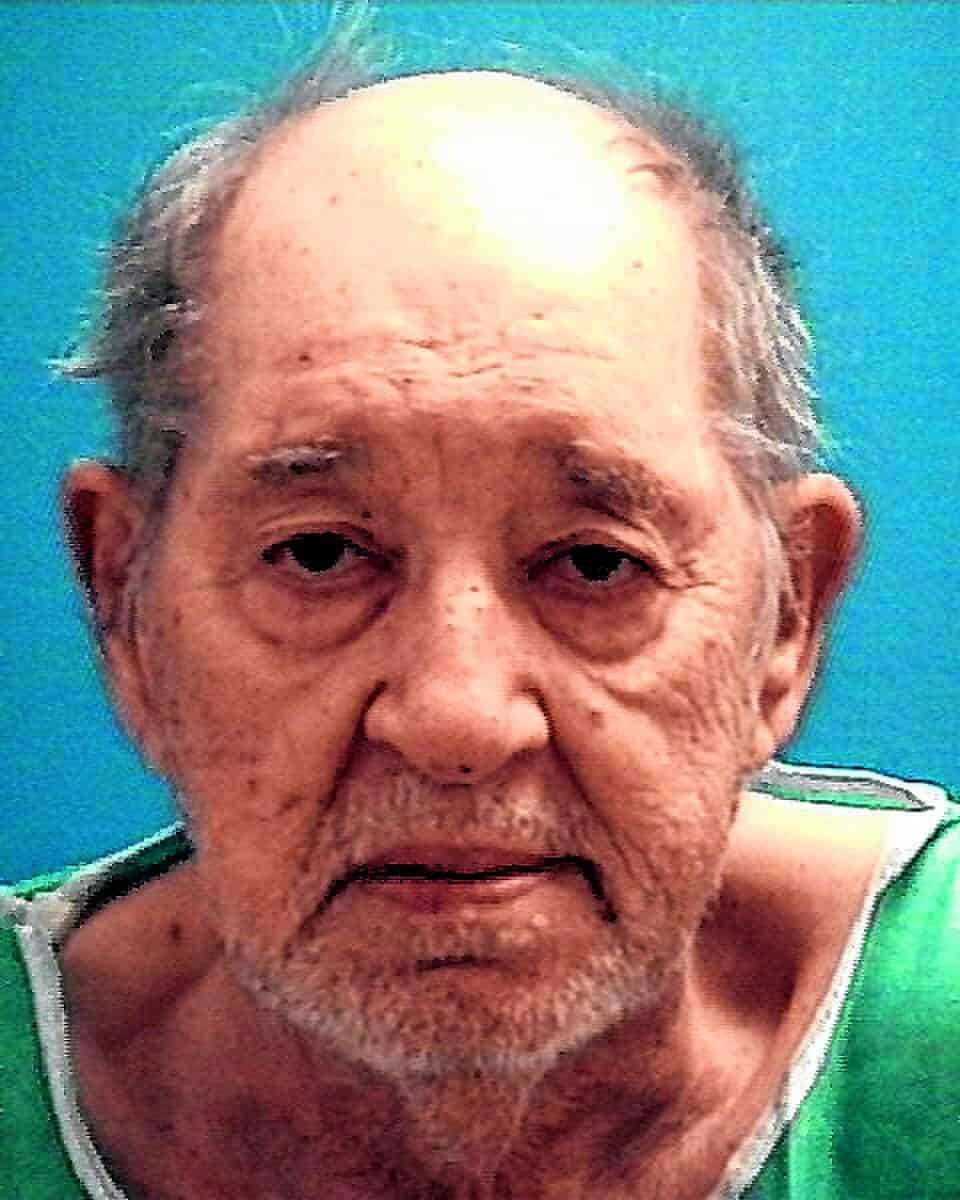
HOPE — A Hope man accused of killing his son last winter has died of apparent natural causes.
James T. “Slim” Mee, 78, died Saturday at his home surrounded by loved ones, according to his obituary.
Mee was charged with stabbing his son, Charles A. Mee, 50, in the neck during the early morning hours of Jan. 7, as well as causing blunt force trauma to the victim’s head, according to a probable cause affidavit written by Bartholomew County Sheriff’s Dept. Detective Terrance Holderness.
Charles Mee died a short time after being taken to Columbus Regional Hospital, and his father was formally charged with murder Jan. 13, online court documents confirm.
During the initial investigation, family members told investigators James Mee had been suffering from dementia and paranoia that was directed, in particular, at his wife, Barbara Mee, and the victim, Holderness wrote.
Although James Mee was also initially accused of inflicting a non-life threatening head injury upon his wife, no charges were filed in relation to that incident, court documents state.
“James Mee told (Sheriff’s Deputy Kevin) Abner that he and his wife had been held hostage for 3-4 days by a male and female, but could not otherwise identify them,” Holderness stated in his affidavit.
Four days after Mee was formally charged with murder, Bartholomew Circuit Court Judge Kelly Benjamin first attempted to conduct the Jan. 17 initial hearing via a teleconference between the jail and the courtroom.
But while sitting in a jail cubicle, Mee appeared confused about where Benjamin’s voice was coming from. Although a nurse repeated the judge’s questions, the defendant responded with a murmur that could not be understood in the courtroom.
That prompted Benjamin to bring Mee to the courthouse for a face-to-face initial hearing. In the hallway outside the courtroom, Mee’s court-appointed defender, Chris Monroe, explained to his wheelchair-bound client that he was accused of killing his son.
“He could not comprehend what was going on during the hearing, nor was he always aware that his son was dead,” Monroe said Monday.
After denying he was responsible for the homicide multiple times to his attorney, Mee broke out in tears outside the courtroom and said “I killed my son.”
But minutes later inside the courtroom, after the judge explained the specific charges, Mee appeared not to understand what the judge had just said. Instead, he responded by asking Benjamin why he was being held in custody.
Mee, a Vietnam War veteran, did tell the court he had been prescribed medication, but didn’t know what type of drug it was. The defendant also told the judge that he had stopped taking the prescribed drug “long ago, because it didn’t have any effect.”
After a request was approved that Mee be housed with the Indiana Department. of Correction while awaiting trial, Mee was eventually taken to Wabash Valley Correctional Facility, north of Vincennes, Monroe said.
While at the Sullivan County facility, the Hope man’s physical condition began to deteriorate “at a dramatic rate,” Monroe said. In the last month of his life, Mee had become non-verbal and essentially bed-ridden, Monroe said.
After a competency evaluation was filed on June 3 by Indianapolis psychiatrist Dr. George Parker, it was administrators at Wabash Valley who concluded the defendant’s condition was terminal, and requested that Mee be allowed to spend his final days in his own home, Monroe said.
Bartholomew County prosecutor Bill Nash said he didn’t want to comment on Mee’s medical condition unless he could be certain he was not violating federal medical privacy laws.
However, Nash did talk with family members and court officials after Wabash Valley requested Mee’s release, Monroe said. A motion to release Mee was both filed and approved June 18, he said.
The court order said Mee was to be released to a family member or an ambulance service arranged by Our Hospice of South Central Indiana, court records state.
When asked if he was told the cause of death, Monroe said his client suffered from a multitude of serious medical issues. However, the attorney said he was not given an exact cause of death.