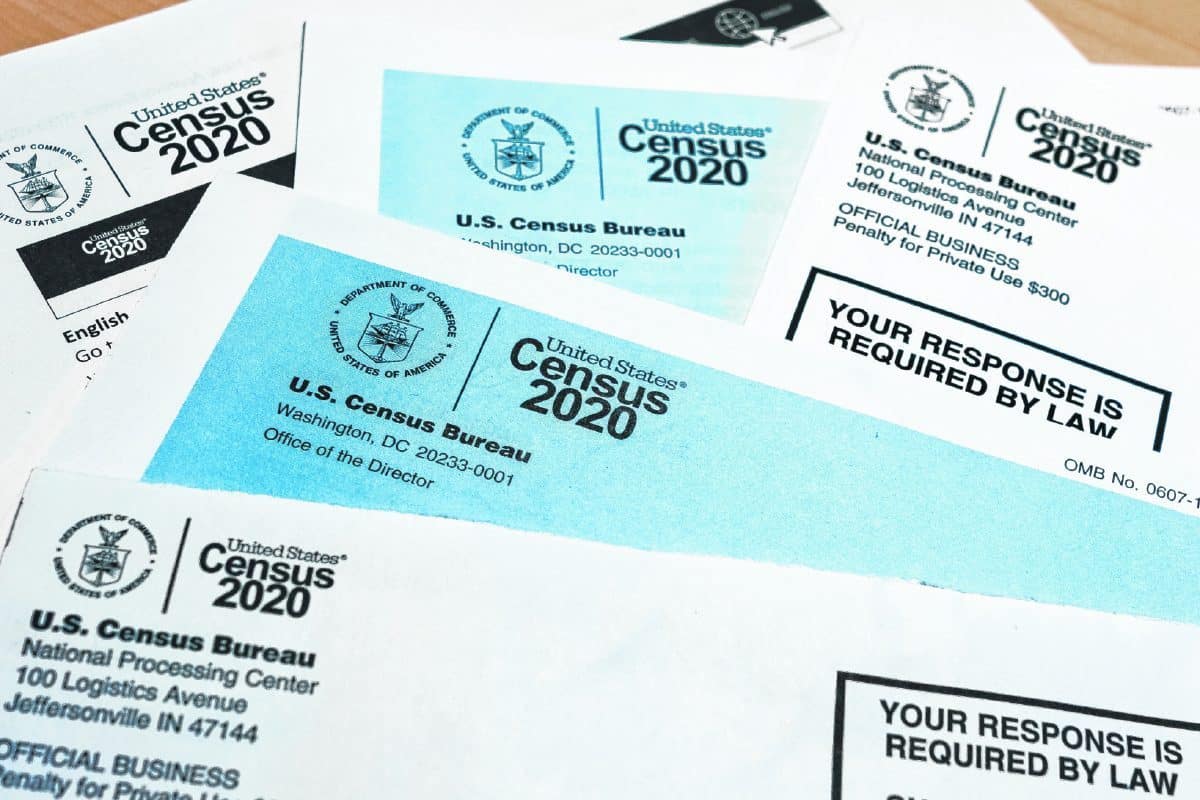
The response rate to the 2020 U.S. Census in some of Bartholomew County’s more economically unstable areas is lagging behind where it was a decade ago, as local officials attempt to get as many people as possible to participate despite pandemic disruptions.
The U.S. Census is taken every 10 years to determine representation in Congress. It also determined how some $675 billion in federal money is allocated to states and local communities for education, Medicaid, food assistance, roads, playgrounds, after-school programs, low-income housing, among many other initiatives, according to the U.S. Census Bureau.
Indiana receives around $18 billion in federal funding each year based on population data from the U.S. Census Bureau — roughly $2,710 per person.
That funding, however, could change depending on how many people respond to the census, said Robin Hilber, assistant director of community development for the city of Columbus and chair of the Columbus 2020 Census Complete Count Committee.
[sc:text-divider text-divider-title=”Story continues below gallery” ]
So far, not as many people have responded as local officials would like, Hilber said.
As of this past week, roughly half of the county’s census tracts were reporting a drop in their response rates compared to 2010, although the overall response rate within the Columbus city limits was slightly higher than 10 years ago.
The largest decrease so far has been in Lincoln-Central Neighborhood area, where 55% of households had responded to the census online, by phone or by mail as of Thursday, compared to 62.5% in 2010, according to the U.S. Census Bureau.
By comparison, just over 86% of households in the area in the Parkside area around Rocky Ford Road and River Road had responded as of Thursday.
Overall, 70.2% of Bartholomew County households had responded to the U.S. Census — 24th highest out of Indiana’s 92 counties, but down slightly from 70.5% in 2010, according to the U.S. Census Bureau. A total of 71.9% of households in Columbus had responded over as of Thursday, up slightly from 71.5% in 2010.
“Unfortunately, we’re not where we had hoped to be,” Hilber said. “…We’ve actually had a bit of an increase in the response rate in the last couple of months, but not as dramatic as I would like to see it.”
Earlier this year, the U.S. Census Bureau temporarily suspended field operations due to the spread of COVID-19 in the United States and pushed back wrapping up field operations for the once-a-decade head count from the end of July to the end of October.
However, the U.S. Census Bureau announced plans two weeks ago to cut short its schedule for data collection for the census by a month after legislation that would have extended the deadlines stalled in Congress, The Associated Press reported.
The deadline for census takers to knock on doors to follow up with people who haven’t responded to the census questionnaires mailed out earlier this year is now Sept. 30, instead of Oct. 31.
Census experts, academics and civil rights activists worry the sped-up count could hurt its thoroughness and produce inaccurate data, miss hard-to-count communities, including minorities and immigrants, which could have lasting effects through the next decade.
The Census Bureau said it decided to cut short its data collection schedule so it can meet the end-of-the-year deadline. The Census Bureau has until Dec. 31 to turn in numbers used for redrawing congressional districts.
As of Thursday, 36.4% of U.S. households and 32.2% of Indiana households hadn’t yet responded. Some of the 500,000 door knockers hired by the Census Bureau have begun visiting those households.
An analysis by the CUNY Center for Urban Research shows that 10 states currently were trailing their 2010 self-response rates by 5 to 10 percentage points as of two weeks, meaning they will require a greater share of door-knocking than they did a decade ago. Those states are Alaska, Montana, New Mexico, New York, North Carolina, North Dakota, Rhode Island, South Carolina, Texas and Wyoming.
Questions on the census questionnaire including a range of demographics questions such as the number of people living in a given household, their gender and sex, race, ethnicity, age, among other questions. The questionnaire can be filled out online at my2020census.gov or over the phone at 844-330-2020. There are no questions about immigration status on the questionnaire, Tim Swarens, media specialist at the U.S. Census Bureau, told The Republic in a previous interview.
All personally identifying information provided to U.S. census workers is confidential, and every census worker takes an oath of office to not divulge any such information collected from participants, Swarens said.
“If they were to breach that (oath), they could face significant prison time and/or a fine,” he said, adding that “there will not be a citizenship question on the 2020 census.”
But with roughly a month and a half before the deadline to respond to the census, Hilber and other local officials are making a final push to get as many local residents to participate in the census as possible.
“We need to get as close to a 100% response rate as possible,” Hilber said. “…(Census) Tracts 101 (the Lincoln-Central Neighborhood district) and 108 (in east Columbus) are the least financially stable and have very low response rates to date. Unfortunately, those who will be most impacted if we fall short of the 100% response rate.”
As of Thursday, those two census tracts had the lowest and third-lowest response rates in the county.
[sc:pullout-title pullout-title=”Where to learn more” ][sc:pullout-text-begin]
Visit 2020census.gov/en/ways-to-respond.html for more information on how to respond to the 2020 U.S. Census.
[sc:pullout-text-end]