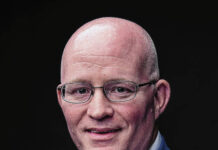
NORTH VERNON — An era in the Jennings County community ended with the passing of William Herbert “Bill” Reichenbach, but there is a promise that his legacy will last for decades.
Reichenbach, known for his work in local conservation and developing the Park Theatre Civic Center, died at 10:20 a.m. on Oct. 17.
“He was a very unique man who worked hard for his community,” North Vernon Mayor Mike Ochs said. “Especially after his wife Hulda died, he really threw himself into the community. I think that is what kept him going. He was always volunteering at the Park Theatre and several other projects. He kept the legacy Hulda and he started together going strong and that legacy will continue in our community.”
Born in Middletown, Kentucky in 1929, Reichenbach graduated from the University of Kentucky in 1952. Soon after graduation, his degree in agriculture qualified him for a job in soil conservation.
After a series of assignments throughout Kentucky and Indiana, Reichenbach was assigned as the conservationist for Jennings County. His career as a conservationist would last 37 years.
Reichenbach’s office was in the same building as the offices of the Farm Service Agency where Hulda Mae Hans worked. Soon after the two single parents met, they fell in love and were married in 1974.
The Reichenbach couple formed a dynamic team that would change the culture of Jennings County.
“Mom grew up in Jennings County. She graduated from Hayden High School where she had participated in several theater projects,” remembered daughter Patty Yount. “Bill was more interested in sports and those kinds of things, but he followed Mom into the Jennings County Players and helped to build that community theater group.”
(Andy) Ertel, the current director of the soil and water district, was hired by Reichenbach to work in conservation in 1979. Ertel said Reichenbach could inspire people to get involved.
“I remember he convinced several of us guys to help the Jennings County Players get ready for their plays,” Ertel said. “Bill called us the ‘carry boys’ because after work we’d go over to the old playhouse and carry things around, build stages and other things like that. He had a real way of getting people to volunteer for things. I think it was because he worked so hard himself. He always showed up before he had to, and, no matter what, he stayed until the work was done.
“Bill was a unique man. What you saw was what you got with Bill. He did act like a tough guy, but he really had a soft heart. He didn’t care about money. Money did not motivate him. People did and meeting goals motivated him.”
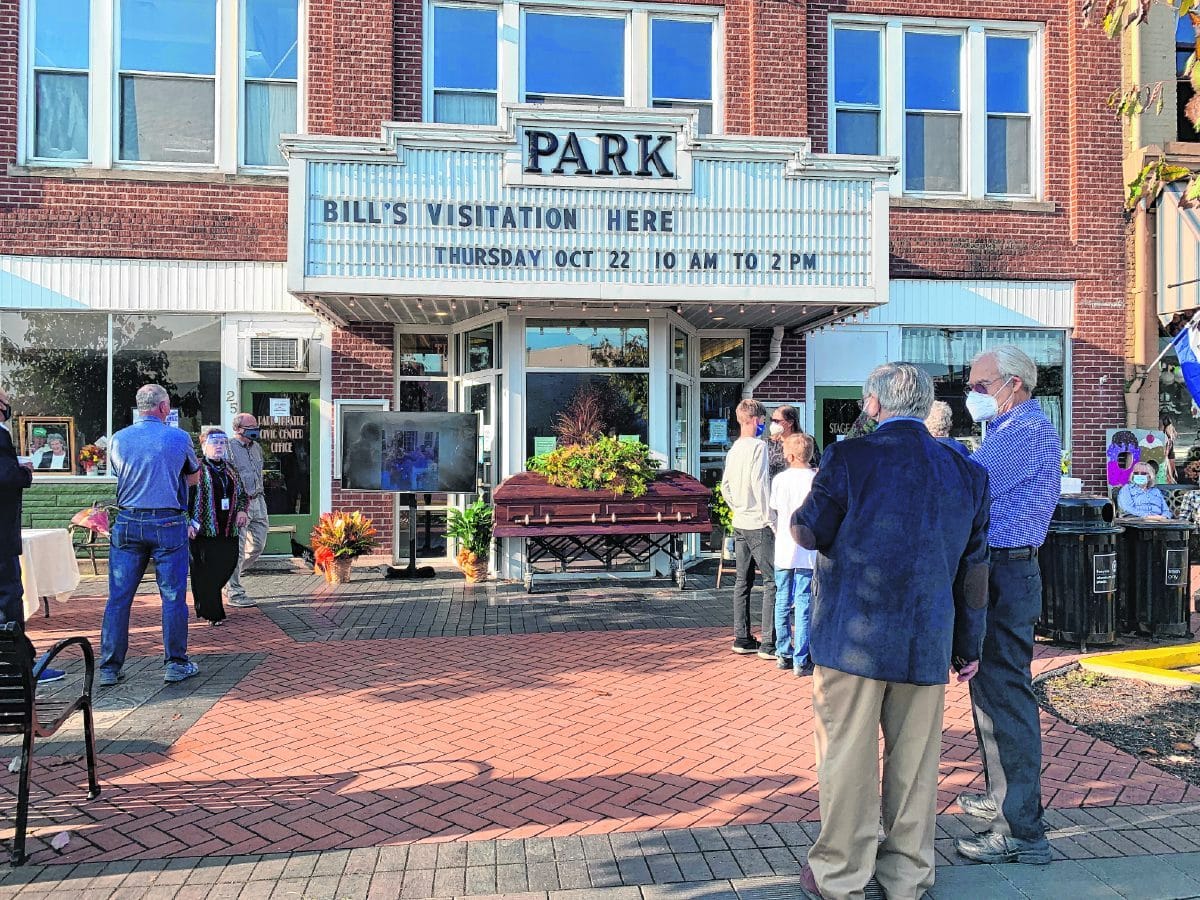
Another former employee traveled from a town near Atlanta, Georgia to attend Reichenbach’s memorial service on Thursday, which was held outside the Park Theatre.
“He was a good guy. He gave me an opportunity and he trained me how to make the most of that opportunity,” retired conservationist Leonard Jordan said. “I was a Black man just out of college and had the idea that partying was more fun than working. By his example, and by an occasional kick in the butt, I learned how to bring the better part of myself out.”
Reichenbach hired Jordan in 1977. Jordan recently retired from his service as the acting chief for the USDA Natural Resources Conservation service.
“Bill drilled into us to stay in touch with the people you are leading,” Jordan said. “He met us in our heart. I made his management style my management style. I modeled my entire career from the examples he set.”
By the mid 1980s, the Reichenbachs noticed the deterioration of North Vernon’s theater building and began researching ways to save the building for use by the community. Following Bill’s 1989 retirement, he and Hulda devoted their time to rebuilding and restoring the Park Theatere building.
“It took them 15 years, and every day of their lives were devoted to developing the Park Theatre Civic Center,” Yount said.
The theater opened in 2003 and both Reichenbach’s continued to volunteer in all aspects of the theater’s operations.
In 2014, Hulda was killed in a tragic accident.
Bill continued to volunteer his time to the wellbeing of the Park Theatre Civic Center up until his death.
“Of course he had to continue to work for the Park Theatre. What kind of a legacy would that be if everything just stopped when Mom died?” Yount said. “Mom and Bill worked very hard to help bring the Park back to the community. That is their legacy, and I can tell you our family will do everything we can do to keep that legacy alive.”