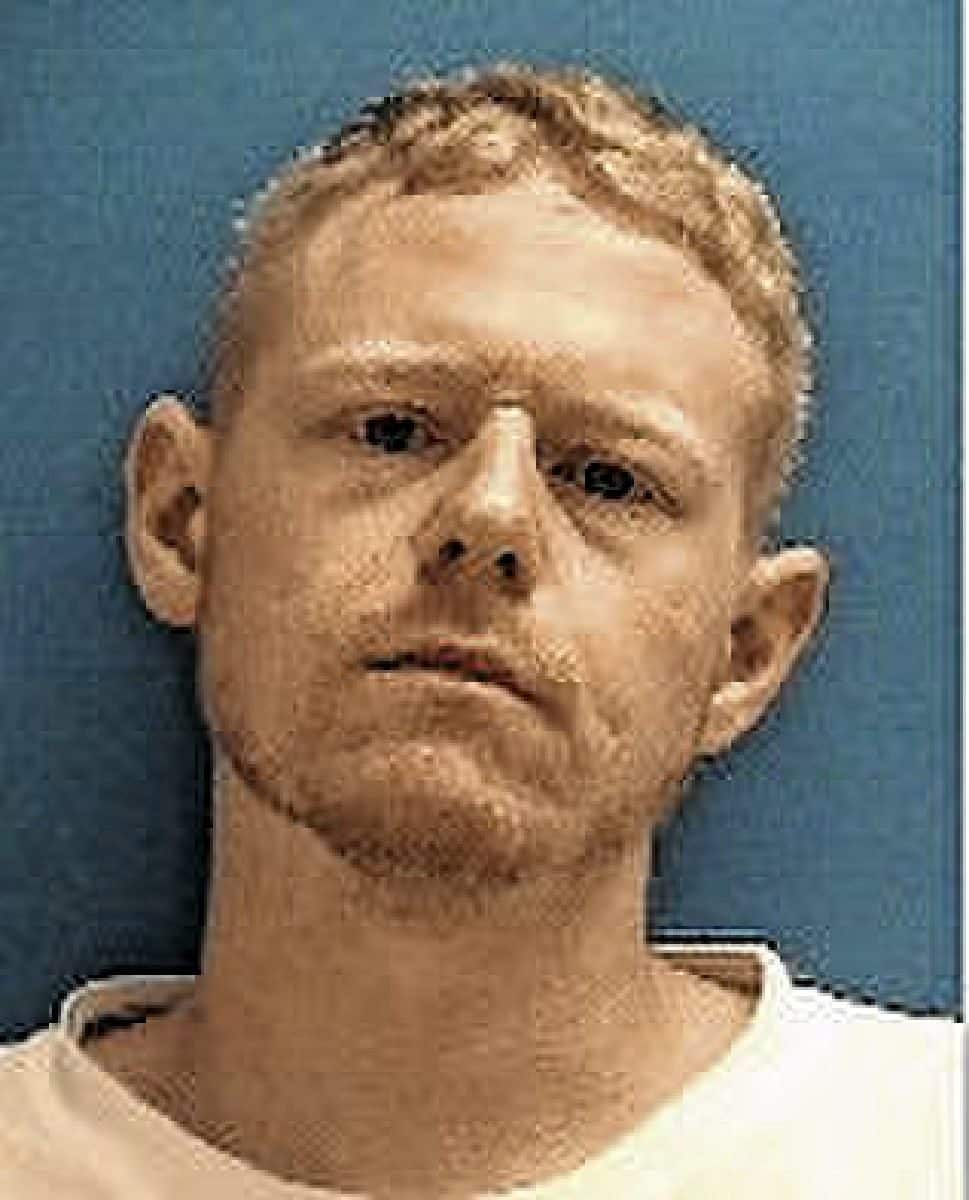
Tears shed by a Columbus man, who had taken multiple illegal drugs when the sports utility vehicle he was driving hit and killed a bicyclist before fleeing the scene last October, did nothing to reduce his sentence.
Eric M. Winship, 28, of 3885 Rosewood Court, was ordered Thursday to serve 18 and a half years in prison as well as pay $4,336 in restitution to the parents of his victim, 21-year-old Kyla Ortlieb.
It was the maximum sentence possible under a plea agreement for causing the Oct. 20, 2019 death of the Columbus woman, Circuit Court Judge Kelly Benjamin said. The late night accident, which was seen by at least two witnesses, occurred at the intersection of 11th and Chestnut streets.
On Sept. 1, a plea agreement was reached that allowed Winship to plead guilty to one count of leaving the scene of an accident, a Level 3 felony, and unlawful possession of a syringe, a Level 6 felony.
After examining the defendant multiple times, clinical psychologist Dr. Shelby Keglar testified Thursday that Winship was coming down off a sleepless two-day addiction binge of alcohol and narcotics when the fatal accident occurred. As a result, Winship was disoriented with severely impaired judgment, the psychologist said.
The SUV involved in the fatal accident, owned by Winship’s mother, failed to come to a halt at a stop sign and struck the bicycle ridden by Ortlieb at the intersection of 11th and Chestnut streets, police reports state.
During the plea bargain, three felony and three misdemeanor counts from earlier cases were dropped in exchange for his guilty pleas on the remaining charges
With tears in his eyes, Winship said that while the testimony against him made him angry, he can’t escape the fact that a young woman had died due to his actions.
“I deserve whatever happens to me,” Winship said. “I can try to make up for this for the rest of my life, but it will never be enough. I can imagine how everyone in this room — the entire community — is looking at me. If I were in their place, I’d want myself dead.”
But the victim’s father, Joe Ortlieb, told the court he worked 15 years with the Indiana Department of Correction. During that time, he learned that some inmates will spend every waking moment practicing techniques designed to manipulate judges and juries, Joe Ortlieb said.
“When I hear (Winship) speak about remorse and regret, I know he could have gone through that speech a thousand times,” Joe Ortlieb said. “Don’t be sucked in by it. His criminal history shows no respect and consideration for the law.”
As the victim’s mother testified, Mary Ortlieb would occasionally glare at the defendant, who avoided direct eye contact with her. She showed Winship a book of baby pictures and memories she had kept of Kyla since her birth.
After displaying her daughter’s birth certificate, Mary Ortlieb held up Kyla Ortlieb’s death certificate and extended it as far as she could in Winship’s direction. During her testimony, Mary Ortlieb repeatedly accused the defendant of making excuses for his dangerous actions instead of behaving responsibly.
After showing the judge photographs of several family holidays that have taken place in the year since her daughter’s death, Mary Ortlieb asked a question: “Is it really ever over? I think not — thanks to the criminal in this room that left her for dead.”
Leaving the scene of the accident after hitting Kyla’s bicycle was one factor cited by Benjamin in her sentencing.
Winship told both his mother and investigators that he had no memory of hitting a bicyclist. But when the victim was thrown off her bike and smashed into the windshield of the SUV, the judge said she found it unlikely that the defendant couldn’t remember.
The judge described the death of Kyla Ortlieb as “unprovoked, unnecessary and avoidable.”
Benjamin also brought up Winship’s criminal history that contains convictions on two felonies and three misdemeanors, as well as four petitions to revoke his probation. However, it was a letter the defendant wrote to Benjamin on an earlier drug-related case in July 2018 that seemed to rub the judge the wrong way.
In that correspondence, Winship displayed a strong knowledge of addictions, including their traits and therapies, after going through a prison addiction treatment program. In that letter, the defendant told the judge he wanted to help others get on “the path to joy” that he had discovered.
But after being caught multiple times under the influence of illegal drugs long after the letter was mailed, Winship made a statement that he did not take his prison treatment program seriously, the judge said.
“I think I had to read that ten times,” Benjamin said. “I find that writing quite manipulative, sir.”
Before pronouncing the sentence, the judge concluded that Winship was at a “very high risk for relapse,” and that the evidence compelled her to protect the community from him.
Benjamin also spoke of a more recent four-page letter from Winship in which he used words like ‘I’, ‘me’ and ‘my’ a total of 95 times. But the judge said he only mentioned the victim Kyla Ortlieb once. In addition, he had never asked Joe and Mary Ortlieb for forgiveness in the death of her daughter.
The judge said she will recommend that Winship serve his sentence at the Miami Correctional Facility, located 11 miles north of Kokomo, because he could receive therapy for both his addiction and for mental illness.