COLUMBUS, Ind. — Mikala Lomax knows how to accurately measure when added racial harmony and equity come to Columbus.
“We’ll know that we’re really getting somewhere when it’s not me saying something when someone says something wrong, but my white peers (speaking up),” Lomax said. “If I have to constantly to be the one to do that — woo, that gets exhausting.”
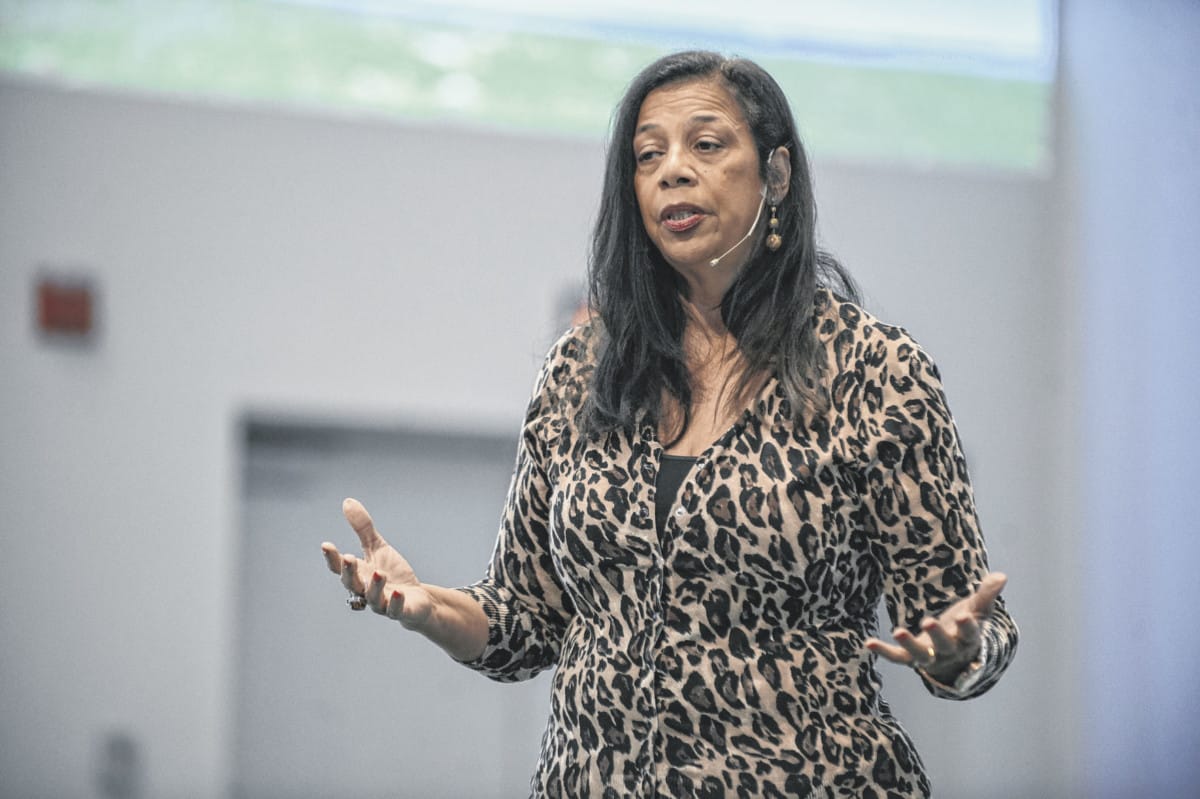
Lomax offered the insight as the youngest member of an all-Black, four-person panel at Saturday’s Zoom discussion “My Black Experience in Columbus, Indiana” as part of Black History Month. The gathering, like other events during the month, was organized by a group of Black community leaders. By Monday morning, it had been viewed 3,600 times, according to a Facebook on-screen tally.
According to 2019 census figures, Blacks represent 2.4 percent of the Bartholomew County population.
Frank Griffin moderated the panel get-together held in a Bartholomew Consolidated Corp. conference room and broadcast on the Facebook page for NAACP Columbus/Bartholomew representing the local chapter advocating for equality for all. Besides Lomax, panelists were retired teacher and continuing educator Paulette Roberts; Ray Gipson, business owner of Coach’s Cutz; Columbus City Council member Jerone Wood; and business and corporate trainer/facilitator Pat McClendon.
The event included a broad range of topics, from Gipson’s view of the need of the local Black community to be more unified and also more promotional about its resources — the NAACP chapter, the African American Fund, the advocacy of the African American Pastors Alliance, Black-owned businesses — so it can better serve as a support for new Black residents, and those being recruited for jobs locally. Plus, panelists said successful Blacks in a variety of sectors need to be more cognizant of actively helping other Blacks succeed.
On matters of racism, McClendon and others said that white people tell them that are sometimes nervous about speaking about racism, worried they’ll say something wrong.
“They say, ‘I’m afraid of saying something,’” McClendon said.
Panelists such as McClendon and others also highlighted that systemic racism is a reality in Bartholomew County, and when a viewer typed in a response that “the system works” for all, a Black resident quickly took issue and firmly-but-respectfully disagreed with a typed response.
Wood said his eyes were opened about local racist views on social media especially last year while reading online political discussions. He said he was extremely surprised that a number of people making questionable or offensive race-related comments were people he has known for years, and in some cases, has been casual friends with.
“I had to take a step back,” Wood said. “ … Especially these last six months on Facebook, it really caught me off guard.”
Lomax mentioned that, for all of the county’s progress toward racial equality, “I think that too often, there’s still a ‘first,’” she said, expressing a measure of frustration that it took so long for there to be a Black city council member in Wood. “Maybe that’s just my impatience.”
Panelists also said that Columbus needs to more welcoming if the recruitment of Black professionals in areas such as education and more is to be successful. More than one panelist mentioned that surrounding areas such as Greenwood or Indianapolis generally are seen as more welcoming with more to offer minorities.
“I think we need to better promote what we do well (in the Black community),” Griffin said, referring to recruitment and other matters.
Roberts reminded her peers that’s she’s been in Columbus since 1970 — long enough to see a variety of race-related challenges continue to be issues. In the past, she has said at more than one forum that community problems must be reevaluated regularly.
“You think a problem is solved,” Roberts said, “and five years later, that issue comes right back.”