An education expert who taught me a lot compared teaching to whitewater rafting — you never know what could be around the next bend.
What the expert was referring to is those moments when a student asks a question or makes a statement that takes the teacher completely by surprise.
When that expert wrote his book, he could never have predicted the coronavirus pandemic, a far rougher patch of whitewater, one educators and students didn’t see coming a year and a half ago.
Now, as we begin to exit the pandemic and can imagine schools being open in the fall, we are learning about how those involved in education — students, teachers, staff and administrators — have fared through this ordeal.
Much of what we are learning about how students have fared over the past 14 months with online learning is sobering and sad. The most frequently used word to describe the pandemic’s negative impact on learning is “stress.” Connected with that term are other terms — depression, loneliness, problems concentrating, lack of ambition and anger at the situation and oneself.
Being an educator, I read with keen interest what psychologists, teachers, parents and students were reporting about the difficulties of online learning. But as a retired educator, I didn’t experience the situation firsthand until I was offered the chance to teach a course online this past semester at Franklin College.
A gifted colleague warned me before the semester started that teaching online was significantly different from what I was used to. One of the best pieces of advice he gave me was not to expect to cover the same amount of material as I had in the past.
Another insight he shared was that while the teacher’s face would be seen by all the students, students were not required to show their faces. Until I met my class the first time, I didn’t realize how much I had relied over the years on seeing students’ expressions to let me know if they understood what I was communicating. No wonder I couldn’t cover as much material as in the past. Without that visual confirmation, I had to pause repeatedly during class sessions to ask if my students were confused.
With all these additional challenges to learning during the pandemic, it’s easy to focus on what students have missed of the educational experience. I have had more than one conversation with colleagues who lament that key elements of their courses — imagine offering a science course without laboratory work or teaching a public speaking course without the student speakers seeing their audience.
But I hold onto another thought — a hope, really — and that is that many students will have gained something quite valuable in these challenging months. One of the “sermons” that I would always give my students was to remind them that the purpose of education is to become an “overcomer.”
Everything that a student faces — learning a new language, reading more difficult novels, playing more difficult pieces of music or playing more talented opponents on the athletic fields — is like a mountain placed directly in their paths.
Will the student turn and run from the challenge? Will the student complain that the challenge is too hard? Those are certainly temptations. But the students who figure out how to overcome the mountains will become adults who won’t run from the challenges they will face in their futures.
I doubt that any generation of students has faced a bigger challenge to learning. So consider doing the following in this month of May. Whether the students you know are graduating or simply finishing another year of school, take the opportunity to tell them how proud you are that they’ve faced incredible challenges — mountains, in fact — and overcame them.
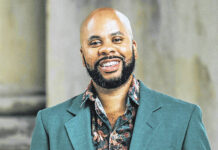
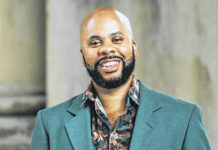
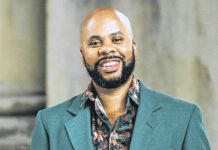
David Carlson of Franklin is a professor emeritus of philosophy and religion. His columns appear weekly in the Daily Journal. Send comments to editorial@therepublic.com.