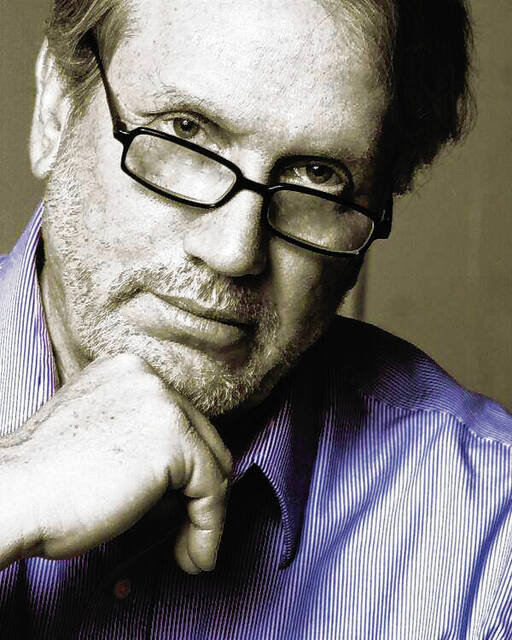
By Brian Howey
For The Republic
About every 80 years since the American Revolution began in 1776, there have been decisive pivot points or cataclysms in history. It was followed by the Civil War eight decades later.
There were a cluster of pivot points in the first half of the 20th Century, including the Great Depression (1929), President Franklin Roosevelt’s New Deal (1933), the commencement of World War II (1939), culminating with the arrival of the nuclear age in 1945 that established two Cold War super powers.
Are we about to enter the fourth cataclysm of the American experience eight decades after World War II?
Over the past five years, Americans have witnessed the greatest upset in American presidential politics with Donald Trump’s defeat of Hillary Clinton, a pandemic that killed 1 million Americans and 22,000 Hoosiers after causing a series of societal lockdowns, the Jan. 6 U.S. Capitol insurrection that occurred with the collapse of the Trump presidency, and now despot Vladimir Putin’s invasion of Ukraine. That has the potential to spark the first nuclear war of the 21st Century, or, perhaps, the collapse of the Putin dictatorship.
Two quotes seem appropriate. American Weather Underground leader Bill Ayers said, “Every revolution seems impossible at the beginning, and after it happens, it was inevitable.” And Soviet Union founder Vladimir Ilyich Lenin observed, “There are decades when nothing happens; and there are weeks when decades happen.”
Lenin’s observation had an echo of truth these past two weeks with Vladimir Putin’s disastrous invasion of Ukraine, and the corresponding coalescing of the Western/NATO alliance into the most severe sanctions ever wrought on one pariah state.
But for 2022 to join the annals of historical pivot points, it will have to go beyond Ukrainian President Volodymyr Zelensky’s Churchillian empowerment of his people through oratory (and social media), President Joe Biden’s revival of what had been a moribund NATO, and the heroic defense of their homeland by millions of patriotic and free Ukrainians. For this year to join 1776, 1865 and 1945, it will likely take millions of Russian people to rise up and force Putin from power.
What are the chances that dramatic event will occur? Andrew Nagorski, a 1980s-era Newsweek correspondent based in Moscow, writes for the Daily Beast: “If history is any indication, Putin already has one foot in his political grave. His war on Ukraine is the beginning of the end for him, no matter how long that beginning takes.”
Prof. Olga Chyzh, who teaches political science at the University of Toronto, said in a Twitter thread this week that Western sanctions will likely not be enough to force Russian military leaders to remove Putin. “Oligarchs have even more to lose if Putin is no longer there to protect them.” Chyzh said that the other power zone is Russian “strongmen,” who, “view the looming Russia’s isolation and the forced return of the oligarchs to Russia as a benefit.”
Leon Aron, director of Russian Studies at the American Enterprise Institute, writes of his native Moscow in the Washington Post, “The Russian national tradition is unforgiving of military setbacks. Virtually every major defeat has resulted in radical change.”
U.S. intel chiefs are concerned. “We assess Putin feels aggrieved,” Director of National Intelligence Avril Haines told Congress on Tuesday. CIA Director William Burns expects Putin to “double down” in Ukraine, targeting civilians.
Writing in Foreign Affairs, analysts Emma Ashford and Joshua Shifrinson see the West and Russia “may now be entering into the terminal stages of an insecurity spiral” that could go nuclear. “One might hope policymakers find off-ramps at that stage, but there are no guarantees,” adding “spirals are defined by their tragic nature.”
Independent U.S. Sen. Angus King of Maine said last week, “Putin may be the most dangerous man in history.”
The human race has entered an unprecedented and harrowing sequence.