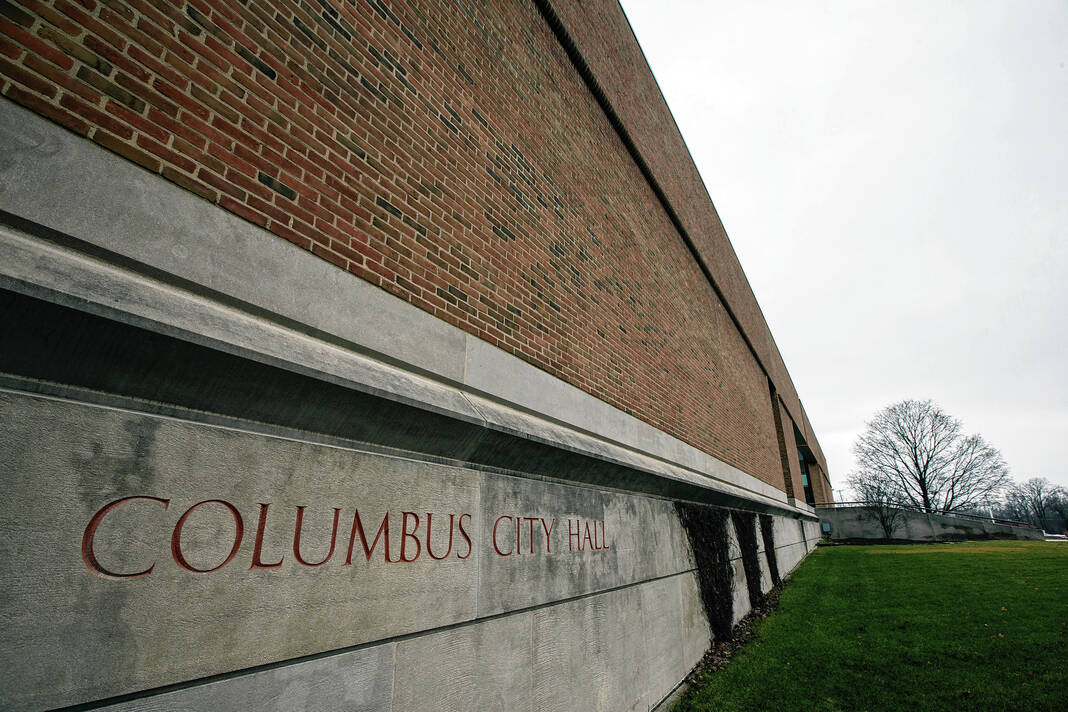
Columbus City Council members approved the first reading of a redistricting ordinance with a 6-0 vote on Tuesday. Councilwoman Elaine Hilber was absent.
The proposed district map can be viewed on the city’s website at columbus.in.gov. The proposal requires two readings by city council to be approved, and the council’s next meeting is set for Nov. 1. The district changes, once approved, would go into effect starting in 2024.
All cities are required to review council district boundaries this year in consideration of the 2020 census. Additionally, the creation of a new, sixth district, is included in this proposal, since the council recently voted to adopt “second class” status for the city of Columbus, which will also go into effect in 2024. The transition entails a number of changes to city structure. One of the most notable is the addition of two new city council members.
Indiana’s second class cities each have a legislative body made up of nine members — six members representing six districts and three at-large members. Columbus City Council is now made up of five district representatives and two at-large.
On the proposed map, District 6 would be located in central and north Columbus, with most of its area coming from the current District 4, as well as a small portion of District 3.
Additionally, District 5 would gain a couple of small portions of District 4. District 4 would gain some pieces of District 3. Some areas of District 5 and District 1 would now be located in District 3. District 1 would include some areas that are currently part of District 2, including downtown Columbus and a stretch of Jonathan Moore Pike from the East Fork White River to Little Creek Shopping.
“The current districts stay in effect through all of next year,” said Councilman Frank Miller, R-District 4, who has been involved with the bipartisan redistricting effort. “The elected officials at this table still represent in those districts until January of 2024. But this map pertains, next year, to all of the voting that will happen that pertains to 2024.”