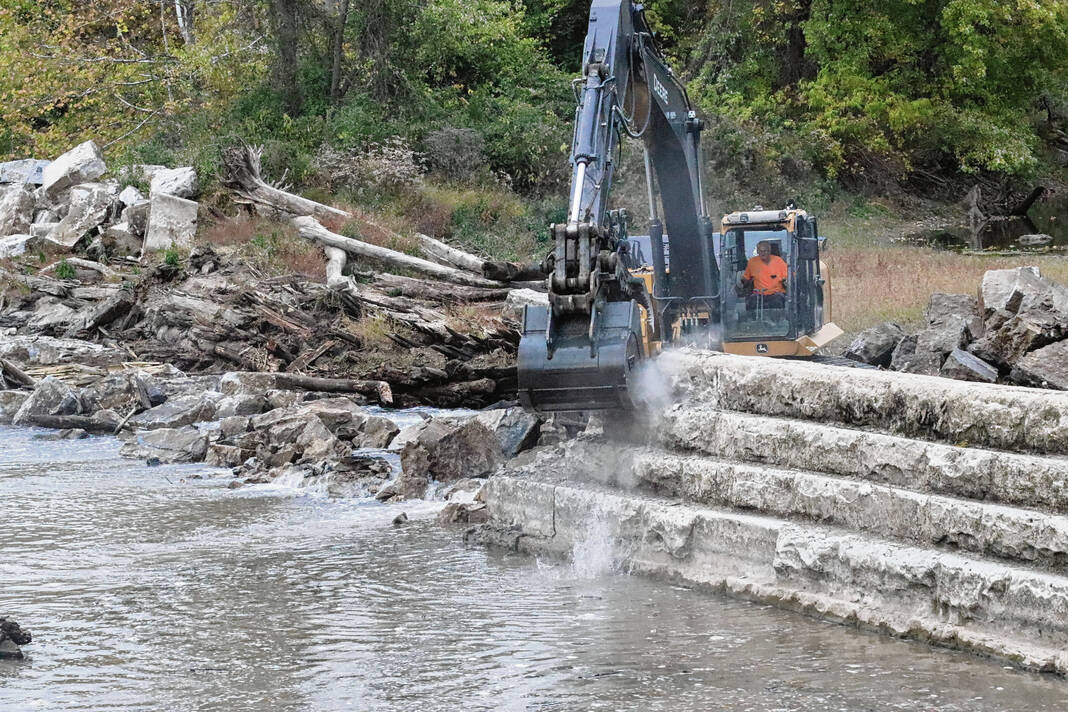
The Thompson Mill Dam in Edinburgh is demolished last month as crews excavate the dam on Oct. 24.
Daily Journal File Photos
EDINBURGH — Amid the Thompson Mill Dam removal last month, contractors revealed an unexpected find.
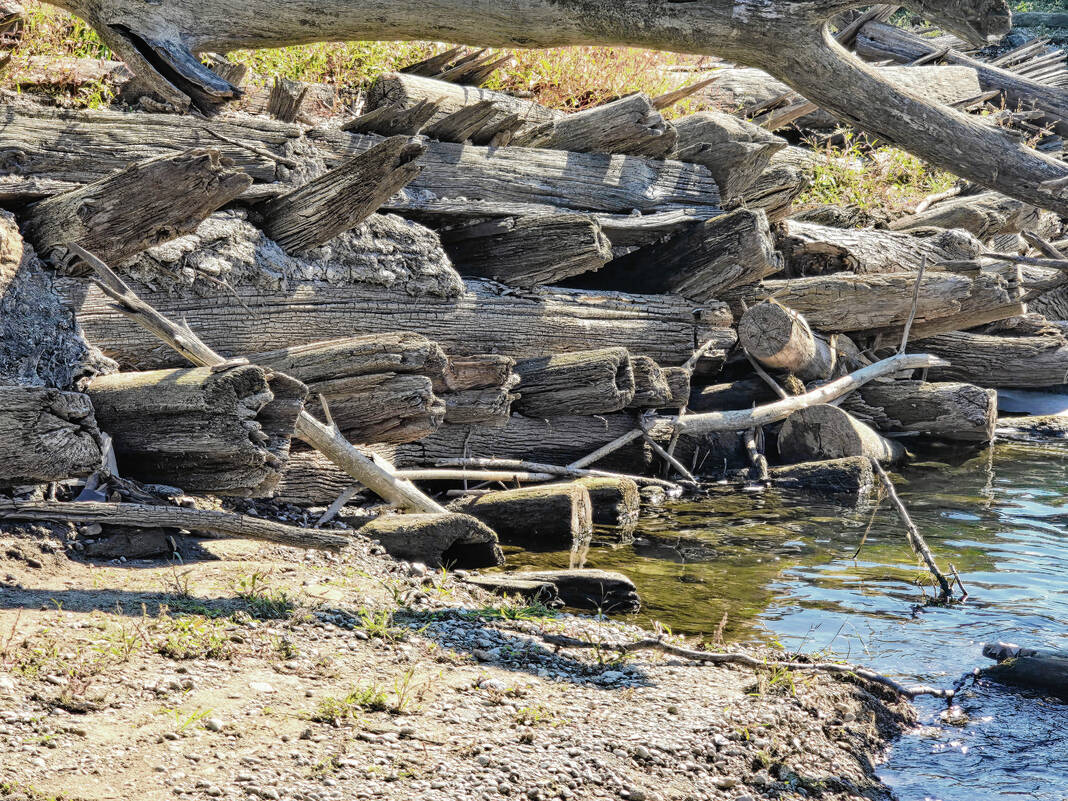
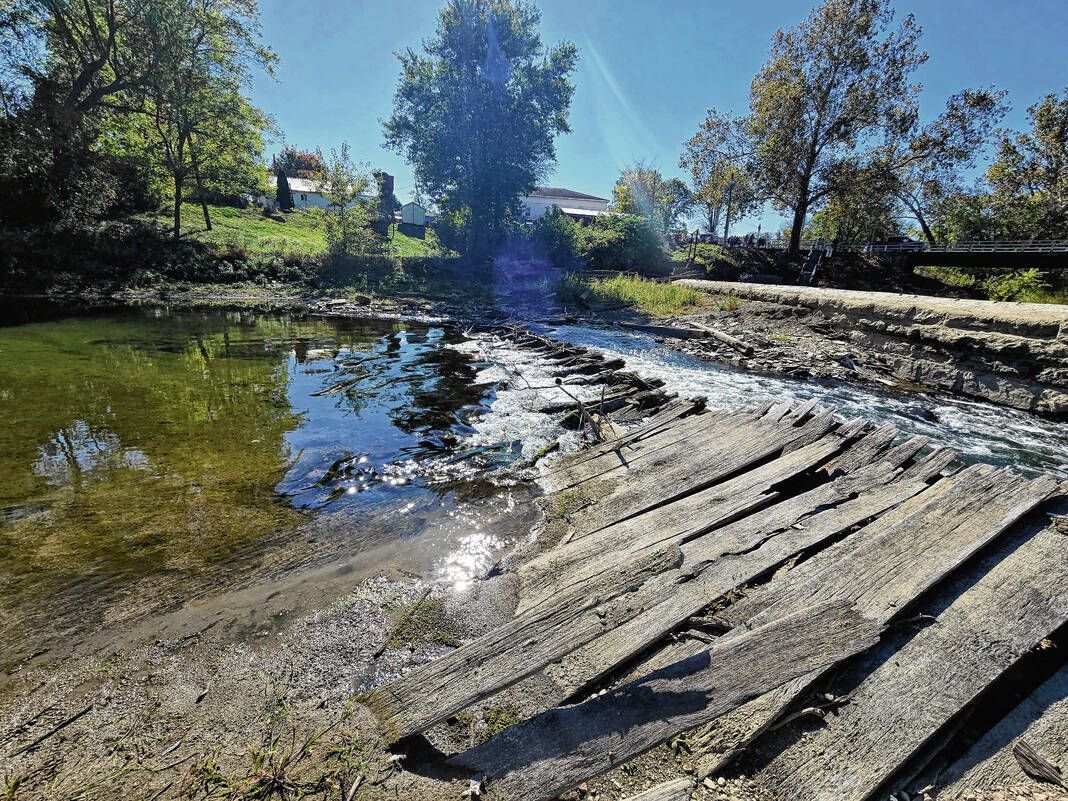
Five layers of plank road and two layers of corduroy road spanning from the 1830s to the 1870s were discovered during the demolition, said James Heimlich, a historian and archeologist with Ecosystems Connections Institute. Corduroy roads are log paths that pioneers would place perpendicular to roads to create a bridge over a swampy area or a low-volume body of water.
The road was a surprise discovery as it was lost to history that the 10-foot limestone low-head dam was placed on top of the road. The dam was built in 1884 by John Thompson, who ran the former Thompson Mill. The dam was deemed a public safety hazard after it failed a year ago.
This road is made of layers of wood built up over the years to bridge the river and connect Edinburgh to Nineveh. The road was used until about 1870 and during the Civil War, the road was used to transport flour from the mill to the Union Army, historic records show.
The road is a unique find, Heimlich said.
“In my 25 years of archaeological experience in Indiana, I’ve never come across a plank road, let alone a corduroy/log road,” Heimlich said. “So the state was very interested in that, it’s quite a treasure for the town. That’s your pioneer history.”
There is a significant portion of the road that will remain buried or partially exposed on an island at the dam site. Excavators left as much of the road intact as possible to preserve the history, Heimlich said.
The road doesn’t need to be removed because it’s not affecting the river, would be costly to remove, and would be destroyed if removed, he said.
Though a piece of history was lost with the dam, a different history was discovered with the road, Heimlich said.
“Through this process, we’ve actually preserved something — the story of this dam, the mill site and this road,” Heimlich said. “So the town has gained, even though they’ve lost. They’ve lost one resource, but they’ve gained a lot of knowledge and history about these resources that I think and I hope will be valuable to them.”
Heimlich and the state are recommending the Thompson Mill Dam site to be listed on the National Register of Historic Places, which would give it some protection if the site or nearby areas are considered for development, he said.
More on the demolition
During the nearly week-long demolition last month, flocks of community members watched the historic structure be removed, and many shared memories of the dam and thoughts on its demise. Jerry Sweeten, a senior ecologist with Ecosystems, appreciated how community members behaved during the process. The town council hired Ecosystems to coordinate the dam demolition with grant funds.
“I want to compliment the folks in Edinburgh. I know there were some people who were sad … There was obviously some misinformation so we made a point to go up and talk to people,” Sweeten said. “But what they did that we really appreciated, everybody played nice. Where we had barricades up, no one tried to go by them. They were respectful and it was highly appreciated.”
The dam was removed by W Enterprises, an ecosystems contractor. The contractor removed the dam’s limestone slabs using an excavator, gave recovered material to the town and cleaned up debris from the process.
The stone came off easier than expected, and 80 to 90% of the blocks were taken out within the first six hours, Sweeten said. Workers were able to recover and give the town 450 limestone blocks and lumber from the historic road.
Though it was suspected before, during the demolition it became clear why the dam had failed. The logs in the foundation of the dam were rotten and are a chief reason the dam failed, Sweeten said. There was an “imminent danger of a more catastrophic collapse,” he said.
“The town board, they should be commended for taking this step,” Sweeten said. “I know they received criticism from some people in town but that dam was simply tired and worn out after 150 years of being beat up by the river. It was time.”
To save the dam, it would have needed to be torn down and built back on a new foundation. Even then, Sweeten said it would “not be possible” to rebuild the dam back to the way it was and it would’ve been extremely expensive.
Healing the river
The Big Blue River is already starting to recover from the demolition, with a full return to nature expected by this time next year. Community members can expect positive changes with the river, like improvements in water quality and fishing, Sweeten said.
Water quality is expected to improve because water gets stagnant behind dams and can grow algae. There will also be new ripples and pools upstream of the river, Sweeten said.
The water channel may move a little bit. He expects the river to predominantly go down the south channel, but the river may decide otherwise.
Piled up sediment behind the dam will also move during large rain events, but there won’t be noticeable differences in the river’s color. The water will remain brown with or without the dam, he said.
Fishing is expected to improve without the dam, especially smallmouth bass. The approximate mile of new stream habitat is “going to be exceptional for river fish,” he said.
“They move into new spawning grounds, they go to wintering grounds, they have feeding areas, they just move up and down all the time,” Sweeten said. “So by allowing that, removing the barrier and allowing them to do that, it gives them (a) new habitat to exist (in) and it also helps with the genetic diversity because fish get separated from the fish that are above the dam.”
Sweeten also anticipates that over several years mussels will recolonize above where the dam was taken out. He walked upstream and downstream, looking for stranded mussels and rescued a couple dozen mussels — not very many. He said mussels can become stuck if the water goes down too fast and the mussels are unable to crawl out of the mud and back into the water.
The company did a pre-removal survey to develop a baseline and will come back in the summer of 2025 to see how the river has changed from the dam removal using data. The final reports will come out sometime next year.
Heimlich will also be working with the town to display the wood and limestone blocks with educational historical signage. The plan right now is to have displays or signage at the Thompson Mill Dam site and possibly in another location. Town officials have talked about making a monument in a new town plaza that is in the planning stages.