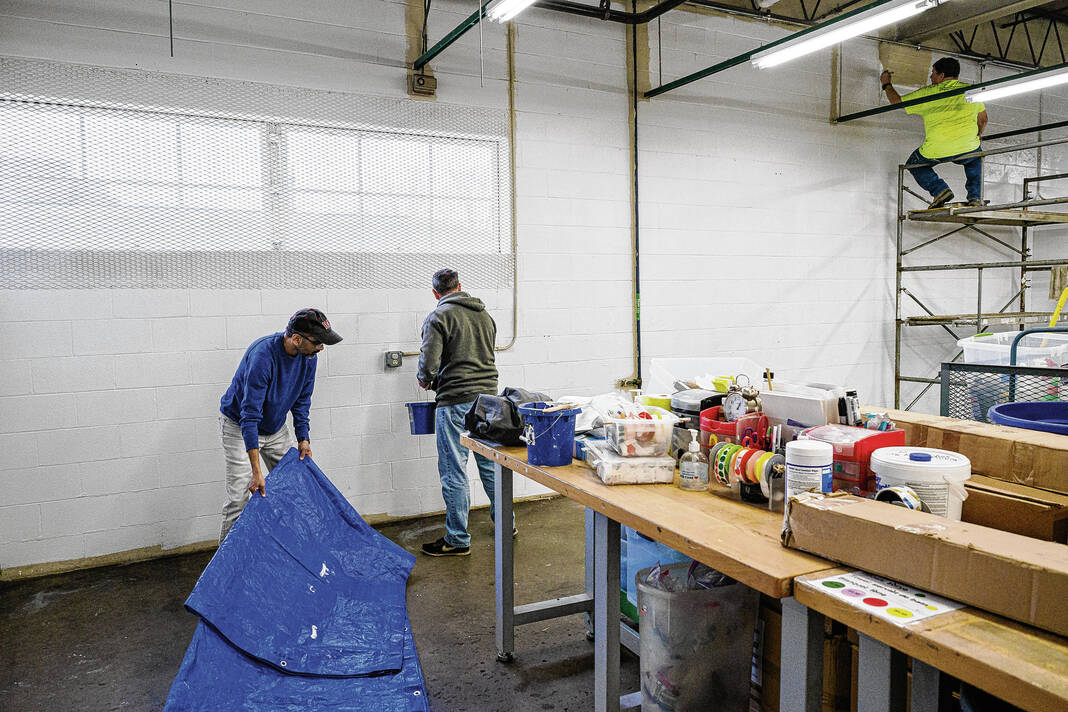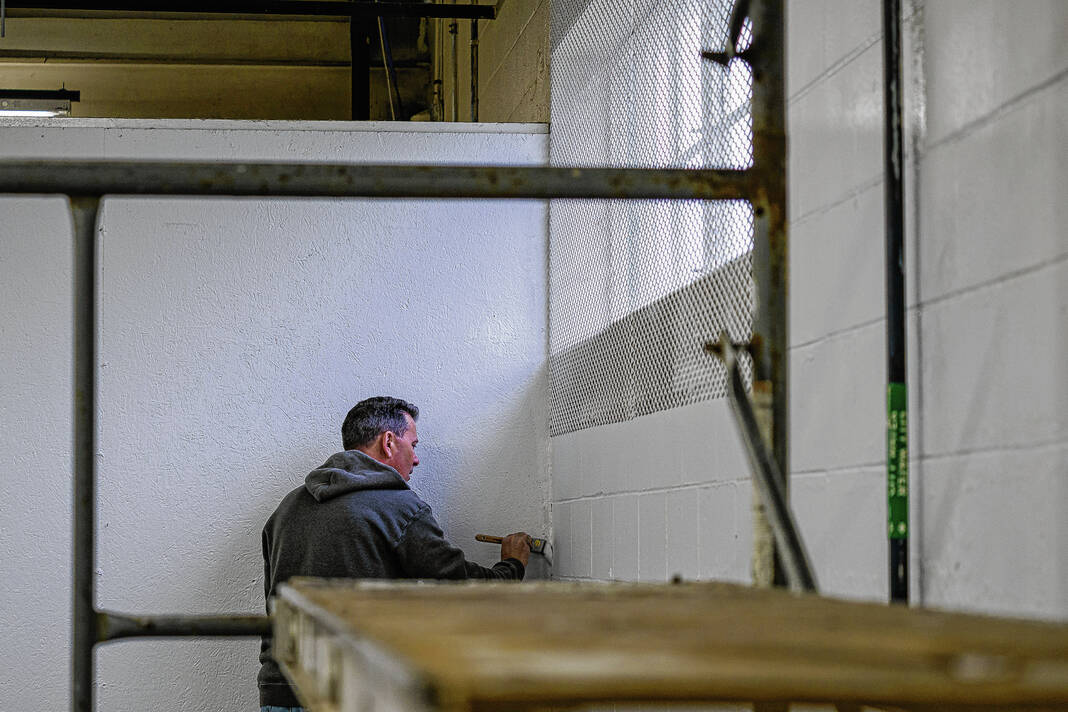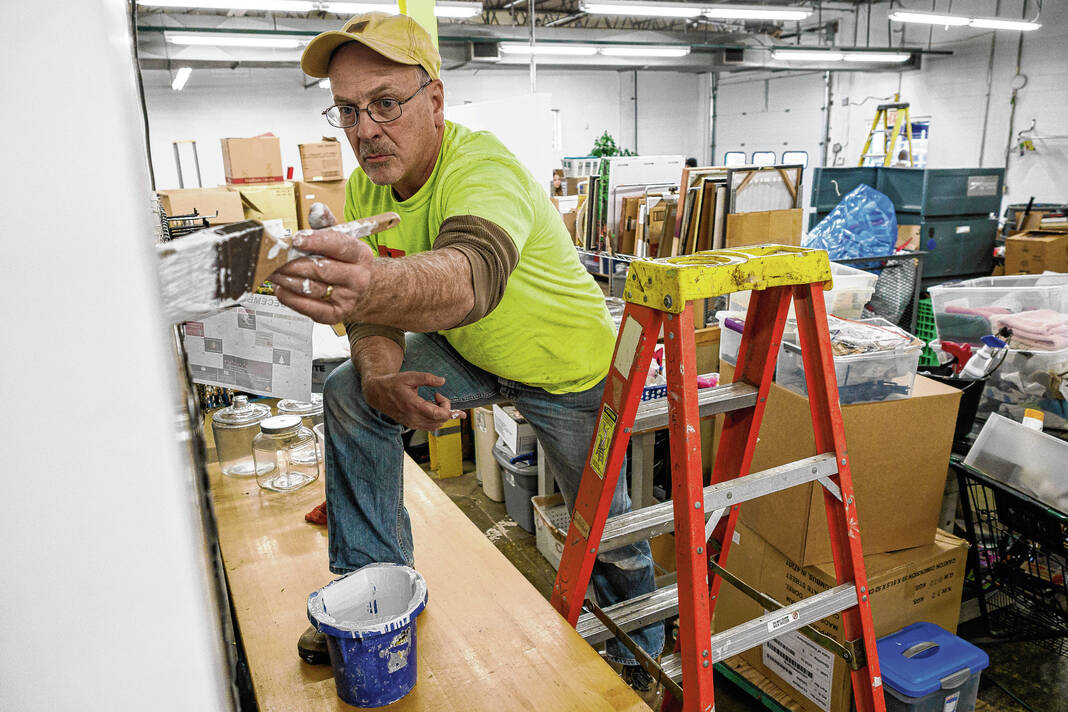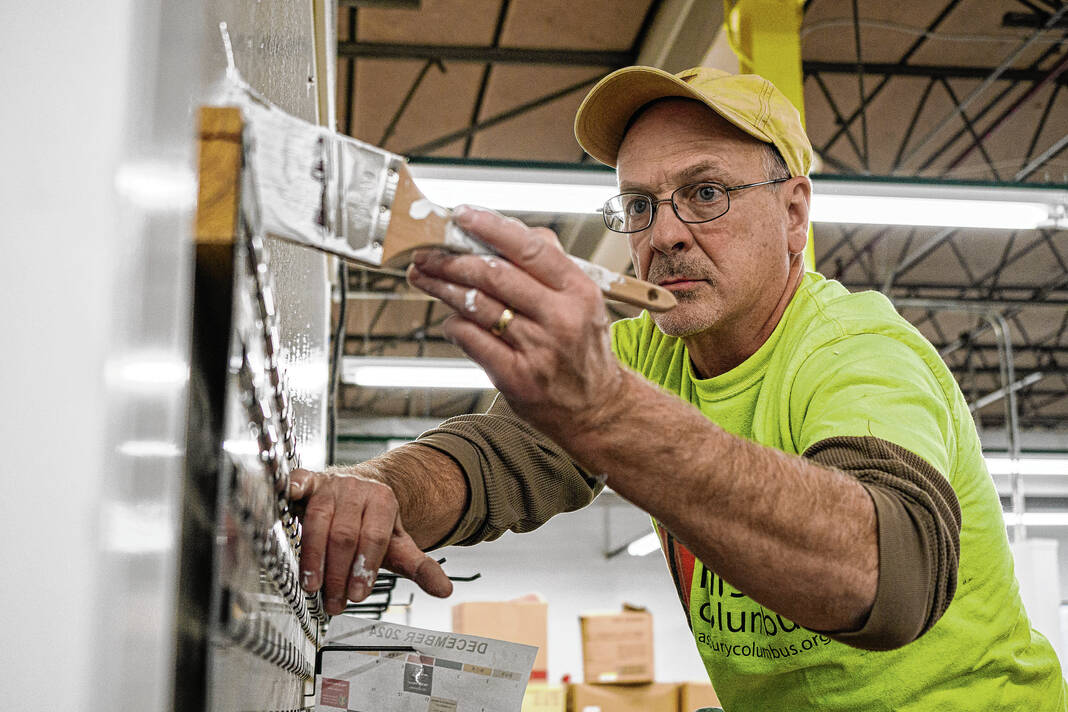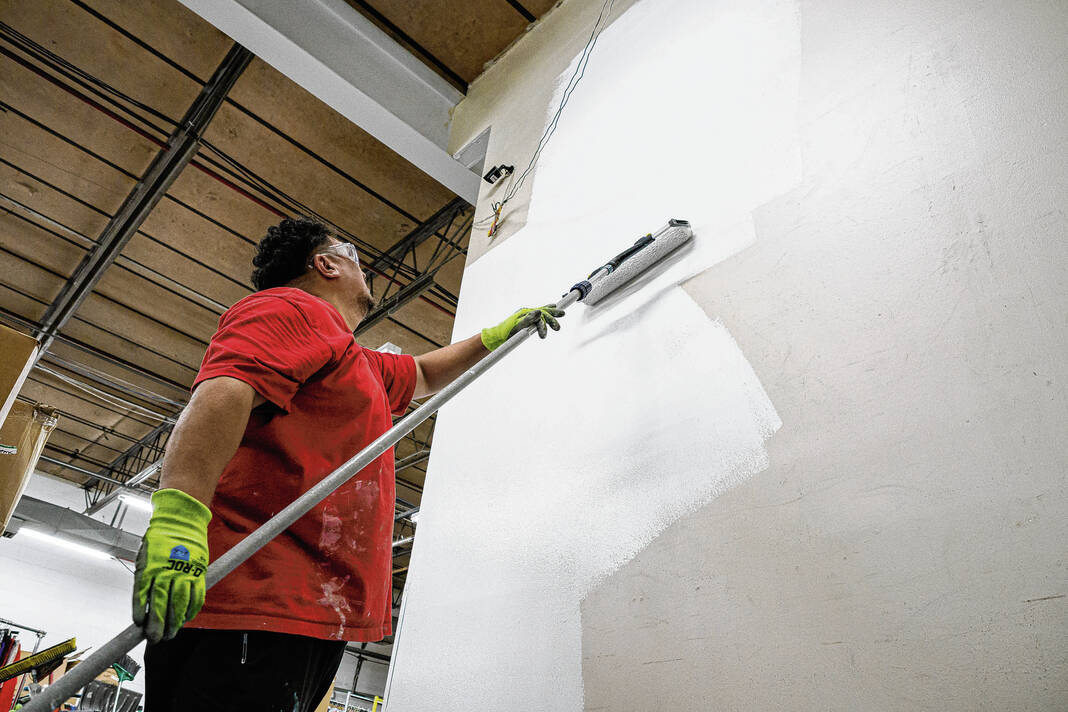
Mike Wolanin | The Republic Frank McNair paints a wall inside San Souci’s donation intake center in Columbus, Ind., Monday, Dec. 9, 2024.
Volunteers with expertise from two of Bartholomew County’s largest manufacturers have loaned their skills to a nonprofit thrift store to improve lives during times of crisis.
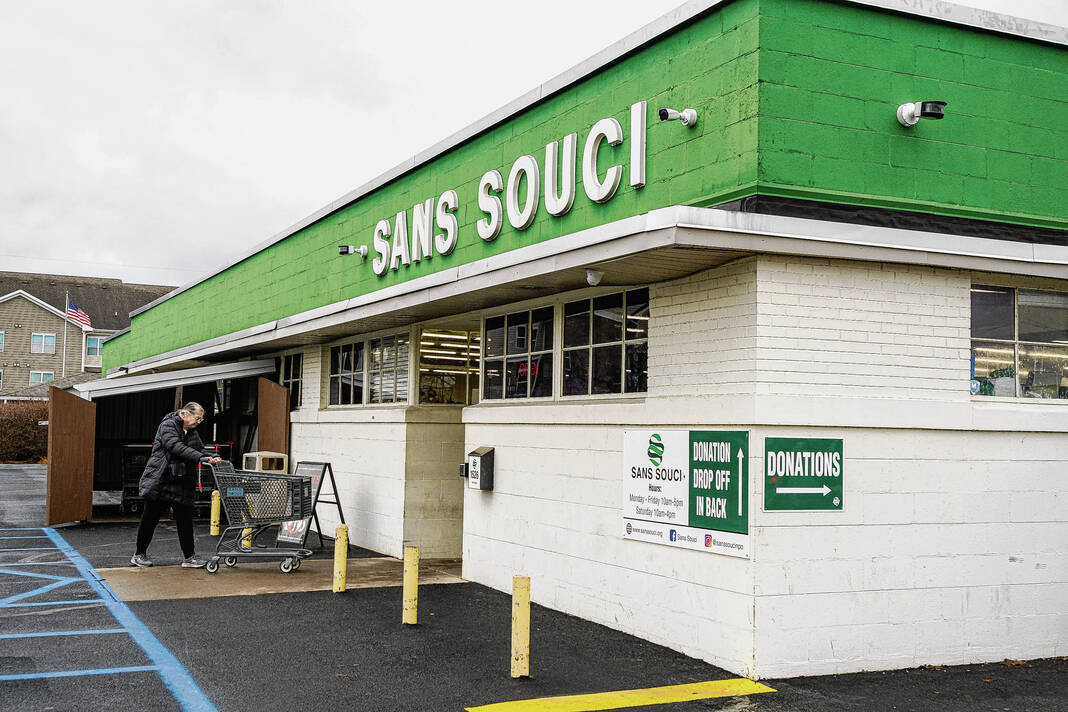
The experts from Cummins Inc. and Toyota Industries North America are striving to create more order, less chaos, and greater efficiencies in the donation center of San Souci, Inc., 1526 13th St.
After nearly a year of planning, they have finally finalized plans to redesign the 10,000-square-feet workspace on the building’s north side, according to Steve Ferdon, director of global engineering technology in the Fuel Systems business at Cummins.
Ferdon, the husband of Columbus Mayor Mary Ferdon, is also coordinator of Mission Columbus, an outreach ministry of Asbury United Methodist Church that provides case work and home repair and construction, extending help through a team of volunteers in Columbus and Bartholomew County who also step up for work trips around the country.
While working with the Cummins and Toyota experts over the past year, San Souci executive director Sheryl Adams says she was kept up to date what it would take to create the efficiencies. Since the nonprofit operates on a tight budget, San Souci requested and received a $38,000 grant from the Cummins Foundation, Adams said.
“By February, we want to have new equipment installed for sorting, processing, boxing and pricing,” said Brad Woodcock, San Souci’s operations supervisor. “It’s going to be totally different.”
This project initially began with the sole concern of safety in 2023, Adams said. Her board of trustees wanted to utilize ergonomics, which means designing or modifying the work to fit the employee, instead of the the other way around. The goal of ergonomics is to eliminate discomfort and risk of injury.
But San Souci board of trustees member Rafa Spear felt more might be needed.
An advisor to Cummins with a black belt certification in Six Sigma quality-control methodology, Spear said he began putting a team together to help determine what improvements were needed in the donation center.
Team members include Ferdon, Cummins senior manager of warehousing Dan Hoffman, and Steve Moir, the director of global emissions compliance at Cummins. Moi, who is Cummins’ community partner liaison to San Souci, has taken the lead on the distribution center project, Ferdon said.
Spear said he has long admired Toyota Industries North America, Inc. for their employee participation in making community improvements, so they were also asked to help.
“Toyota came on board and I think they have done a fantastic job,” Spear said.
It wasn’t long before the San Souci donation center became a formal Six Sigma project, Moir said.
After observing the current operations in the donation center, the committee first performed what manufacturers call a Five S, according to Ferdon. The term refers to a five-step methodology for organizing and maintaining a workplace that is clean, uncluttered, safe and well organized to reduce waste and increase productivity.
In this early stage, Cummins had a number of safety and ergonomic experts do evaluations and recommendations, Moir said.
During the first quarter of this year, the committee carried out a process that Spear calls value stream mapping, which helps to identify, demonstrate and reduce waste, as well as create an effective flow through all the processes.
In the second quarter, the committee started to launch some analysis, Spear said. That’s when Hoffman was brought in to come up with a whole flow analysis, a layout of the whole site, and alternative work flows to consider, he said.
In the summer, the committee – along with Adams and Woodcock – decided how they wanted to redesign and improve the donation center, Spear said.
The final plan was put together in September, and the committee was successful in getting the Cummins Foundation grant that will allow them to carry out the plan.
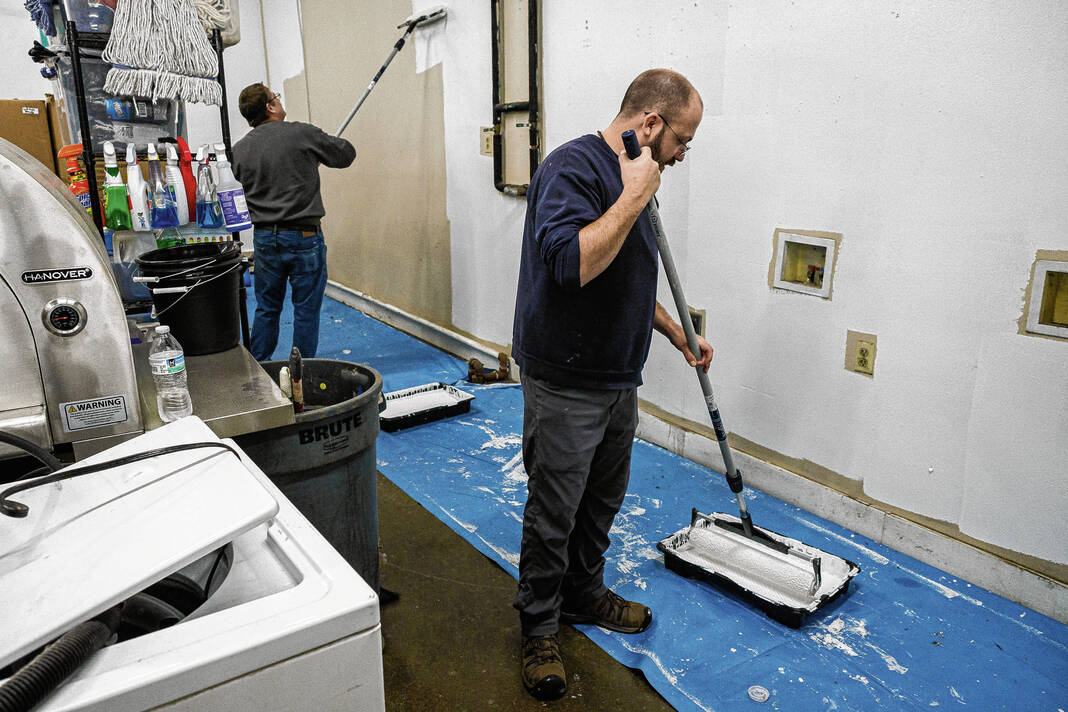
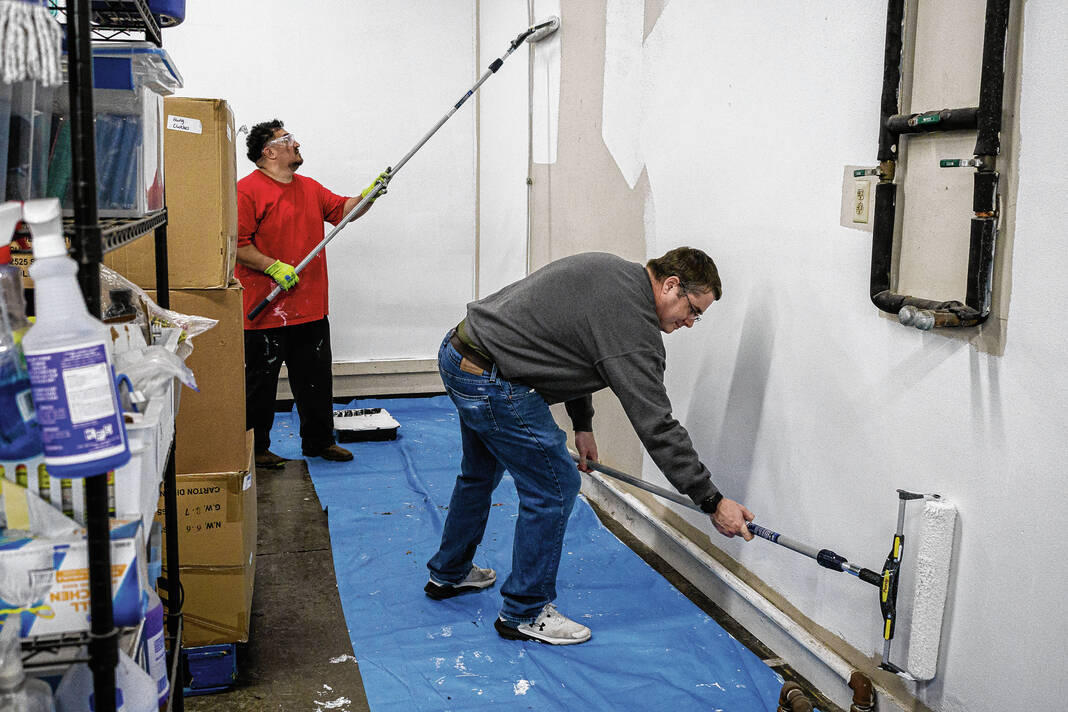
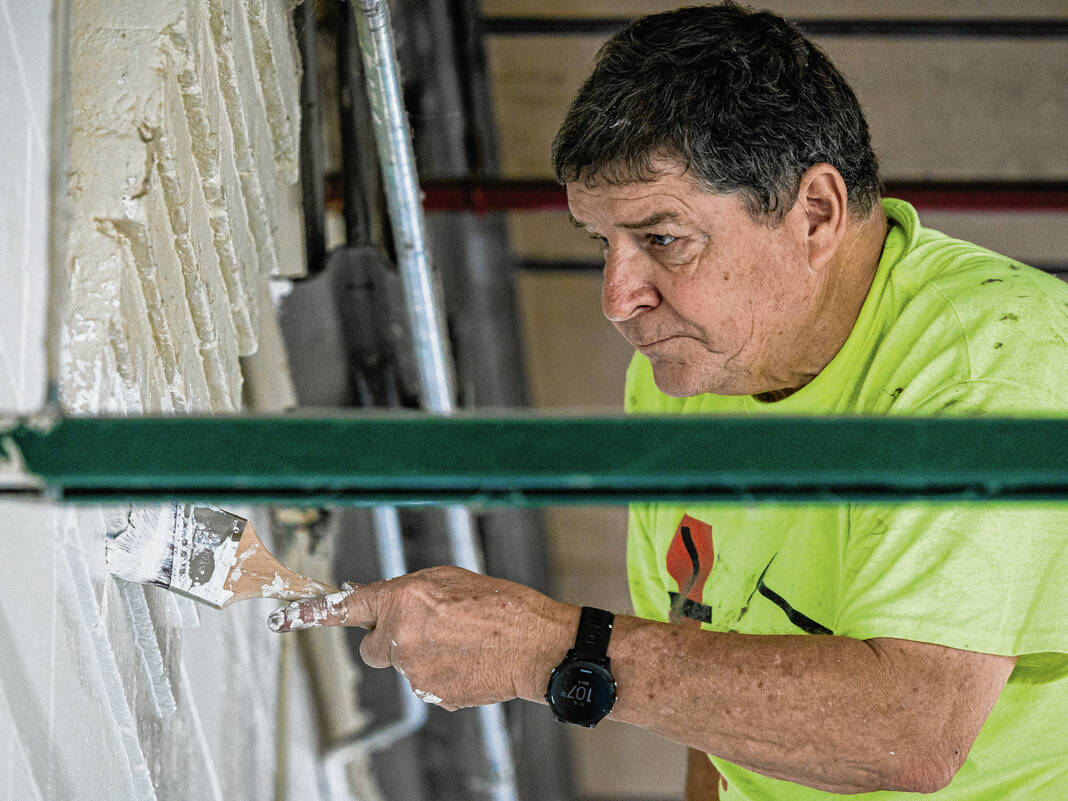
Part of the 5S program is to brighten up the workplace. Ferdon said his organization agreed to oversee eight volunteer painters who transformed dingy beige walls into a clean white surface with two coats of fresh paint – all in one day.
Florescent lighting high up on the ceiling will be replaced by lower-hanging lights that will provide employees an improved ability to find stains or defects in donations, Woodcock said.
But most of the grant money will go to obtain the equipment needed to handle the incoming flow of donations, Moir said. That will includes compatible mobile rolling bins that will allow safe, long-term storage of seasonal items such as Christmas decorations, he added.
Other steps to increase efficiency and improve work conditions will be determined in the future, Moir said.
Many volunteers were willing to put out the effort for San Souci because the nonprofit is fundamentally important to the community, Ferdon said. According to the San Souci website, the nonprofit allows:
- Thousands of community members to have access to things like clothing, shoes and winter coats at little to no cost to them.
- Community members to stretch their household dollars by shopping for low-cost necessity goods.
- Employees to remove barriers that have prohibited them from obtaining or retaining employment elsewhere, guiding them on a lifelong path of success with new life and work skills.
San Souci intentionally hires individuals with barriers that have prohibited them from obtaining or retaining employment elsewhere, Adams said. That might mean being homeless, an immigrant who don’t speak English or a former inmate coming out of prison, she explained.
Since many of these employees are going through a difficult period in their lives, Spear said it’s extremely important to provide them an attractive and efficient workplace that helps them envision a brighter future.
With inflation taking a huge bite out of family budgets, both the amount of donations and the number of thrift shop customers has skyrocketed, Adams said.
“The donation flow has just increased and increased,” Moir said. “We had to do something to handle it.”
San Souci averages about 250 to 300 paying customers on a daily basis, Adams said. There are more than 100 donations made each day that have been increasing for several months, while the number of employees being helped totals about 50 each day, she said.
“So we can see an average of 250 to 400 people a day,” Woodcock said.
Ferdon says he’s proud to have San Souci in the community to help the less fortunate and those in crisis.
“But I’m also heartbroken that there is such a need for this industry,” he added.