This story has been corrected to add wording to clarify hours that are in the ordinance in which noise is allowed.
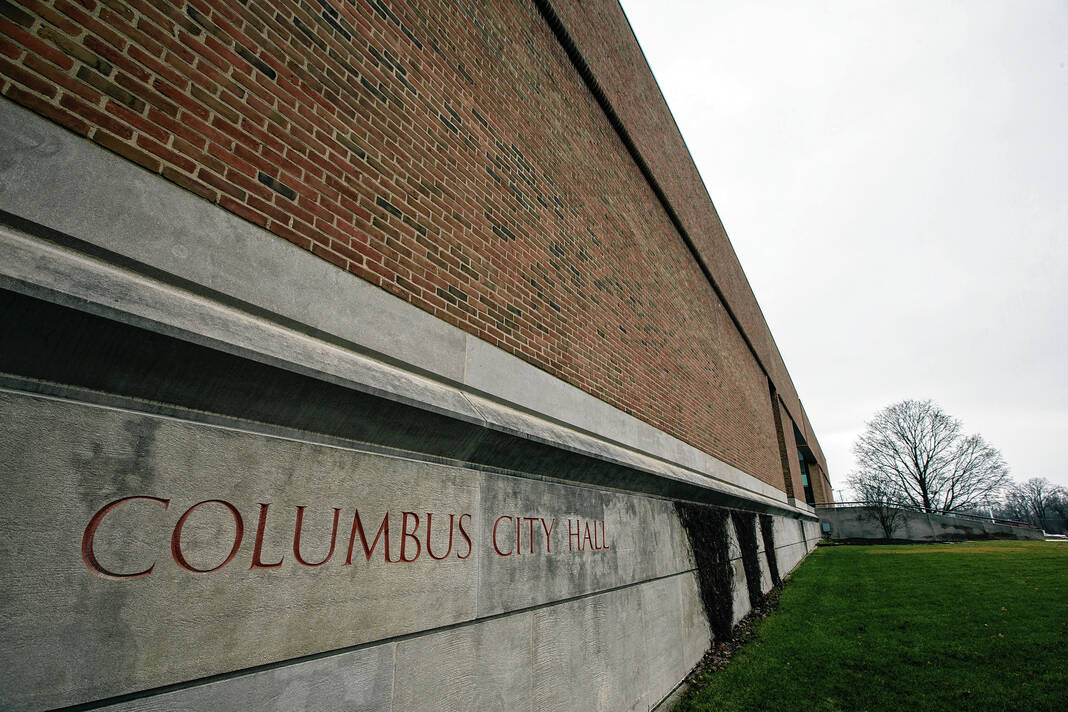
A new noise ordinance for Columbus is now in effect after getting official approval from the Columbus City Council on Tuesday night.
Columbus City Council members voted 9-0 to pass the second reading of an ordinance that repeals and replaces the previous noise ordinance.
The updated legislation is intended to modernize noise regulations and make them more enforceable, city officials said.
The changes have been in the works for years, and involved extensive research on behalf of city attorneys and the council’s ordinance review working group, along with input from the Columbus Police Department and code enforcement.
The updated iteration includes more applicable references to Indiana Code to help enforceability and got rid of out-of-date terminology used in the old ordinance including references to steam whistles and phonographs. It also doubles the fines for a violation of the noise ordinance compared to the previous legislation.
The ordinance says that it is unlawful for a person to “make, continue, or cause to be made or continued any loud, unnecessary, unusual, or raucous noise or any noise which either annoys, disturbs, injures, or endangers the comfort, repose, health, peace, or safety of others within the limits of the city.”
The ordinance also outlines specific noises that are prohibited under Section 8.28.040. It states that a person “who recklessly, knowingly, or intentionally makes unreasonable noise and continues to do so after being asked to stop by a police or code enforcement officer is in violation of disorderly conduct” as defined by Indiana Code.
The section goes on to outline certain time periods that those specific noises are disallowed. Construction, demolition, maintenance, production or repairs that goes on in a manner that creates “loud, unnecessary and unreasonable noise” is not allowed weekdays unless it is between 7 a.m. to 8 p.m. and weekends from 8 a.m. to 8 p.m., unless authorized by the city. In addition, yelling or shouting on public streets is not allowed from 11 p.m. to 7 a.m., according to the ordinance.
As another example, loudspeakers and amplifiers that produces sound “cast upon the public streets” is also prohibited, unless authorized by the city.
If a violation of the noise ordinance is alleged to have occurred, people are asked to file a complaint with either Columbus police or the city’s code enforcement office. The updated ordinance increases fines for violations when someone fails to comply when asked by police or code enforcement: $100 for a first offense, $500 for a second offense and $1,000 for a third offense.
In other words, those in violation would essentially receive a warning before they begin accruing fines. Only police officers are able to issue citations, officials said.
Definitions for disorderly conduct and public nuisance were two important elements of the legislation, according to city officials. Someone would be declared a public nuisance if they violate the noise ordinance more than three times in one year and could be referred to the city attorney’s office for penalties beyond the aforementioned fines, up to and potentially including jail time.
Councilor Chris Bartels, R-District 1, said he heard feedback from community members who had specific questions about mobile businesses such as ice cream trucks or mobile dog grooming vehicles that would go through a neighborhood and make a noise, for example.
Austin Whitted, city attorney, said there are carve-outs for city authorized vehicles that would require permission from the board of works.
Kerri Sinibaldi brought up a similar concern she discussed during the first reading on Jan. 21 about how those living downtown have had issues with Rumpke loudly picking up trash in the middle of the night and wanted to be sure that language in the ordinance would cover both dumpsters and toter trucks. Whitted said previously that that is addressed in the ordinance under letter F, “Loading and Unloading Boxes,” and indicated Tuesday that he believes the language would make that enforceable.
Councilor Elaine Hilber, D-District 2, followed up with a process question, asking who the public should call if the “Loading and Unloading Boxes” was violated.
Whitted responded that it would be code enforcement or Columbus police, but said that police would be a better option in an emergency situation and code enforcement in the instance where a dumpster was picked up loudly.