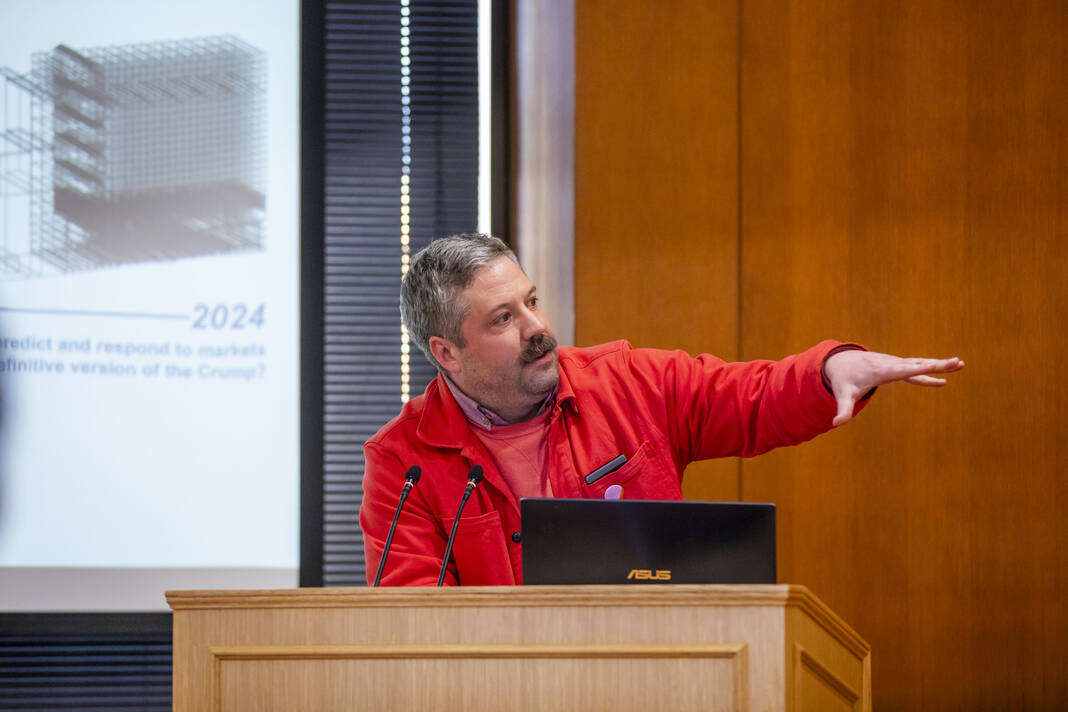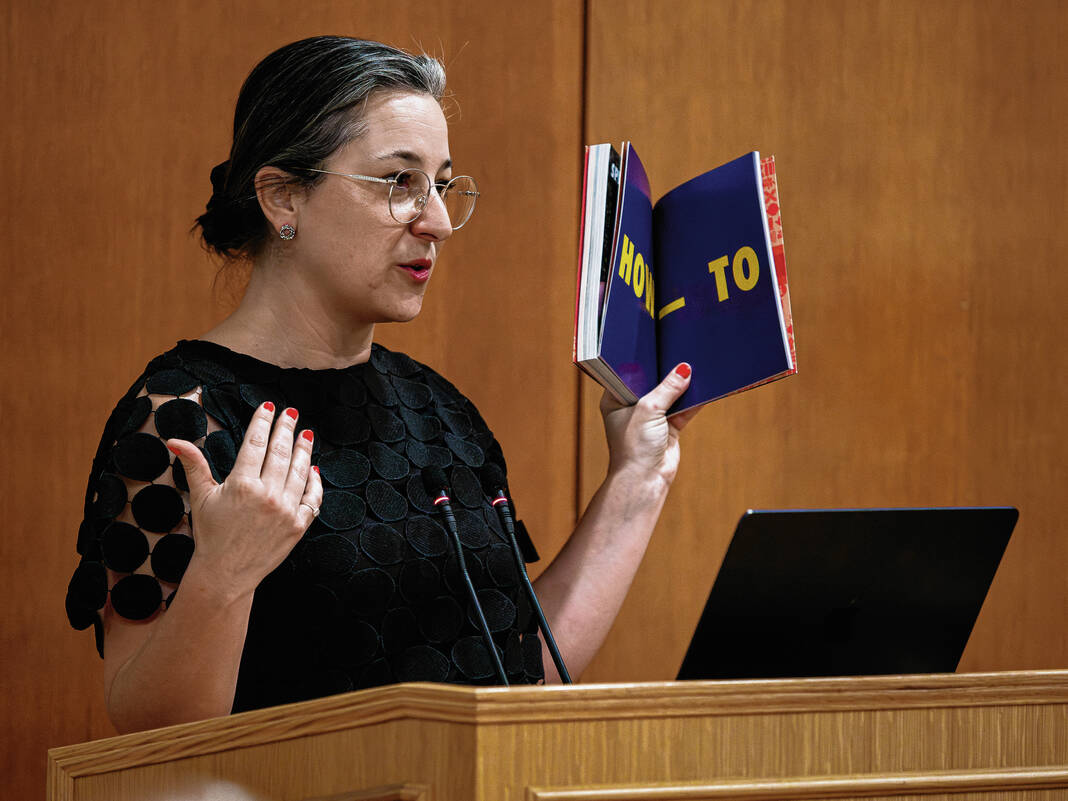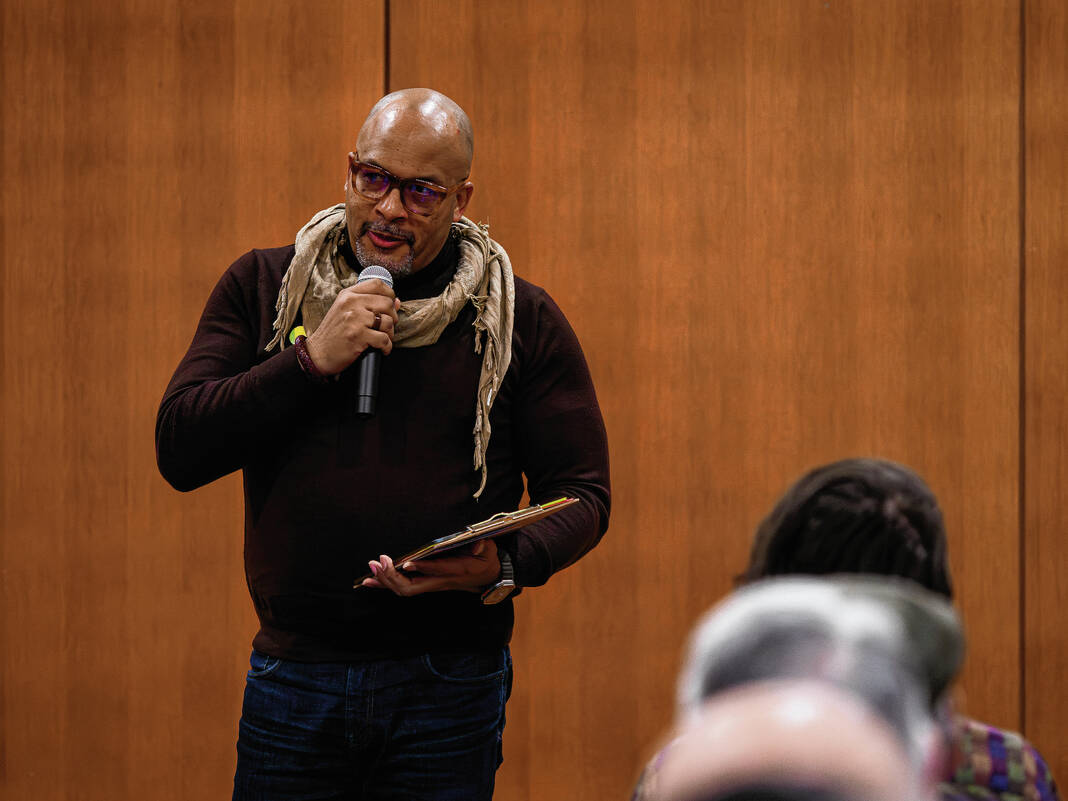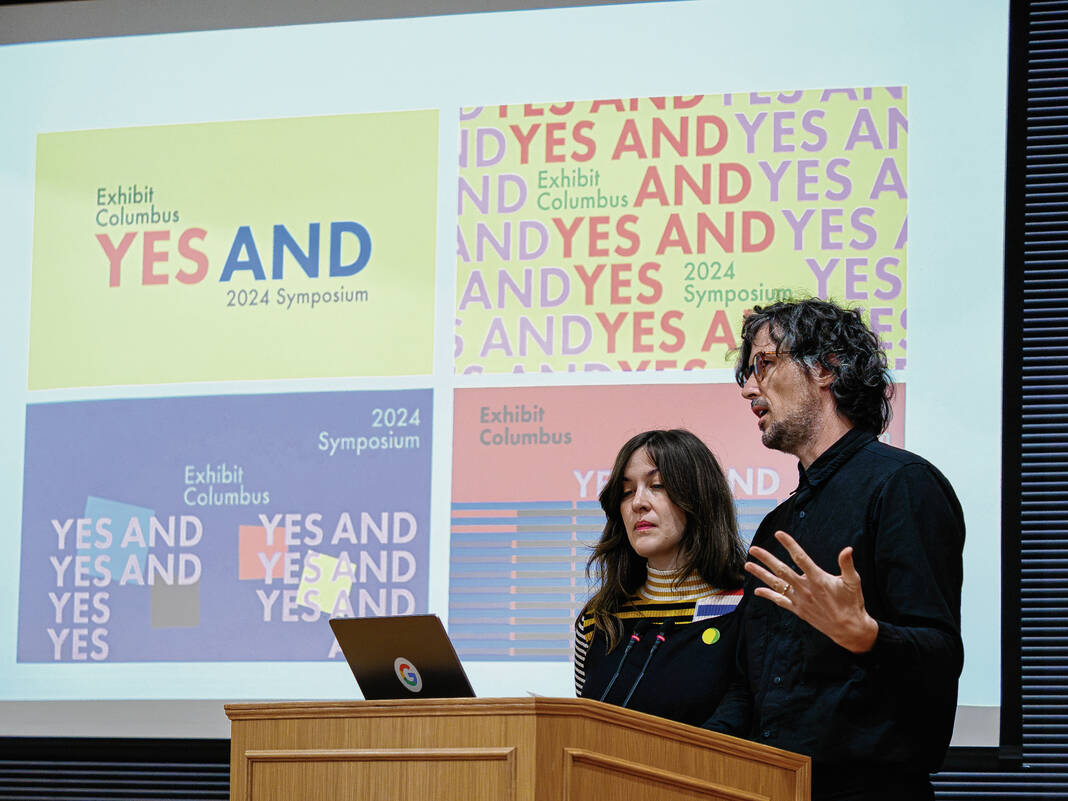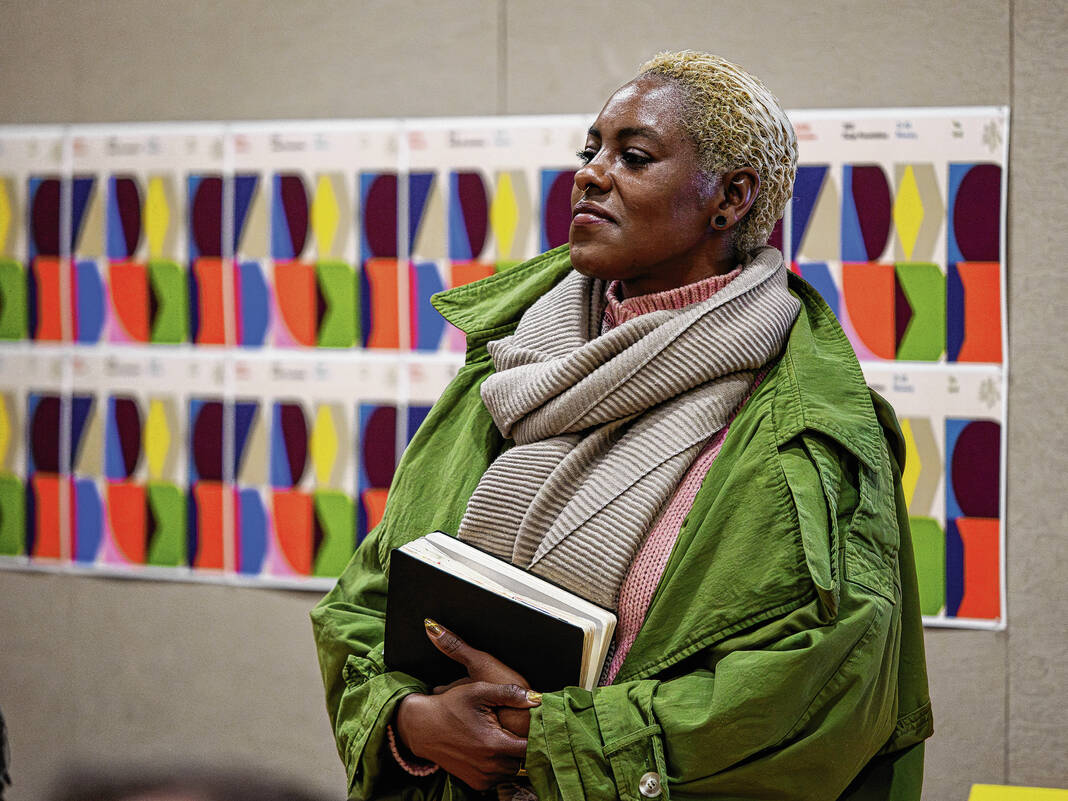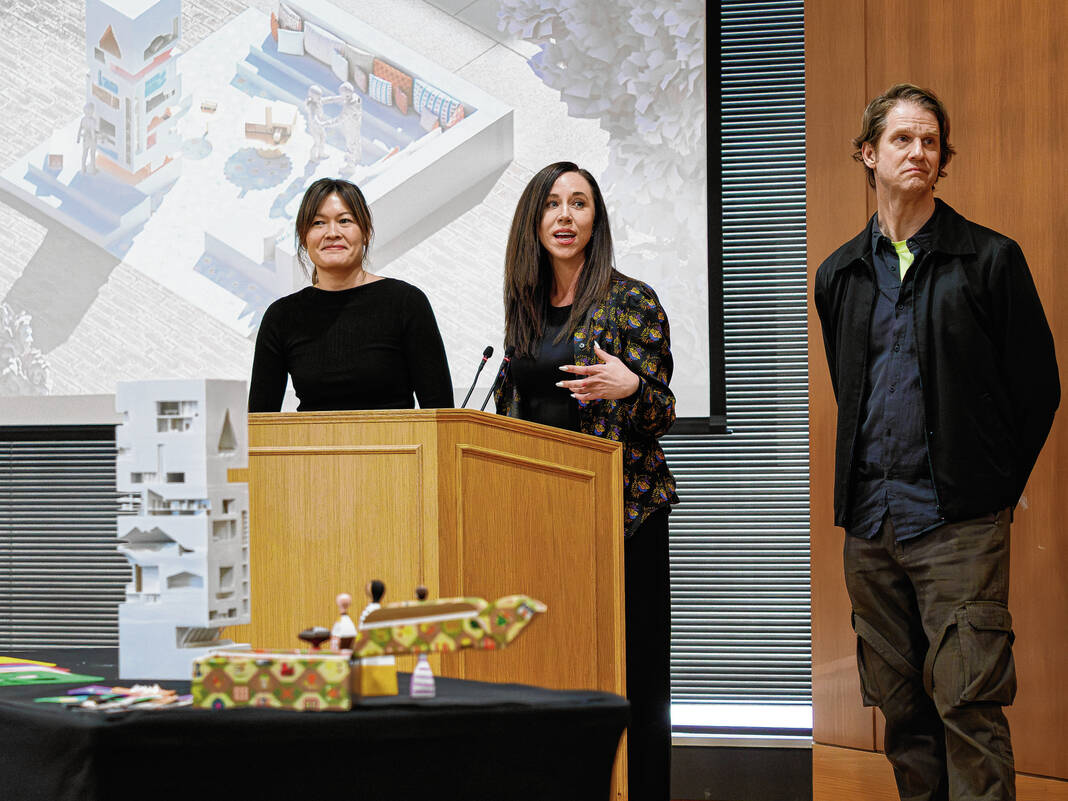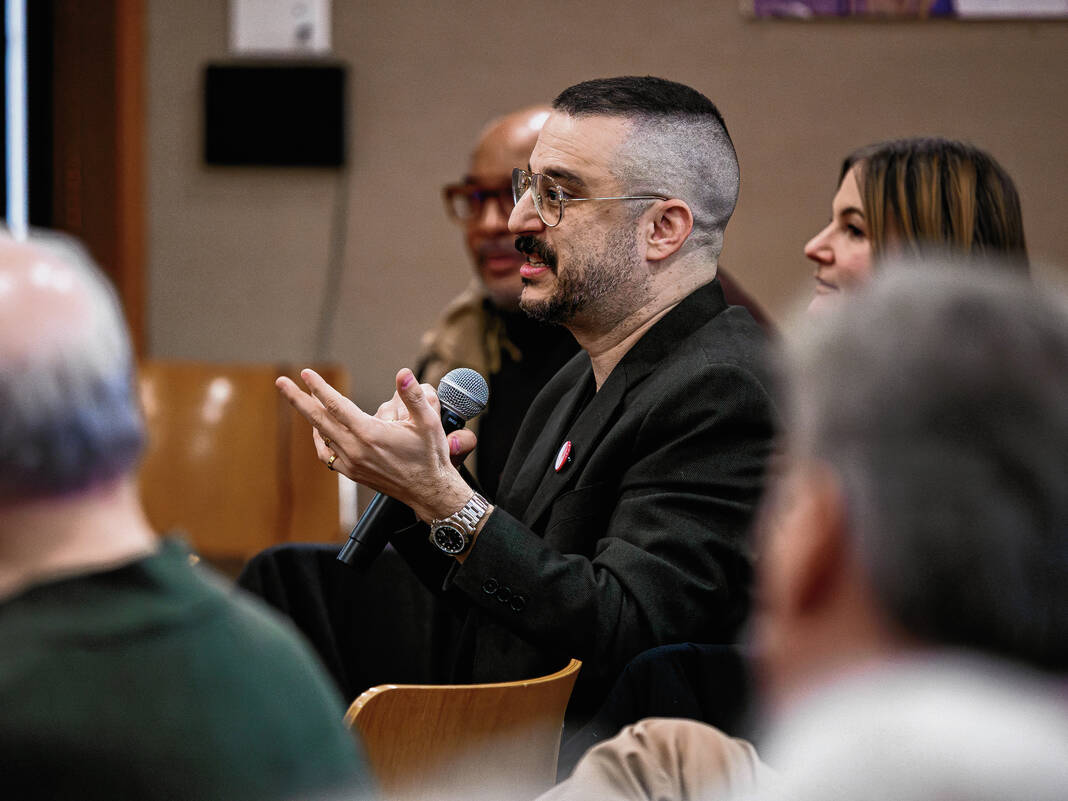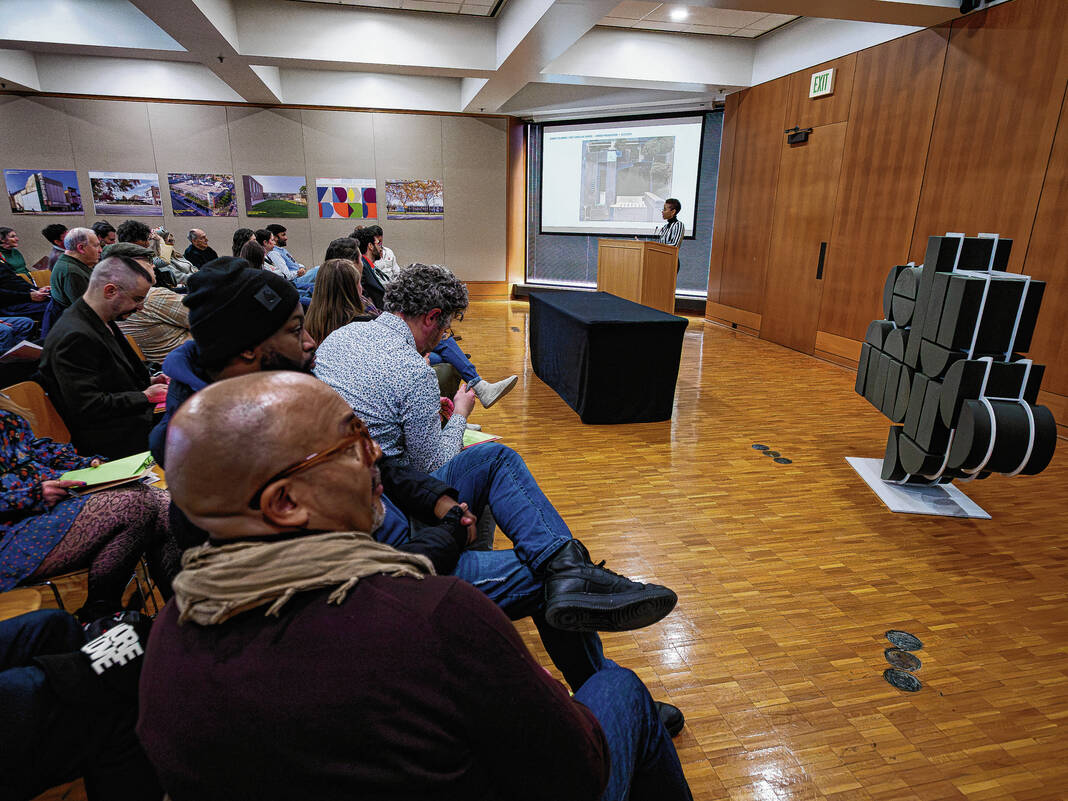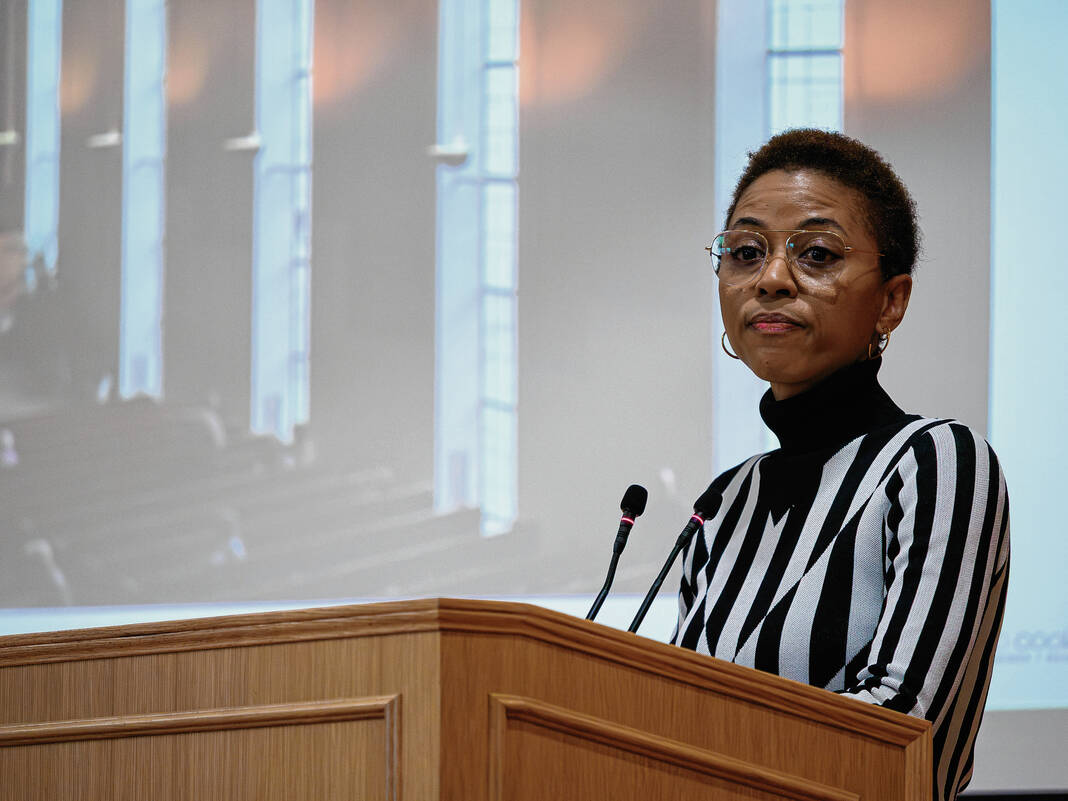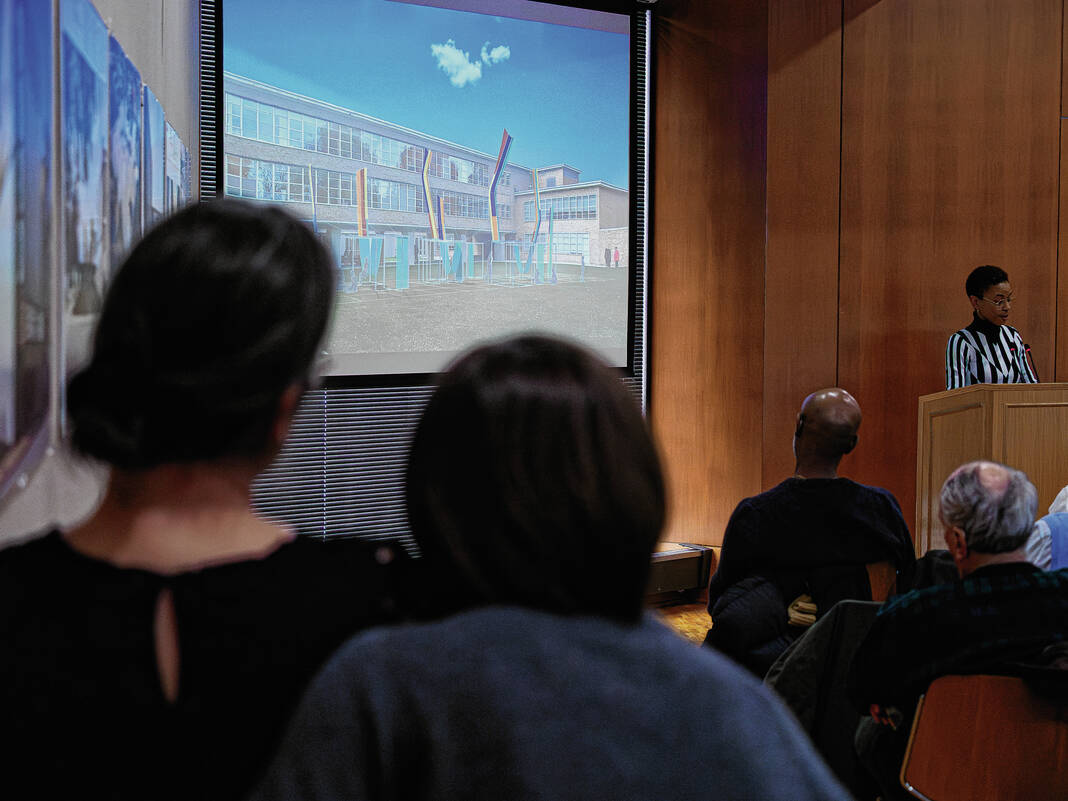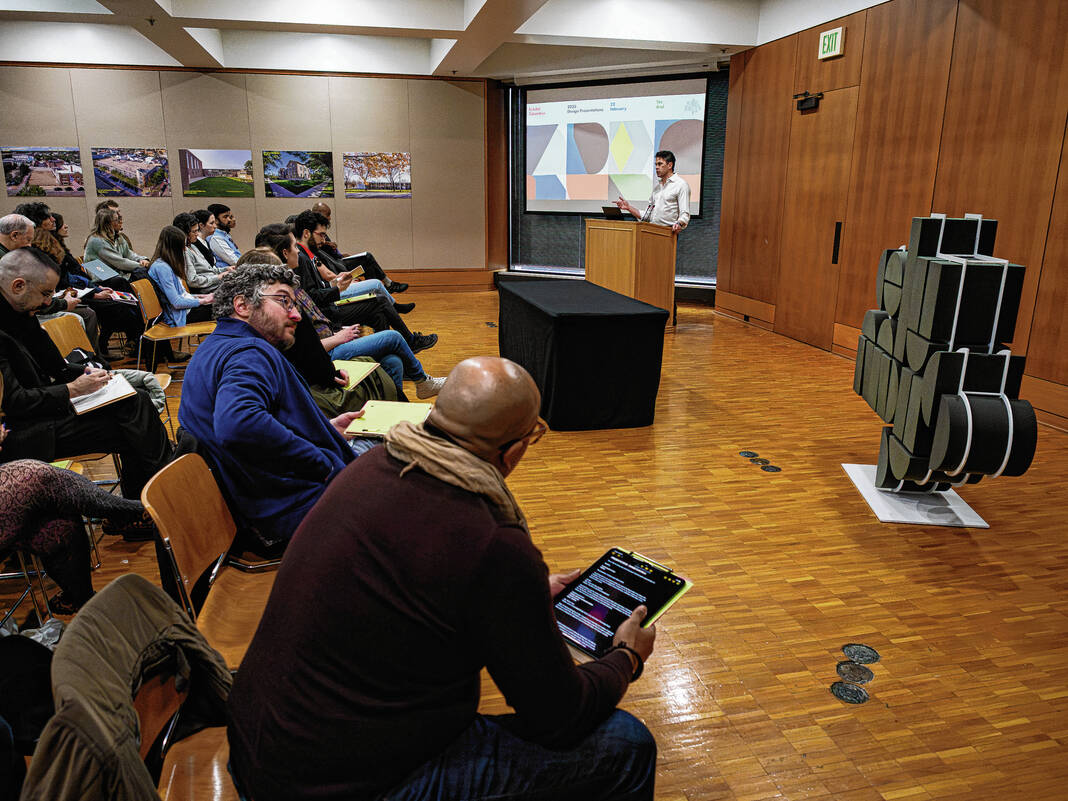
Mike Wolanin | The Republic Richard McCoy, executive director of Landmark Columbus, welcomes guests to the 2025 Exhibit Columbus design presentations program at Columbus City Hall in Columbus, Ind., Saturday, Feb. 22, 2025.
From transforming a parking garage into a giant speaker to a large dollhouse comprised of famous Columbus architecture, members of the public were invited to view and provide feedback on unique design concepts for site-specific installations as part of the fifth Exhibit Columbus cycle, “Yes And.”
Taking inspiration from an improv theatre technique, “Yes And” consists of four J. Irwin and Xenia S. Miller Prize recipients, six University Design Research Fellowship teams, the High School Design Team, Communication Designer team and Bartholomew County School Corporation STEM, at 13 presentations across four sessions Saturday. The cycle’s curatorial partners, Could Be Design, Mila Lipinski, Rasul Mowatt, Preservation Futures and Too Black, were also in attendance to introduce the designers.
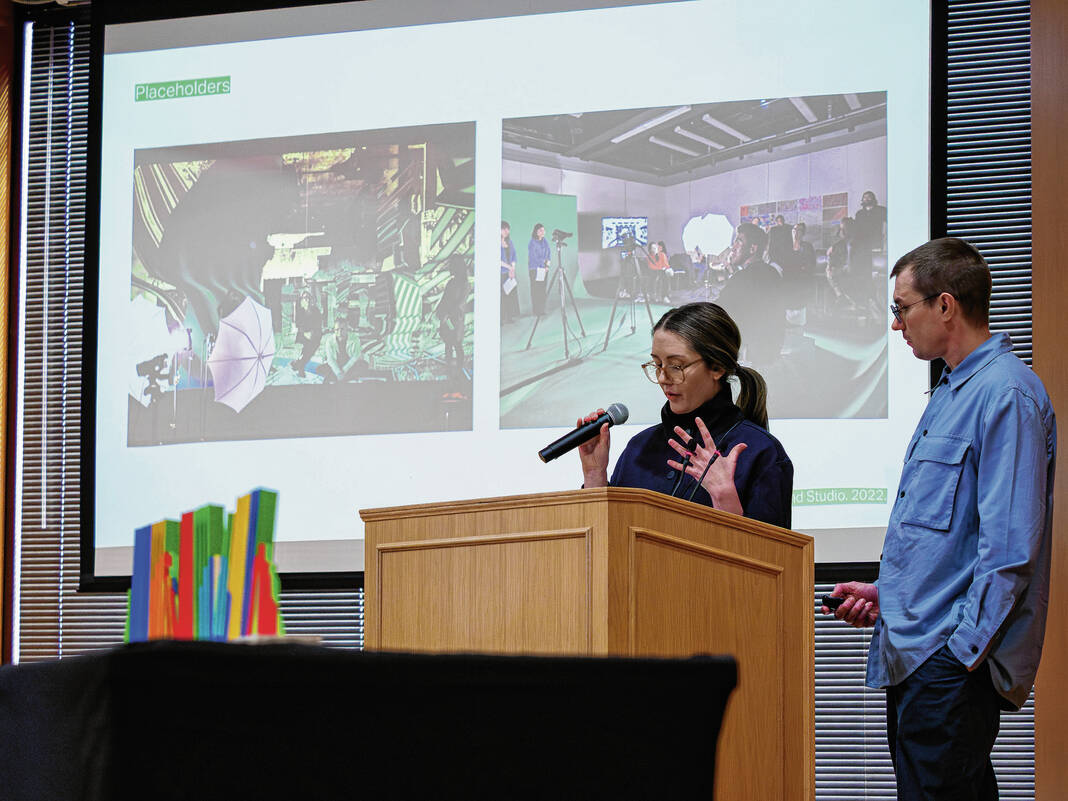
The first session opened with this cycle’s Communication Designer Sing-Sing, a Los Angeles-based multidisciplinary studio consisting of Adi Goodrich and Sean Pecknold. Their installation concept, titled “Motions,” would consist of a central hub area with a map of each installation and distinctly designed double-sided signage, planned to be made of welded steel and colored paint, in front of each installation. These would feature a QR code to scan that would include animation and interview audios showing how each installation came to be.
“These signs will serve as large beacons around Columbus, clearly marking the location of each of the installations,” Goodrich said.
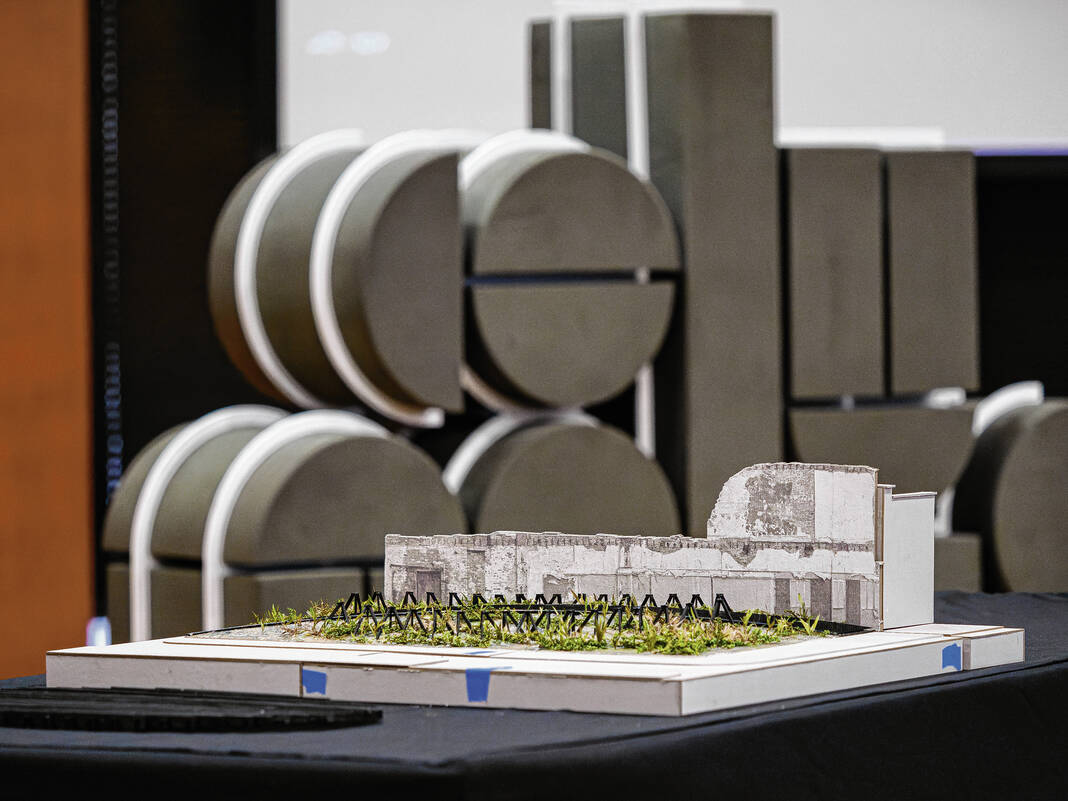
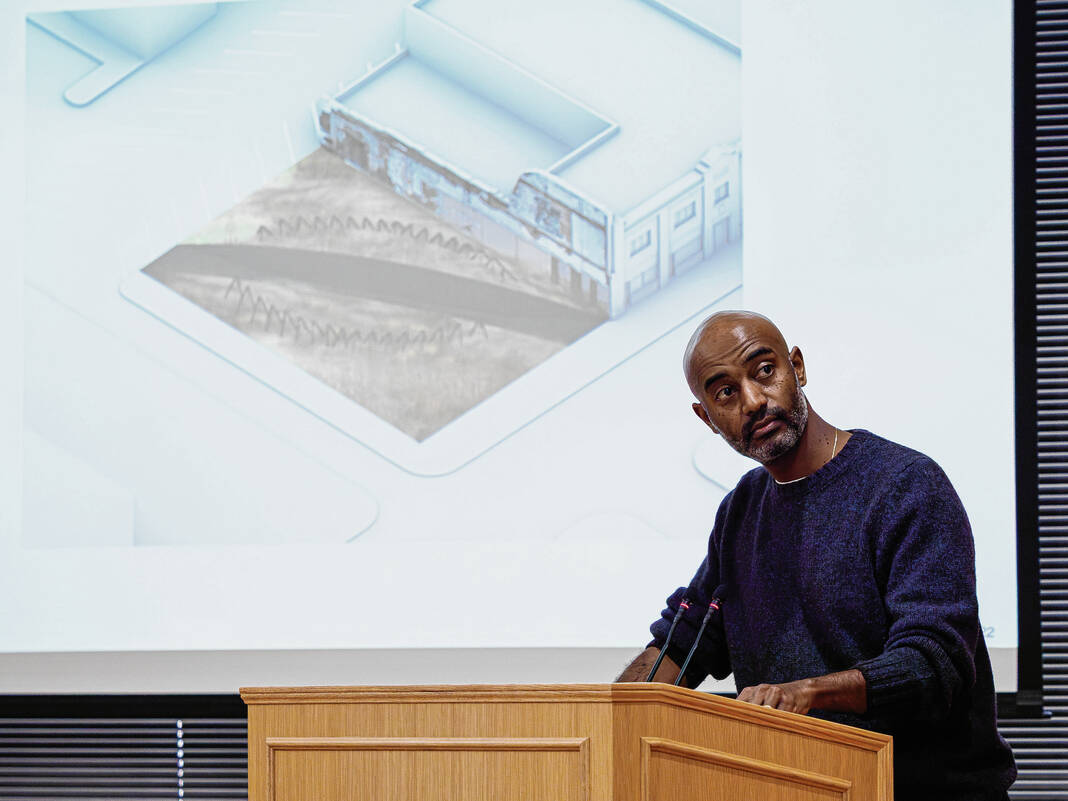
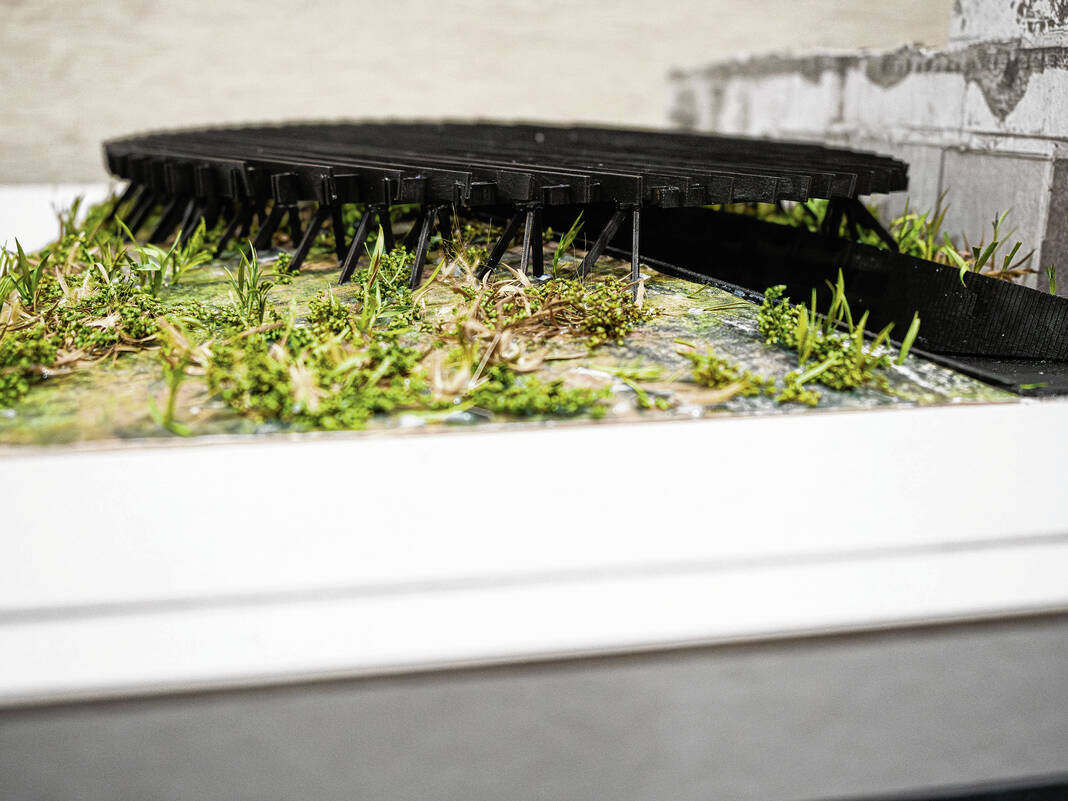
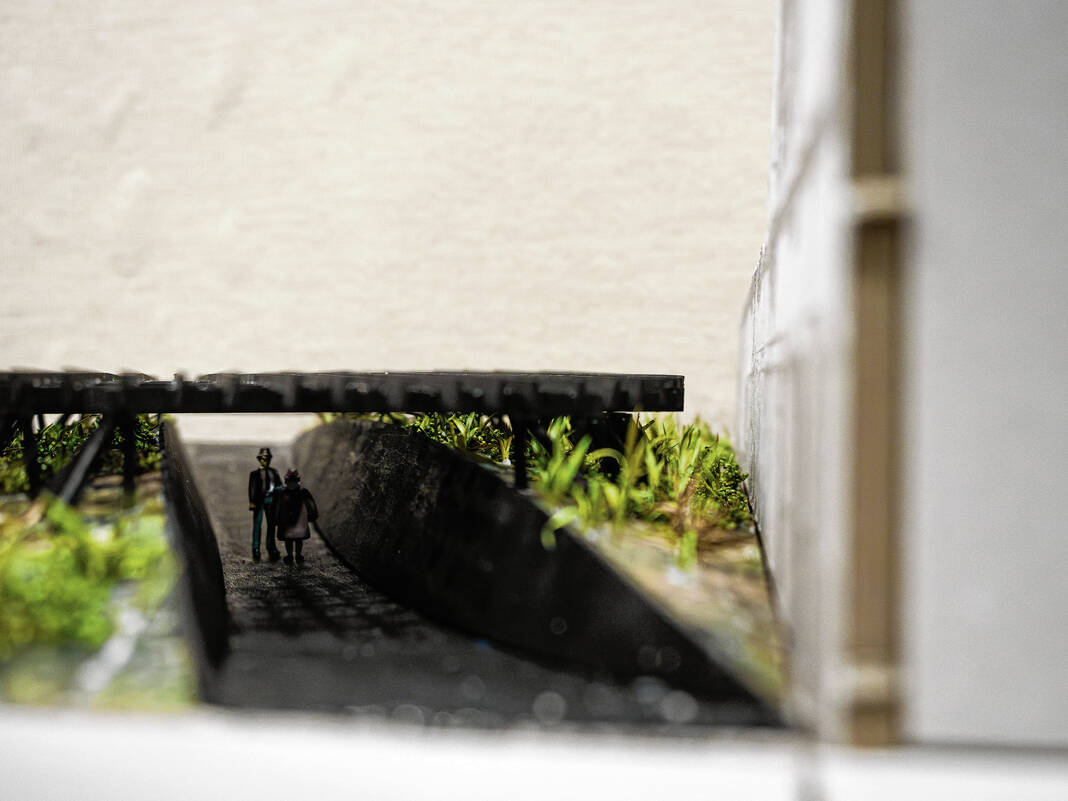
A Miller Prize winner, Emanuel Admassu with New York-based art and architecture practice AD-WO introduced “…,” an ellipses-shaped dug-out gathering space on the site of the former Irwin Block Building, surrounded by dirt mounds of planted indigenous plants and tripod wooden columns. If fundraising is met, Admassu said a canopy made of fire-created timber, making reference to indigenous land remediation techniques, would be installed.
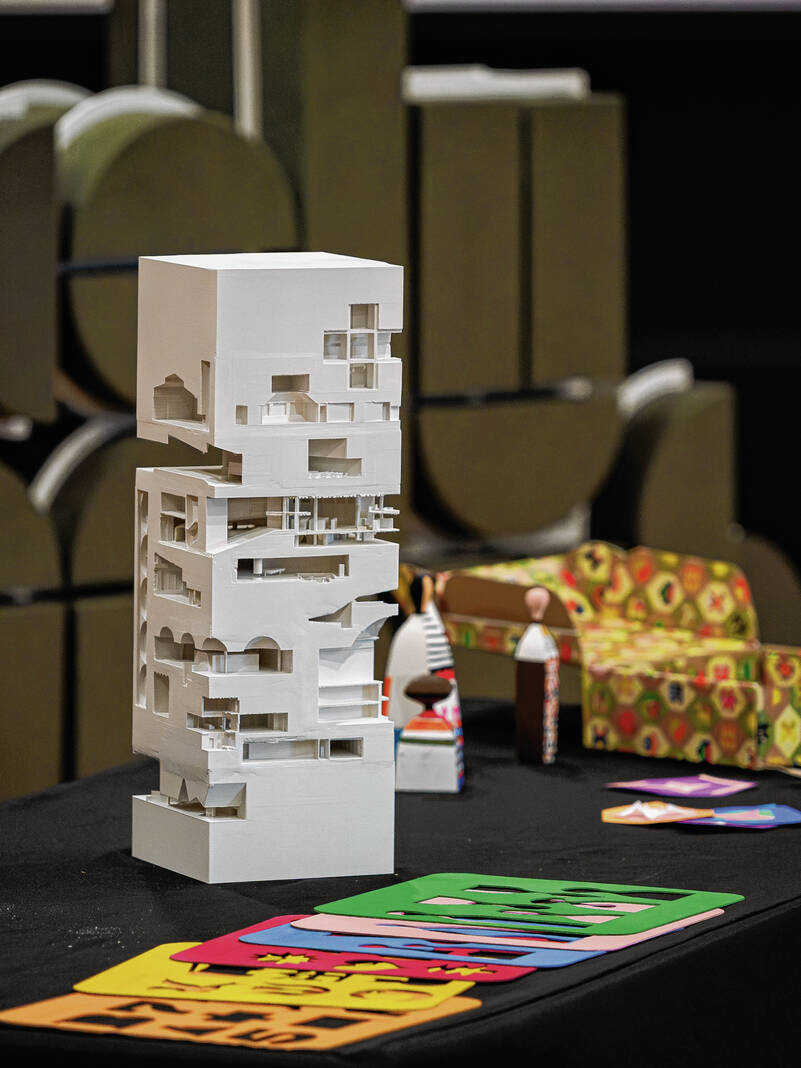
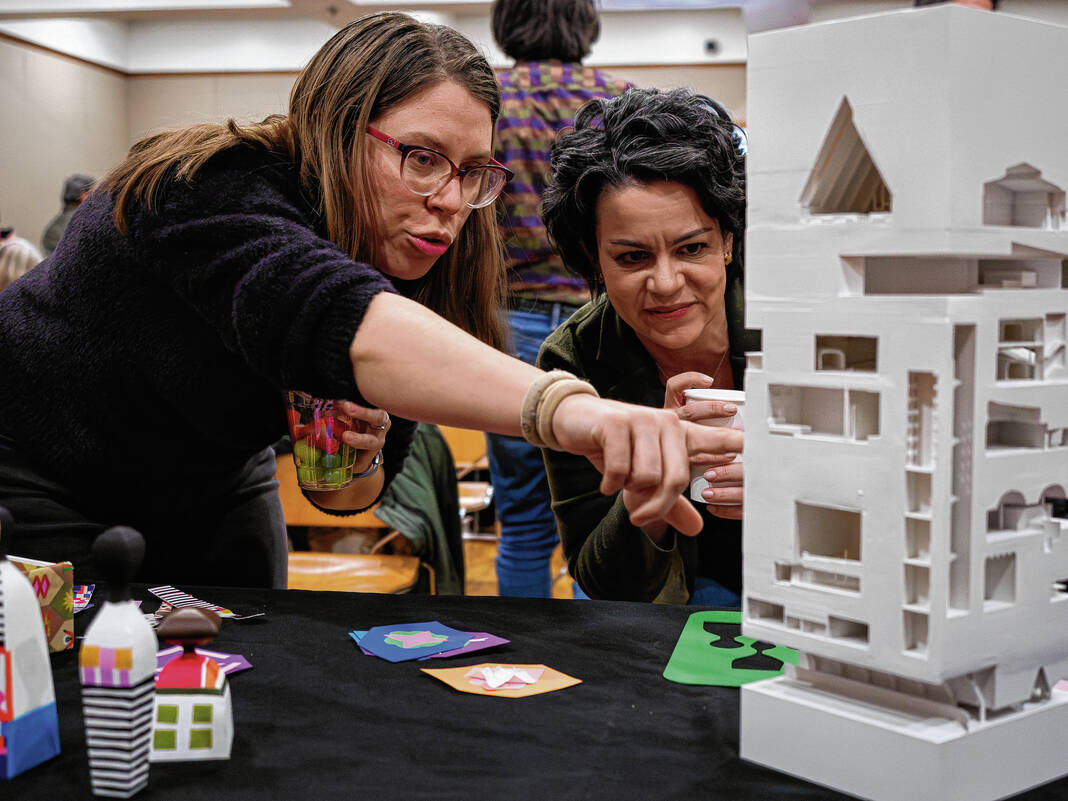
Chandler Ahrens, Constance Vale and Kelly Van Dyke Murphy from Washington University in St. Louis, University Design Research Fellows, concluded the first session with its concept “Inside Out,” a large dollhouse made up of prominent architectural places in Columbus and a conversation pit, inspired by the one at the Miller House, at the Bartholomew County Public Library’s plaza. The dollhouse would stand around 9 feet tall made up of different fabrication techniques including laser cutting and 3D printing. A printed rug will also rest in the conversation pit, which will most likely be made of lumber, Ahrens said.
The second session began with “Pool/Side,” designed by Akima Bracken from University of Illinois Urbana Champaign, also a University Design Research Fellow. This installation features a shallow filtered pool that one could dip their feet into as they sit on an elevated seating platform outside of the Bartholomew County Public Library. Teen Programming Librarian Dakota Hall said they worked with teens at the library on this installation, having them practice deep listening which helped influence their design of water features.
“‘Pool/Side’ is designed as a space for gathering, rest, performance, play and reflection,” Hall said. “It seeks to reclaim and re-imagine spacial typologies such as pools, platforms and courtyards through a lens of inclusivity and imagination.”
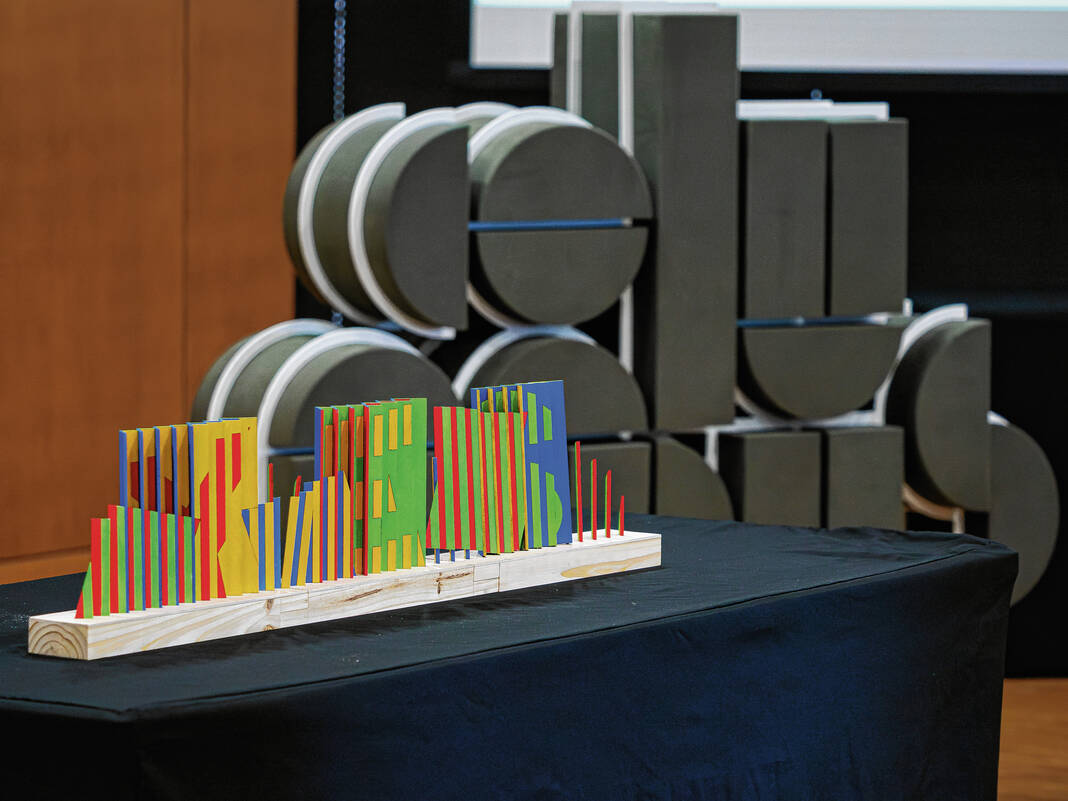
Also as part of the second session, Michael Jefferson and Suzanne Lettieri from Cornell University, also a University Design Research Fellow, presented “Apart, Together,” multi-colored accordion folded screens that would utilize passerbys’ movement and chroma key to display films and video at the Ovation Plaza.
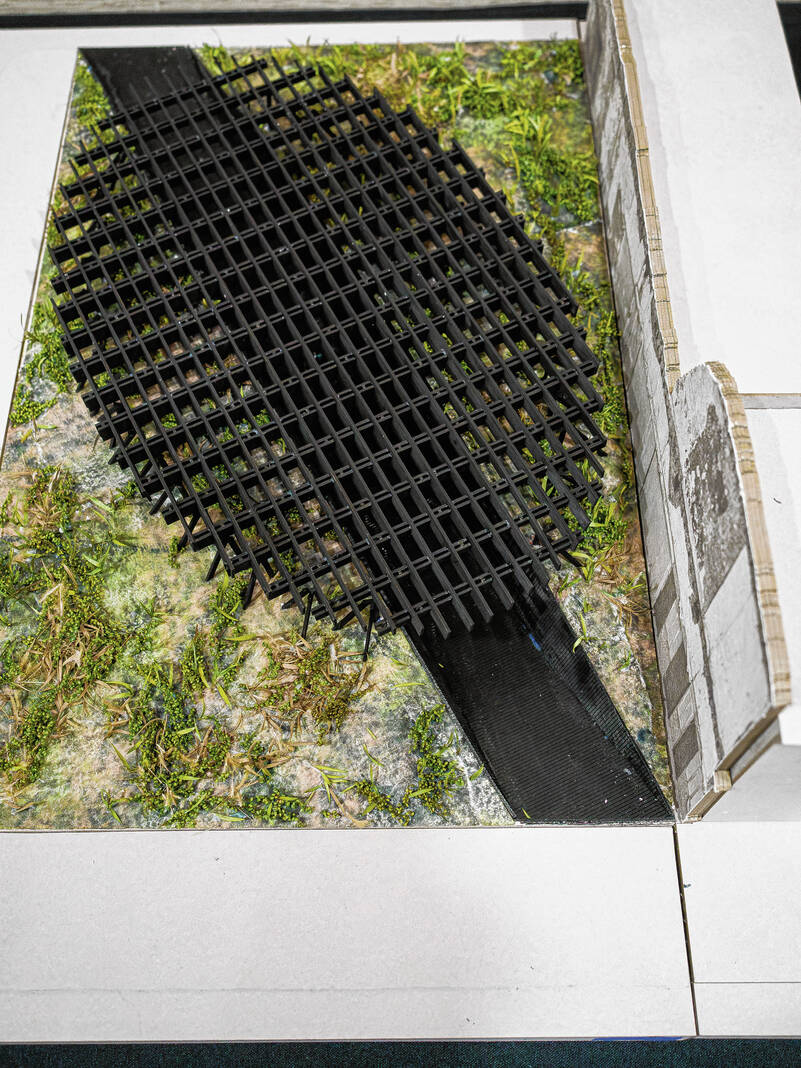
Also a recipient of the J. Irwin and Xenia S. Miller Prize, “Lift,” presented by Nina Cooke John with Brooklyn-based Studio Cooke John, consists of a grid, to most likely be made of welded steel, one can sit in and light fabrics weaving from one raised cube to another, which portrude into the sky in multi-colored “kites” made up of sewn together nylon fabric. The site is First Christian Church. John said the installation represents a message that all are welcome in the church.
The third session kicked off with “Joy Riding,” presented by Gabriel Soomar and Francesca Picard with Flordia-based Studio Barnes, also a Miller Prize winner. This multimedia installation at the Jackson Street Parking Garage would combine Black car culture and mid-century modern design to transform the parking garage into a speaker with a large mural, facade panels resembling speakers to be made of metal or wood and a transforming, folding sound system that would be 15 feet when deployed.
Andrew Fu and Aleksandr Mergold with the New Jersey Institute of Technology, a University Design Fellow, presented “The Steel Horsie,” a framed structure made of recycled materials that would hold old photographs of people in its frames at the Bartholomew County Historical Society. “PUBLIC/SCHOOL/GROUNDS,” presented by Cesar Lopez of the University of Virginia, Jess Myers with Syracuse University and Amelyn Ng with Columbia University, incorporates sound and uniquely textured platforms to re-imagine an outdoor classroom on the grounds of Central Middle School and CSA Lincoln Elementary School.
“Our project ‘PUBLIC/SCHOOL/GROUNDS’ will take inspiration from the architecture of Columbus’ schools to foster a sense of openness and spontaneity in education spaces. We’re proposing a new enclosure by introducing discursive geometries to bolster a tactile material and sensorial experience,” Lopez said. “The intent is to continue the legacy of Columbus’ architectural exploration into the interior of the classroom and really break the barriers that contain the creativity and curiosity.”
The fourth and final session saw Sarah Aziz with the University of New Mexico, a University Design Fellos, presenting “View of the World from Indiana,” a concept for 12 shrines to buildings in the Midwest and a larger-than-life slogan that would read “Nothing to See Here.” Davida Harden with Bartholomew County School Corp. STEM then explained how fifth graders would answer the question “how could your favorite downtown Columbus building be re-envisioned for the future?” with prototypes in downtown storefronts.
“It’s introducing our students as young as fifth grade to the world of architecture and we’re just super excited about that opportunity,” Harden said.
BCSC C4 instructor Darin Johnson and HDST Coordinator Spencer Steenblik with Indiana University Sidney and Lois Eskenazi School of Art, Architecture + Design, joined by students with the Columbus Area Career Connection program, took the audience through their design process for their concept of “Valence.” This wooden structure, inspired by carbon molecular structures, incorporates rest and conversation with its seating area as well as play with a pipe configuration that allows for climbing.
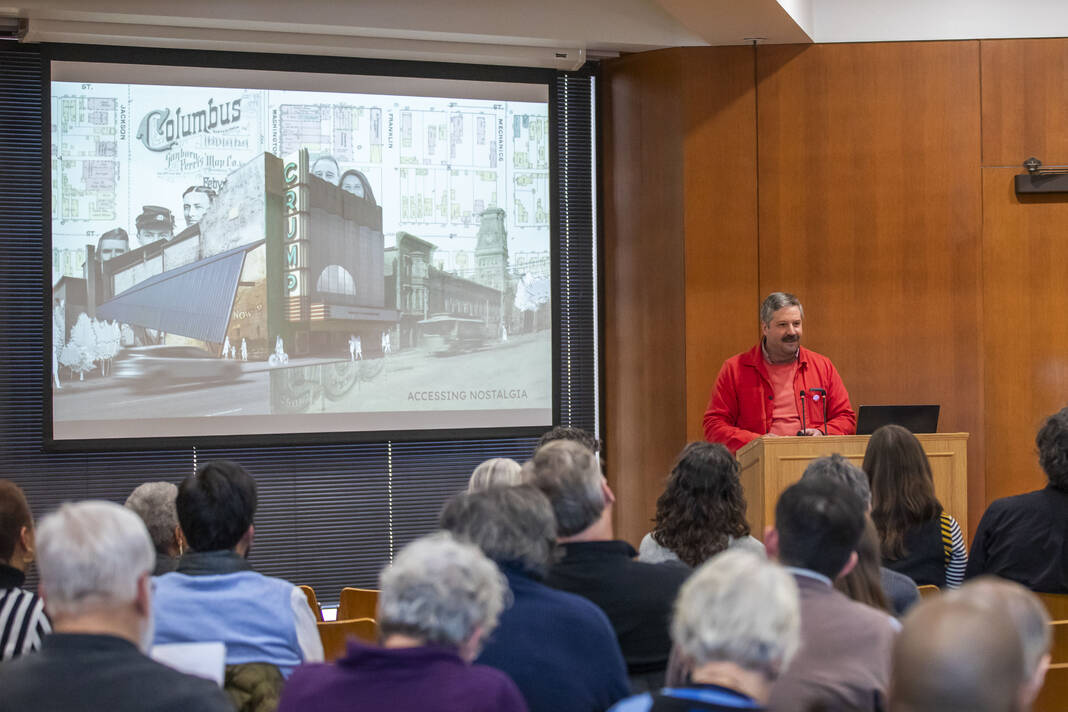
To conclude the day, Charlie Vinz with Chicago-based Adaptive Operations, a Miller Prize winner, presented his concept for breathing life back into the Crump Theatre, in a concept he called “Accessing Nostalgia.” This would feature four aperatures and would essentially “peel back” the building’s metal siding to create a covered canopy area, while also serving as a new entryway and a space that can be used for outdoor events.
“Our goal with ‘Accessing Nostalgia’ is to create new apertures, literally and metaphorically, within and around the Crump that allow a creative nostalgia to be projected,” Vinz read from his presentation slides. “A nostalgia not for historic reenactment nor historic revision, but one that searches for a past perfect that can point to an idealized future.”
For more information on each designer and concept, visit exhibitcolumbus.org. The 2025 Exhibition will debut Aug. 15 and 16.