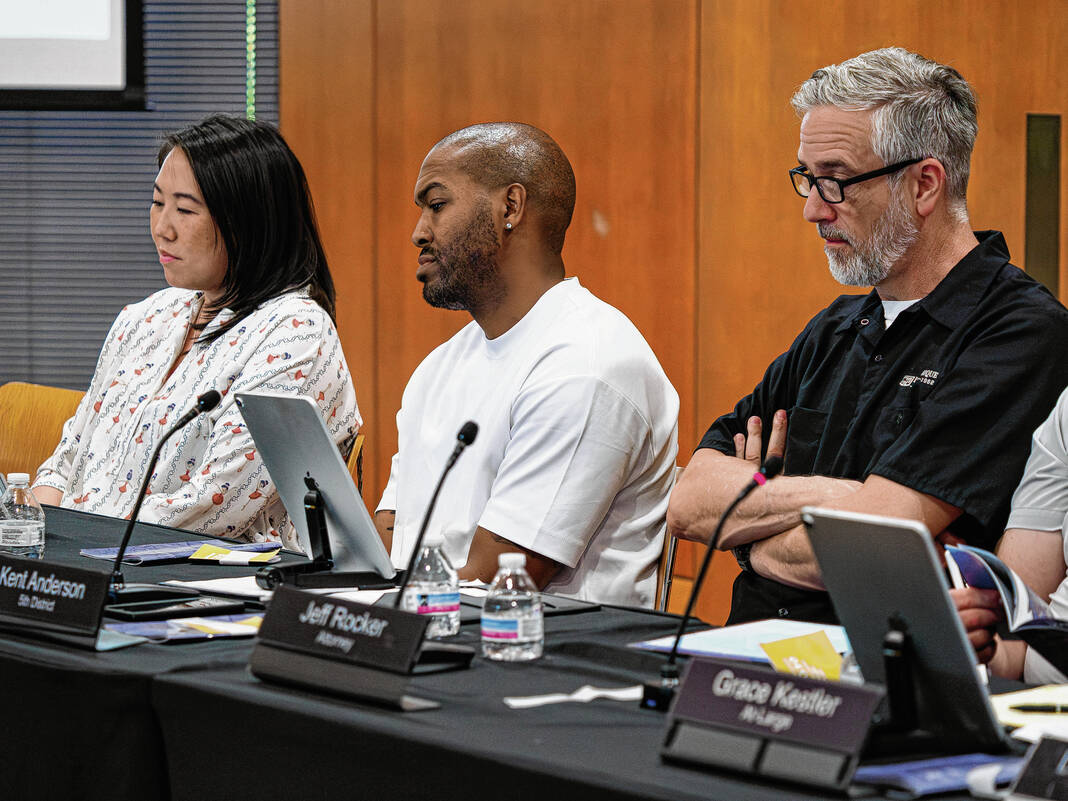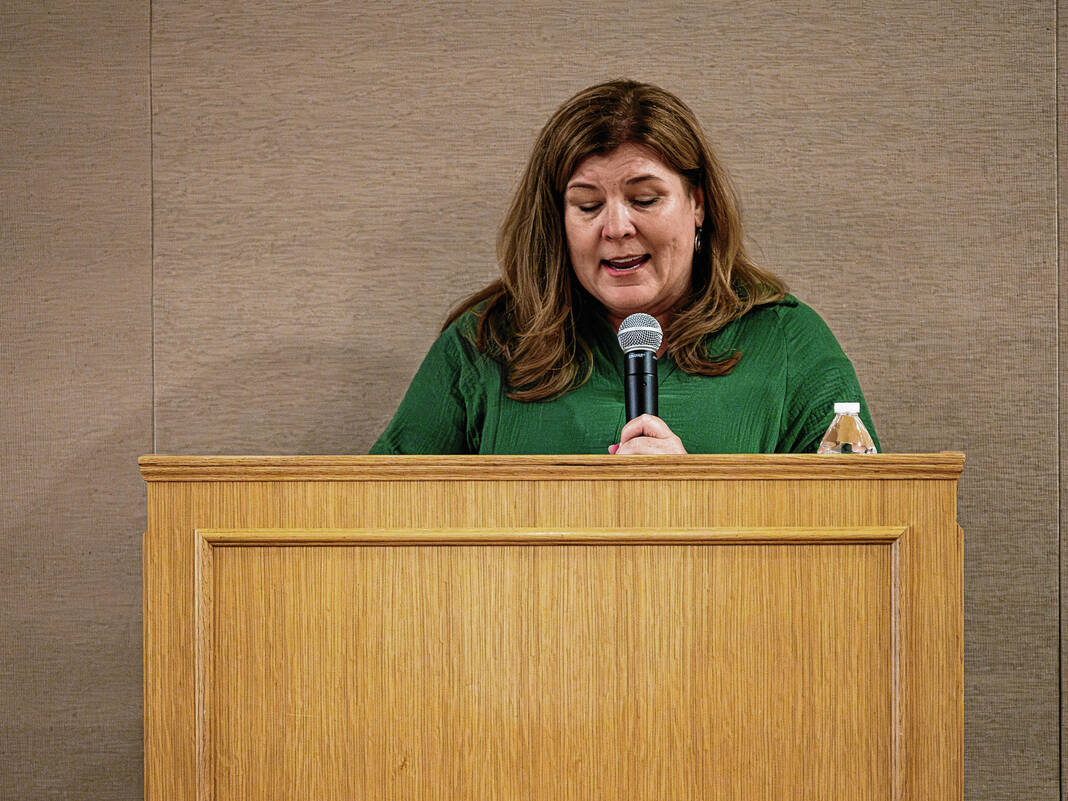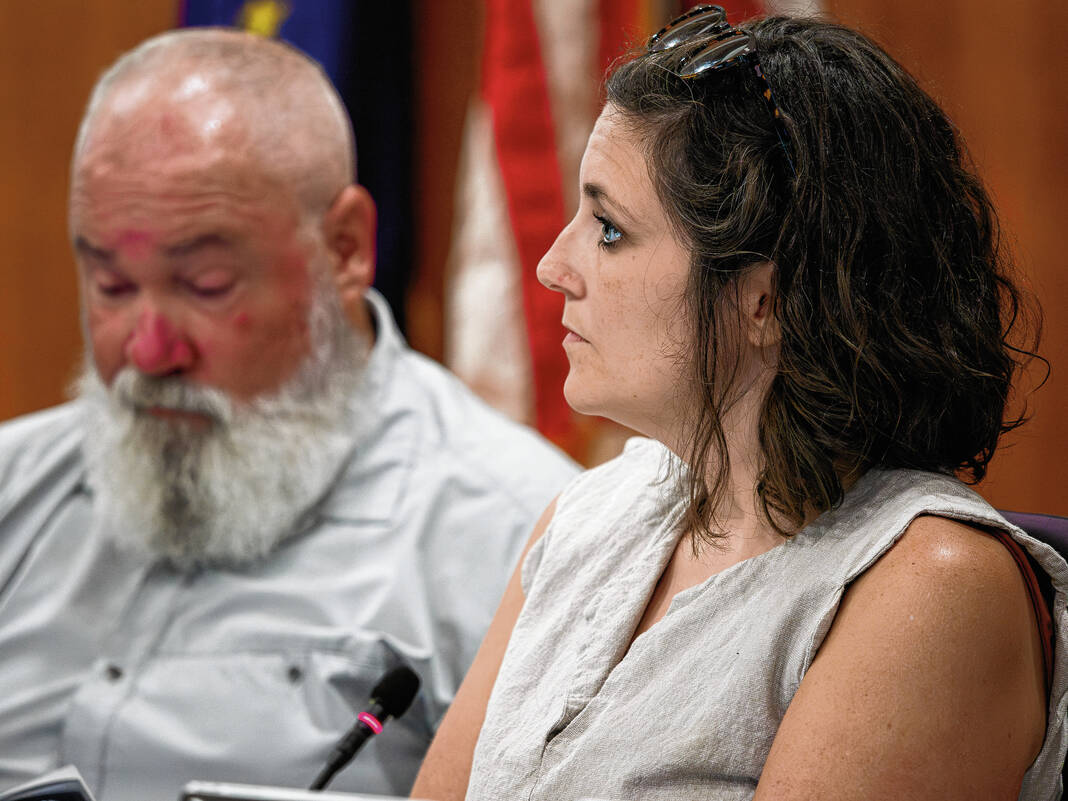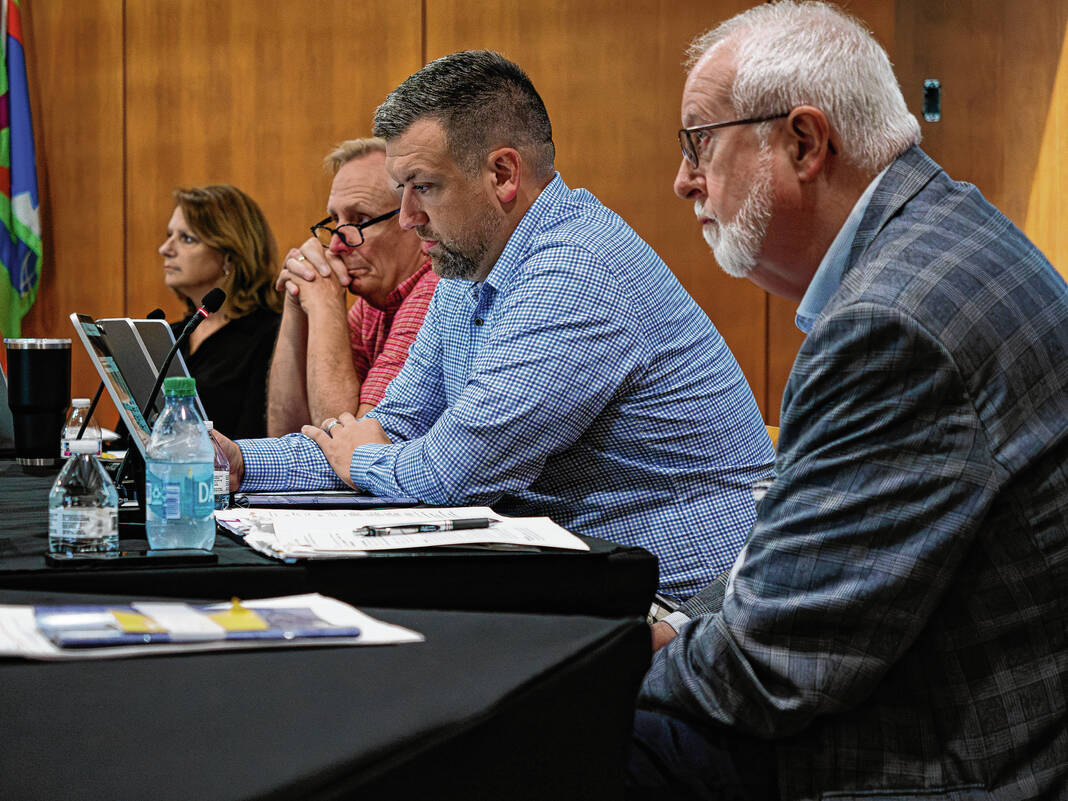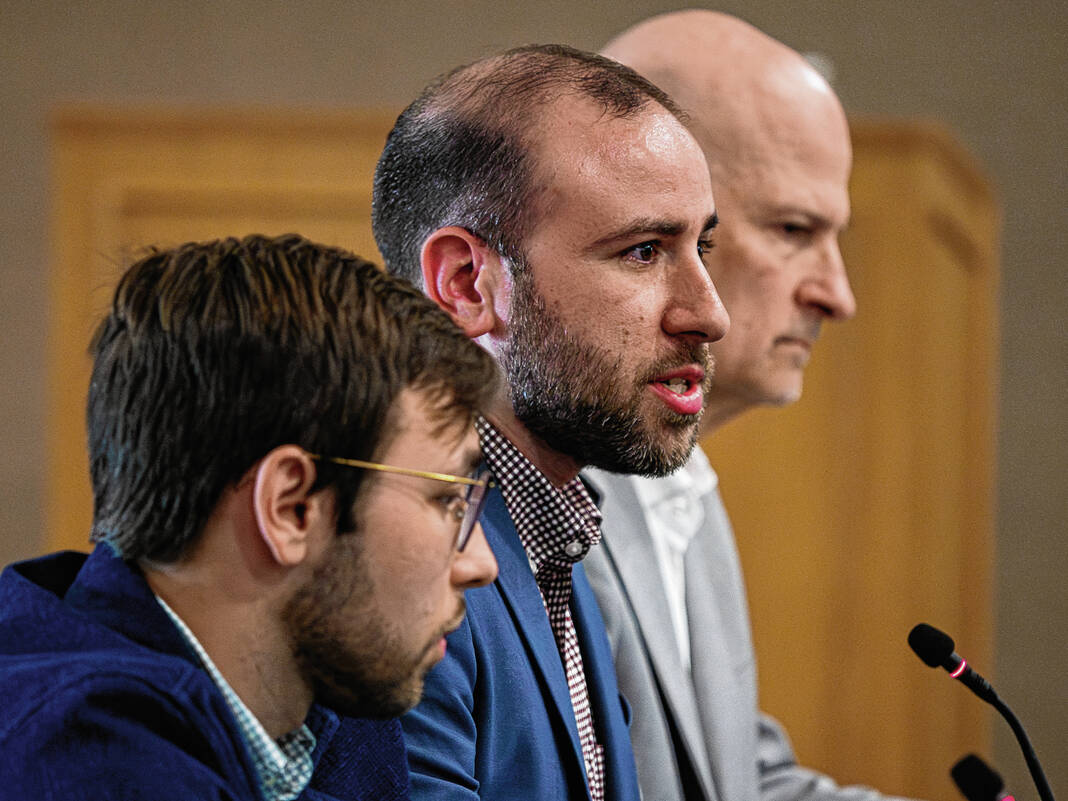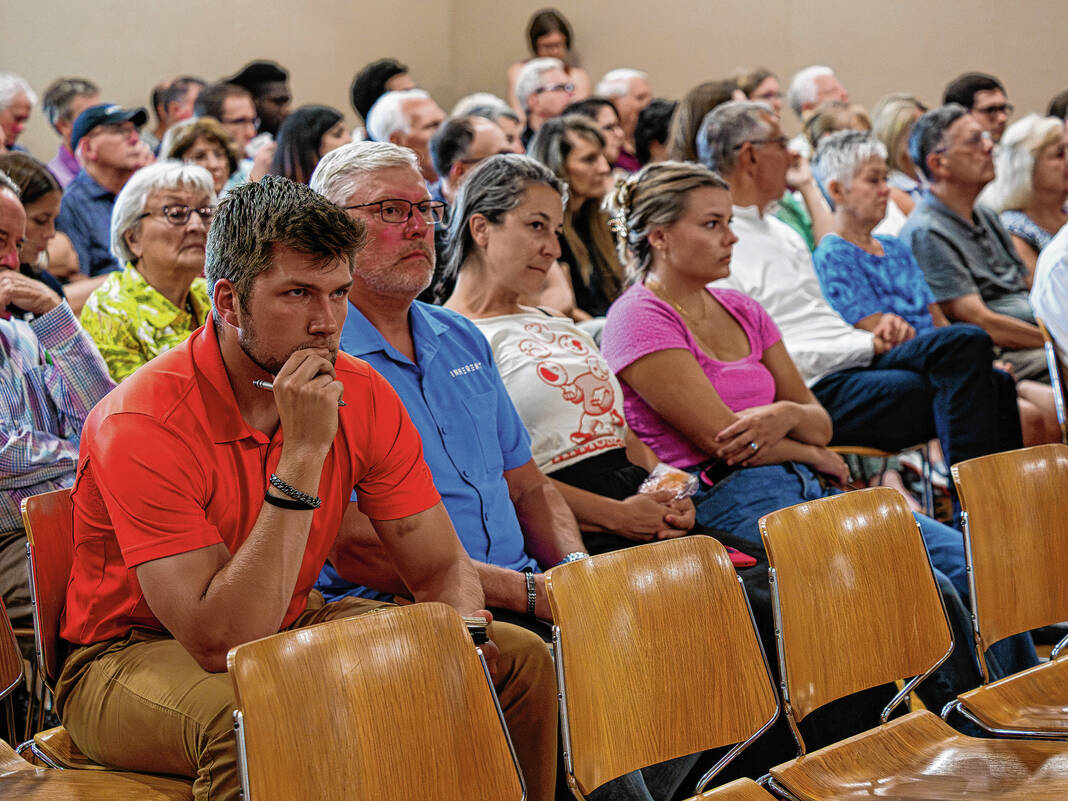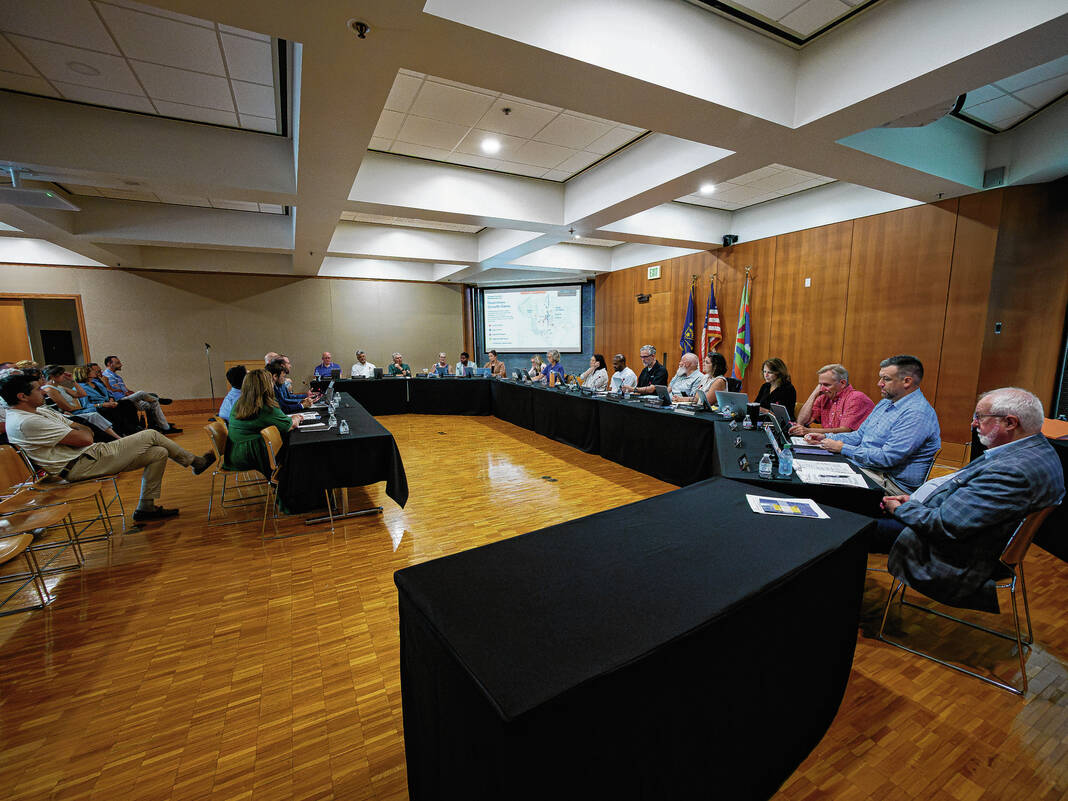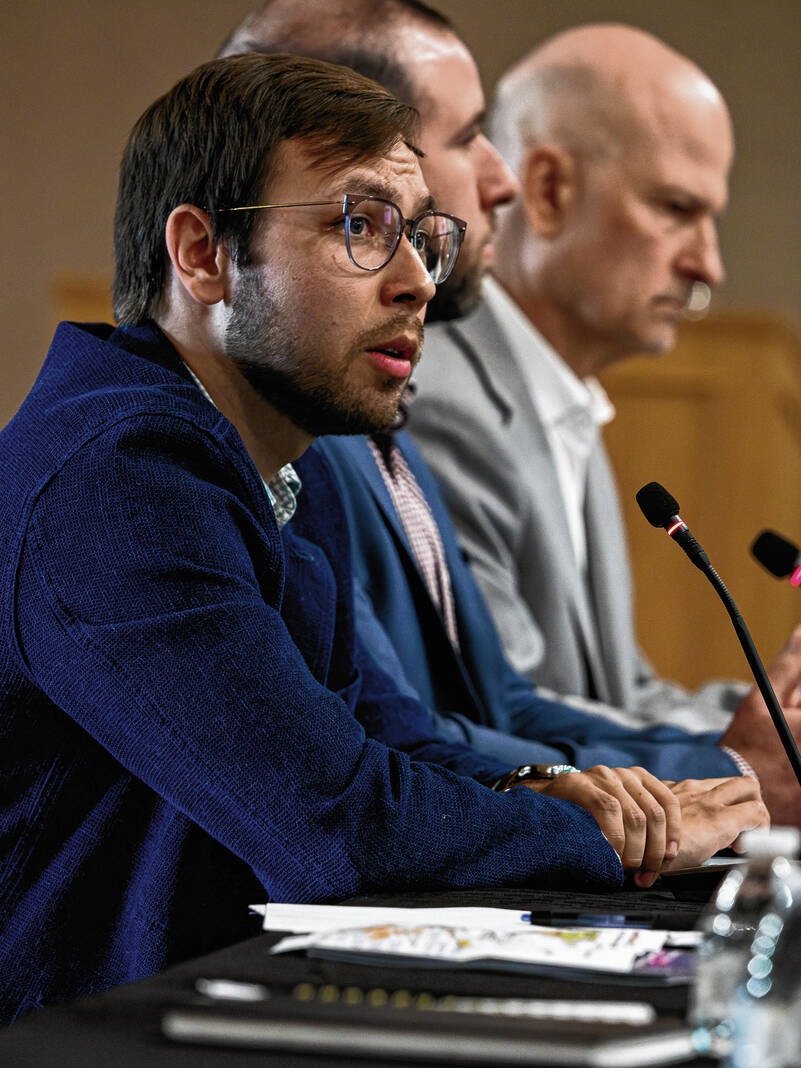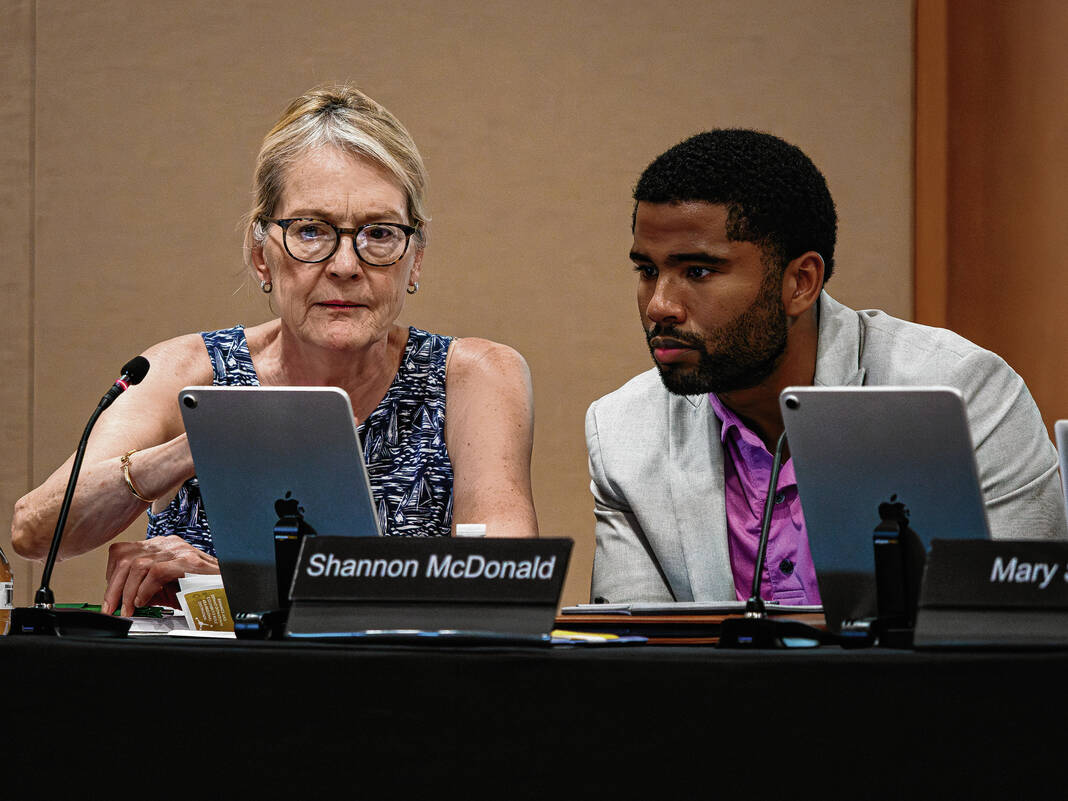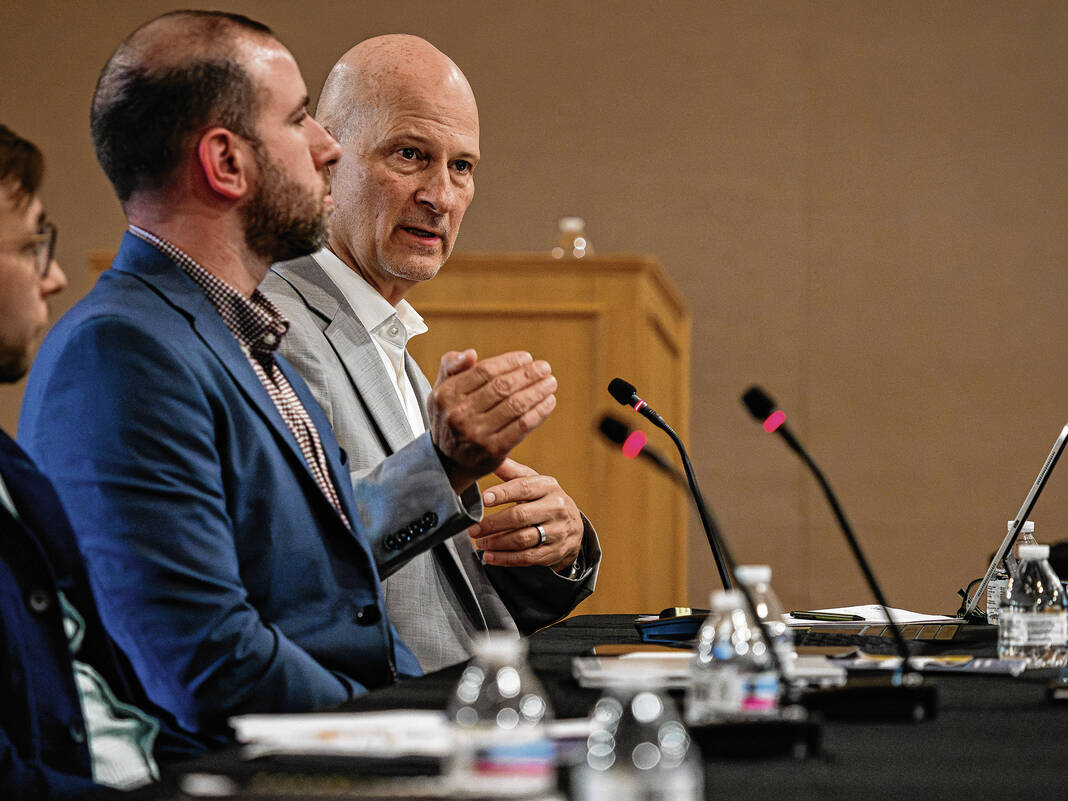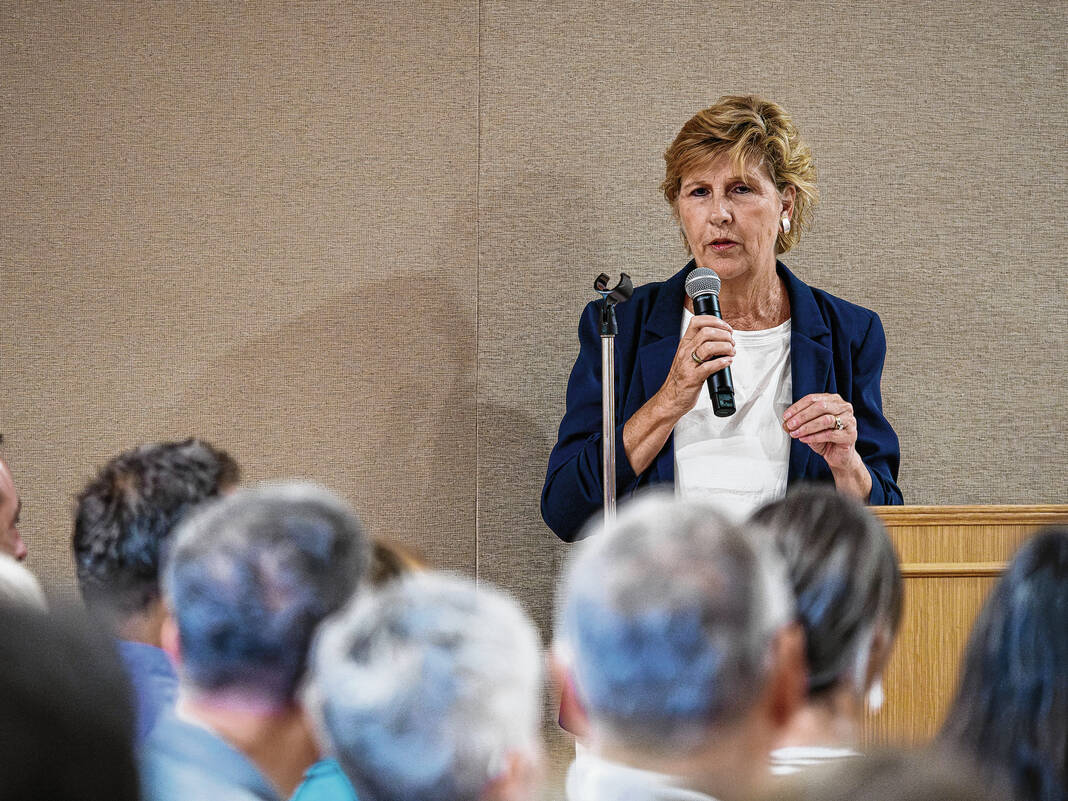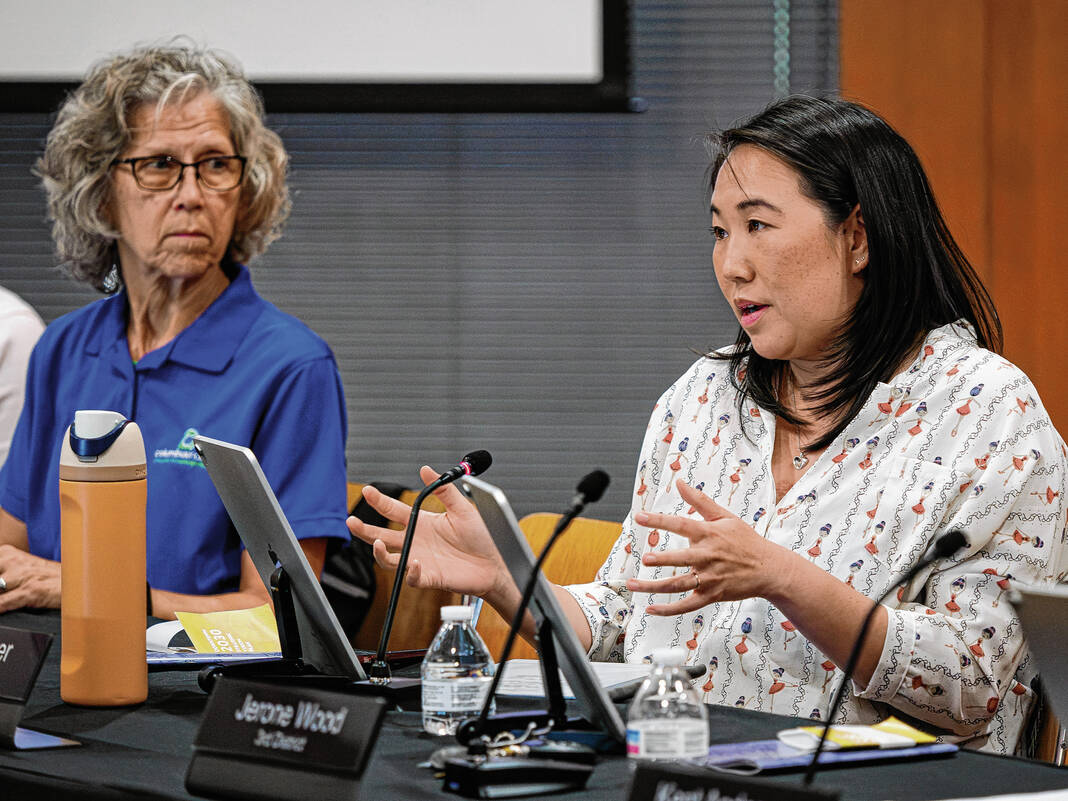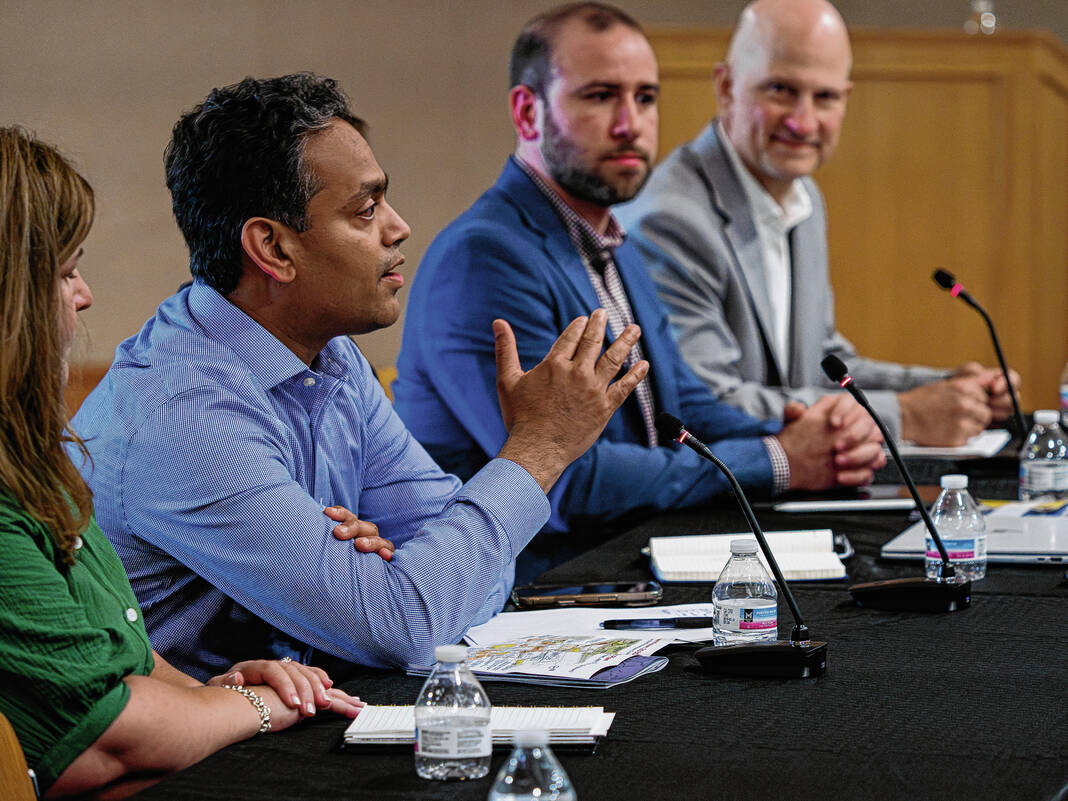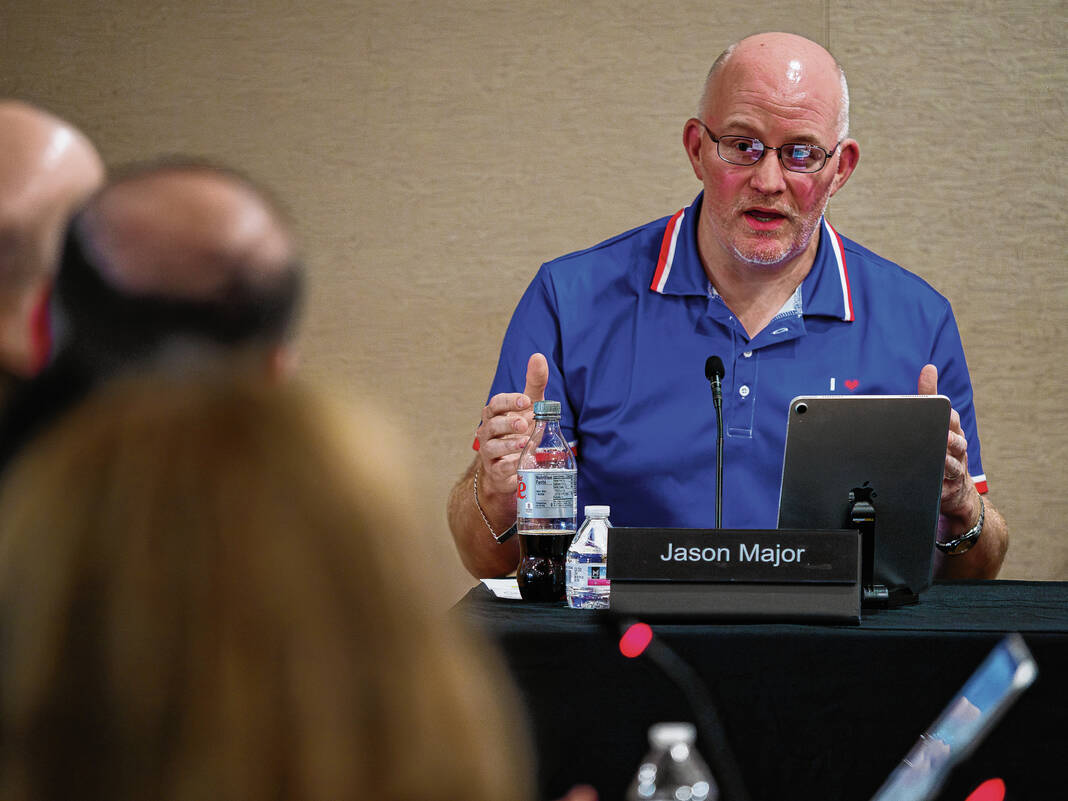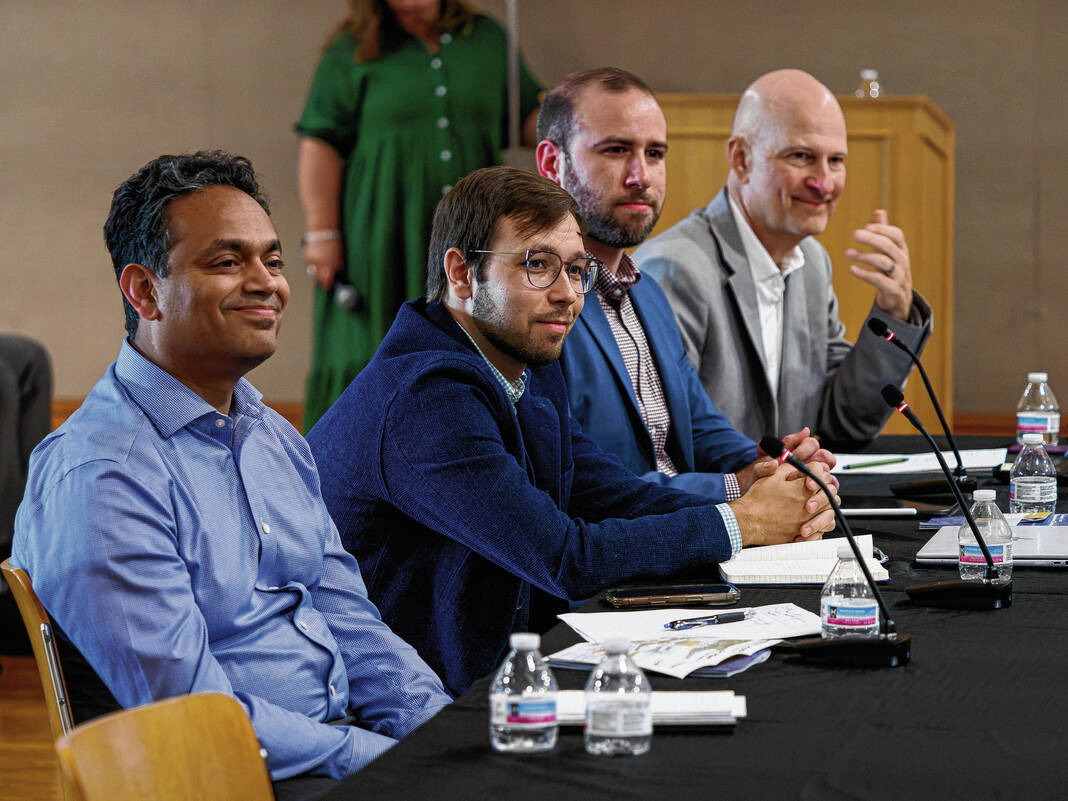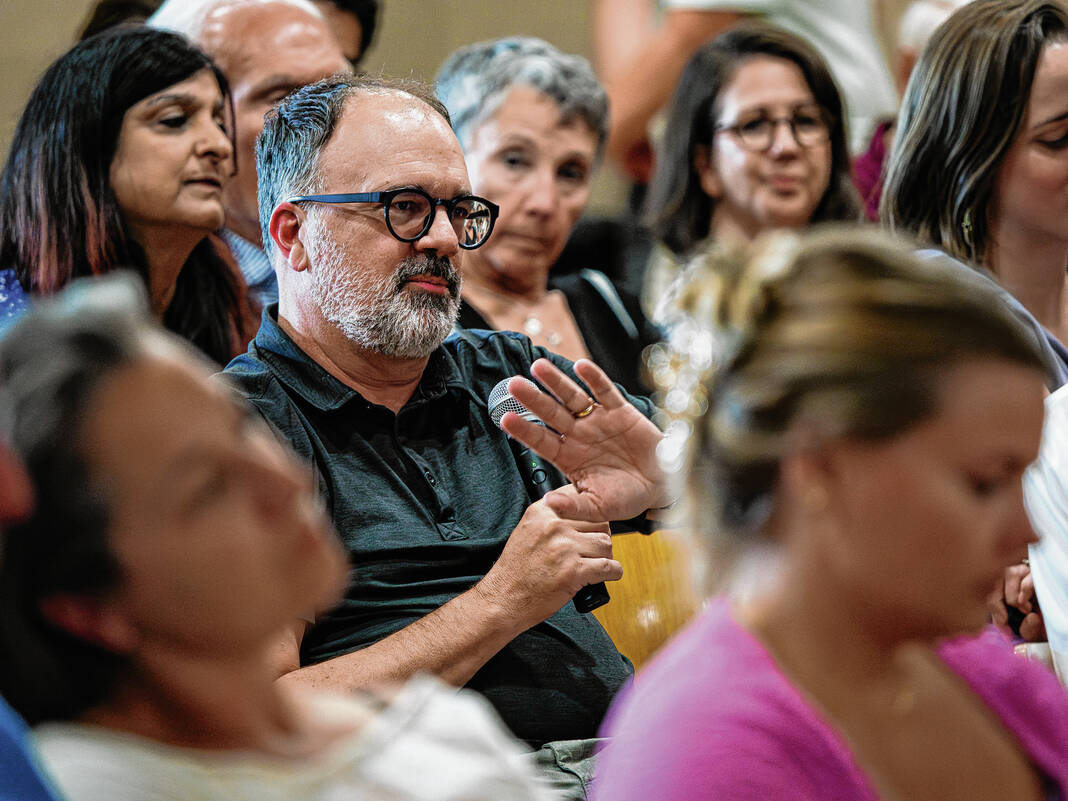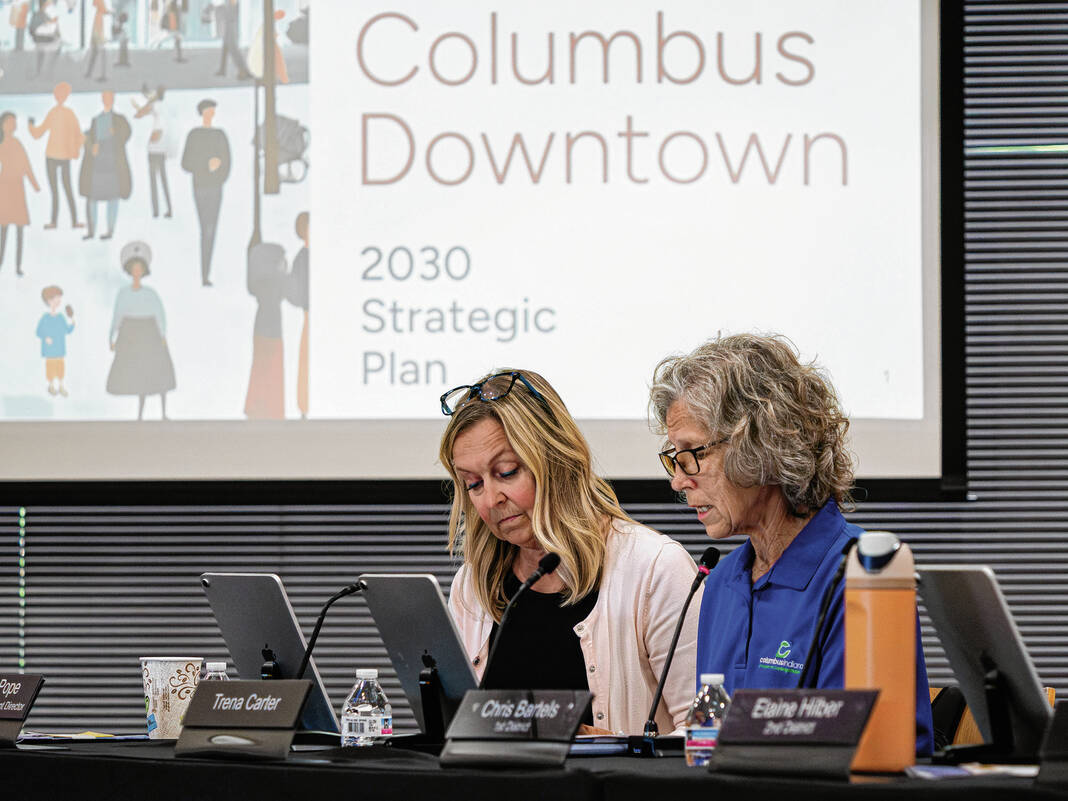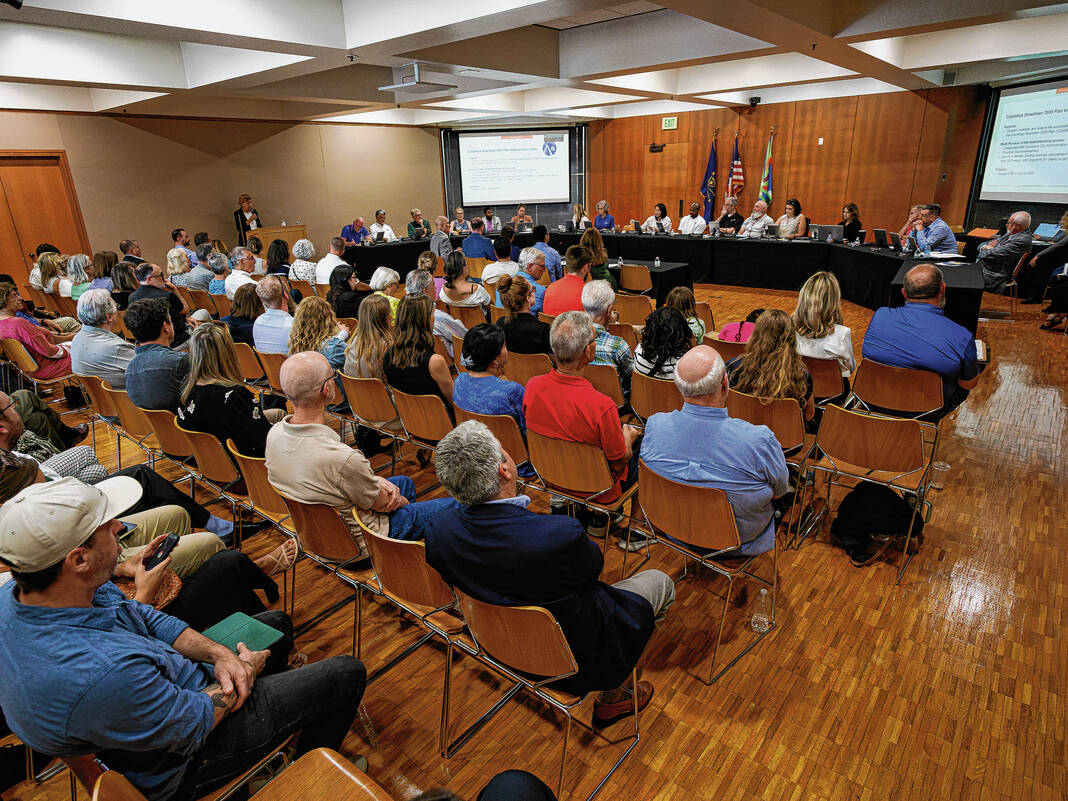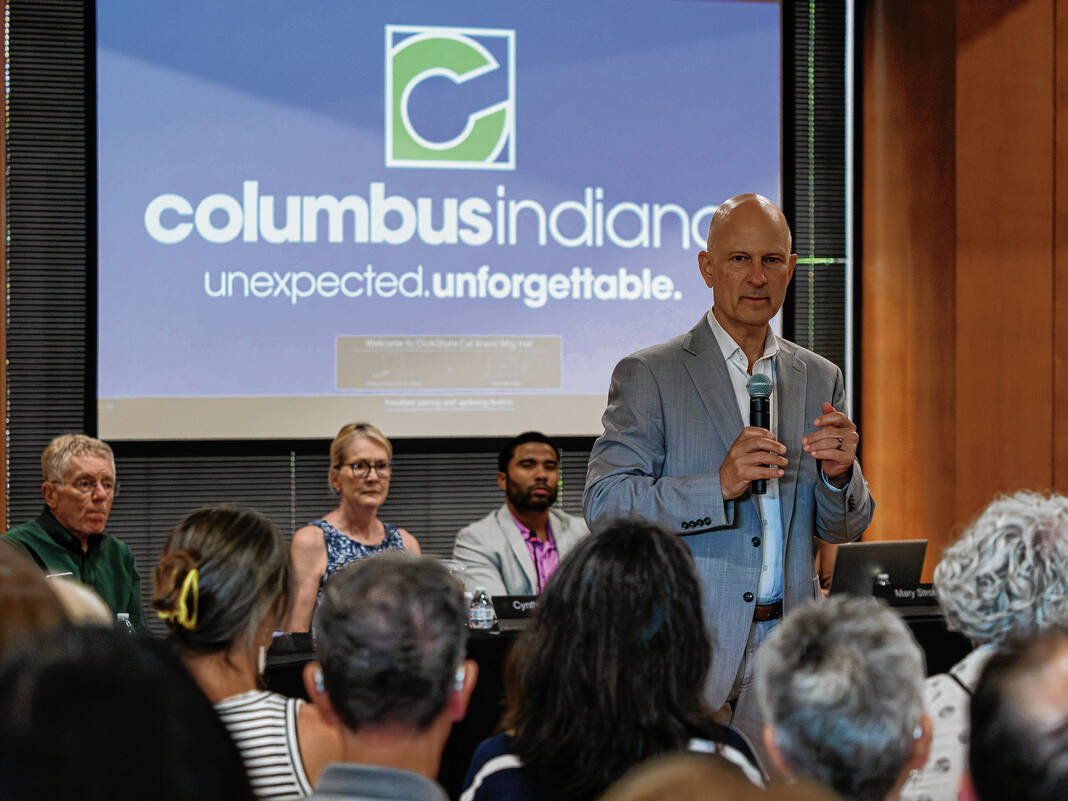
Mike Wolanin | The Republic Martin Zogran, principal an urban designer at Sasaki, answers questions from members of the public during a combined meeting of the Columbus City Council and Redevelopment Commission at Columbus City Hall in Columbus, Ind., Monday, July 21, 2025. Representatives from SB Friedman and Sasaki presented their findings for the Columbus Downtown 2030 Strategic Plan during the meeting.
Results from Columbus’ new downtown strategic plan were unveiled Monday night before a large crowd at city hall.
Now, the idea is to begin work on the implementation of some of the recommendations as determined by three community teams over the next couple of months.
Consultants enlisted for Columbus Downtown 2030 discussed recent findings from two recent community engagement activities before providing a sampling of their recommendations for the future of Columbus’ downtown.
The presentation is available on the city’s website. The slide presentation and executive summary of the findings are also available on the Columbus Redevelopment Commission’s website and via the city’s social media pages.
The final recommendations in report form will be available by September at the latest, according urban planning and design firm Sasaki, who partnered with subconsultants SB Friedman and Storyboard over the past eight months in the plan’s inception.
The plan itself is more than 100 pages and includes more than 50 recommendations that also come with ideas for funding sources and suggested policy changes to local code, zoning, urban design or public realm guidelines.
City officials said the utility of the plan is somewhat similar to that of the recent housing study in that it will serve as a road map and means of attracting potential developers, while providing a sense of what the community is seeking.
The three consultants, along with their city counterparts, have held a number of pop-up events, surveys and community input sessions to get feedback from the community over the past several months, with attendees totaling 500-plus and survey responses in the 3,600-person range.
Top desired uses for downtown activation, according to community feedback, included more restaurants, entertainment venues, an expanded farmer’s market, splash pad, and as always, a downtown grocery store.
Columbus Mayor Mary Ferdon talked about how the recommendations will be prioritized and put into action with the help of three separate implementation teams, each focusing on real estate and economic development, public realm and infrastructure, as well as programming and activation.
The mayor said the work of the implementation teams will play out over the next several months, and involve looking at all of the recommendations that fall within their particular pathway and determining which ones make the most sense.
“By December, we want to have some really high-level priorities that inform the work of these three teams, and then talk those teams into working through at least the next August seeing them through,” the mayor told The Republic.
The way each of the recommendations will be realized for city-owned properties in particular, such as the former Sears Building, will be done with a request-for-proposal process, with a private entity taking the reins in its development.
The primary objective of Columbus Downtown 2030 is to identify the best use of more than 20 individual parcels identified as critical, made up of several owned by the Columbus Redevelopment Commission, some owned by the Columbus Capital Foundation, current project areas including the riverfront and downtown entrance plaza and parcels identified as future project opportunities including the Irwin Block Building site.
Although it will have a smaller footprint, the plan will include more available buildings and spaces for consideration as compared to 2018’s Envision Columbus, which city officials said led to some implementation but was mostly encumbered due to the pandemic.
Private developers will be the chief focus in working towards bringing about the recommendations, although philanthropic entities, redevelopment and potential public funding opportunities could have a hand in that as well, Ferdon said.
The downtown plan is expected to set forth a vision that can be actionable within a timeline of the immediate term (1-2 years) to mid-term (5-10 years) to long-term (10-plus years), informed by community feedback, city officials have said. It will look for ways to revitalize and activate the city’s downtown, while accounting for a changed climate in the area after the pandemic. That’s most prominently reflected in Cummins, the county’s largest employer, decreasing its presence downtown as many of their employees transitioned to remote work.
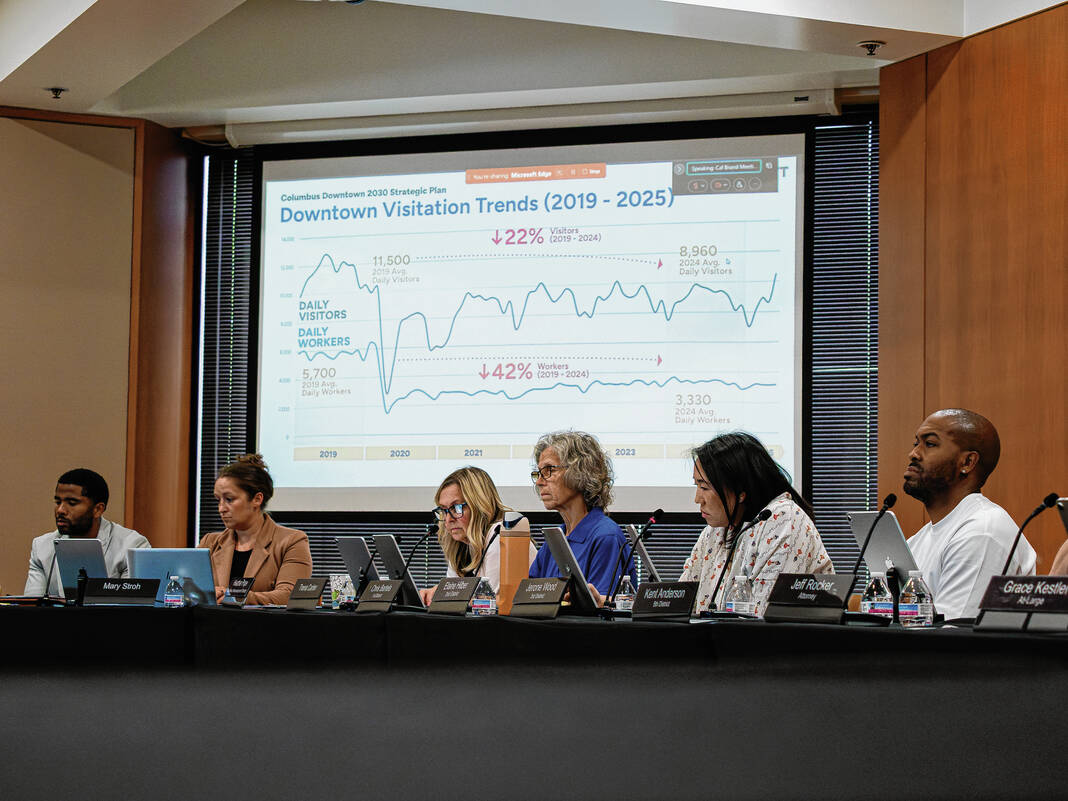
A market analysis by SB Friedman found that average daily visitors and employees downtown have dropped 22% and 41% respectively between 2019 and 2024. Population in the city at-large is expected to grow from 52,416 to 55,550 by 2030, according to SB Friedman, necessitating an additional 3,500 units of housing by that time.
Additional residential housing in the downtown area is the most prominent driver the consultants said could fuel its growth, and in turn boost activation and retail elements.
SB Friedman looked to other comparably-sized cities with similar characteristics to identify approaches that could be a fit for Columbus. Those included Appleton, Wisconsin; Holland, Michigan; Wooster, Ohio and Staunton, Virginia.
All have a major employer located in their downtown, major attractions in the area and are less than 100 miles from a metropolitan area, SB Friedman said. Median household incomes are similar, although populations varied from 25,000 to 77,000 people.
Just under 2% of Columbus’ population lives downtown, whereas as high as 30% of people living in the aforementioned peer communities do. Bonnie Boatwright, project manager on the plan, previously said the hope is to begin by doubling the amount of people living downtown.
Including developments already in the works at Sixth and Washington street and 11th and Washington street, more than 750 potential new housing units downtown were identified as being feasible. This included residential options in the riverfront area behind Water Street, a mixed-use residential development at the post office on Jackson Street, and others at Third and Lafayette Streets and along Second Street.
The focus in the immediate term, the consultants recommended, is best placed on housing growth, public realm improvements and activation and programming.
Sasaki and company talked through key elements for the framework of the downtown plan, including embracing urban infill with an emphasis on housing, focus on three different corridors downtown and developing stronger connections directing people to Mill Race Park.
Sasaki emphasized the importance of the Fourth, Fifth and Washington street corridors during their presentation and provided a look at their recommendations for the area.
“It’s a matter of history and geography,” Martin Zogran, principal at Sasaki, said of the corridors.
Washington serves as the historic main street with Fourth and Fifth Streets as connectors to Mill Race Park.
“We wanted to make sure that we were acknowledging the history and all of those great efforts,” Zogran explained. Urban design and planning had an ethos of “erasure” in the 1960s and 1970s, but that has since changed, he said.
“It’s now an ethos of respect for history,” Zogran said.
Between the corridors are four sites Sasaki referred to as the “four-pack,” comprised of the former Sears Building and adjoining parking lot, the post office and expanded Hotel Indigo that they said could serve as development opportunities to create an activated, pedestrian-friendly gateway to and from Mill Race.
SB Friedman found that the park is “fundamental” in lifting the economics of the downtown because of the spillover effect it can have when people attending events in the park matriculate to local businesses in the city’s center.
Broadly, Sasaki recommended three “big moves” for the downtown in their presentation on Monday, Zogran said. This involved “finishing Fourth Street,” by extending it two blocks towards Mill Race, further activation of Washington Street and realizing an Avenue of the Architects along Fifth Street between Eliel Saarinen’s First Christian Church and I. M. Pei’s Bartholomew County Public Library.
In terms of phasing, immediate changes include a sculptural gateway into Mill Race Park with various improvements to Washington Street, such as boosts to its facade, which the city and Office of Downtown Development have already begun.
A little farther out in the short-term are suggestions for a multi-family residential development across from the Bartholomew County Jail at Third and Lafayette streets, and a much-yearned-for children’s play area and splash pad in Mill Race Park.
In the medium and long-term, some recommendations are a Market Hall along Fourth Street to operate as a year-round location for the Columbus Farmer’s Market and a “mid-tier hotel and conference center” in the former Sears parking lot at Brown and Lindsey Streets.
City officials said that they plan to provide an update on the work of the implementation teams in October. The home for updates on the plan is downtowncolumbus2030.com.
The Columbus Redevelopment Commission on Oct. 21 approved funding in an amount not to exceed $464,820 to go towards the three firms for their work.