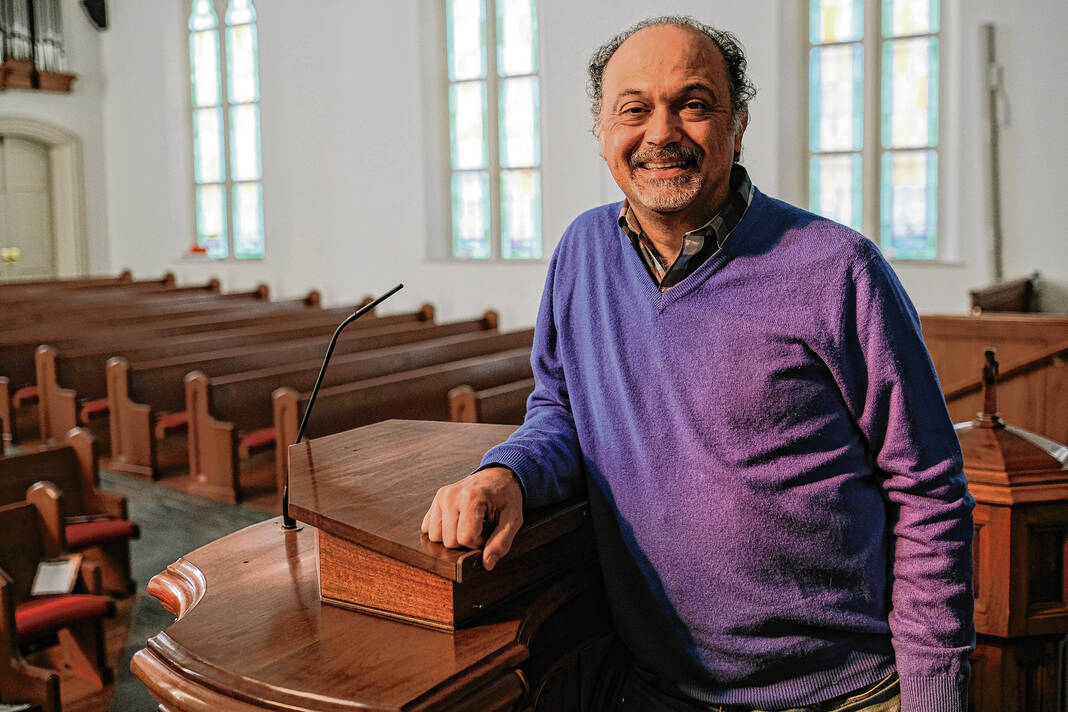
Local churches and community members have asked to provide spiritual and emotional services for detainees who may be held at Camp Atterbury. First Presbyterian Church, St. Bartholomew Catholic Church and First United Methodist Church gave a letter to Camp Atterbury asking to be allowed to provide the services.
In July, Defense Secretary Pete Hegseth named Camp Atterbury and a base in New Jersey as two sites for temporary use by the Department of Homeland Security to house those alleged to be in the U.S. illegally in a letter to Congress, according to the Indiana Capital Chronicle.
There has been nothing constructed at Camp Atterbury yet and there is no work on how many detainees are being planned to be housed at the camp.
First Presbyterian Church Pastor Felipe Martinez said he hand delivered the church’s letter, addressed to the base commander, at Camp Atterbury around two weeks ago. The letter also acknowledged that when or if the ICE detention facility comes, it will be under the jurisdiction of the Department of Homeland Security, Martinez said.
“… but we were attempting to sort of get the ball rolling as far as ways in which we could actively be involved in supporting those people who would be eventually detained,” Martinez said.
First Presbyterian Church collaborated with Camp Atterbury in 2022, where they brought supplies to more than 7,000 Afghan refugees who were housed there, Martinez said. The church also served as a leader with other local churches and community members to help seven Afghan families settle in the United States.
St. Bartholomew Catholic Church Pastor Chris Wadelton said St. Bartholomew Catholic Church also has a good relationship with Camp Atterbury, as they provide pastoral care to current detainees at the state prison every week.
“Currently, we’re just brainstorming, trying to make inroads with the people at Atterbury and with the Department of Defense, Homeland Security, voicing our concern for the people that will be detained,” Wadelton said. “And so right now without anybody being detained, we don’t have any direct action or direct service.”
Martinez said as a clergy, they are thinking in terms of the spiritual and emotional needs of the people there, and if given permission to go further, to bring sacraments to the individuals who are there. This potential partnership comes as an effort through Columbus Community United and its immigration committee, who look for ways that they can be active in the moment, he said.
Columbus Community United, or CCU, began this spring and is based upon of four work groups that focus on addressing concerns in the community. These four groups include immigration, education, women’s rights and LGBTQ rights, according to CCU moderator Richard Safford. Their mailing list currently has about 500 members and 750 members on its Facebook page.
“The CCU is driven by the grassroots concerns for issues that the community and the area are facing,” Safford said. “And the organization is really just there to support what those work groups are doing.”
While they have yet to hear back from Camp Atterbury, Martinez said he remains hopeful that they will receive a response and be able to have that conversation. He expressed disappointment in Camp Atterbury possibly being used to detain people, as the camp has been a place of welcome.
“And so, if this detention center does come that we as a community can take our role, can take our part in making sure that the hospitality, that Hoosier hospitality’s really given and offered to detainees,” Martinez said. “In other words, we get to have a say in how folk are welcomed in, even in these difficult and chaotic moments in their lives.”