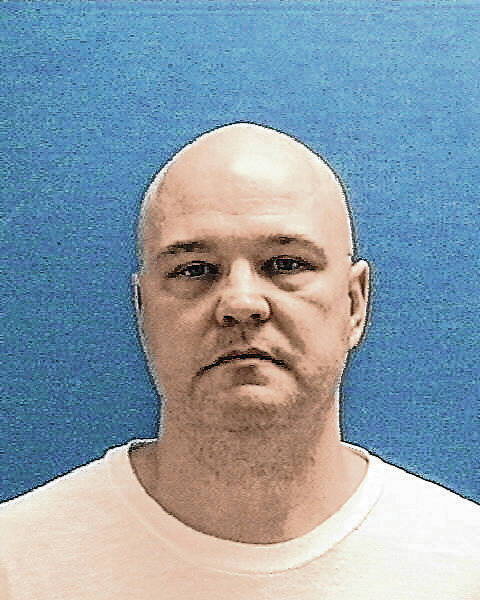
Hubbell
Noon update:
A local man in prison since 1999 after being convicted of murder and criminal confinement has been granted a new trial by Bartholomew Circuit Court Judge Kelly Benjamin.
Benjamin ruled that Jason Hubbell, now age 54, had “met his burden of showing that he is entitled to post-conviction relief,” granting his petition to vacate his convictions for murder and criminal confinement in the death of Sharon Myers, and awarding him a new trial.
A pre-trial conference on the order for a new trial is set for 1:30 p.m. Oct. 2 in Bartholomew Circuit Court.
Hubbell, who is incarcerated in the Pendleton Correctional Facility, was sentenced to 75 years in prison by then-Circuit Judge Stephen Heimann after Hubbell was convicted Nov. 5 1999 by a jury in Bartholomew Circuit Court.
Hubbell was arrested and charged with abducting Myers in a parking lot outside Arvin Industries on May 13, 1997. According to court records, Hubbell was a former Arvin employee whose benefits were handled by Myers. During the trial, a witness testified Hubbell was having difficulty getting insurance benefits and that Myers was treating him coldly. The body of Myers, who was killed by strangulation, was discovered six months after her disappearance, at Teal Marsh in Atterbury Fish and Wildlife Area north of Columbus, according to court records.
Hubbell, who has a projected released date in 2035, alleged in his appeal that an individual now on death row actually committed the crime.
Bartholomew County Prosecutor Lindsey Holden-Kay said in a statement Friday she plans to appeal Benjamin’s ruling on the appeal, but could not comment further as a new trial has been granted.
In an amended petition for post-conviction relief seeking a new trial and DNA testing, Hubbell and his attorneys allege that death row inmate Michael Dean Overstreet, who was convicted for the 1997 killing of Kelly Eckart in Johnson County, killed Myers.
“The new evidence that has surfaced shows beyond any reasonable question that Hubbell deserves a new trial,” according to the petition filed by the Exoneration Justice Clinic at the Notre Dame Law School and Hubbell’s attorneys. “First, John Borges, the Task Force Commander of the Kelly Eckart investigation, revealed that the Franklin Police Department provided the Columbus Police Department with numerous pieces of exculpatory evidence connecting Michael Dean Overstreet to Sharon Myers’ abduction. Second, Overstreet himself repeatedly invoked the Fifth Amendment in response to questions about his responsibility for Myers’ abduction and murder,” the petition states.
According to the petition, Myers was abducted in May 1997 from Arvin’s Gladstone plant in Columbus in a white van. The assailant removed her shoes, strangled her with a ligature fashioned from her own clothing, and left her body with the ligature around her neck near the marsh in Atterbury Wildlife Preserve where it was found six months later, the petition states.
The petition states Eckart was abducted in a van after leaving her job at Walmart in Franklin in September 1997. In this abduction, the assailant removed Eckart’s shoes, strangled her with a ligature fashioned from her own clothing and initially left her body in a remote part of Atterbury, the petition states. In both cases, there were indications that a sexual assault had occurred.
In the Eckart case, a male DNA profile was generated consistent with Overstreet’s DNA, the petition states. At Overstreet’s 2000 trial, his brother, Scott Overstreet, testified that he drove his brother to Atterbury the night Eckart was abducted and that his brother told him he had “taken a girl” and had to “get her lost,” according to court records. Based on evidence at his trial, Overstreet was convicted of the murder, rape and criminal confinement of Eckart and sentenced to death, according to the petition.
After Hubbell was charged with murder and criminal confinement of Myers in August 1998, Hubbell’s attorneys sought all information implicating other suspects in the case, according to the petition. Then, Columbus Police Department Detective Dennis Knulf testified that there was no information connecting Overstreet to the crime, the petition states.
According to the petition, no DNA, fingerprints, hair or blood ever linked Hubbell to the crime. Hubbell was convicted and sentenced to 75 years, a judgement that was reaffirmed on direct appeal, according to court documents.
In August 2020, Hubbell sought habeas relief from the U.S. District Court for the Southern District of Indiana, resulting in a judge granting Hubbell discovery from law enforcement agencies that had investigated both murders, according to the petition.
In his appeal, attorneys for Hulbell argued prosecutors withheld material exculpatory evidence in violation of Hubbell’s rights under the Brady vs. Maryland case and the 14th Amendment to the U.S. Constitution.
In that discovery, the petition states attorneys learned that Melissa Holland, Overstreet’s former wife and a key witness in the Eckart case, directly implicated Overstreet in Myers’ abduction. Holland told attorneys the morning that Myers was abducted, Overstreet left his house before sunrise in a white cargo van and said he was going to Arvin in Columbus to apply for a job, the petition states.
Overstreet was gone until the evening, and when he returned, he was covered in blood and asked Holland to wash his clothing, according to the petition. Holland provided this information to Franklin police in November 1997 and after they spoke to officers with Columbus police, she and the Franklin Chief of Police were told “Columbus was not interested in that information, they already had somebody as a suspect,” according to the petition. This evidence was not disclosed to Hubbell prior to his trial, according to the petition.
“Newly discovered evidence further reveals that Overstreet engaged in a course of brazen conduct and made statements that directly implicated himself in the Myers homicide,” the petition states. “Multiple witnesses observed him tapping on a missing persons photo of Myers at a Walmart while grinning menacingly at his wife after an argument with her. When he saw a news report that Myers body was found by Teal Marsh, he allegedly commented, ‘Teal Marsh, I knew that was the place.’ He repeatedly commented to his family members and others about how the shoes of both women were missing and the cases had the same ‘M.O.’ And most significantly, when Overstreet was arrested and charged with the murder of Eckart, a search of his home revealed he was collecting newspaper articles about both the Myers and Eckart abductions,” the petition states.
Other witnesses provided law enforcement with information suggesting Overstreet had a relationship with Myers or was under “the delusion he was,” the petition states. John Mascoe, a fisherman from Indianapolis, told police that he saw Overstreet and Myers together in the midst of an argument on a boat ramp by an Atterbury lake in May 1997, the same month Myers disappeared, the petition states.
According to the petition, law enforcement collected a significant amount of physical evidence after the discovery of Myers’ body, including pubic hairs from a piece of fabric, head hair, fingernails, pieces of duct tape, a band-aid, pantyhose, underwear, a jacket and fabric from a sweater and skirt. None of this evidence connected to Hubbell in any way, according to the petition.
Law enforcement also recovered “hundreds of fibers” from the crime scene, determining that red acrylic fibers found at the crime scene were similar to fibers found in Hubbell’s van, although no common source of the fibers was identified, according to the petition.
An FBI forensic examiner who testified in the case said the red fibers from the crime scene were “consistent” in appearance with those of Hubbell’s van, but could not say they were from the same source, the petition states. The witness said the fibers were “fairly common” in manufactured products and were found in sweaters, hats and other clothing, the petition states.
Bartholomew County prosecutors have acknowledged that investigators failed to disclose certain information to the defense during Hubbell’s trial but argued the withheld evidence is unlikely to have changed the trial’s outcome.
Prosecutors also argued that the withheld information did not meet the legal threshold required to overturn a conviction.
“Considering these items collectively, there is a very low likelihood that disclosure of these items would have led to a different result at trial and therefore … the petitioner (Hubbell) is not entitled to a new trial based on the state’s failure to disclose these items,” Holden-Kay said in proposed findings of fact and conclusions of law filed in Bartholomew Circuit Court.
However, in the judge’s findings of fact, Benjamin cites numerous specific examples of evidence withheld from the defense that was suppressed by the state and was favorable to Hubbell, much of it detailed in the defendant’s appeal.
In one portion of the findings of fact, the court specifies that “Knulf intentionally failed to truthfully inform (Sean) Thomasson (Hubbell’s defense attorney) of the information he was aware of linking Overstreet to Myers and implicating him in Myers’ murder as an alternate suspect.”
The judge further wrote, “Knulf’s testimony was misleading and was a significant barrier to Thomasson in gaining information, or being able to investigate information, that could be material and substantive to the presentation of his alternate suspect theory, two-person suspect theory or used to impeach witnesses … such as Knulf.”
Benjamin found that Hubbell, by a preponderance of the evidence, showed he was entitled to a new trial, because the state failed to disclose favorable and material exculpatory evidence to Hubbell and his attorney.
“This failure eliminated the ability of Hubbell’s attorneys to obtain crucial evidence linking Overstreet to Myers and implicating Overstreet in the Myers’ murder, in order to include Overstreet as a viable alternate suspect. This failure also eliminated the ability of Hubbell’s attorneys to challenge the integrity of law enforcement’s investigation to rule out other suspects and discredit/impeach Knulf. The state’s failure to disclose the material exculpatory evidence undermines the confidence in Hubbell’s guilty verdict and deprived Hubbell of his right to a fair trial,” the judge wrote.
The judge also notes “stunning similarities” between the Myers and Eckart murders, noting their bodies and belongings were found within two miles of one another at Atterbury.
“Ultimately, when viewing all the evidence discussed in the findings of fact together, the amount of evidence that was favorable to Hubbell, but withheld from him, is overwhelming,” the judge write. “The evidence implicating Overstreet aligned with trial evidence.”
In 2014, a South Bend judge ruled Overstreet was not mentally competent to be executed but would remain on death row until the state could prove he was competent. St. Joseph County Judge Jane Woodward Miller ruled that Overstreet’s severe case of paranoid schizophrenia prevents him from rationally understanding his execution, meaning he cannot be put to death.
ORIGINAL STORY
COLUMBUS, Ind. — A local man in prison since 1999 after being convicted of murder has been granted a new trial by Bartholomew Circuit Court Judge Kelly Benjamin.
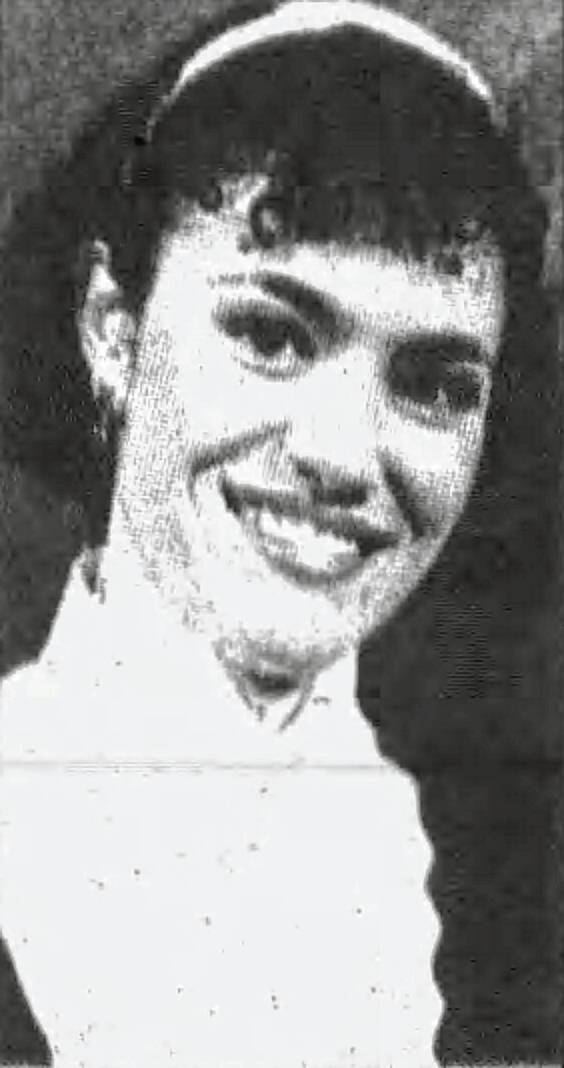
Jason Hubbell was arrested and charged with abducting Sharon Myers in a parking lot outside Arvin Industries on May 13, 1997. According to court records, Hubbell was a former Arvin employee whose benefits were handled by Myers. During the trial, a witness testified Hubbell was having difficulty getting insurance benefits and that Myers was treating him coldly. The body of Myers, who was killed by strangulation, was discovered six months after her disappearance, at Teal Marsh in Atterbury Fish and Wildlife Area north of Columbus, according to court records.
Hubbell alleged in his appeal that an individual now on death row actually committed the crime.
Bartholomew County Prosecutor Lindsey Holden-Kay said in a statement she plans to appeal Benjamin’s ruling, but could say no more due to her plans for appeal.
Hubbell, now 54, was convicted by a jury in Bartholomew County on Nov. 5, 1999, on one count of murder and criminal confinement after 12 hours of deliberation. Then-Circuit Court Judge Stephen Heimann sentenced to 75 years in prison and Hubbell is currently being held at Pendleton Correctional Facility, with a projected released date in 2035, according to the Indiana Department of Corrections.
In an amended petition for post-conviction relief seeking a new trial and DNA testing, Hubbell and his attorneys allege that death row inmate Michael Dean Overstreet, who was convicted for the 1997 killing of Kelly Eckart in Johnson County, killed Myers.
“The new evidence that has surfaced shows beyond any reasonable question that Hubbell deserves a new trial,” according to the petition filed by the Exoneration Justice Clinic at the Notre Dame Law School and Hubbell’s attorneys. “First, John Borges, the Task Force Commander of the Kelly Eckart investigation, revealed that the Franklin Police Department provided the Columbus Police Department with numerous pieces of exculpatory evidence connecting Michael Dean Overstreet to Sharon Myers’ abduction. Second, Overstreet himself repeatedly invoked the Fifth Amendment in response to questions about his responsibility for Myers’ abduction and murder,” the petition states.


For the complete story, see Saturday’s Republic.