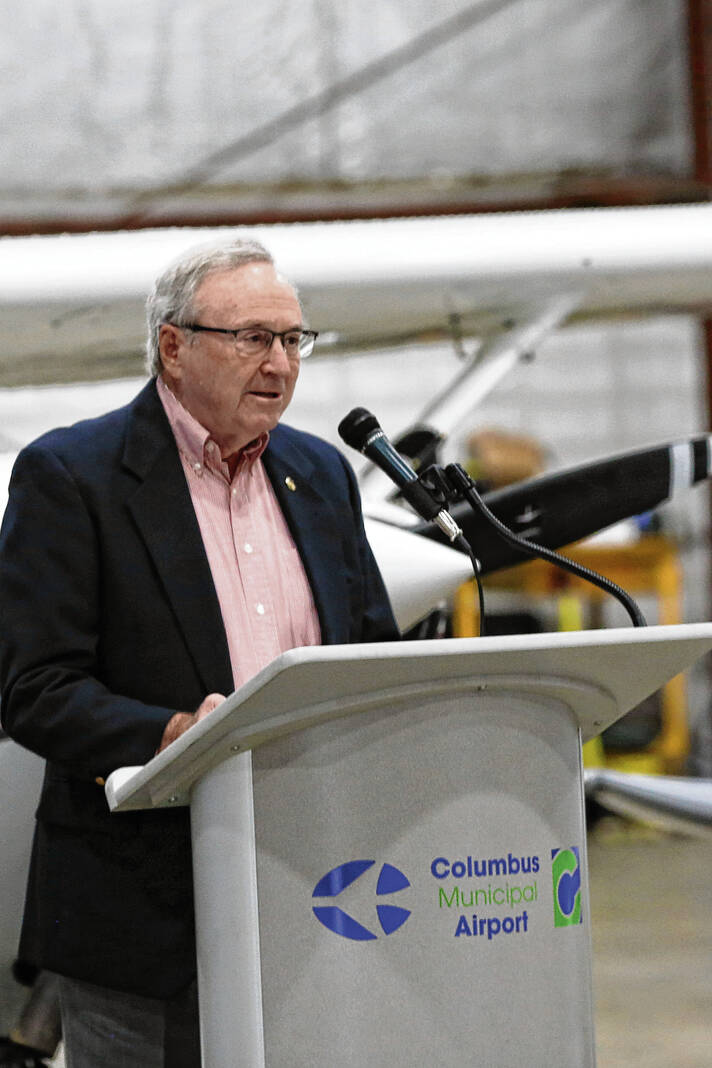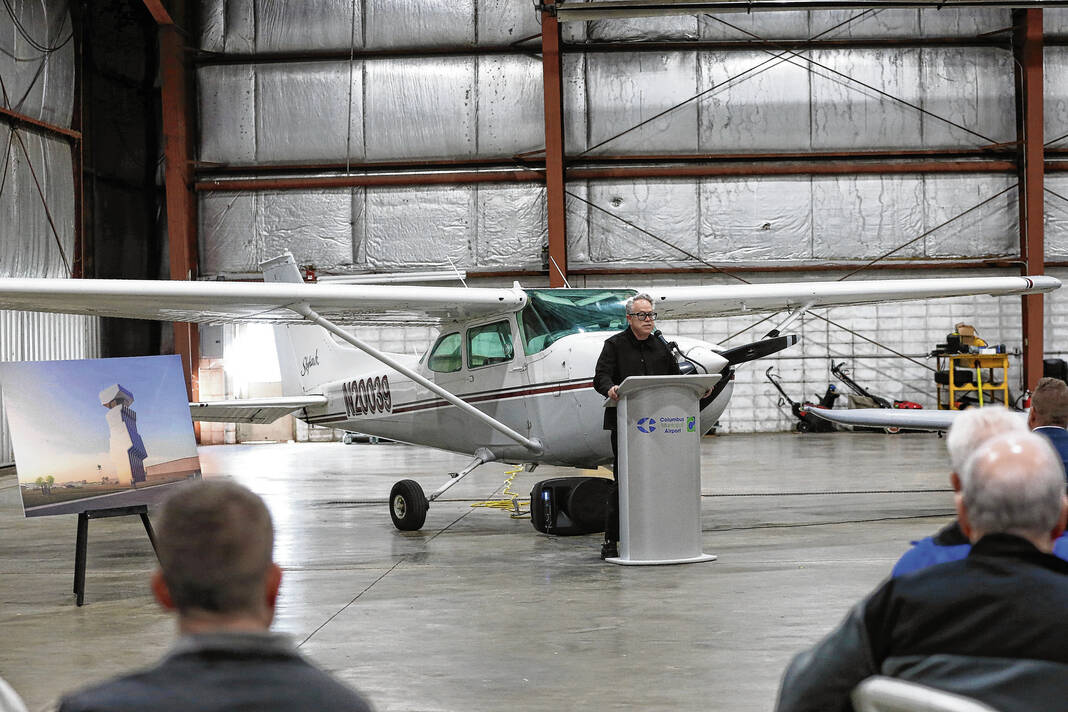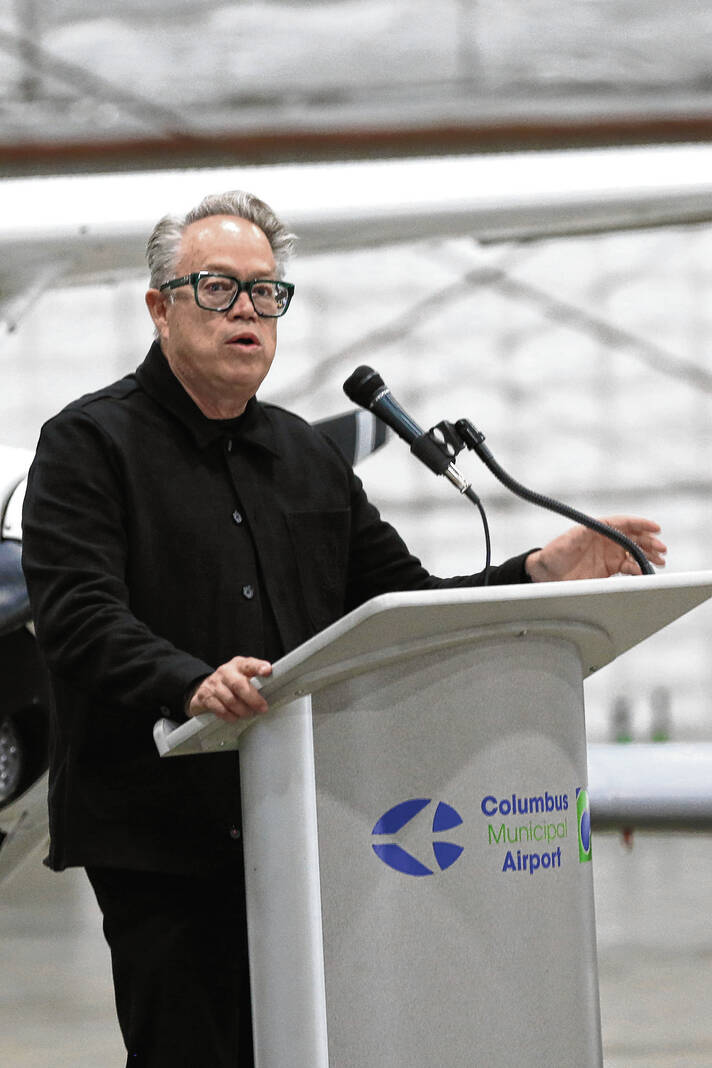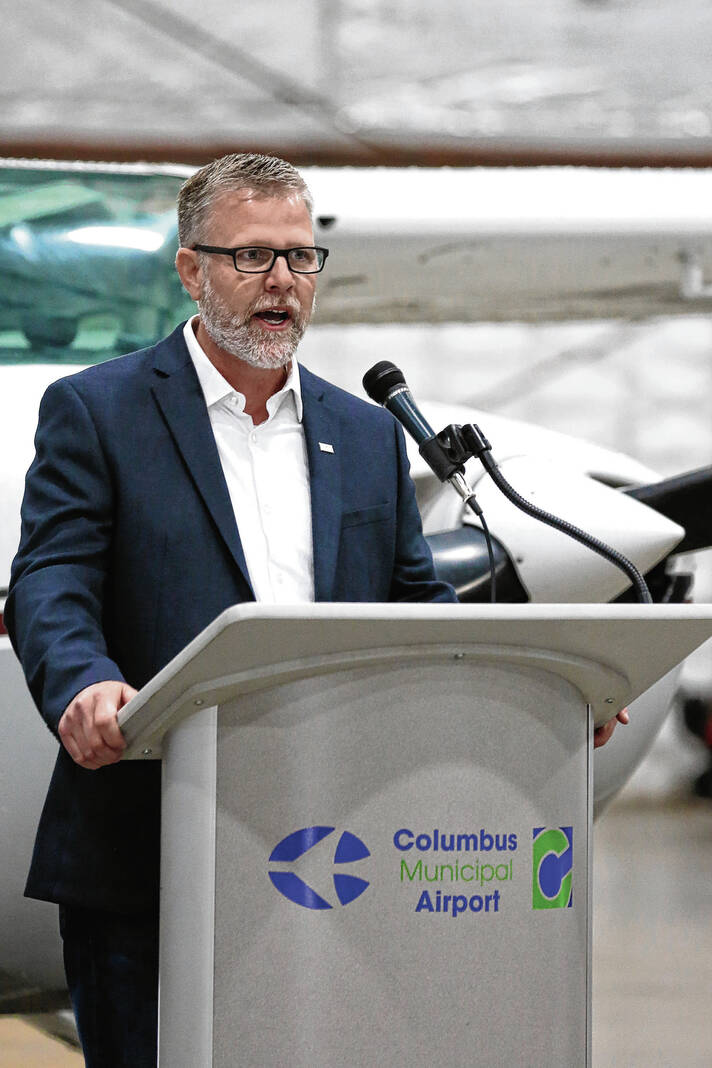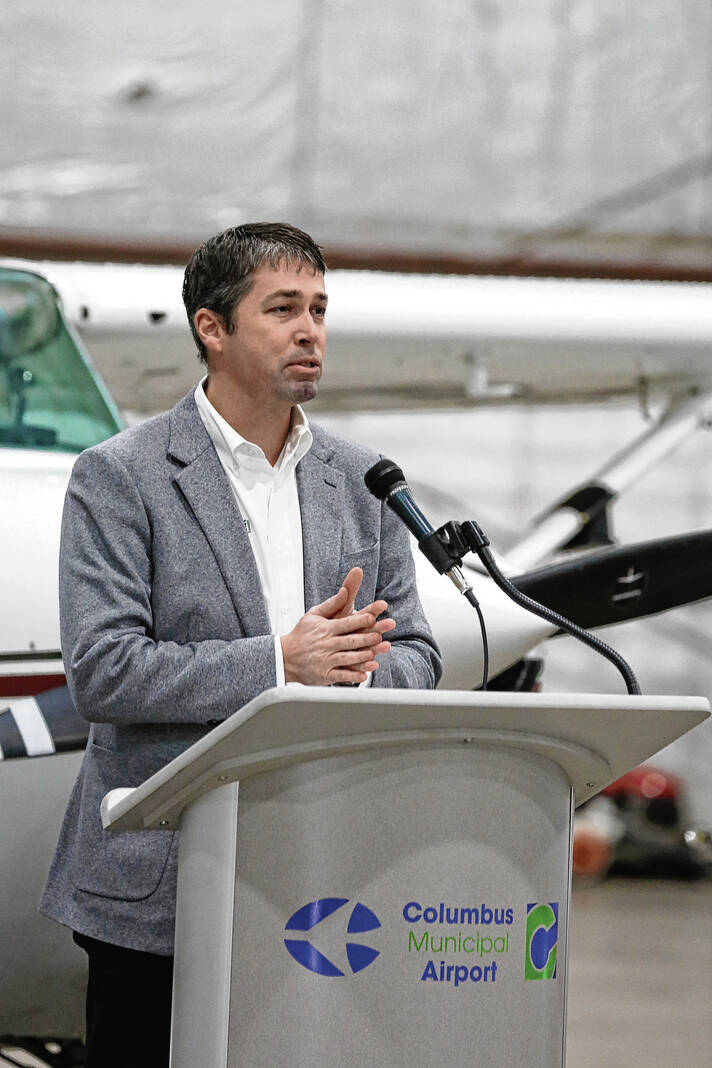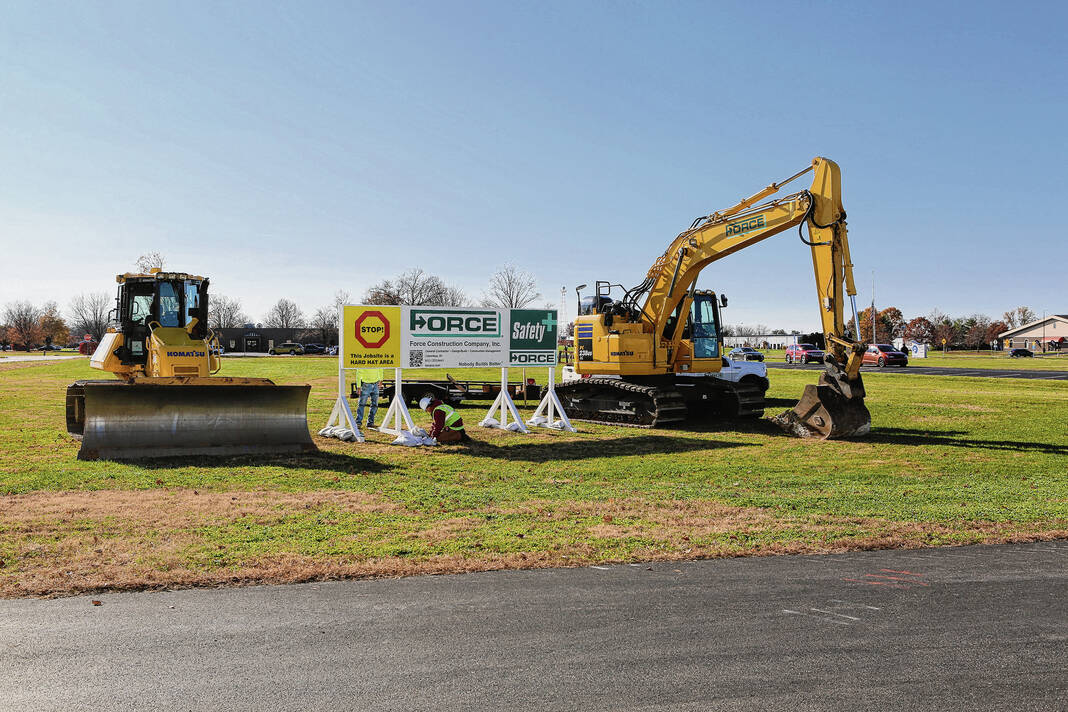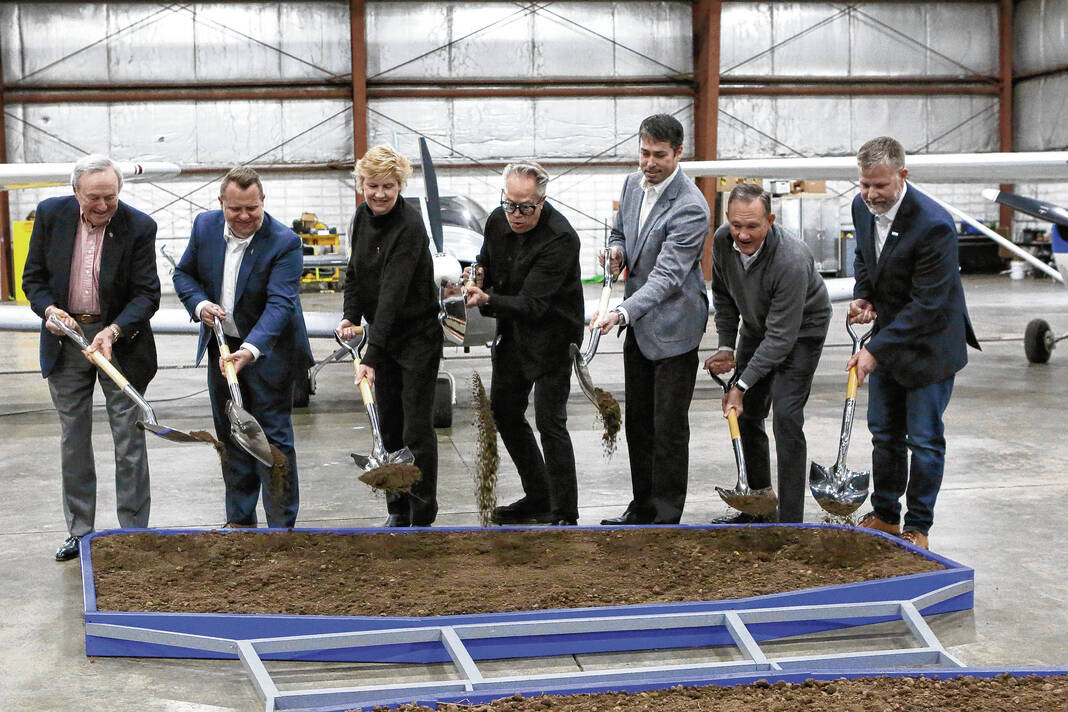
Carla Clark | For The Republic Mark Pillar, airport board president, from left, Brian Payne, airport director, Mayor Mary Ferdon, Marlon Blackwell, Marlon Blackwell Architects, Clayton Force, president and CEO Force Construction, Jim Schacht, CEO Cummins Foundation, and Ryan McCroskey, Woolpert, tower project manager, turn shovels of dirt during the groundbreaking ceremony for the new air traffic control tower at the Columbus Municipal Airport in Columbus, Ind., Monday, Nov. 17, 2025.
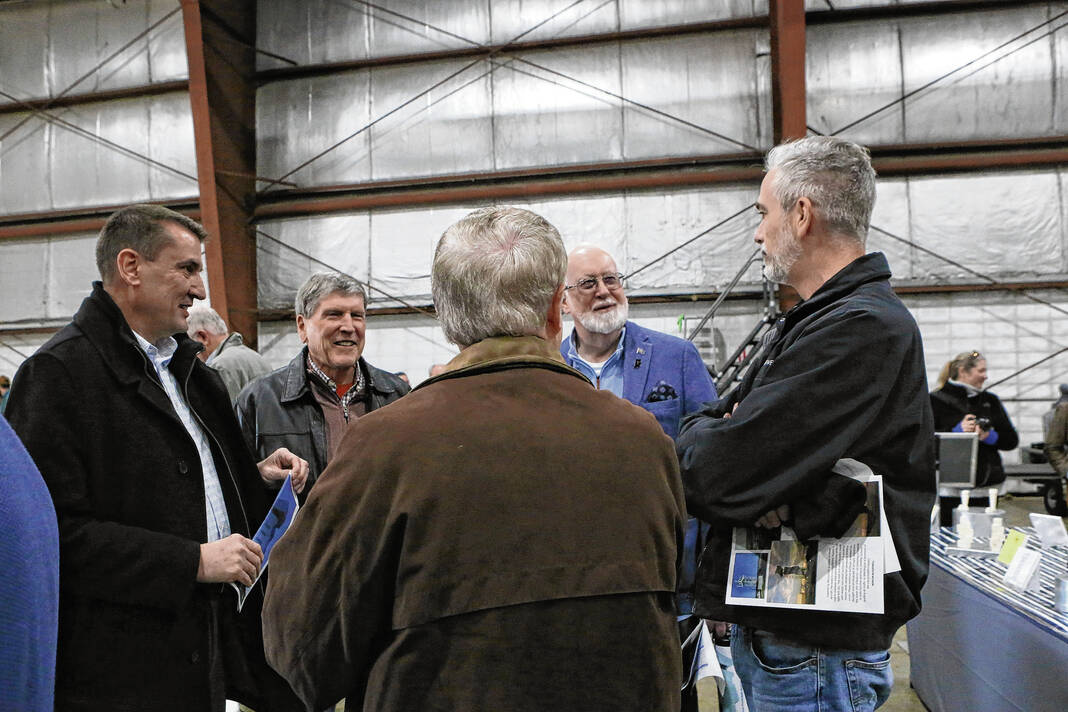
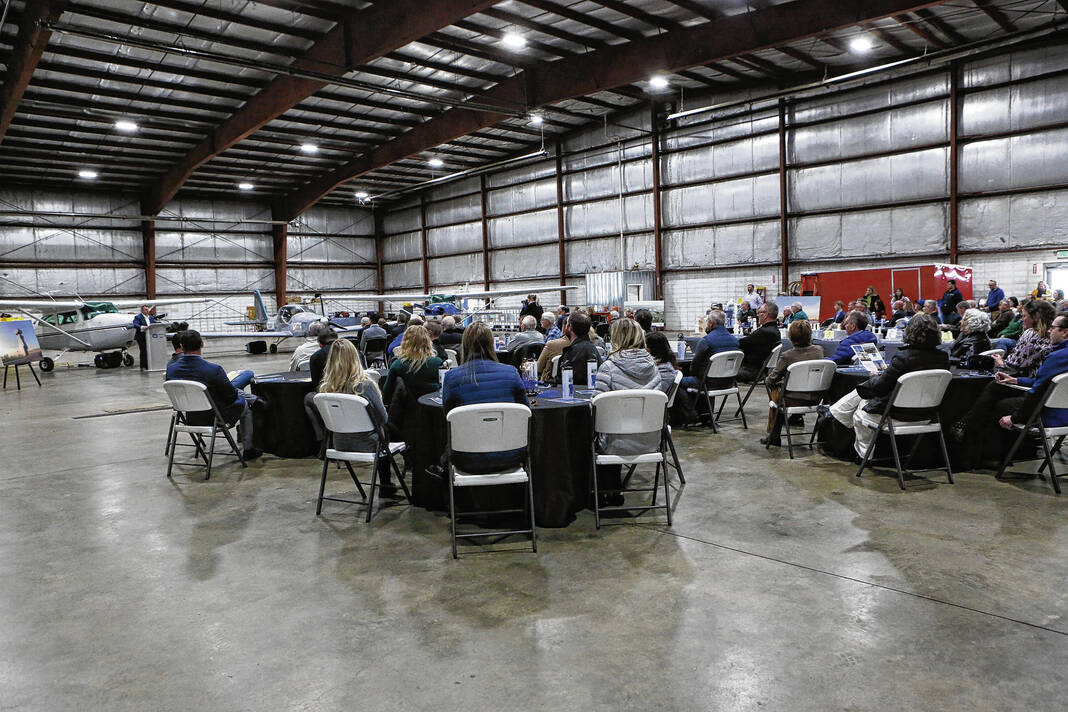
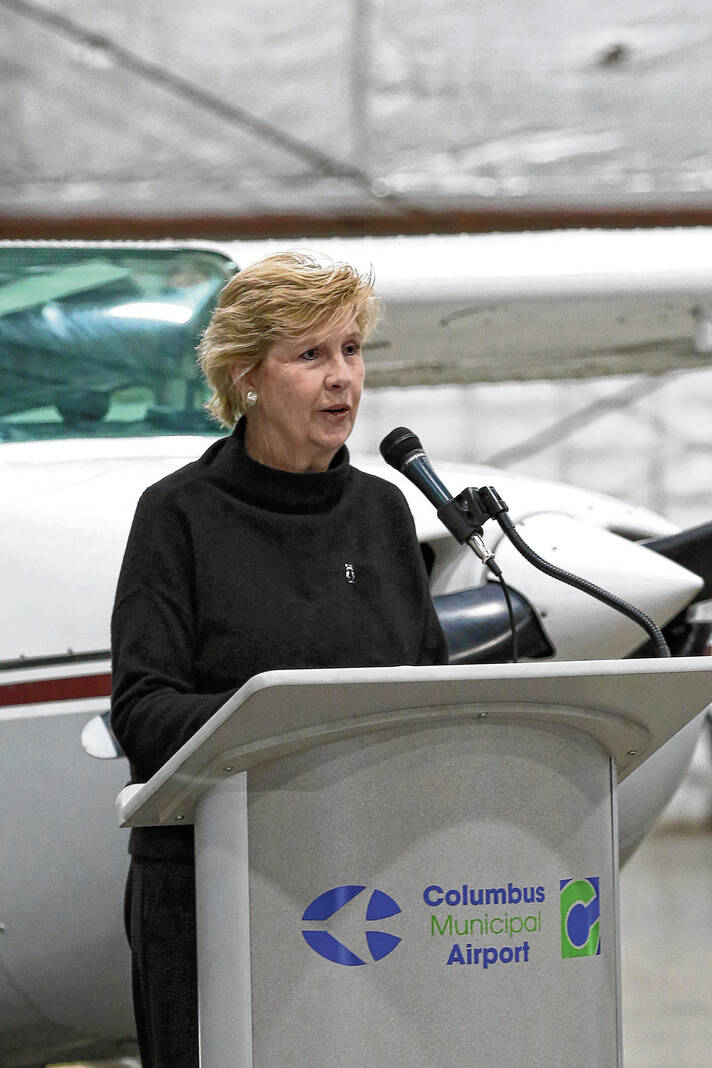
Columbus Municipal Airport rolled out the red carpet Monday to celebrate the latest entry into the city’s storied architectural history.
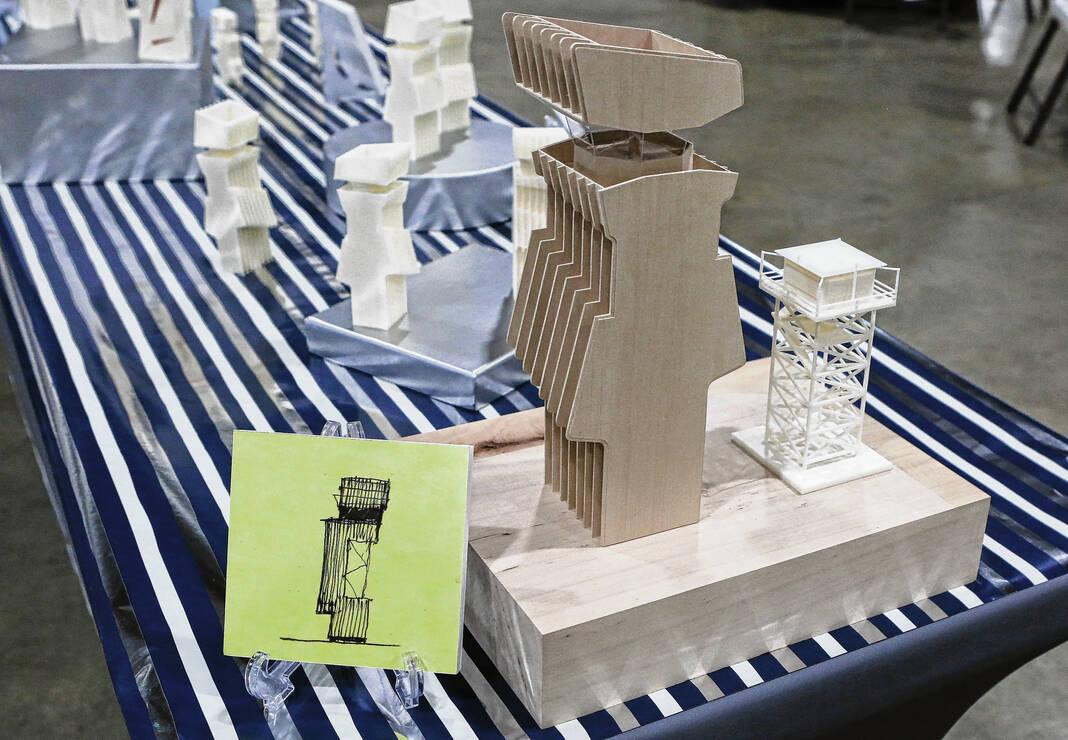
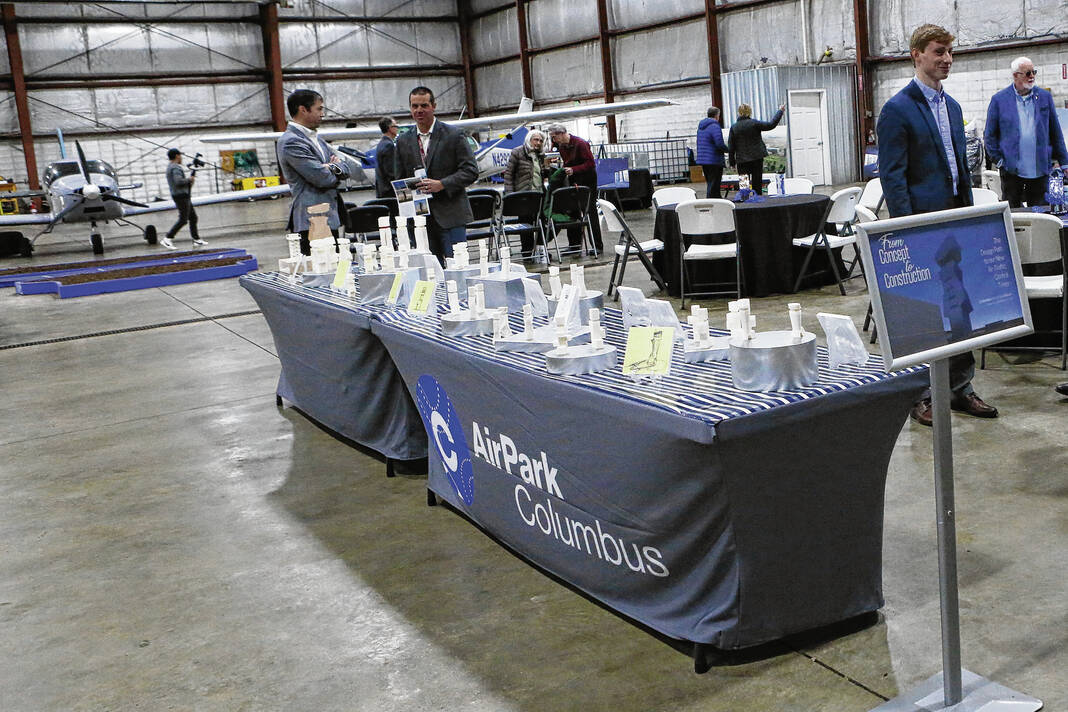
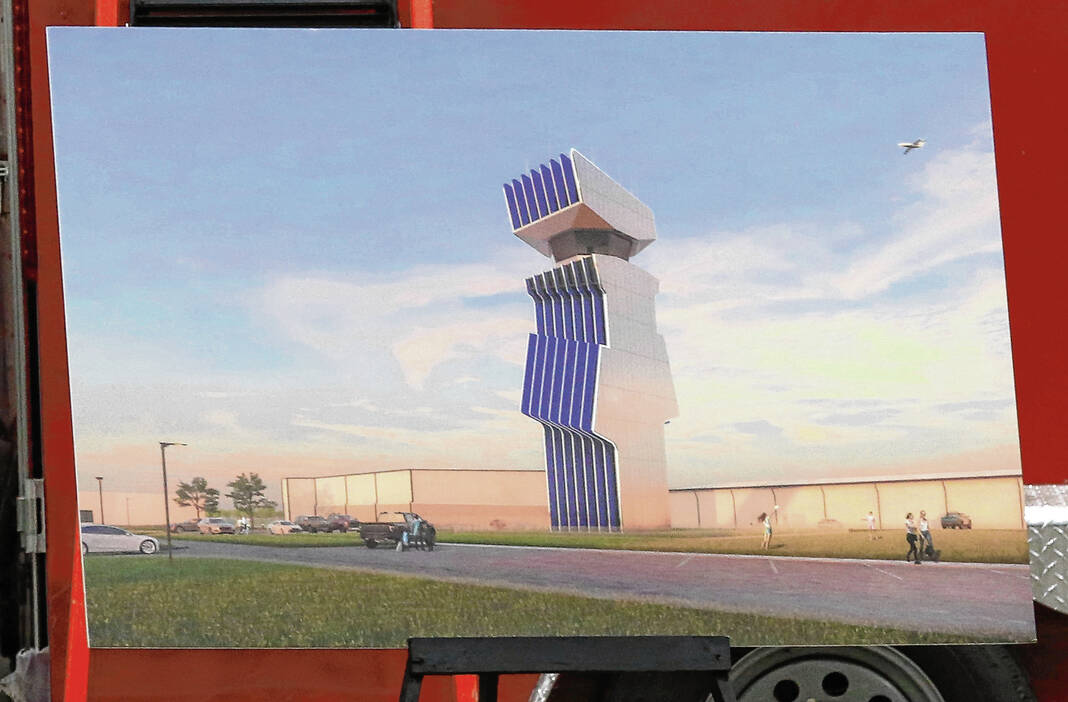
Inside an airport hanger, city officials turned the dirt to mark the beginning of construction on what will be a futuristic, 128-foot-tall air traffic control tower.
The path to get to the beginning of construction was anything but simple, speakers during the festivities noted, but the result will be a new tower that supports the safety of one of the fastest growing general aviation airports in the state, while also contributing to the local economy and reflecting the area’s architectural identity.
In about 18 months time, the tower, designed by world-renowned architecture firm Marlon Blackwell Architects, will replace the airport’s existing tower that has been in place since 1954.
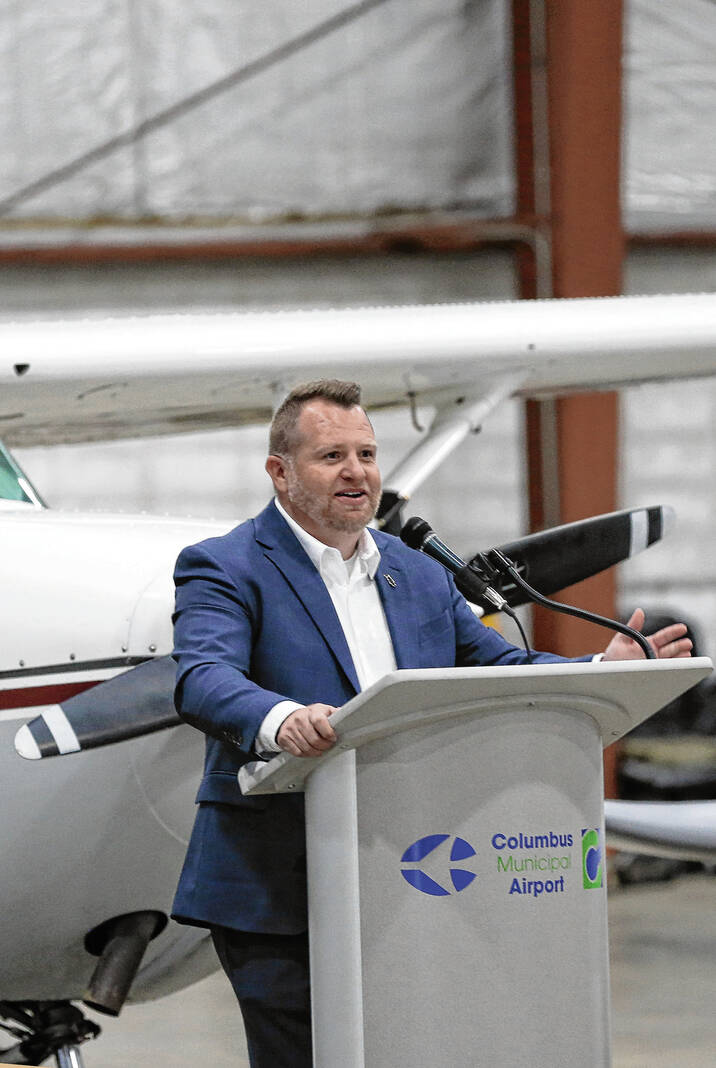
Mark Pillar, president of the city’s aviation board, said the tower will serve as the “newest gem in the incredible crown of the Columbus Architectural Tour.”
The new structure, which has been a priority item for the airport for over a decade, is to align with current Federal Aviation Administration (FAA) air traffic control tower standards and equip the airport to deal with its increasing activity.
Airport Director Brian Payne previously pointed out that the airport was running 36,000 operations a year when he started working there 13 years ago. That figure is now poised to double.
This will not be just any airport tower— Payne noted in his remarks that they could have endeavored to build a control tower like any other across the country — “but we all now that’s not Columbus.”
The tower’s runway facing facade is clad in stainless steel panels that shift in color depending on changes in temperature. The east and west facades feature deeply saturated aluminum fins that evoke motion, according Marlon Blackwell, who said the design was inspired by the spirit of flight and aviation.
“(The design is) manifested in both form and material with streamlined aerodynamic planes shifting upward and undulating outward, and is intended to act as an iconic, planar figure, clad in stainless steel and aluminum, not unlike what you might see on a plane,” Blackwell said of his firm’s creation during the design unveiling in the summer of 2024.
Blackwell said Monday that the tower could serve as a beacon of the city and its gateway from the north.
The new tower has already garnered attention in the architectural world as well after earning a nomination in the Future Project: Infrastructure category at the World Architecture Festival in Miami last week, among 10 other designs from around the world from places including Bhutan and Dubai.
The project will have a local builder as well in Force Construction, which was selected to build the tower in collaboration with the FAA and Woolpert, an aviation-focused engineering firm.
Force Construction President and CEO Clayton Force recalled riding his bike over and sneaking into to the very hangar the groundbreaking was being held in when he was a kid to get a look at the planes.
The project had been supported by a design grant from the Cummins Foundation Architecture Program. Monday was the second project groundbreaking in the past month that received support from the Cummins Foundation Architecture Program, joining the groundbreaking of BCSC’s newest elementary school.
The city recently announced the air traffic control tower project received an additional $17.2 million in grant funding from the Federal Aviation Administration (FAA), reaching the funds required to follow through on the project, which has access to total funding of $29.2 million. Overall, 97% of the project is funded from grants contributed by either the FAA or INDOT with dollars generated through user fees.
Electronics in the tower will still need to be bid out and airport officials said it’s still unclear when the old tower will be demolished. The total resulting improvements on the airfield could be up to $34 million.
Construction on the tower is expected to be finished in the summer of 2027.