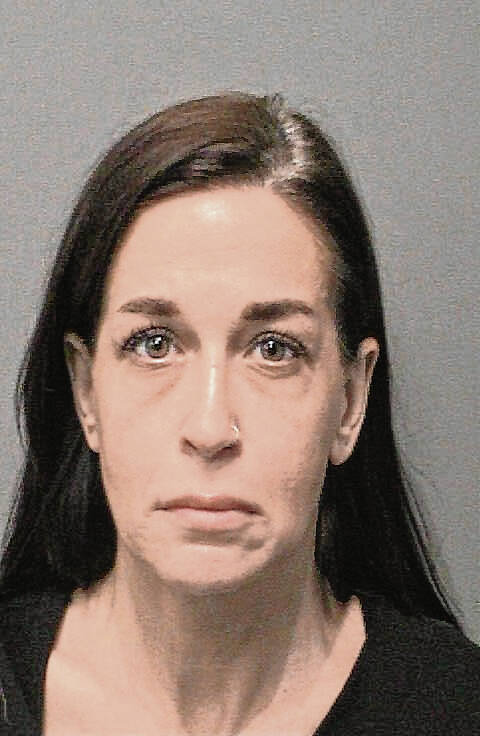
Babb
By Noah Crenshaw | Daily Journal
ncrenshaw@dailyjournal.net
For The Republic
FRANKLIN — A former Franklin nurse is accused of switching out a resident’s oxycodone medication with another drug and failing to accurately maintain records.
Kori Beth Babb, 47, of Columbus, is charged with interference with medical services where the defendant is a licensed health care provider, a Level 5 felony; obtaining a controlled substance by fraud or deceit, a Level 6 felony; and failure to make, keep or furnish records, a Level 6 felony. Babb was arrested Monday and released on bail.
Otterbein SeniorLife Community in Franklin reported to Franklin Police on March 17, 2025, that a resident alleged a nurse had been giving her a different medication instead of her prescribed oxycodone, a Schedule II controlled substance. Franklin Police forwarded the investigation to the Indiana Attorney General’s Medicaid Fraud Unit, according to a probable cause affidavit filed Dec. 22, 2025, in Johnson Superior Court 1.
Babb worked at Otterbein for about six months, from Sept. 9, 2024, to March 13, 2025, when she was suspended pending an investigation, according to the affidavit.
Babb is no longer employed at Otterbein. A spokesperson said they are aware of inquiries “involving a former nurse,” and said resident safety and medication integrity are among Otterbein’s highest priorities.
“When concerns arose, we took immediate action, consistent with policy, including restricting access, initiating required screening, document follow-up efforts and ending the individual’s employment,” said Shonia Russelle, vice president of marketing and communications for Otterbein, in a statement to the Daily Journal. “Because this involves resident care and personnel matters, privacy protections and external legal/regulatory processes, we cannot share additional details. We will continue to cooperate with authorities in this matter.”
Otterbein and its employees, including Babb, are required to maintain “complete and accurate” records under state and federal laws for the dispensation of controlled substances. This includes the number of units or volume of the drug issued, the name and address to whom it was dispensed, the date of dispensing and the name or initials of the person who dispensed or administered the substance, according to the affidavit.
At Otterbein, nurses administer medications to residents, so during each shift, a medication cart will have a nurse assigned to it, and that nurse will be the only staff member with keys to unlock to access medications. Nurses are tasked with withdrawing the medications for the appropriate resident per physician order and making the appropriate records, the affidavit says.
Investigators allege Babb not only failed to maintain accurate records but also gave a resident the wrong medication.
The initial reports
The resident whom Babb allegedly interfered with was prescribed 15 milligram oxycodone tablets, as an “as-needed” painkiller — meaning the resident needed to request a dose instead of it being scheduled automatically to be given to her.
On March 17, 2025, days after Babb had been suspended, the resident notified another nurse that she believed Babb had allegedly been giving her “allergy pills” in place of oxycodone. She showed the nurse a small white pill she had allegedly been given by Babb, which was later identified as Lorazepam. The then-director of nursing for Otterbein ordered the pill destroyed, according to the affidavit.
While the resident previously was prescribed Lorazepam, she was only prescribed it for a few weeks between Oct. 23 to Nov. 6, 2024. The investigator also noted the resident didn’t have a history of making unsubstantiated claims against Otterbein staff, the affidavit shows.
Otterbein’s Social Services director interviewed the resident, who gave the same statement. The resident said she’d been hiding the pills Babb gave her by not swallowing them, spitting them out and saving them after Babb left the room. The resident later said this had been happening for about a month, with Babb reportedly, and typically, giving her pills in the morning near the end of her shift, according to the affidavit.
The resident was able to give two more pills to the director, which were determined to be Lorazepam and ordered to be destroyed.
The investigation
The resident told Franklin Police the pills that Babb had given her made her sleepy, which was not the typical effect she had from oxycodone, and Babb had reportedly put the pills directly in her mouth without letting her see what the pill was. She also made her open her mouth to show she had swallowed it. The resident also gave police another pill she had saved, according to the affidavit.
An Otterbein supervisor later visited the resident the following day to collect all of the pills she had saved. Six more pills were recovered and entered into evidence. Three of the pills were dissolved to the point where he couldn’t see the code imprinted on them, three were intact enough to see a Lorazepam tablet code, the affidavit says.
All of the pills were taken to the Indiana State Police crime lab for analysis in August. In November, the pills were confirmed to be Lorazepam.
The investigator also interviewed the resident. She said Babb was automatically giving the resident oxycodone without her requesting it. And while she would usually let the resident take her own medications, but she physically put the pain pill into the resident’s mouth. The resident often had to swallow the pills on days that Bab didn’t leave the room directly after giving her the medication, according to the affidavit.
There were reportedly 64 instances of Babb signing that she withdrew oxycodone doses for the resident; they did not chart what she did with the doses from September 2024 to March 2025, the affidavit says.
The investigator also reviewed a controlled substance record for a 15-milligram oxycodone tablet delivered to Otterbein in February and prescribed to another resident. Babb had reportedly signed that she withdrew a dose for the resident, which brought the number of doses down from seven to six, but she marked out that line to possibly indicate it had been removed by mistake or was wasted. She also allegedly withdrew a second dose that brought the number down to five doses, according to the affidavit.
However, when reviewing this resident’s medication administration records, the investigator found that Babb allegedly only recorded one of the two doses taken out. She allegedly didn’t chart that she withdrew the first dose and marked out that line, whether she administered it to the resident or returned it to the medication cart. There was also no documentation or a signature of a second nurse to show if it was wasted or destroyed, the affidavit shows.
Nurse denies allegations
In July, the state investigator interviewed Babb about the allegations and the evidence he found. Among her answers, she said as a nurse for a hall at Otterbein, she would be the only nurse on the floor to have a key to unlock the medication cart and the “lock box” to access the OxyContin, according to the affidavit.
Babb was asked about the incidents with the second resident first, where she only charted the administration of one of the two doses of oxycodone. She confirmed her signature and initials on the two lines on the chart, but didn’t remember the incident or know why the medication administration records show she only administered one of the two doses. Since she drew a line through the first dose of oxycodone, she said she must have needed to waste the dose but didn’t remember what other nurse would’ve acted as the “waste witness” and that the nurse being a witness doesn’t always sign off on doing so, the affidavit says.
As for the first resident, there were 64 instances of withdrawing oxycodone that were not charted as being administered to her, Babb said she was careful to chart the administration of medications, especially controlled substances, to patients. She didn’t know why she failed to chart the 64 instances, and told the investigator it shocked her. She also claimed the resident would regularly ask for oxycodone, sometimes even before the six-hour limit was up, according to the affidavit.
Babb denied giving the resident a different medication instead of oxycodone and told the investigator the resident was prescribed Lorazepam for panic attacks. The investigator noted that the resident wasn’t prescribed Lorazepam, according to the affidavit.
Babb also said she didn’t know why the resident would make the allegation.
Investigators, however, ultimately reached a determination that Babb gave the resident Lorazepam instead of oxycodone, acquired oxycodone through deception and recklessly, knowingly or intentionally failed to make, keep or furnish a record for the documentation of the dispensing or administration of a controlled substance, the affidavit shows.