Home Blog Page 1005

Trump’s plan to seize and revitalize Venezuela’s oil industry faces major hurdles

President Donald Trump’s plan to take control of Venezuela’s oil industry and ask American companies to revitalize it after capturing President Nicolás Maduro in a raid isn’t likely to have a significant immediate impact on oil prices.

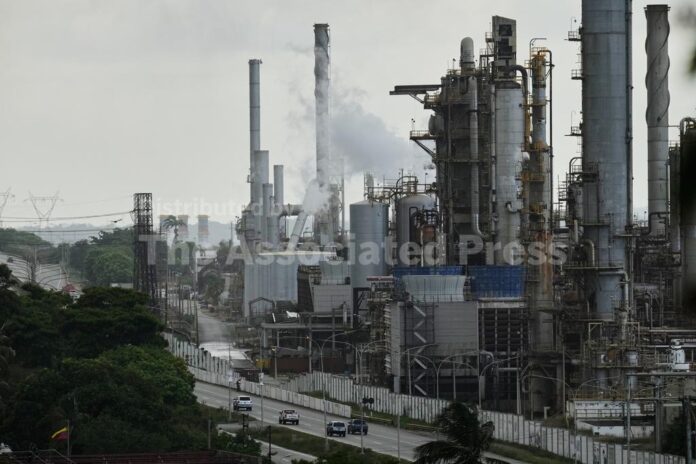
Venezuela’s oil industry is in disrepair after years of neglect and international sanctions, so it could take years and major investments before production can increase dramatically. But some analysts are optimistic that Venezuela could double or triple its current output of about 1.1 million barrels of oil a day to return to historic levels fairly quickly.

“While many are reporting Venezuela’s oil infrastructure was unharmed by U.S. military actions, it has been decaying for many many years and will take time to rebuild,” said Patrick De Haan, who is the lead petroleum analyst at gasoline price tracker GasBuddy.

American oil companies will want a stable regime in the country before they are willing to invest heavily, and the political picture remained uncertain Saturday with Trump saying that the United States is in charge, while the current Venezuelan vice president argued, before Venezuela’s high court ordered her to assume the role of interim president, that Maduro should be restored to power.

“But if it seems like the U.S. is successful in running the country for the next 24 hours, I would say there would be a lot of optimism that U.S. energy companies could come in and revitalize the Venezuelan oil industry fairly quickly,” said Phil Flynn, a senior market analyst at the Price Futures Group.

And if Venezuela can grow into an oil production powerhouse, Flynn said “that could cement lower prices for the longer term” and put more pressure on Russia.

Oil isn’t traded over the weekend, so there wasn’t an immediate impact on prices. But a major shift in prices isn’t expected when the market does reopen. Venezuela is a member of OPEC so its production is already accounted for there. And there is currently a surplus of oil on the global market.

Proven reserves

Venezuela is known to have the world’s largest proven crude oil reserves of approximately 303 billion barrels, according to the U.S. Energy Information Administration. That accounts for roughly 17% of all global oil reserves.

So international oil companies have reason to be interested in Venezuela. Leading companies, including Exxon Mobil and Chevron, didn’t immediately respond to requests for comment Saturday. ConocoPhillips spokesperson Dennis Nuss said by email that the company “is monitoring developments in Venezuela and their potential implications for global energy supply and stability. It would be premature to speculate on any future business activities or investments.”

Chevron is the only one with significant operations in Venezuela, where it produces about 250,000 barrels a day. Chevron, which first invested in Venezuela in the 1920s, does business in the country through joint ventures with the state-owned company Petróleos de Venezuela S.A., commonly known as PDVSA.

But even with those massive reserves, Venezuela has been producing less than 1% of the world’s crude oil supply. Corruption, mismanagement and U.S. economic sanctions saw production steadily decline from the 3.5 million barrels per day pumped in 1999 to today’s levels.

The problem isn’t finding the oil. It’s a question of the political environment and whether companies can count on the government to live up to their contracts. Back in 2007, then President Hugo Chávez nationalized much of the oil production and forced major players like ExxonMobil and ConocoPhillips out.

“The issue is not just that the infrastructure is in bad shape, but it’s mostly about how do you get foreign companies to start pouring money in before they have a clear perspective on the political stability, the contract situation and the like,” said Francisco Monaldi, who is the director of the Latin American energy program at Rice University.

But the infrastructure does need significant investment.

“The estimate is that in order for Venezuela to increase from one million barrels per day — that is what it produces today — to four million barrels, it will take about a decade and about a hundred billion dollars of investment,” Monaldi said.

Strong demand

Venezuela produces the kind of heavy crude oil that’s needed for diesel fuel, asphalt and other fuels for heavy equipment. Diesel is in short supply around the world because of the sanctions on oil from Venezuela and Russia and because America’s lighter crude oil can’t easily replace it.

Years ago, American refineries on the Gulf Coast were optimized to handle that kind of heavy crude at a time when U.S. oil production was falling and Venezuelan and Mexican crude was plentiful. So refineries would love to have more access to Venezuela’s crude because it would help them operate more efficiently, and it tends to be a little cheaper.

Boosting Venezuelan production could also make it easier to put pressure on Russia because Europe and the rest of the world could get more of the diesel and heavy oil they need from Venezuela and stop buying from Russia.

“There’s been a big benefit for Russia to see Venezuela’s oil industry collapse. And the reason is because they were a competitor on the global stage for that oil market,” Flynn said.

Complicated legal picture

But Matthew Waxman, a Columbia University law professor who was a national security official in the George W. Bush administration, said seizing control of Venezuela’s resources opens up additional legal issues.

“For example, a big issue will be who really owns Venezuela’s oil?” Waxman wrote in an email. “An occupying military power can’t enrich itself by taking another state’s resources, but the Trump administration will probably claim that the Venezuelan government never rightfully held them.”

But Waxman, who served in the State and Defense departments and on the National Security Council under Bush, noted that “we’ve seen the administration talk very dismissively about international law when it comes to Venezuela.”

___

Associated Press writers Matt O’Brien and Ben Finley contributed to this report.
Trump’s plan to seize and revitalize Venezuela’s oil industry faces major hurdles

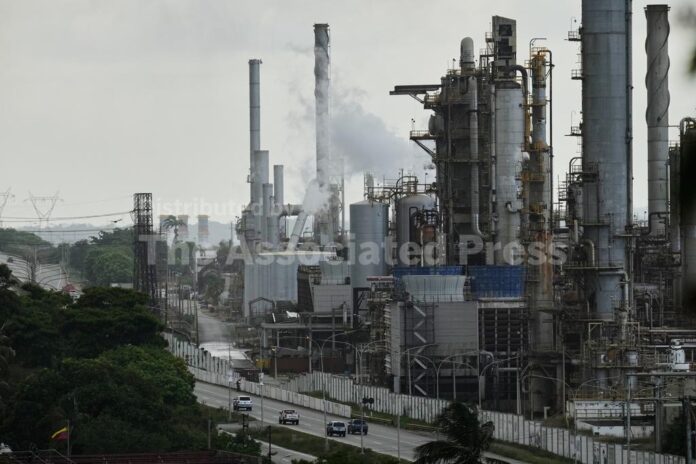
President Donald Trump’s plan to take control of Venezuela’s oil industry and ask American companies to revitalize it after capturing President Nicolás Maduro in a raid isn’t likely to have a significant immediate impact on oil prices.

Venezuela’s oil industry is in disrepair after years of neglect and international sanctions, so it could take years and major investments before production can increase dramatically. But some analysts are optimistic that Venezuela could double or triple its current output of about 1.1 million barrels of oil a day to return to historic levels fairly quickly.

“While many are reporting Venezuela’s oil infrastructure was unharmed by U.S. military actions, it has been decaying for many many years and will take time to rebuild,” said Patrick De Haan, who is the lead petroleum analyst at gasoline price tracker GasBuddy.

American oil companies will want a stable regime in the country before they are willing to invest heavily, and the political picture remained uncertain Saturday with Trump saying that the United States is in charge, while the current Venezuelan vice president argued, before Venezuela’s high court ordered her to assume the role of interim president, that Maduro should be restored to power.

“But if it seems like the U.S. is successful in running the country for the next 24 hours, I would say there would be a lot of optimism that U.S. energy companies could come in and revitalize the Venezuelan oil industry fairly quickly,” said Phil Flynn, a senior market analyst at the Price Futures Group.

And if Venezuela can grow into an oil production powerhouse, Flynn said “that could cement lower prices for the longer term” and put more pressure on Russia.

Oil isn’t traded over the weekend, so there wasn’t an immediate impact on prices. But a major shift in prices isn’t expected when the market does reopen. Venezuela is a member of OPEC so its production is already accounted for there. And there is currently a surplus of oil on the global market.

Proven reserves

Venezuela is known to have the world’s largest proven crude oil reserves of approximately 303 billion barrels, according to the U.S. Energy Information Administration. That accounts for roughly 17% of all global oil reserves.

So international oil companies have reason to be interested in Venezuela. Leading companies, including Exxon Mobil and Chevron, didn’t immediately respond to requests for comment Saturday. ConocoPhillips spokesperson Dennis Nuss said by email that the company “is monitoring developments in Venezuela and their potential implications for global energy supply and stability. It would be premature to speculate on any future business activities or investments.”

Chevron is the only one with significant operations in Venezuela, where it produces about 250,000 barrels a day. Chevron, which first invested in Venezuela in the 1920s, does business in the country through joint ventures with the state-owned company Petróleos de Venezuela S.A., commonly known as PDVSA.

But even with those massive reserves, Venezuela has been producing less than 1% of the world’s crude oil supply. Corruption, mismanagement and U.S. economic sanctions saw production steadily decline from the 3.5 million barrels per day pumped in 1999 to today’s levels.

The problem isn’t finding the oil. It’s a question of the political environment and whether companies can count on the government to live up to their contracts. Back in 2007, then President Hugo Chávez nationalized much of the oil production and forced major players like ExxonMobil and ConocoPhillips out.

“The issue is not just that the infrastructure is in bad shape, but it’s mostly about how do you get foreign companies to start pouring money in before they have a clear perspective on the political stability, the contract situation and the like,” said Francisco Monaldi, who is the director of the Latin American energy program at Rice University.

But the infrastructure does need significant investment.

“The estimate is that in order for Venezuela to increase from one million barrels per day — that is what it produces today — to four million barrels, it will take about a decade and about a hundred billion dollars of investment,” Monaldi said.

Strong demand

Venezuela produces the kind of heavy crude oil that’s needed for diesel fuel, asphalt and other fuels for heavy equipment. Diesel is in short supply around the world because of the sanctions on oil from Venezuela and Russia and because America’s lighter crude oil can’t easily replace it.

Years ago, American refineries on the Gulf Coast were optimized to handle that kind of heavy crude at a time when U.S. oil production was falling and Venezuelan and Mexican crude was plentiful. So refineries would love to have more access to Venezuela’s crude because it would help them operate more efficiently, and it tends to be a little cheaper.

Boosting Venezuelan production could also make it easier to put pressure on Russia because Europe and the rest of the world could get more of the diesel and heavy oil they need from Venezuela and stop buying from Russia.

“There’s been a big benefit for Russia to see Venezuela’s oil industry collapse. And the reason is because they were a competitor on the global stage for that oil market,” Flynn said.

Complicated legal picture

But Matthew Waxman, a Columbia University law professor who was a national security official in the George W. Bush administration, said seizing control of Venezuela’s resources opens up additional legal issues.

“For example, a big issue will be who really owns Venezuela’s oil?” Waxman wrote in an email. “An occupying military power can’t enrich itself by taking another state’s resources, but the Trump administration will probably claim that the Venezuelan government never rightfully held them.”

But Waxman, who served in the State and Defense departments and on the National Security Council under Bush, noted that “we’ve seen the administration talk very dismissively about international law when it comes to Venezuela.”

___

Associated Press writers Matt O’Brien and Ben Finley contributed to this report.

A mother says goodbye to her son as Swiss community grieves after deadly fire

CRANS-MONTANA, Switzerland (AP) — A Mass was held Sunday for victims of the New Year’s Eve fire at a bar in the Swiss Alpine resort of Crans-Montana, which left 40 dead and many severely injured, as distressed parents waited for news of their children or began the long process of mourning.

Gray-haired parents, teenagers and members of the police were seen comforting one another during the service, which took place at the Chapelle Saint-Christophe in Crans-Montana. Mass was set to be followed by a silent march to the site of the tragedy.

In the crowded pews, a grieving woman listened intently, her hands clasped tightly and sometimes clasping rosary beads, as speakers delivered readings in German, French and Italian. Despite freezing weather, several hundreds followed the Mass on the screen installed outside the church.

The Rev. Gilles Cavin spoke of the “terrible uncertainty” for families unsure if their loved ones are among the dead or still alive among the injured. “We pray for their friends hard hit by misery on this day that was meant to be one of festivities and friendship,” he said.

Forty people died and 119 were injured in the blaze that broke out around 1:30 a.m. on Thursday at Le Constellation bar. Police have said many of the victims were in their teens to mid-20s.

By Sunday morning, Swiss authorities identified 24 out of the 40 fatalities. They include 18 Swiss citizens aged 14 to 31 years, two Italians 16 years old, one dual citizen of Italy and the United Arab Emirates also 16 years old, an 18-year-old Romanian, a 39-year-old French and a Turkish citizen, 18.

A grieving mother

One of the victims was 16-year old Arthur Brodard, whose mother had been frantically searching for him.

“Our Arthur has now left to party in paradise,” a visibly shaken Laetitia Brodard said in a Facebook story posted on Saturday night, speaking to camera. “We can start our mourning, knowing that he is in peace and in the light.”

Brodard’s frenzied search for her son reflected the desperation of families of the young people disappeared during the fire, who did not know whether their loved ones were dead or in the hospital.

Swiss authorities said the process of identifying victims was particularly hard because of the advanced degree of the burns, requiring the use of DNA samples. Brodard also had given her DNA sample to help in the identification process.

In her Facebook post, Brodard thanked those who “testified their compassion, their love” and to those who shared information as she anxiously searched and waited for news of her son. Other parents and siblings are still waiting in anguish.

Bar managers face a criminal investigation

Swiss authorities have opened a criminal investigation of the bar managers.

The two are suspected of involuntary homicide, involuntary bodily harm and involuntarily causing a fire, the Valais region’s chief prosecutor, Beatrice Pilloud, told reporters Saturday. The announcement of the investigation did not name the managers.

Investigators said Friday they believe sparkling candles atop Champagne bottles ignited the fire when they came too close to the ceiling of the crowded bar.

Authorities planned to look into whether sound-dampening material on the ceiling conformed with regulations and whether the candles were permitted for use in the bar. Officials said they also would look at other safety measures on the premises, including fire extinguishers and escape routes.

Swiss President Guy Parmelin announced a national day of mourning for the victims on Jan. 9.

France’s Health Minister Stéphanie Rist said 17 patients have received care in France, out of a total of 35 transferred from Switzerland to five European countries. Other patients were planned to be transferred to Germany, Italy and Belgium.

___

Associated Press writers Geir Moulson in Berlin, Sylvie Corbet in Paris and Claudia Ciobanu in Warsaw contributed to this report.

Swiss skier Rast challenges Shiffrin’s dominance in slalom again at World Cup race in Slovenia

KRANJSKA GORA, Slovenia (AP) — Swiss skier Camille Rast challenged Mikaela Shiffrin’s dominance in slalom for a second straight week Sunday, leading the American star by one-tenth of a second after the opening run of a race in Slovenia.

Shiffrin has won all five slaloms so far in the Olympic season but last week in Austria had to come back from half a second behind on a deteriorating course to edge out first-run leader Rast.

Racing in excellent conditions Sunday, Shiffrin charged down the Podkoren 3 course and gave herself a thumbs-up after finishing in 50.34 seconds, the fastest time by far until then.

But Rast, who is the slalom world champion, started a few minutes later and had the best split times in the last two sections to take the lead.

The rest of the field, led by Rast’s teammate Wendy Holdener in third and Shiffrin’s teammate Paula Moltzan in fourth, had more than three-quarters of a second to make up in the final leg. Austria’s Katharina Truppe was the only other skier to finish less than a second off the pace.

Rast is after her fourth career win. On Saturday, she earned her maiden giant slalom win on the same hill and dedicated that victory to the victims of the fire at a bar in Crans-Montana near her hometown of Vétroz.

Shiffrin said she was impressed by her Swiss rival and by several other racers who posted fast split times.

“It’s been really impressive to see the women coming down, green light, like so many are doing such a good job,” Shiffrin said.

“They are finding speed and time somewhere in the course that I can’t imagine where. So, I love to see that, it’s like a really good show.”

If she wins, Shiffrin will match her personal best of seven straight World Cup slalom victories, having also won the final race of last season. The World Cup record is eight consecutive wins.

It would also mark Shiffrin’s record-extending 70th career win in slalom; no other skier, male or female, has ever won more than 46 World Cup races in a single discipline.

Defending slalom World Cup winner Zrinka Ljutic of Croatia didn’t finish her run for the fourth time in six races this season, and Italian prodigy Lara Colturi, competing for Albania, lost balance and fell on a course set by her father and coach, Alessandro Colturi.

___

AP skiing: https://apnews.com/hub/alpine-skiing

Drone strike kills 1 in Russian border region ahead of Ukraine peace talks

One person was killed and two others wounded when a Ukrainian drone struck a car in the Russian border region of Belgorod, local officials said Sunday, ahead of peace talks to end the nearly 4-year-old war in Paris this week.

Belgorod regional Gov. Vyacheslav Gladkov said a young child was among the wounded.

In Ukraine, three people were wounded in the Kharkiv region in drone strikes overnight into Sunday, the country’s State Emergency Service said.

Meanwhile, the death toll from a Russian missile attack on the city of Kharkiv on Friday increased to four when two other bodies were found under the rubble of a building, Kharkiv regional head Oleh Syniehubov wrote on Telegram Sunday.

The latest attacks came after national security advisers from Europe and other allies visited Kyiv on Saturday to discuss security guarantees and economic support, as a U.S.-led diplomatic push to end the war in Ukraine intensifies.

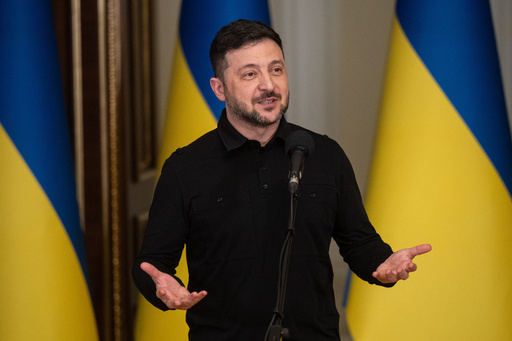
President Volodymyr Zelenskyy, preparing to travel to Paris for a meeting with partners, said Saturday that work on the peace proposals could now accelerate as Ukraine has shared all documents under discussion with the 18 national security advisers, including those on security guarantees.

He said representatives from Ukraine’s General Staff and military sector would meet on Monday in Paris, followed by a meeting Tuesday of European leaders, where he said he hoped documents on security guarantees would be finalized. He said there also would be meetings with U.S. representatives in Paris.

___

Follow AP’s coverage of the war in Ukraine at https://apnews.com/hub/russia-ukraine

Maduro arrives in US after stunning capture in operation that Trump says will let US ‘run’ Venezuela

CARACAS, Venezuela (AP) — Deposed Venezuelan leader Nicolás Maduro arrived in the United States to face criminal charges after being captured in an audacious nighttime military operation that President Donald Trump said would set the U.S. up to “run” the South American country and tap its vast oil reserves to sell to other nations.

Maduro landed Saturday evening at a small airport in New York following the middle-of-the-night operation that extracted him and his wife, Cilia Flores, from their home in a military base in the capital city of Caracas — an act that Maduro’s government called “imperialist.” The couple faces U.S. charges of participating in a narco-terrorism conspiracy.

The dramatic action capped an intensive Trump administration pressure campaign on Venezuela’s autocratic leader and months of secret planning, resulting in the most assertive American action to achieve regime change since the 2003 invasion of Iraq. Legal experts raised questions about the lawfulness of the operation, which was done without congressional approval. Venezuela’s vice president, Delcy Rodriguez, meanwhile, demanded that the United States free Maduro and called him the country’s rightful leader as her nation’s high court named her interim president.

Some Venezuelan civilians and members of the military were killed, said Rodríguez, who didn’t give a number. Trump said some U.S. forces were injured, but none were killed.

Speaking to reporters hours after Maduro’s capture, Trump revealed his plans to exploit the leadership void to “fix” the country’s oil infrastructure and sell “large amounts” of oil to other countries.

Trump says US will ‘run the country’

The Trump administration promoted the ouster as a step toward reducing the flow of dangerous drugs into the U.S. The president touted what he saw as other potential benefits, including a leadership stake in the country and greater control of oil.

Trump claimed the U.S. government would help lead the country and was already doing so, though there were no immediate visible signs of that. Venezuelan state TV aired pro-Maduro propaganda and broadcast live images of supporters taking to the streets in Caracas in protest.

“We’re going to run the country until such time as we can do a safe, proper and judicious transition,” Trump said at a Mar-a-Lago news conference. He boasted that this “extremely successful operation should serve as warning to anyone who would threaten American sovereignty or endanger American lives.”

Maduro and other Venezuelan officials were indicted in 2020 on narco-terrorism conspiracy charges, and the Justice Department released a new indictment Saturday of Maduro and his wife that painted his administration as a “corrupt, illegitimate government” fueled by a drug-trafficking operation that flooded the U.S with cocaine. The U.S. government does not recognize Maduro as the country’s leader.

The Trump administration spent months building up American forces in the region and carrying out attacks on boats in the Caribbean Sea and eastern Pacific Ocean for allegedly ferrying drugs. Last week, the CIA was behind a drone strike at a docking area believed to have been used by Venezuelan drug cartels — the first known direct operation on Venezuelan soil since the U.S. campaign began in September.

Early morning attack

Taking place 36 years to the day after the 1990 surrender and seizure of Panama leader Manuel Antonio Noriega following a U.S. invasion, the Venezuela operation unfolded under the cover of darkness early Saturday. Trump said the U.S. turned off “almost all of the lights” in Caracas while forces moved in to extract Maduro and his wife.

Gen. Dan Caine, chairman of the Joint Chiefs of Staff, said U.S. forces had rehearsed their maneuvers for months, learning everything about Maduro — where he was and what he ate, as well as details of his pets and his clothes.

“We think, we develop, we train, we rehearse, we debrief, we rehearse again and again,” Caine said. “Not to get it right, but to ensure we cannot get it wrong.”

Multiple explosions rang out that morning, and low-flying aircraft swept through Caracas. Maduro’s government accused the United States of hitting civilian and military installations, calling it an “imperialist attack” and urging citizens to take to the streets. The explosions — at least seven blasts — sent people rushing into the streets, while others took to social media to report what they saw and heard.

Under Venezuelan law, Rodríguez would take over from Maduro. Rodríguez, however, stressed during a Saturday appearance on state television that she did not plan to assume power, before Venezuela’s high court ordered that she become interim president.

“There is only one president in Venezuela,” Rodriguez said, “and his name is Nicolás Maduro Moros.”

Some streets in Caracas fill up

Venezuela’s ruling party has held power since 1999, when Maduro’s predecessor, Hugo Chávez, took office, promising to uplift poor people and later to implement a self-described socialist revolution.

Maduro took over when Chávez died in 2013. His 2018 reelection was widely considered a sham because the main opposition parties were banned from participating. During the 2024 election, electoral authorities loyal to the ruling party declared him the winner hours after polls closed, but the opposition gathered overwhelming evidence that he lost by a more than 2-to-1 margin.

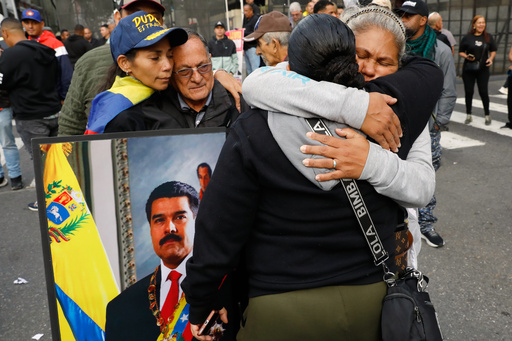
In a demonstration of how polarizing Maduro is, people variously took to the streets to protest his capture, while others celebrated it. At a protest in the Venezuelan capital, Caracas, Mayor Carmen Meléndez joined a crowd demanding Maduro’s return.

“Maduro, hold on, the people are rising up!” the crowd chanted. “We are here, Nicolás Maduro. If you can hear us, we are here!”

In other parts of the city, the streets were empty hours after the attack.

“How do I feel? Scared, like everyone,” said Caracas resident Noris Prada, who sat on an empty avenue looking at his phone. “Venezuelans woke up scared. Many families couldn’t sleep.”

In Doral, Florida, home to the largest Venezuelan community in the United States, people wrapped themselves in Venezuelan flags, ate fried snacks and cheered as music played. At one point, the crowd chanted “Liberty! Liberty! Liberty!”

Questions of legalitylinger

Whether the United States violated any laws, international or otherwise, was still a question early Sunday. “There are a number of international legal concepts which the United States might have broken by capturing Maduro,” said Ilan Katz, an international law analyst.

In New York, the U.N. Security Council, acting on an emergency request from Colombia, planned to hold a meeting on U.S. operations in Venezuela on Monday morning. That was according to a council diplomat, who spoke on the condition of anonymity to discuss a meeting not yet made public.

Lawmakers from both American political parties have raised reservations and flat-out objections to the U.S. attacks on boats suspected of drug smuggling. Congress has not approved an authorization for the use of military force for such operations in the region.

Connecticut Rep. Jim Himes, the top Democrat on the House Intelligence Committee, said he had seen no evidence that would justify Trump striking Venezuela without approval from Congress and demanded an immediate briefing by the administration on “its plan to ensure stability in the region and its legal justification for this decision.”

___

Toropin and Tucker reported from Washington. Associated Press writers Jorge Rueda in Caracas, Venezuela; Lisa Mascaro, Michelle L. Price, Seung Min Kim and Alanna Durkin Richer in Washington; Farnoush Amiri in New York; and Larry Neumeister in South Amboy, New Jersey, contributed to this report.

First Financial completes acquisition of Chicago-based BankFinancial Corporation

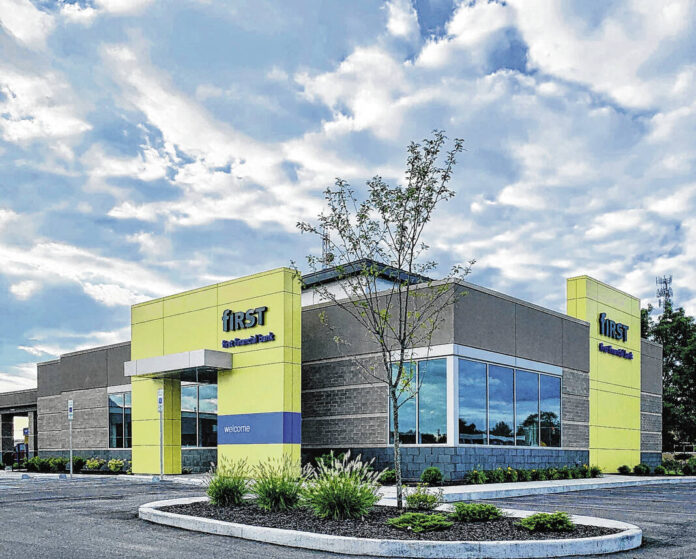
Photo provided The exterior of the First Financial Bank’s location on Central Avenue.

CINCINNATI, Ohio — First Financial Bancorp. (Nasdaq: FFBC) (“First Financial” or the “Company”) announced that, on Jan. 1, it closed its previously announced acquisition of Chicago-based BankFinancial Corporation (“BankFinancial”) through an all-stock transaction, expanding First Financial’s presence in the Chicago market with its first retail consumer-focused locations.

First Financial adds BankFinancial’s strong core deposit franchise, with 18 financial centers in the area, plus its regional and national commercial loan, lease and deposit lines of business. With the completion of this acquisition, First Financial will now have $22 billion in assets and offer an even broader range of consumer, commercial, specialty lending and wealth management services.

“Expanding our presence in Chicago presents us with significant opportunities for growth and profitability because of the many solutions we can bring to new and existing clients in this market,” said Archie Brown, president and chief executive officer of First Financial Bank. “First Financial exists to create opportunities to help our clients and communities thrive, and we look forward to the impact we can have with this approach in Chicago.”

BankFinancial locations will continue to operate under the name “BankFinancial” until the completion of the conversion process, anticipated in June 2026, which will consolidate the two banks’ products, processes and operating systems. BankFinancial clients will receive detailed information about account conversions in the coming months. Until then, BankFinancial clients do not need to take any action and can continue to obtain services from their existing BankFinancial channels. First Financial clients will not be impacted by the merger or the conversion.

This acquisition continues First Financial’s recent growth in the Midwest. In 2023, First Financial added a commercial lending presence in Chicago’s Fulton Market, and it acquired Lincolnshire-based Agile Premium Finance in 2024. In November 2025, First Financial announced the closing of its Westfield Bank acquisition, expanding its existing commercial banking and wealth management capabilities in Northeast Ohio. First Financial also recently added a commercial banking presence in Grand Rapids, Michigan. These growth areas build upon the bank’s Midwestern foundation, which includes Cincinnati, Dayton, Columbus and Northeast Ohio; Chicago, Illinois; Indianapolis, Indiana; and Louisville, Kentucky.

First Financial Bancorp. is a Cincinnati, Ohio-based bank holding company. As of Sept. 30, the company had $18.6 billion in assets, $11.7 billion in loans, $14.4 billion in deposits and $2.6 billion in shareholders’ equity. The company’s subsidiary, First Financial Bank, founded in 1863, with locations in Columbus, provides banking and financial services products. For more, visit www.bankatfirst.com.

‘Knock Out The Need’ blood drive set for Wednesday, Thursday

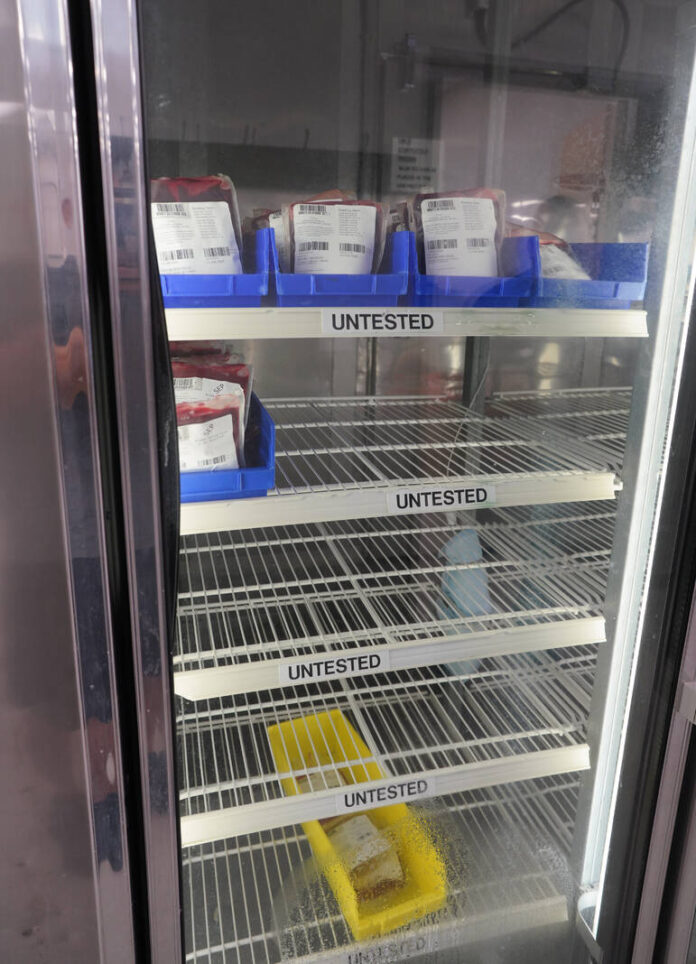
INDIANAPOLIS – The American Red Cross Indiana Region and WTHR are partnering for the annual “Knock Out The Need” Blood Drive to help save lives during National Blood Donor Month in January. The community is invited to donate blood at upcoming blood drives at five locations across the area on Wednesday and Thursday.

“When you roll up a sleeve to donate, you can help change a life,” said Regional Donor Services Executive Julie Brady. “We’re grateful for WTHR’s support in highlighting the impact of blood donations to help us ‘knock out the need’ and ensure a stable blood supply.”

National Blood Donor Month is an important time to honor the contributions of blood donors and raise awareness about the need for blood donations. The winter months can be challenging to collect blood products, due to holiday travel, seasonal illness and the threat of severe winter weather which could lead to the cancellation of blood drives.

Knock Out The Need Blood Drive locations from 1 to 6 p.m. Wednesday and 10 a.m. to 3 p.m. Thursday:

  • American Red Cross Office, 1510 N. Meridian St., Indianapolis
  • Hancock County Fairgrounds – Sheep Barn, 620 Apple St., Greenfield
  • The Commons – Lower Miller-Tangeman Lobby, 300 Washington St., Columbus
  • Ivy Tech Community College – Lamkin Hall, 200 Daniels Way, Bloomington
  • Church at Main – Multipurpose Room, 1500 E Main St., Brownsburg (Jan. 8 – 11:00 a.m. – 4:00 p.m.)

To schedule an appointment, visit RedCrossBlood.org or call 1-800-RED CROSS (1-800-733-2767) and use sponsor code knockouttheneed.

Presenting donors will receive a Knock Out The Need Blood Drive T-shirt, while supplies last.

The Red Cross and the NFL are partnering for the seventh year and invite football fans and blood donors to join our lifesaving team and score big! All who come to give Jan. 1-25, 2026, will be automatically entered for a chance to win a trip for two to Super Bowl LX in California’s San Francisco Bay Area. Visit RedCrossBlood.org/SuperBowl for details.

How to donate blood: All blood types are needed to ensure a reliable supply for patients. A blood donor card or driver’s license or two other forms of identification are required at check-in. Individuals who are 17 years of age in most states (16 with parental consent where allowed by state law), weigh at least 110 pounds and are in generally good health may be eligible to donate blood. High school students and other donors 18 years of age and younger also have to meet certain height and weight requirements.

Marjorie Taylor Greene made waves. Her constituents don’t agree on whether it was worth it

DALTON, Ga. (AP) — President Donald Trump says Rep. Marjorie Taylor Greene is a traitor. But for Jackie Harling, who chairs the local Republican Party in Greene’s northwestern corner of Georgia, she’s still “mama bear.”

“Every thought that we had in our minds, she seemed to be very good at verbalizing,” Harling said.

Saying things that no one else would say may be Greene’s most durable legacy as she steps down on Monday, resigning halfway through her third term in Congress. First, it was her embrace of conspiracy theories and incendiary rhetoric, turning her into a national symbol of a political culture without guardrails. Then it was her willingness to criticize Trump, a schism that made her position in Washington untenable.

In interviews in Greene’s district, constituents described her over and over as a “fighter.” For Republicans like Harling, that was enough.

“We got a lot of satisfaction,” Harling said. “She was our voice.”

It was less satisfying for an independent like Heath Patterson, who struggled to think of ways that Greene’s fame and notoriety made a difference for her district during her time in the U.S. Capitol.

“I don’t know of anything that she did do here except, certainly, got her voice heard. But where did we, how did we benefit from that?” he said. “I don’t think we did.”

From MAGA warrior to exile

Greene began clashing with Trump last year, criticizing his focus on foreign policy and his reluctance to release documents involving the Jeffrey Epstein case. The president eventually had enough, saying he would support a primary challenge against her. Greene announced a week later that she would resign.

She has kept up the criticism since then, including over Trump’s decision to strike Venezuela this weekend.

“This is what many in MAGA thought they voted to end,” Greene wrote on social media on Saturday. “Boy were we wrong.”

The split was surprising because, until that point, Greene’s trajectory had mirrored Trump’s own rise to power. She didn’t become politically involved until his presidential campaign in 2016 and first ran for Congress in 2020. Greene considered trying to represent Georgia’s 6th congressional district, which includes the Atlanta suburbs, before relocating to the 14th, where the Republican incumbent was retiring.

She remained loyal to Trump after he lost to President Joe Biden, promoting his falsehoods about a stolen election. When Trump ran again in 2024, she toured the country with him and spoke at his rallies while wearing a red “Make America Great Again” hat.

Her Georgia district is one of the most Republican-leaning in the state, although it wasn’t always that way. The region once backed Democrats like Zell Miller, a governor and U.S. senator who spearheaded Georgia’s lottery program that still bankrolls college scholarships and early childhood education programs.

But residents have felt left behind by years of change, said Jan Pourquoi, a Belgian native who emigrated in 1987, became a U.S. citizen and later won local office in Whitfield County.

His county’s population has grown by roughly by 32% since 1990, which pales in comparison to statewide growth of 74%. As the U.S. becomes more urban, secular, and diverse, Pourquoi said residents believe they’re “culturally oppressed.”

“They see themselves as great Americans, proud Americans, Christian Americans, and that doesn’t fit the American model anymore as they see it,” said Pourquoi, who said he left the Republican Party because of Trump. Greene exemplified the political backlash, which he summarized as “stick it to them — any possible way you can.”

Georgia leaders, like those in many other states, have spent years drawing congressional districts to pack like-minded voters together. That means in red areas, whoever wins the Republican primary is virtually guaranteed to come out on top in the general election, incentivizing candidates like Greene with more hardline views.

The political landscape means former Republicans like Pourquoi or independents like Patterson say they have no shot at helping a centrist win.

“I’m kind of square in the middle,” said Patterson, adding that it sometimes feels like he’s “the only one around here who’s that way.”

Republicans plan their path forward

Whitfield County Republicans gathered at a local restaurant last month for their annual Christmas party, where seasonal decor and a visit from Santa Claus were intermingled with the red, white and blue regalia and a smattering of MAGA paraphernalia.

There was still deep affection for Greene and plenty of talk about the cultural issues she championed.

“I think it’s just the fact that she was unwavering in ‘America First,’” said Gavin Swafford, who worked on Greene’s initial campaign.

Swafford called her “an accountability representative” because of her clashes with Republican leaders.

Lisa Adams, a party volunteer, called Greene “our stand-up person.”

“Look at her stance on transgenderism. That’s a big one,” she said. “Abortion. That’s a big one.”

None of Greene’s inconsistencies — real or perceived — were a problem, they said.

For example, Greene has praised the Korean-owned solar panel factories in the district even after voting against Biden-era policies intended to boost production. She broke with Republicans, Trump included, and sided with Democrats who wanted to extend premium subsidies for Affordable Care Act health insurance customers.

None of the Republicans at the Christmas party expressed any interest in taking sides between Trump and Greene.

“I think it’s inevitable when you have two firebrands that are both stubborn,” Swafford said.

Asked whether the district missed having a more traditional lawmaker, the kind who might cut bipartisan deals and bring as much federal money as possible back home, Swafford was unconcerned.

“The biggest thing that Marjorie contributed wasn’t even in legislation,” he said.

Still, there was also a sense among some that Greene, for all her bare-knuckle politics, could have gone further.

Star Black, a Republican who is running to replace Greene, was already planning a primary challenge before she announced her resignation.

“You had a great representative who was a fighter. Well, you know what? I want to take it one step further,” Black said.

“Not only do you need a fighter,” Black said, “you need someone who is going to listen. You need someone who is going to represent you.”

How cocaine and corruption led to the indictment of Maduro

NEW YORK (AP) — A newly unsealed U.S. Justice Department indictment accuses captured Venezuelan President Nicolás Maduro of running a “corrupt, illegitimate government” fueled by an extensive drug-trafficking operation that flooded the U.S. with thousands of tons of cocaine.

The arrest of Maduro and his wife in a stunning military operation early Saturday in Venezuela sets the stage for a major test for U.S. prosecutors as they seek to secure a conviction in a Manhattan courtroom against the longtime leader of the oil-rich South American nation.

Attorney General Pam Bondi said in a post on X that Maduro and his wife “will soon face the full wrath of American justice on American soil in American courts.”

Here’s a look at the accusations against Maduro and the charges he faces.

Maduro faces drugs and weapons charges

Maduro is charged alongside his wife, his son and three others. Maduro is indicted on four counts: narco-terrorism conspiracy, cocaine importation conspiracy, possession of machine guns and destructive devices and conspiracy to possess machine guns and destructive devices.

Maduro is facing the same charges as in an earlier indictment brought against him in Manhattan federal court in 2020, during the first Trump presidency. The new indictment unsealed on Saturday, which adds charges against Maduro’s wife, was filed under seal in the Southern District of New York just before Christmas.

It was not immediately clear when Maduro and his wife, Cilia Flores, would make their first appearance at the courthouse in Manhattan. A video posted Saturday night on social media by a White House account showed Maduro, smiling, as he was escorted through a U.S. Drug Enforcement Administration office in New York by two federal agents grasping his arms. He was expected to be detained while awaiting trial at a federal jail in Brooklyn.

Maduro allowed ‘cocaine-fueled corruption to flourish,’ US says

The indictment accuses Maduro of partnering with “some of the most violent and prolific drug traffickers and narco-terrorists in the world” to allow for the shipment of thousands of tons of cocaine into the U.S. Authorities allege powerful and violent drug-trafficking organizations, such as the Sinaloa Cartel and Tren de Aragua gang, worked directly with the Venezuelan government and then sent profits to high-ranking officials who helped and protected them in exchange.

Maduro allowed “cocaine-fueled corruption to flourish for his own benefit, for the benefit of members of his ruling regime, and for the benefit of his family members,” the indictment alleges.

U.S. authorities allege that Maduro and his family “provided law enforcement cover and logistical support” to cartels moving drugs throughout the region, resulting in as much as 250 tons of cocaine trafficked through Venezuela annually by 2020, according to the indictment. Drugs were moved on go-fast vessels, fishing boats and container ships or on planes from clandestine airstrips, the indictment says.

“This cycle of narcotics-based corruption lines the pockets of Venezuelan officials and their families while also benefiting violent narco-terrorists who operate with impunity on Venezuelan soil and who help produce, protect, and transport tons of cocaine to the United States,” the indictment says.

Allegations of bribes and orders of kidnappings and murders

The U.S. accuses Maduro and his wife of ordering kidnappings, beatings and murders “against those who owed them drug money or otherwise undermined their drug trafficking operation.” That includes the killing of a local drug boss in Caracas, according to the indictment.

Maduro’s wife is also accused of accepting hundreds of thousands of dollars in bribes in 2007 to arrange a meeting between “a large-scale drug trafficker” and the director of Venezuela’s National Anti-Drug Office. In a corrupt deal, the drug trafficker then agreed to pay a monthly bribe to the director of the anti-drug office as well as about $100,000 for each cocaine-carrying flight “to ensure the flight’s safe passage.” Some of that money then went to Maduro’s wife, the indictment says.

Nephews of Maduro’s wife were heard during recorded meetings with confidential U.S. government sources in 2015 agreeing to send “multi-hundred-kilogram cocaine shipments” from Maduro’s “presidential hanger” at a Venezuelan airport. The nephews during the recorded meetings explained “that they were at ‘war’ with the United States,” the indictment alleges. They were both sentenced in 2017 to 18 years in prison for conspiring to send tons of cocaine into the U.S. before being released in 2022 as part of a prisoner swap in exchange for seven imprisoned Americans.

Operation to capture Maduro was a ‘law enforcement function,’ Rubio says

During a news conference, Secretary of State Marco Rubio and Dan Caine, the chairman of the Joint Chiefs of Staff, cast the military raid that captured Maduro and his wife as an action carried out on behalf of the Department of Justice. Caine said the operation was made “at the request of the Justice Department.”

Rubio, as he responded to a question about whether Congress had been notified, said the U.S. raid to get the couple was “basically a law enforcement function,” adding that it was an instance in which the “Department of War supported the Department of Justice.” He called Maduro “a fugitive of American justice with a $50 million reward” over his head.

___

Richer reported from Washington.