Home Blog Page 1016

Candidate filings for primary start next week

Bartholomew County voters will soon get their first look at who plans to run for a range of federal, state and local offices that will be up for grabs during the 2026 midterm elections.

Candidate filings for the 2026 primary open Wednesday and continue until Feb. 6, marking the start of the primary campaign season. The primary in Indiana is May 5.

Primary elections are held to nominate candidates from each party to appear on the general election ballot in the fall.

This year, several federal, state and local offices will be on the ballot in Bartholomew County — including four Indiana General Assembly seats, two U.S. House seats, Columbus Township Trustee and several county offices, among other races.

One race that is expected to draw some attention is the Republican primary for Indiana Senate District 41.

The seat is currently held by five-term incumbent Sen. Greg Walker, R-Columbus, who said last month that he is “beginning to reconsider” retiring from the Senate after announcing in August that he would not seek re-election.

Walker’s potential decision to reverse course and seek a sixth term comes after he became a vocal critic of President Donald Trump’s demands to redraw Indiana’s congressional map ahead of this year’s midterm elections.

The Indiana Senate voted 31-19 last month to reject a proposed congressional map that would have redrawn congressional districts in ways that could flip two Democratic-held seats as part of a broader national push to help preserve the GOP’s narrow majority in the U.S. House.

Walker said he declined two invitations to visit the White House, including an offer to visit the Oval Office, while the Trump administration officials pushed for Indiana lawmakers to redraw the map.

In a 20-minute address to the Senate Committee on Elections last month, Walker suggested the push to redraw Indiana’s congressional map mid-decade may lead him to seek re-election after all.

“And you’re thinking, ‘Oh, it’s easy. You already said you’re not coming back. You can’t be primaried,’” Walker said during the address. “Well, some little seed in the back of my head says, ‘Go ahead and file.’ I think it’d be the dumbest thing I ever did in my life, but that’s what my wife thought when I ran 20 years ago.”

After Walker initially said he did not plan to seek re-election, former U.S. Rep. Greg Pence, R-Ind., said he had conversations about the seat becoming vacant with leaders and others who may be interested in running in the GOP primary but had not made a decision about whether he would run.

Pence, who is the older brother of former Vice President Mike Pence, represented Indiana’s Sixth Congressional District for three terms from 2019 to 2025.

Former Indiana Rep. Milo Smith, R-Columbus, who represented Indiana House District 59 from 2006 to 2018, said in August that he plans to run for Walker’s seat.

Following the Senate vote on redistricting last month, Gov. Mike Braun issued a statement that seemed to indicated that was pledging to work with Trump against members of his own party in Indiana to oppose state senators who voted against the proposed congressional map.

At the federal level, Indiana’s Sixth and Ninth Congressional Districts are up for re-election this year. Those two seats are currently held by Rep. Jefferson Shreve, R-Ind., and Rep. Erin Houchin, R-Ind.

Indiana House Districts 59, 69 and 73 will also be up for grabs this year. Rep. Ryan Lauer, R-Columbus; Rep. Jim Lucas, R-Seymour; and Rep. Jennifer Meltzer, R-Shelbyville, currently hold those seats.

Locally, the 2026 primary will be the first election since former Columbus Township Trustee Ben Jackson pleaded guilty to stealing and misusing $1.12 million in township funds to cover personal expenses over an eight-year period.

Jackson, a Republican, resigned in November 2024 amid an investigation into his use of the township’s credit card.

Several county-level races will also be on the ballot this year, including Bartholomew County Council seats, Bartholomew County Prosecutor, Bartholomew County Sheriff, Bartholomew Superior Court 2 judge and Bartholomew County Clerk.

Bartholomew County Prosecutor Lindsey Holden-Kay, Bartholomew Superior Court 2 Judge Jonathan “Jon” Rohde and Bartholomew County Sheriff Chris Lane, all Republicans, have already announced plans to seek re-election this year.

The deadline to register to vote for the 2026 primary is April 6, according to the Indiana Secretary of State’s Office.

Robby Ashford leads Wake Forest past Mississippi State 43-29 in Duke’s Mayo Bowl

CHARLOTTE, N.C. (AP) — Robby Ashford threw for 303 yards and three touchdowns and ran for 50 yards and two scores, Koredell Bartley scored on a 100-yard kickoff return and Wake Forest beat Mississippi State 43-29 in the Duke’s Mayo Bowl on Friday night, earning coach Jake Dickert a mayonnaise bath.

Ashford threw TD passes of 14 yards to Kamrean Johnson, 64 yards to Jack Foley and 62 yards to Ty Clark III and had scoring runs of 2 and 1 yards for the Demon Deacons (9-4). They won seven of their final nine games.

Clark finished with 153 yards from scrimmage after taking over the starting role after second-team All-ACC selection Demond Claiborne opted out of the game after declaring for the NFL draft.

Freshman quarterback Kamario Taylor, making his second college start, had a big second half for Mississippi State (5-8) and finished 13 of 22 for 241 yards and a touchdown. He ran for 60 yards and another score before suffering what appeared to be a significant leg injury with 1:46 left in the game. He was carted off the field and there was no immediate word on the extent of the injury.

After the Bulldogs took an 3-0 lead on the game’s first possession, Bartley fielded the ensuing kickoff at the goal line and weaved his way up the field before turning up the speed and outracing five defenders to the end zone for the longest touchdown in bowl history.

Ashford, a sixth-year QB playing for his fourth college, put Wake Forest ahead 30-12 in the third quarter on a 2-yard run to make it a three-possession game and the Demon Deacons seemed in cruise control.

But the Bulldogs came storming back.

Mississippi State finally found the end zone on the last play of the third quarter when Taylor took a shotgun snap, got a running start and leaped over the line and extended the ball over the goal line on his descent.

He added a 2-point conversion toss to cut it to 10 and then found Sanfrisco Magee over the middle for a 42-yard catch-and-run touchdown pass to make it 30-27 with 10:17 left.

Wake Forest appeared to put it away when Ashford ran for his second touchdown with 4:07 remaining, but Navaeh Sanders blocked the extra point and Kelly Jones scooped it up and scored for 2 points for the Bulldogs to make it 36-29.

On the ensuing possession, Mississippi couldn’t manage a first down and coach Jeff Lebby made the curious decision to punt on fourth-and-11 from the Bulldogs 25 with 2:35 left in the game, putting trust in his defense that it would force a three and out and get the offense the ball back.

That backfired, as Ashford dumped a pass off to Ty Clark III on a third-and-7 and he raced 62 yards untouched to the end zone to seal the win.

The bowl game’s unique tradition includes the winning head getting a 5-gallon bucket filled with 42 1/2 pounds of mayonnaise dumped on his head after the game.

Up next

Mississippi State: Hosts Louisiana-Monroe on Sept. 5.

Wake Forest: Hosts Akron on Sept. 3.

___

Get poll alerts and updates on the AP Top 25 throughout the season. Sign up here and here (AP News mobile app). AP college football: https://apnews.com/hub/ap-top-25-college-football-poll and https://apnews.com/hub/college-football

Community leaders to lead mental health discussions in book read series

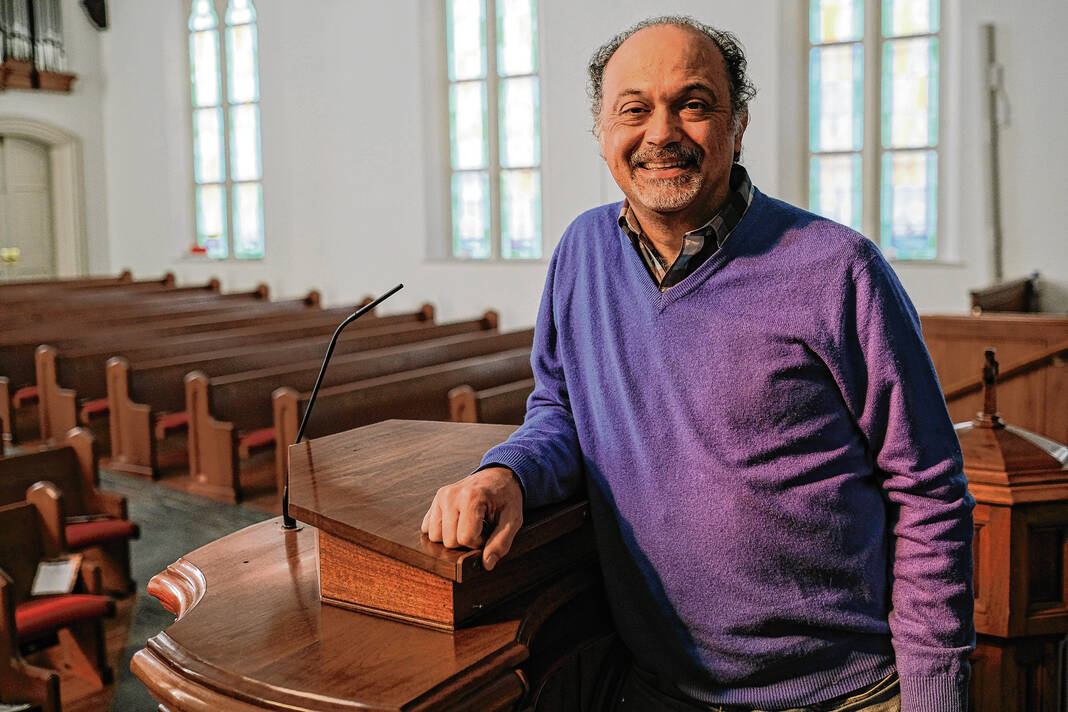
Mike Wolanin | The Republic Pastor Felipe Martinez poses for a portrait at First Presbyterian church in downtown Columbus, Ind., Monday, Feb. 12, 2024. First Presbyterian is set to celebrate its 200th anniversary.

It can be difficult and extremely frustrating to try and help someone with mental illness who is adamant that they do not need help. Attempts to do so may even backfire and cause the person to move further away from getting help.

There’s a term for that, called anosognosia, which is a neurological condition that prevents awareness of one’s mental illness, according to psychologist Dr. Xavier Amador. His book, “I Am Not Sick, I Don’t Need Help,” discusses just that and his evidence-based LEAP, or “listen, empathize, agree and partner,” method.

Community members, whether they are family members of someone needing help or are just curious to learn more, can talk about the the book together in a series of discussion groups organized by Mental Health Matters and the National Alliance on Mental Illness, or NAMI, of South Central Indiana starting on Jan. 9 and continuing until Feb. 4.

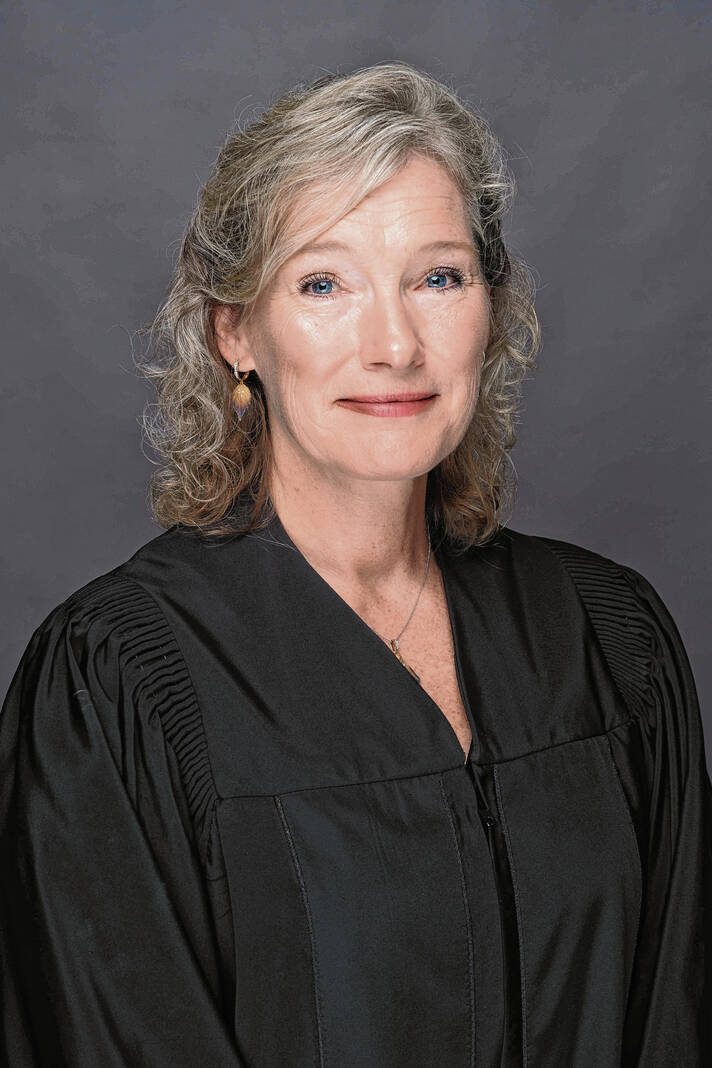
Several community leaders have also been invited to lead discussions on the book. The first session, to be held from from 9 to 10:30 a.m. at Columbus City Hall in the Cal Brand Meeting Room, will have discussions facilitated by First Presbyterian Church pastor Felipe Martinez and Bartholomew Circuit Court Judge Kelly Benjamin.

“I Am Not Sick, I Don’t Need Help” can be purchased at Viewpoint Books or on Amazon. The accompanying book guide can be obtained from Viewpoint Books, the Bartholomew County Public Library or Mental Health Matters. For a full list of dates and locations for book discussion groups, visit mhmbc.org.

Amador’s LEAP method, as explained in the book, can help build trust with someone even if they refuse to acknowledge their illness, communicate effectively without confrontation or power struggles and recognize the signs of anosognosia, according to Mental Health Matters’ website.

Mental Health Matters Action Team Specialist Julie Orben said it provides good examples and tools for how to have a conversation with someone who may be adamant they don’t need help and the frustration that can arise from those conversations.

“Dr. Amador, his own brother, he talks about how this whole process changed their relationship in that he went from, ‘you’re frustrating me, you need to take your medication. If you don’t do this, it’s going to be bad,’ and move from that type of combative conversation to more of having a calm conversation and… a conversation back and forth to acknowledge and show empathy, that you’re listening to the person and not being confrontational with them,” Orben said.

While the primary focus of the class is on mental health, individuals who struggle with substance issues are welcome to attend as well. Even if they haven’t read the book or do not wish to participate in the discussions, community members are still invited to listen in.

“You can still listen, you can still learn something by coming and just listening to the discussion of the individuals that are going to lead the discussion and then there’s a study guide that… a couple other individuals within NAMI that developed this study guide that will have different questions that you can go to and individuals can talk about,” Orben said.

Martinez said he plans to discuss how the book relates to his work as a pastor and Benjamin as a judge in their respective lines of work and how they can be partners to families experiencing mental health issues. Benjamin said she has already changed the way she frames questions and talks to people who may have mental health issues in the courtroom because of the book.

“I’ve noticed that if I change the way I ask or how I have my tone with people with mental illness really changes how they respond,” Benjamin said.

Because it’s a difficult subject, Martinez feels that churches sometimes aren’t well equipped to discuss mental health issues, but he said they are trying to de-stigmatize it, even in his own church. They have partnered with NAMI in the past and, in 2025, started a yearlong mental health initiative with workshops, special speakers and support groups.

Martinez believes these discussions are a good opportunity to further de-stigmatize mental health issues. He said he looks forward to having a conversation with Benjamin as well as the community at large.

“I’m so grateful that we as a church have an opportunity to be supportive of the community, and so I invite other churches and other houses of worship to consider ways in which they can collaborate with NAMI and with CRH and Mental Health Matters,” Martinez said. “Our members in our community will benefit.”

Benjamin hopes the community takes the time and effort to learn more about mental health issues and the LEAP method. She believes it to be a new outlook on how to approach people who may be suffering from a severe mental illness and give them the encouragement they need to seek out help.

“It’s really an important and interesting issue that the more you learn about it and the better we understand it, I think the better we can help people,” Benjamin said.

Curbside tree collection underway

Curbside live Christmas tree collection is underway in Columbus, continuing until Jan. 30.

Trees must be free of ornaments, hooks, lights, nails and stands for curbside collection by the city’s Department of Public Works.

Residents are asked to have trees curbside by 7 a.m. on trash day for your neighborhood.

Big Tech’s fast-expanding plans for data centers are running into stiff community opposition

SPRING CITY, Pa. (AP) — Tech companies and developers looking to plunge billions of dollars into ever-bigger data centers to power artificial intelligence and cloud computing are increasingly losing fights in communities where people don’t want to live next to them, or even near them.

Communities across the United States are reading about — and learning from — each other’s battles against data center proposals that are fast multiplying in number and size to meet steep demand as developers branch out in search of faster connections to power sources.

In many cases, municipal boards are trying to figure out whether energy- and water-hungry data centers fit into their zoning framework. Some have entertained waivers or tried to write new ordinances. Some don’t have zoning.

But as more people hear about a data center coming to their community, once-sleepy municipal board meetings in farming towns and growing suburbs now feature crowded rooms of angry residents pressuring local officials to reject the requests.

“Would you want this built in your backyard?” Larry Shank asked supervisors last month in Pennsylvania’s East Vincent Township. “Because that’s where it’s literally going, is in my backyard.”

Opposition spreads as data centers fan out

A growing number of proposals are going down in defeat, sounding alarms across the data center constellation of Big Tech firms, real estate developers, electric utilities, labor unions and more.

Andy Cvengros, who helps lead the data center practice at commercial real estate giant JLL, counted seven or eight deals he’d worked on in recent months that saw opponents going door-to-door, handing out shirts or putting signs in people’s yards.

“It’s becoming a huge problem,” Cvengros said.

Data Center Watch, a project of 10a Labs, an AI security consultancy, said it is seeing a sharp escalation in community, political and regulatory disruptions to data center development.

Between April and June alone, its latest reporting period, it counted 20 proposals valued at $98 billion in 11 states that were blocked or delayed amid local opposition and state-level pushback. That amounts to two-thirds of the projects it was tracking.

Some environmental and consumer advocacy groups say they’re fielding calls every day, and are working to educate communities on how to protect themselves.

“I’ve been doing this work for 16 years, worked on hundreds of campaigns I’d guess, and this by far is the biggest kind of local pushback I’ve ever seen here in Indiana,” said Bryce Gustafson of the Indianapolis-based Citizens Action Coalition.

In Indiana alone, Gustafson counted more than a dozen projects that lost rezoning petitions.

Similar concerns across different communities

For some people angry over steep increases in electric bills, their patience is thin for data centers that could bring still-higher increases.

Losing open space, farmland, forest or rural character is a big concern. So is the damage to quality of life, property values or health by on-site diesel generators kicking on or the constant hum of servers. Others worry that wells and aquifers could run dry.

Lawsuits are flying — both ways — over whether local governments violated their own rules.

Big Tech firms Microsoft, Google, Amazon and Facebook — which are collectively spending hundreds of billions of dollars on data centers across the globe — didn’t answer Associated Press questions about the effect of community pushback.

Microsoft, however, has acknowledged the difficulties. In an October securities filing, it listed its operational risks as including “community opposition, local moratoriums, and hyper-local dissent that may impede or delay infrastructure development.”

Even with high-level support from state and federal governments, the pushback is having an impact.

Maxx Kossof, vice president of investment at Chicago-based developer The Missner Group, said developers worried about losing a zoning fight are considering selling properties once they secure a power source — a highly sought-after commodity that makes a proposal far more viable and valuable.

“You might as well take chips off the table,” Kossof said. “The thing is you could have power to a site and it’s futile because you might not get the zoning. You might not get the community support.”

Some in the industry are frustrated, saying opponents are spreading falsehoods about data centers — such as polluting water and air — and are difficult to overcome.

Still, data center allies say they are urging developers to engage with the public earlier in the process, emphasize economic benefits, sow good will by supporting community initiatives and talk up efforts to conserve water and power and protect ratepayers.

“It’s definitely a discussion that the industry is having internally about, ‘Hey, how do we do a better job of community engagement?’” said Dan Diorio of the Data Center Coalition, a trade association that includes Big Tech firms and developers.

Data center opposition dominates local politics

Winning over local officials, however, hasn’t translated to winning over residents.

Developers pulled a project off an October agenda in the Charlotte suburb of Matthews, North Carolina, after Mayor John Higdon said he informed them it faced unanimous defeat.

The project would have funded half the city’s budget and developers promised environmentally friendly features. But town meetings overflowed, and emails, texts and phone calls were overwhelmingly opposed, “999 to one against,” Higdon said.

Had council approved it, “every person that voted for it would no longer be in office,” the mayor said. “That’s for sure.”

In Hermantown, a suburb of Duluth, Minnesota, a proposed data center campus several times larger than the Mall of America is on hold amid challenges over whether the city’s environmental review was adequate.

Residents found each other through social media and, from there, learned to organize, protest, door-knock and get their message out.

They say they felt betrayed and lied to when they discovered that state, county, city and utility officials knew about the proposal for an entire year before the city — responding to a public records request filed by the Minnesota Center for Environmental Advocacy — released internal emails that confirmed it.

“It’s the secrecy. The secrecy just drives people crazy,” said Jonathan Thornton, a realtor who lives across a road from the site.

Documents revealing the extent of the project emerged days before a city rezoning vote in October. Mortenson, which is developing it for a Fortune 50 company that it hasn’t named, says it is considering changes based on public feedback and that “more engagement with the community is appropriate.”

Rebecca Gramdorf found out about it from a Duluth newspaper article, and immediately worried that it would spell the end of her six-acre vegetable farm.

She found other opponents online, ordered 100 yard signs and prepared for a struggle.

“I don’t think this fight is over at all,” Gramdorf said.

___

Follow Marc Levy on X at https://x.com/timelywriter.

BMV releases new specialty license plates

Photo provided A collage of the new specialty plates available from the Indiana Bureau of Motor Vehicles.

INDIANAPOLIS — The Indiana Bureau of Motor Vehicles is releasing five new Special Group Recognition (SGR) license plates.

SGR plates allow Indiana residents to demonstrate support for organizations, colleges, and universities. The group license plate fee associated with each SGR plate goes directly to the respective group.

The new plate designs include three non-profits and two universities:

  • Indiana Fever Fund of the Pacers Foundation: Honors Indiana’s WNBA team and supports girls’ and women’s organizations statewide.
  • Indiana State Teachers Association (ISTA) Foundation: Advances continuing education and training for Indiana public school educators.
  • Pollinator Partnership: Promotes the health of pollinators critical to food and ecosystems.
  • Purdue University Fort Wayne: Represents Purdue’s growing impact in Indiana’s second-largest city.
  • Purdue University Northwest: Demonstrates Purdue’s commitment to expanding higher education in the northwest part of the state.

In addition to standard passenger vehicles, the new plates are available for light trucks (11,000 lbs. or less), motorcycles, and RVs. Customers can select one of these new designs or any other plate designs available in person at a BMV branch, online via myBMV.com, or at a BMV Connect Kiosk. Additional fees for these license plates will apply.

For a complete list of branch locations and hours, to complete an online transaction, or to find a 24-hour BMV Connect kiosk, visit IN.gov/BMV.

Around Town — Jan. 3

Editor’s Note: Submissions to Around Town are opinions submitted anonymously by readers, not factual representations, and do not reflect the viewpoints of The Republic or its staff.

Jan. 3

Orchids to

John Krull for an excellent analysis of the governor’s unpopularity.

anyone resolving to give up falsehoods and hatred toward our national leaders this year.

Onions to

the state of Indiana for not participating in the federal SUN Bucks program offered to low-income families to buy groceries in the summer.

to the new system of justice, inflicting the punishment before even starting the investigation of the alleged crime.

the fans for leaving the playoff game early because they can’t stand to see their team humiliated.

major news network allowed two inebriated people to host their New Year’s Eve coverage.

the elected leader trying to cancel the multi-year leases on D.C. public golf courses and build an arch with his name, taking money from middle and low-income Americans.

Asking Eric: Letter writer wants to eat strangers’ leftovers

Dear Eric: Often when I’m eating at a restaurant or cafe, I’ll notice other tables leaving half-finished food to be thrown out. In these situations, I’m tempted to either ask if I can have the remaining food, or to just pick it up from the empty table. I don’t like food waste and am completely unbothered by the thought of sharing food and germs.

Would this ever be acceptable? If so, in which situations or types of restaurants? Also, how could I go about asking for the food?

– You Gonna Finish That?

Dear Finish: I doubt there’s any restaurant that can facilitate this kind of exchange between customers because of potential liability. So, you may be on your own.

Even one-on-one, this is likely going to be a tough sell for some people, but if you’re unbothered by sharing food and germs, then potential social awkwardness should be a breeze. I don’t mean to sound flippant, but if you want the food, simply telling people that you’re trying to prevent food waste and you’d like to take their food home, may be the best path. If you’re experiencing food insecurity and it’s about meeting a need you have, you might also say that.

However, if your primary concern is food waste, there are ways that you can have a greater impact. For instance, Food Waste Prevention Week (foodwastepreventionweek.com) lists many entry points for addressing food waste at a neighborhood or community level and beyond. See if there are options that appeal to you. Tackling the problem from this angle may keep you healthy and maximize your influence.

Dear Eric: I have a truly wonderful husband with five older sisters, who all live out of state.

I have had “run-ins” in the past with one of my sisters-in-laws, I’ll call her Tanya.

Earlier this year, my wonderful mamma passed away from Alzheimer’s, and I was, and still am struggling, but I lean on my husband and my siblings for support.

On the morning my mamma passed away, I sent a text message to all my sisters-in-law, informing them of her passing. A couple of my sisters-in-law responded immediately to my text message and I acknowledged them.

However, Tanya decided to send me a separate email. I am not the best at reading email, and I had zero intention of reading any emails on that day.

When I couldn’t sleep later that night, I saw the first email Tanya sent. I responded to her right away. But then I saw a second email Tanya sent many hours later, it was very nasty and Tanya made it sound like I acknowledged her sisters and not her. I was flabbergasted as well as angry because Tanya made the absolute worst day in my life about her.

We will be with the sisters-in-law and their extended family for a large upcoming gathering. I am not sure how to handle this. I want to avoid her at all costs, but we all usually sit at the same table. Just thinking about it totally sickens me. I don’t want to even go.

My husband is aware of all of this and the past run-ins as well and he also avoids Tanya.

How do you think I should proceed?

– Tense Family Affair

Dear Family: As you likely already know, Tanya is completely in the wrong here. While I might normally suggest having a frank conversation about your grievance with her beforehand, it sounds like she’s not in an ideal space to be reasonable and so it might be a waste of your time.

But it would be a shame for her to chase you away from having a nice time with family. Depending on the size of the table, you might purposefully choose the seats farthest from her so as not to be pulled into conversation, or you could simply decide that there are at least four other people with whom you can interact instead. If Tanya tries to engage with you, calmly tell her, “there are some things that we need to talk about before we can move forward. Let’s enjoy ourselves tonight and I’ll reach out about a time to talk later.” You’re under no obligation to clear the air with Tanya, especially if she’s not taking the initiative. But you’re also under no obligation to cater to her either.

Dear Eric: As a 73-year-old with plenty of aches and pains, I have a suggestion for “The Cup is Half Full”, whose friend group was overtaken by medical complaints. My group of friends and family refer to this kind of talk with humor as the “Organ Recital.” We limit our Organ Recitals to 15 minutes per visit for the group and then move on to other topics.

– Achy Lady

Dear Lady: The Organ Recital was a very popular suggestion. Love it.

Send questions to R. Eric Thomas at eric@askingeric.com or P.O. Box 22474, Philadelphia, PA 19110. Follow him on Instagram and sign up for his weekly newsletter at rericthomas.com.

Column: Here’s to a year of choosing each other and community

As 2025 comes to a close and we look to brighter days ahead, I find myself thinking about wishes. Not the grand kind you’d buy if you had billions of dollars — the quiet type that grows in the chest, that takes the shape of a friendly face or a neighbor’s help that arrives at the exact moment you need it.

My wish for 2026 is simple enough to say, but stubborn, like all good hopes: That we keep choosing each other.

What I see in our community is not people waiting to be rescued. It’s working folks carrying one another through storms that never really made the headlines. The teacher who keeps granola bars in her desk because she knows who will come to school hungry. The retired electrician who snow-blows half the block without being asked. The parent juggling two jobs and still somehow managing to coach their child’s sport. The cashier who remembers your mom’s name.

None of them have billions of dollars. Most don’t even have the cushion they deserve. But they know a secret the rich keep trying to spend their way around: Joy isn’t a luxury good. It’s a practice. A stubborn, daily rebellion against despair. And it thrives best in community.

May we keep insisting on the good life, not the glossy version on a billboard, but the real one.

And I’ll tell you how I talk about this with our kids. When we talk about wealth, I don’t reach for numbers; I reach for the good stuff. Some days, we are rich in beaded bracelets. Other days, we are rich in pick-up hugs. Many days, we are rich in dad jokes, which makes us equally wealthy in eye rolls. This, I tell them, is real wealth: the kind you can’t deposit, can’t hoard, and can’t lose to the stock market. The kind that grows only when shared. And the sort of stuff that keeps us motivated when it is time to roll up our sleeves and get back into the fight for everyone’s opportunity to earn and thrive.

So my wish for 2026 is that we square up to that truth with both feet. That we stop pretending any of us has to deny someone else’s humanity to survive. We don’t. We never did. The lie that we must fight over scraps while a handful hoards the rest is wearing thin and people are beginning to see the threads now.

And yes, I also carry a quieter, harder wish. That the people who harm this community through peddling this false narrative, who wield their unprocessed wounds like weapons, find the healing they so desperately need. May they learn to sit with themselves instead of taking their unmet needs out on the public. May they rediscover the center they lost somewhere along the way, the reason they once felt called to public service. Before power became something to hoard, before they forgot that leadership was supposed to be a lantern, not a bludgeon.

Healing doesn’t excuse harm. And none of us is immune to committing it. But without healing, the harm just keeps circling. And we are long past the time for the cycle to break.

My hope, audacious as it sounds, is that class solidarity becomes our neighborhood reflex. That we talk plainly about power: who has it, who doesn’t, and how we reclaim what was always meant to be shared. That taking care of one another stops being framed as idealistic and starts being understood as the oldest survival strategy in the human story.

May we keep insisting on the good life, not the glossy version on a billboard, but the real one:

A life where families have time instead of fear.

Where workers have dignity instead of exhaustion.

Where leaders earn trust instead of demanding loyalty.

Where we measure wealth in safety, in rest, in laughter, in the knowledge that someone down the street would show up for you and you’d show up for them.

This season, I’m holding tight to the belief that we can build that future — not through miracles, but through the small, unglamorous, everyday work of being decent to each other.

We do what we can, where we can, with what we have. And somehow, astonishingly, it adds up.

Here’s to a year of choosing each other. Here’s to a community that remembers its own power. Here’s to the quiet, ordinary wish that might just change everything.

Elise Shrock is a communications professional and policy advocate whose work intersects in the areas of spirituality, women’s empowerment and Hispanic affairs. Send comments to editorial@therepublic.com.

Community calendar – Jan. 3

Events for Saturday, Jan. 3

S.E.A.R.S. Indoor Winter Market, 11 a.m. to 5 p.m., former Sears building, 323 Brown St., Columbus, local vendors, beer garden, kids play zone, live music, food trucks and more.

Open Skate, 2 to 4 p.m., Hamilton Community Center and Ice Arena, 2501 Lincoln Park Drive, Columbus.