
Legal Advertisement Vision Housing LLC (6126 Basswood Dr, Columbus, Indiana 47201) is submitting a Notice of Intent to the Indiana Department of Environmental Management of our intent to comply with the requirements of Construction Stormwater General Permit to discharge stormwater from construction activities associated with the construction of an earthen berm along the northern and western property lines of a 19.2 acre tract on 150 N south of Paula Drive in Columbus, Indiana. Proposed land disturbance for this permit includes construction of an eight foot tall earthen berm in accordance with a zoning commitment for the property. Run-off from the project site will flow to the west and south toward the Joseph Anthony regulated drain which adjoins the property. Total site disturbance is 3.2 acres. Total impervious surface post-development is zero square feet. Project site is located within the Haw Creek – Flatrock River watershed. Please direct questions to the engineer for the owner, Tim Thomas, of Milestone Design Group, Inc. (1428 Lafayette Ave, Columbus, Indiana 47201) by calling 812-372-7398 or by email at tthomas@milestonedesign.org. 60156478 hspaxlp R: 01/03/2026
2026-01-03 The Republic 60156501
Legal Advertisement NOTICE TO BIDDERS Bowen Engineering Corporation (a General Contractor) An Equal Employment Opportunity Employer is seeking Certified MBE/WBE owned business bids for the Columbus, IN “WWTP Thermal Dryer” Project. Subcontracting opportunities are available for Demolition, Excavation, Trucking, Seeding, Sheeting/Shoring, Asphalt Paving, Fencing, Concrete, Reinforcing Steel Placement, Masonry, Waterproofing, Roofing, Interior Finishes, Painting, Instrumentation/Controls, HVAC and Electrical. Interested and Certified MBE/WBE business parties should contact Elaine Dabney at elaine.dabney@bowenengineering.com to discuss subcontracting opportunities and to view plans. All bids and applicable MBE/WBE documentation must be submitted on or before January 27th, 2026 at 12:00PM EST. 60156501 hspaxlp R: 1/3/2026
Work begins on Ten20 North apartment complex construction

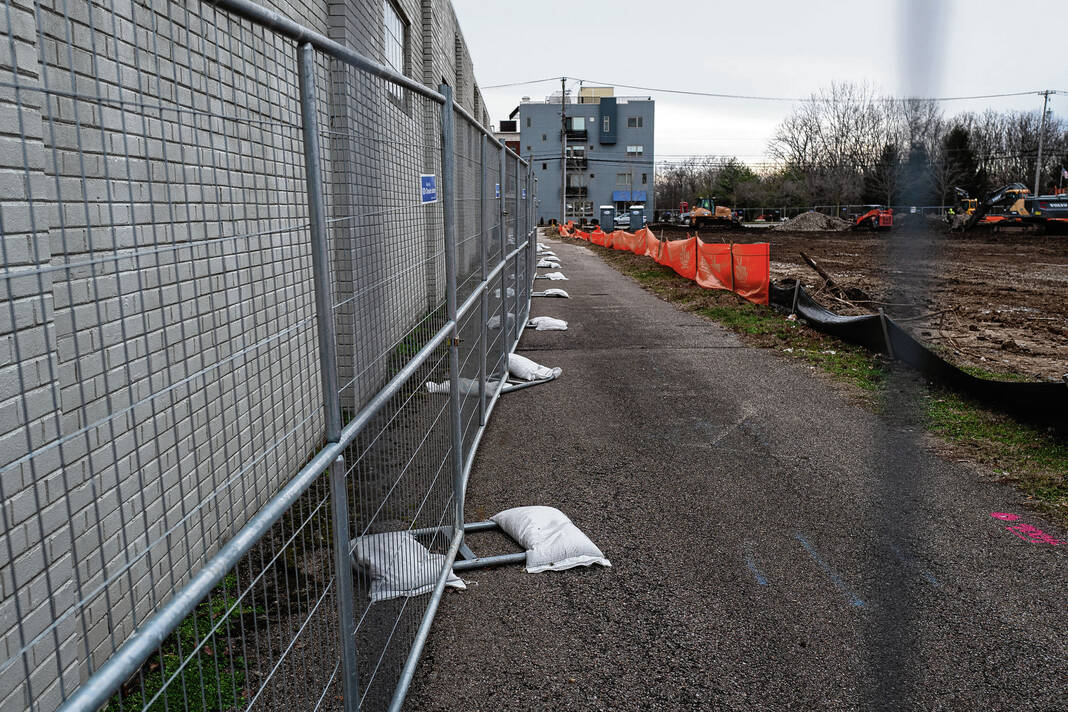
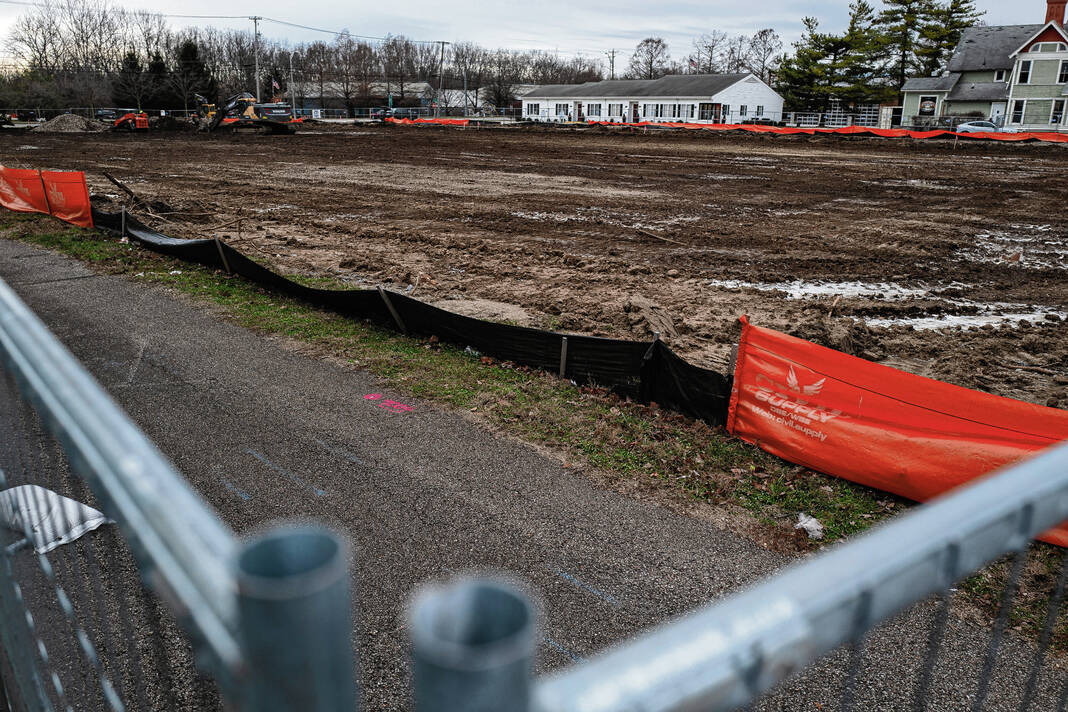
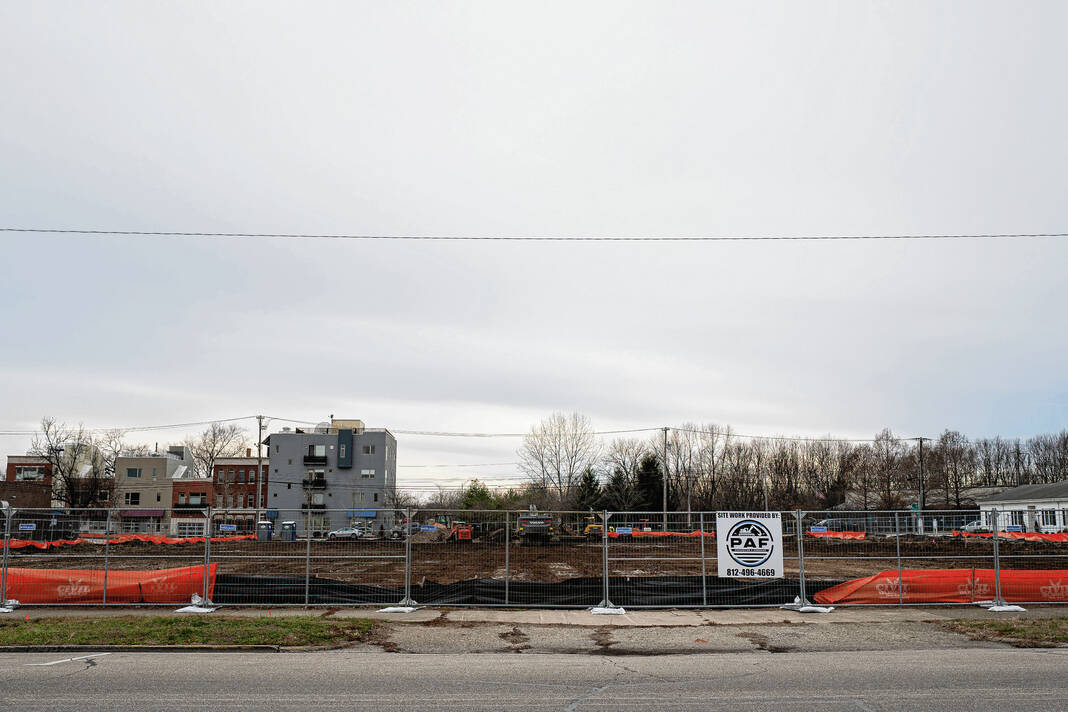
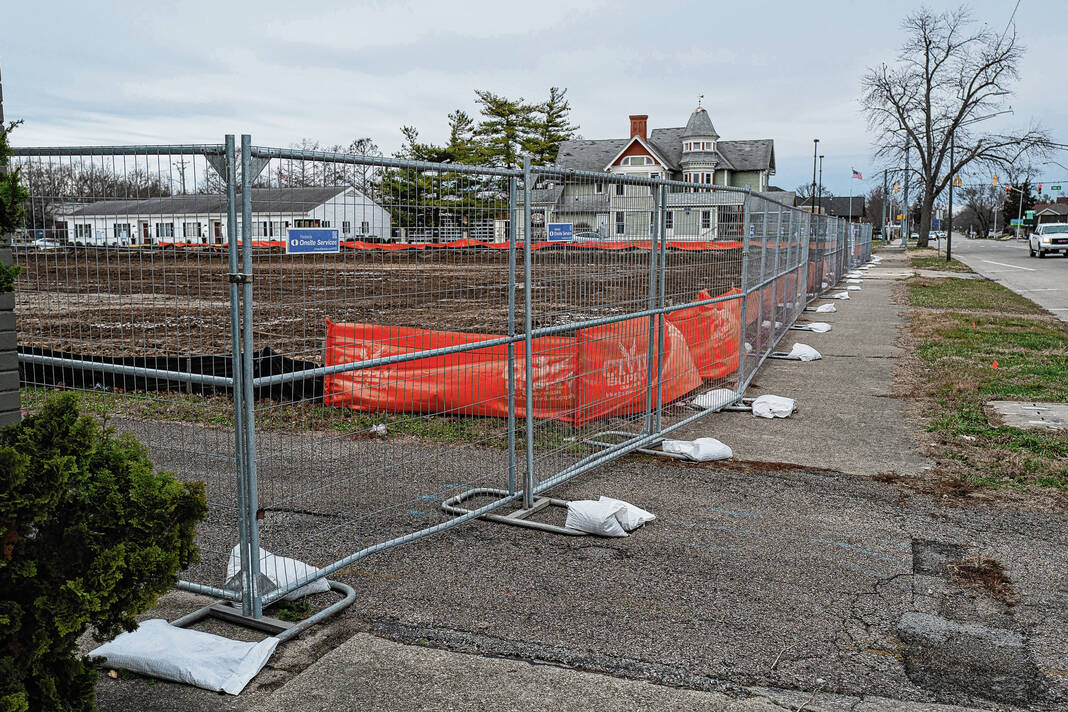
Mike Wolanin | The Republic Site prep for the Ten20 North development continutes near the intersection of 11th and Washington streets in Columbus, Ind., Tuesday, Dec. 30, 2025.
Construction on what will be a 120-unit mixed-use development at 11th and Washington streets is underway.
Bloomington-based Rubicon Development has begun construction on what will be a five-story, 120-unit, mixed-use development known as Ten20 North.
Columbus Board of Public Works and Safety members in October accepted right-of-way associated with the project, which consolidated three lots between Jackson and Washington streets, just south of 11th Street, including 921 Jackson St. and 1008 and 1020 Washington streets.
A building permit for the project was issued the first week of November, and so far, the site has been leveled and graded.
Rubicon representatives did not return requests for information about the construction timeline by press time.
According to site plans, the development would include a ground floor with 61,000 square feet for parking, 2,700 square feet of entry space and 2,600 square feet for office/commercial space. It will also have a 143-space parking garage.
Floors two through five will be 32,000 square feet each for residential space, including eight three-bedroom units, 40 two-bedroom units, 48 one-bedroom units and 24 studio units.
Studio units start at $1,320 per month, one-bedroom units at $1,435 per month, two-bedrooms up to $2,167 per month and three-bedroom units up to $2,376 per month, Rubicon representatives said previously, with 10% of the units considered “workforce” units at a 20% rent reduction.
The project received $6.4 million in tax-increment-financing (TIF) dollars in the form of a forgivable loan the redevelopment commission provided to the developer to make the financing of the $30.9 million project work, according to city officials.
Columbus City Council members earlier this year voted against creating a new TIF district as part of the project agreement, which meant redevelopment will recoup just over $2.4 million of that $6.4 million for other purposes, with the remainder of the $4 million returning to the tax base.
Rubicon gained ownership of the three parcels from Sprague Rentals LLC on July 11, according to online property records.
Rubicon had previously presented plans for a potential restaurant at 1034 Washington St., the former Joe Willy’s site, as late as June 2024 during the site development plan approval process, but were asked to remove that material by planning department staff because it wasn’t part of the mixed-use development.
Bergman also said that Rubicon has not yet submitted an application to his department regarding the former Joe Willy’s property, also known as the Overstreet Home.
The parcel at 1034 Washington St. is currently owned by the Columbus Capital Foundation. It was purchased in 2023 for $412,500, according to the county GIS system.

‘Cautious optimism’: Overdose deaths in Bartholomew County decline for third straight year
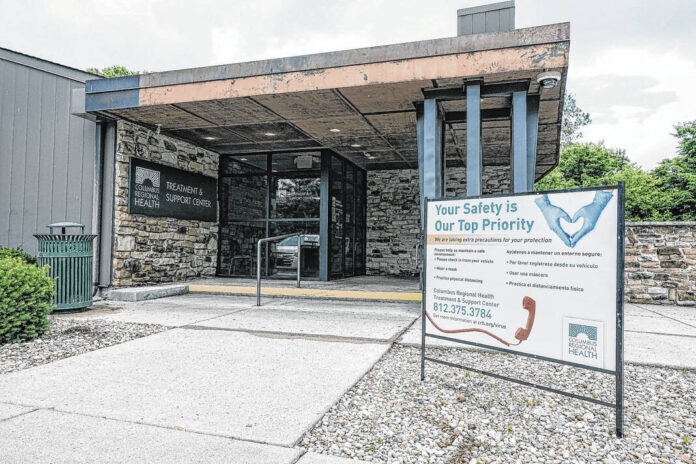
Mike Wolanin | The Republic An exterior view of the Columbus Regional Health Treatment and Support Center in Columbus, Ind., Wednesday, June 9, 2021.
Bartholomew County is expected to record an annual decline in drug overdose deaths for the third consecutive year, with local officials expressing “cautious optimism” that the community will continue to make progress in reducing deaths.
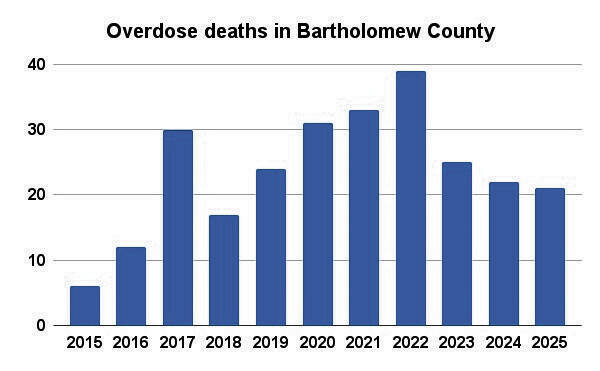
A total of 21 overdose deaths were reported in Bartholomew County in 2025, according to preliminary data from the Bartholomew County Coroner’s Office. That would be a decline from 22 deaths in 2024, 25 deaths in 2023 and a record 39 deaths in 2022.
The coroner’s office cautioned that the data is preliminary at this point and may be adjusted later as officials validate records for the office’s annual report, which is expected to be released by the end of this month.
“Three consecutive years of decreases is good news and cause for cautious optimism,” said Bartholomew County Deputy Coroner Jay Frederick. “It’s also noteworthy that we did not have any apparent overdose deaths in the fourth quarter of 2025.”
Dr. Kevin Terrell, medical director at Columbus Regional Health’s Treatment and Support Center, or TASC, also welcomed the third consecutive annual decline in overdose deaths. TASC, 2630 22nd St., provides a range of outpatient treatments for substance use disorder.
“The decline in overdose death rates in 2025 is great news for our community,” Terrell said. “I am thrilled that the trend continues. I was very concerned that the decrease we saw in 2023 was a fluke, but the reductions in death rates have continued for an additional two years. This makes me more optimistic that we will continue to make progress on the opioid epidemic.”
Terrell said last month that TASC had been consistently seeing over 400 active patients. The most common drug that people have been seeking help with is methamphetamine, followed closely by fentanyl.
Fentanyl is a synthetic opioid that is more potent than heroin but is cheaper to produce and distribute. Officials have said fentanyl is increasingly being cut with other drugs, including counterfeit pills.
At the same time, TASC has continued to see a “large and growing number of patients” seeking help for alcohol problems, Terrell said.
Many experts attribute the growing numbers of people struggling with alcohol abuse to the COVID-19 pandemic, when people were stuck at home and isolated from others, Terrell said. Many people turned to alcohol to cope with the loneliness and despair people experienced during the pandemic.
“I am pleased that so many people who are struggling with alcohol are coming in for help,” Terrell said.
The preliminary annual figures from the coroner’s office come a few months after the federal government reported that there were 30,000 fewer U.S. drug overdose deaths in 2024 than the year before — the largest one-year decline ever recorded, The Associated Press reported.
An estimated 80,000 people died from overdoses last year, according to provisional Centers for Disease Control and Prevention data released Wednesday, according to wire reports. That’s down 27% from the 110,000 in 2023.
The CDC has been collecting comparable data for 45 years. The previous largest one-year drop was 4% in 2018, according to the agency’s National Center for Health Statistics.
All but two states saw declines last year, with Nevada and South Dakota experiencing small increases, according to wire reports. Some of the biggest drops were in Ohio, West Virginia and other states that have been hard-hit in the nation’s decades-long overdose epidemic, according to wire reports.
There were 1,695 overdose deaths in Indiana during the 12-month period that ended in December 2024, down from 2,193 during the same period in 2023 — a 23% decline — according to the provisional CDC data.
Bartholomew County has seen declines in overdose deaths in each of the previous three years after surging to records highs in 2020, 2021 and 2022, according to county records. Overdose deaths in the county declined 36% in 2023, 12% in 2024 and 5% in 2025.
Before 2020, annual overdose deaths in the county had eclipsed 20 two times within the previous five years. Since the pandemic struck, annual overdose deaths have been higher than 20 for six straight years, including three years above 30.
A total of 260 people in Bartholomew County died from an overdose from 2015 to 2025, according to county records.
“We have a long way to go to return to pre-epidemic levels,” Frederick said.
Experts say more research needs to be done to understand what drove the reduction, but they mention several possible factors, including, among other things, increased availability of the overdose-reversing drug naloxone, expanded addiction treatment, shifts in how people use drugs, the impact of opioid lawsuit settlement money, according to wire reports.
Frederick said it would take in-depth research to determine what factors may have contributed to the local decline in overdose deaths, but the coroner’s office “would prefer to believe” that the reduction was driven by increased public awareness about the fatal risks of street drugs, the increased availability of naloxone and steady law enforcement targeting drug dealers.
“Our office publicly presents drug overdose deaths in terms of statistics to respect the privacy of individuals and their families,” Frederick said. “But it is important to recognize that each case involves an individual story. Too often, it’s the story of a young person who otherwise had plenty of life ahead. Many families choose to share their painful story on social media or in other news features, hoping it can prevent similar deaths. It’s possible that individual stories and photos of young faces have helped drive the overall numbers down.”

James family welcomes first baby of 2026
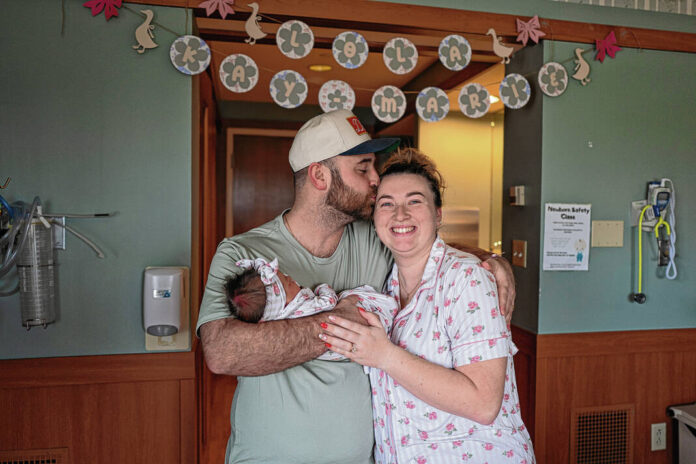
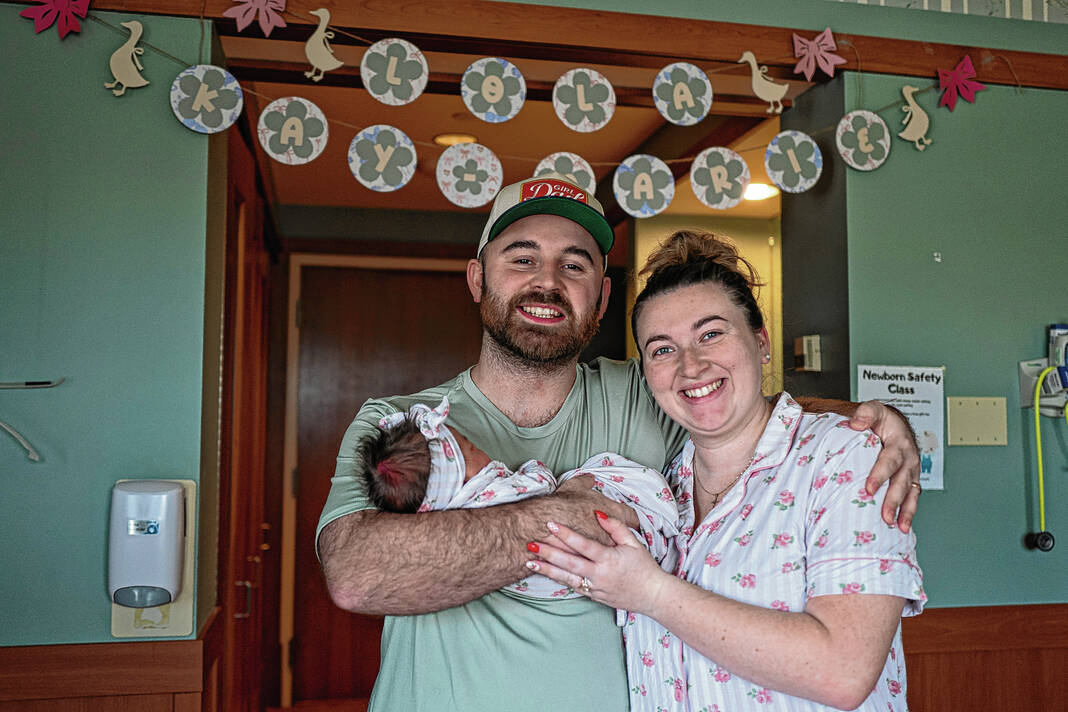
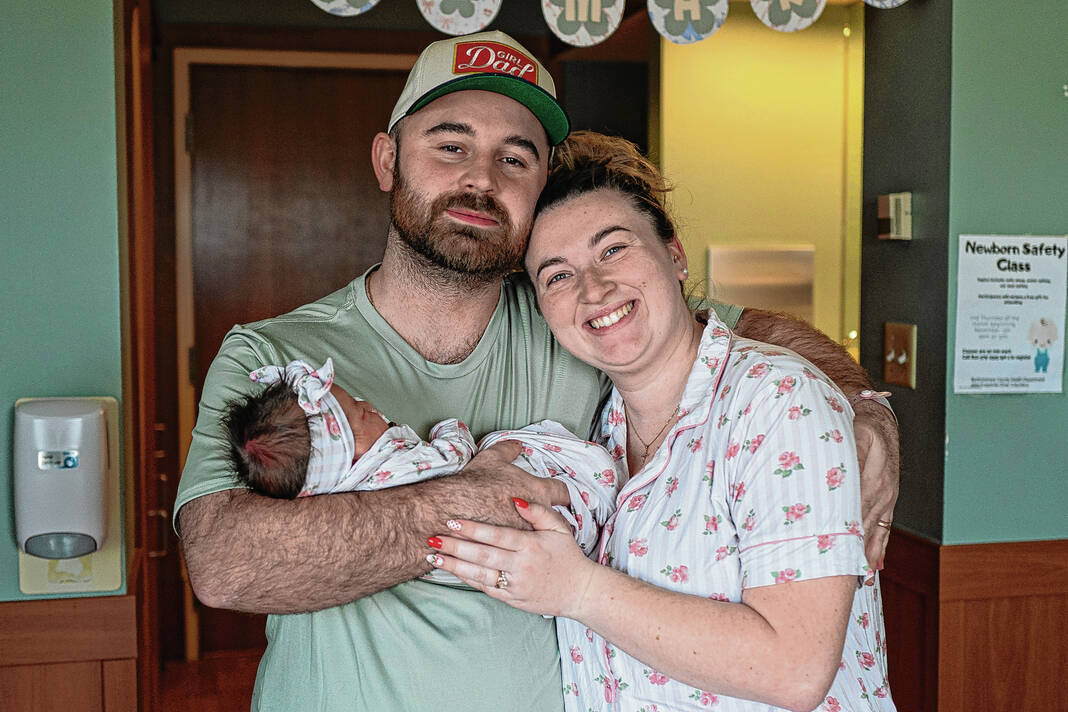
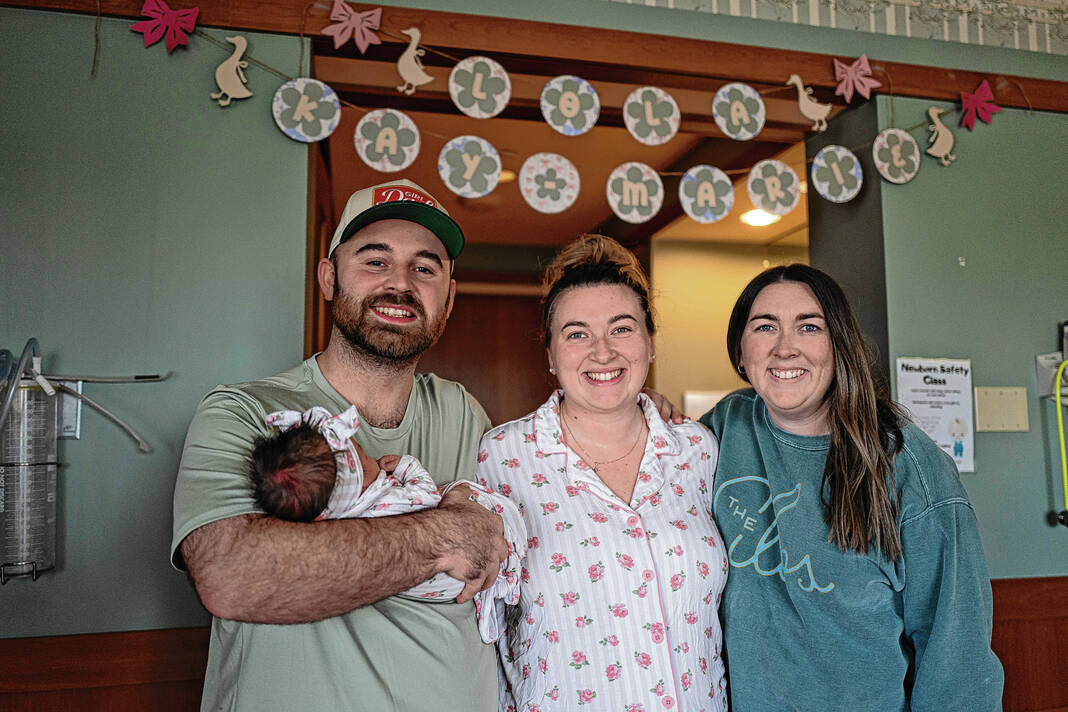
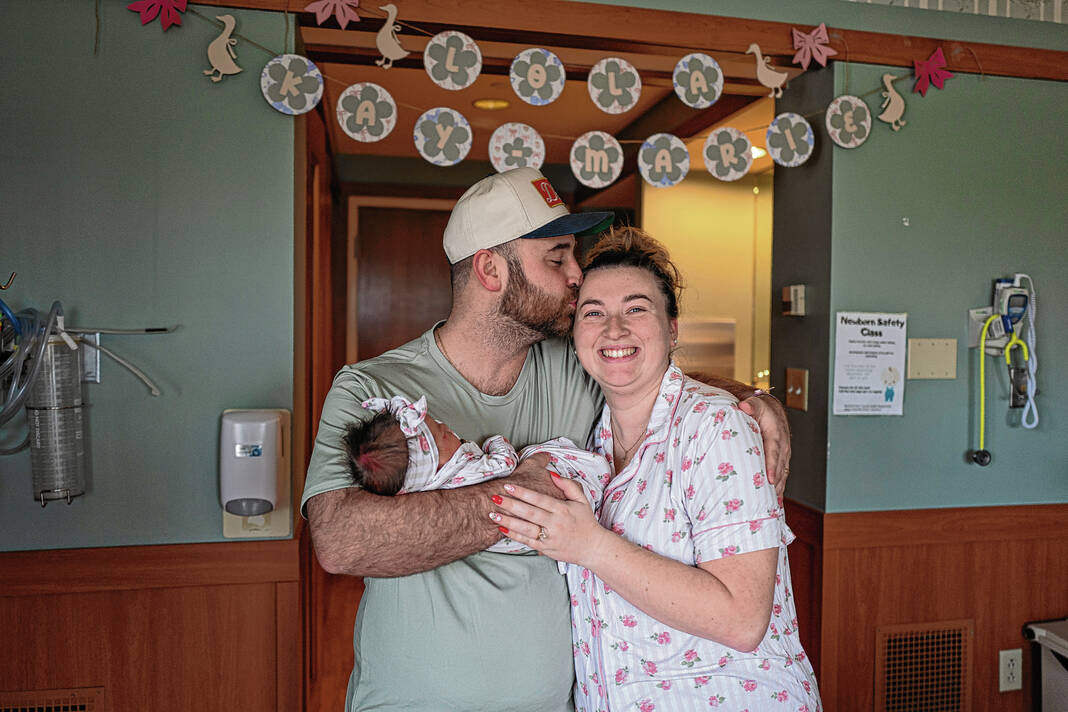
Mike Wolanin | The Republic Blake and Grace James pose for a photo with their newborn daughter Lola Kay Marie James in their room at the Birthing Center inside Columbus Regional Hospital in Columbus, Ind., Friday, Jan. 2, 2026. Lola James was the first baby born in Bartholomew County in 2026.
Bartholomew County’s first baby of 2026 arrived at Columbus Regional Hospital just a short time after the arrival of the new year.
The county’s first baby is Lola Kay-Marie, born at 1:08 a.m. Thursday, the first child for Blake and Grace James, Columbus. Her original due date was Jan. 9.
Lola weighed in at 8 pounds, 3 ounces, 21-inches long, and joins several “grandsons” and just one other “granddaughter” in the extended family.
Blake is a wastewater plant operator for the city of Columbus and Grace is a kindergarten teacher at CSA Fodrea in the Bartholomew Consolidated School Corp.
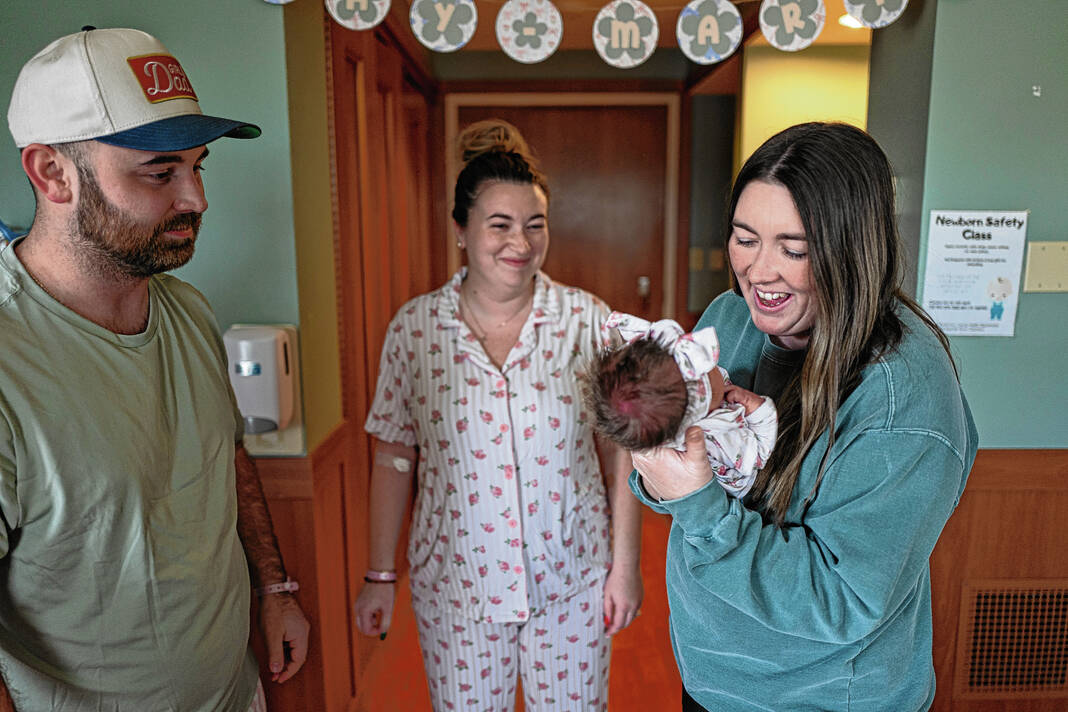
Extended family also played a role in Lola’s arrival, the new parents said. CRH registered nurse Sarah Hudson, older sister of Grace, helped in the delivery at the birthing center.
Aunt Sarah has been at the center for more than 12 years and is currently studying to be a midwife.
Grace said she and her husband were told that she needed to be induced Wednesday morning due to some medical issues.
“We didn’t know how long it would take,” she said in an interview from the hospital Friday. Surprisingly, the CRH birthing center wasn’t very busy over New Year’s, with the couple saying that “basically, it’s really just been us” except for perhaps one other family.
Grace said it was very emotional to have her sister assist in Lola’s birth as the couple did not know they were going to have the baby on New Year’s Eve or New Year’s Day.
“It was a very happy surprise,” she said.
Hudson described assisting in Lola’s arrival as a “huge blessing,” to get to be with her baby sister and to help her deliver her first baby on the holiday. “For her (Lola) to be the first baby of the year was just a lot of fun,” she said.
When asked what it was like to enter the exclusive “Girl Dad” club, Blake James said, “I wanted a girl, so I’m over the moon.”



Candidate filings for primary start next week

Bartholomew County voters will soon get their first look at who plans to run for a range of federal, state and local offices that will be up for grabs during the 2026 midterm elections.
Candidate filings for the 2026 primary open Wednesday and continue until Feb. 6, marking the start of the primary campaign season. The primary in Indiana is May 5.
Primary elections are held to nominate candidates from each party to appear on the general election ballot in the fall.
This year, several federal, state and local offices will be on the ballot in Bartholomew County — including four Indiana General Assembly seats, two U.S. House seats, Columbus Township Trustee and several county offices, among other races.
One race that is expected to draw some attention is the Republican primary for Indiana Senate District 41.
The seat is currently held by five-term incumbent Sen. Greg Walker, R-Columbus, who said last month that he is “beginning to reconsider” retiring from the Senate after announcing in August that he would not seek re-election.
Walker’s potential decision to reverse course and seek a sixth term comes after he became a vocal critic of President Donald Trump’s demands to redraw Indiana’s congressional map ahead of this year’s midterm elections.
The Indiana Senate voted 31-19 last month to reject a proposed congressional map that would have redrawn congressional districts in ways that could flip two Democratic-held seats as part of a broader national push to help preserve the GOP’s narrow majority in the U.S. House.
Walker said he declined two invitations to visit the White House, including an offer to visit the Oval Office, while the Trump administration officials pushed for Indiana lawmakers to redraw the map.
In a 20-minute address to the Senate Committee on Elections last month, Walker suggested the push to redraw Indiana’s congressional map mid-decade may lead him to seek re-election after all.
“And you’re thinking, ‘Oh, it’s easy. You already said you’re not coming back. You can’t be primaried,’” Walker said during the address. “Well, some little seed in the back of my head says, ‘Go ahead and file.’ I think it’d be the dumbest thing I ever did in my life, but that’s what my wife thought when I ran 20 years ago.”
After Walker initially said he did not plan to seek re-election, former U.S. Rep. Greg Pence, R-Ind., said he had conversations about the seat becoming vacant with leaders and others who may be interested in running in the GOP primary but had not made a decision about whether he would run.
Pence, who is the older brother of former Vice President Mike Pence, represented Indiana’s Sixth Congressional District for three terms from 2019 to 2025.
Former Indiana Rep. Milo Smith, R-Columbus, who represented Indiana House District 59 from 2006 to 2018, said in August that he plans to run for Walker’s seat.
Following the Senate vote on redistricting last month, Gov. Mike Braun issued a statement that seemed to indicated that was pledging to work with Trump against members of his own party in Indiana to oppose state senators who voted against the proposed congressional map.
At the federal level, Indiana’s Sixth and Ninth Congressional Districts are up for re-election this year. Those two seats are currently held by Rep. Jefferson Shreve, R-Ind., and Rep. Erin Houchin, R-Ind.
Indiana House Districts 59, 69 and 73 will also be up for grabs this year. Rep. Ryan Lauer, R-Columbus; Rep. Jim Lucas, R-Seymour; and Rep. Jennifer Meltzer, R-Shelbyville, currently hold those seats.
Locally, the 2026 primary will be the first election since former Columbus Township Trustee Ben Jackson pleaded guilty to stealing and misusing $1.12 million in township funds to cover personal expenses over an eight-year period.
Jackson, a Republican, resigned in November 2024 amid an investigation into his use of the township’s credit card.
Several county-level races will also be on the ballot this year, including Bartholomew County Council seats, Bartholomew County Prosecutor, Bartholomew County Sheriff, Bartholomew Superior Court 2 judge and Bartholomew County Clerk.
Bartholomew County Prosecutor Lindsey Holden-Kay, Bartholomew Superior Court 2 Judge Jonathan “Jon” Rohde and Bartholomew County Sheriff Chris Lane, all Republicans, have already announced plans to seek re-election this year.
The deadline to register to vote for the 2026 primary is April 6, according to the Indiana Secretary of State’s Office.
Robby Ashford leads Wake Forest past Mississippi State 43-29 in Duke’s Mayo Bowl

CHARLOTTE, N.C. (AP) — Robby Ashford threw for 303 yards and three touchdowns and ran for 50 yards and two scores, Koredell Bartley scored on a 100-yard kickoff return and Wake Forest beat Mississippi State 43-29 in the Duke’s Mayo Bowl on Friday night, earning coach Jake Dickert a mayonnaise bath.
Ashford threw TD passes of 14 yards to Kamrean Johnson, 64 yards to Jack Foley and 62 yards to Ty Clark III and had scoring runs of 2 and 1 yards for the Demon Deacons (9-4). They won seven of their final nine games.
Clark finished with 153 yards from scrimmage after taking over the starting role after second-team All-ACC selection Demond Claiborne opted out of the game after declaring for the NFL draft.
Freshman quarterback Kamario Taylor, making his second college start, had a big second half for Mississippi State (5-8) and finished 13 of 22 for 241 yards and a touchdown. He ran for 60 yards and another score before suffering what appeared to be a significant leg injury with 1:46 left in the game. He was carted off the field and there was no immediate word on the extent of the injury.
After the Bulldogs took an 3-0 lead on the game’s first possession, Bartley fielded the ensuing kickoff at the goal line and weaved his way up the field before turning up the speed and outracing five defenders to the end zone for the longest touchdown in bowl history.
Ashford, a sixth-year QB playing for his fourth college, put Wake Forest ahead 30-12 in the third quarter on a 2-yard run to make it a three-possession game and the Demon Deacons seemed in cruise control.
But the Bulldogs came storming back.
Mississippi State finally found the end zone on the last play of the third quarter when Taylor took a shotgun snap, got a running start and leaped over the line and extended the ball over the goal line on his descent.
He added a 2-point conversion toss to cut it to 10 and then found Sanfrisco Magee over the middle for a 42-yard catch-and-run touchdown pass to make it 30-27 with 10:17 left.
Wake Forest appeared to put it away when Ashford ran for his second touchdown with 4:07 remaining, but Navaeh Sanders blocked the extra point and Kelly Jones scooped it up and scored for 2 points for the Bulldogs to make it 36-29.
On the ensuing possession, Mississippi couldn’t manage a first down and coach Jeff Lebby made the curious decision to punt on fourth-and-11 from the Bulldogs 25 with 2:35 left in the game, putting trust in his defense that it would force a three and out and get the offense the ball back.
That backfired, as Ashford dumped a pass off to Ty Clark III on a third-and-7 and he raced 62 yards untouched to the end zone to seal the win.
The bowl game’s unique tradition includes the winning head getting a 5-gallon bucket filled with 42 1/2 pounds of mayonnaise dumped on his head after the game.
Up next
Mississippi State: Hosts Louisiana-Monroe on Sept. 5.
Wake Forest: Hosts Akron on Sept. 3.
___
Get poll alerts and updates on the AP Top 25 throughout the season. Sign up here and here (AP News mobile app). AP college football: https://apnews.com/hub/ap-top-25-college-football-poll and https://apnews.com/hub/college-football
Community leaders to lead mental health discussions in book read series
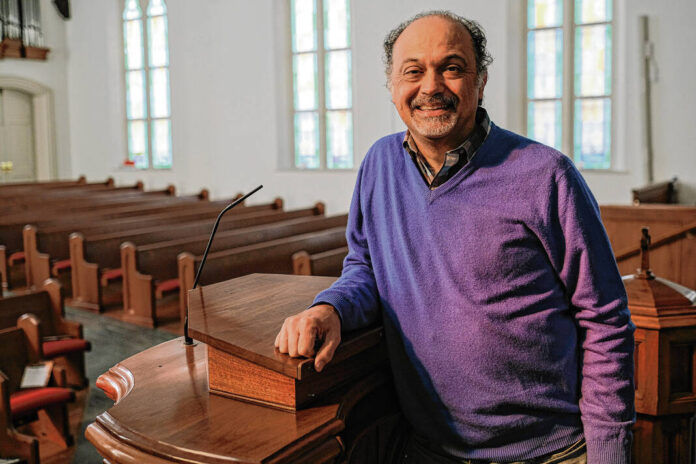
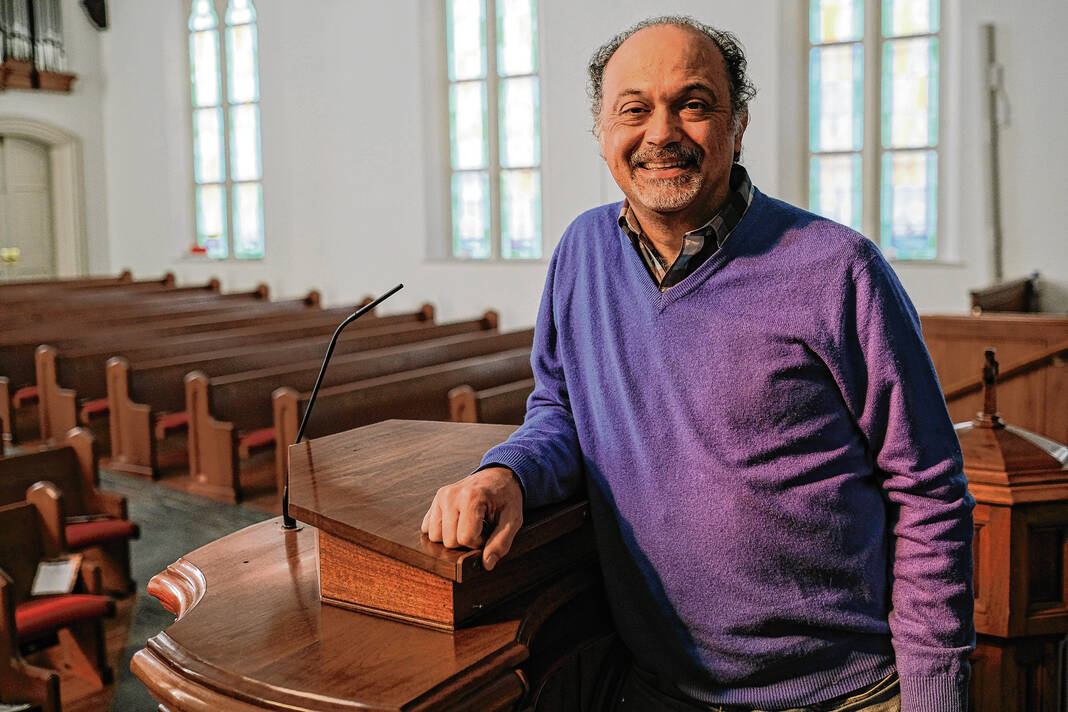
Mike Wolanin | The Republic Pastor Felipe Martinez poses for a portrait at First Presbyterian church in downtown Columbus, Ind., Monday, Feb. 12, 2024. First Presbyterian is set to celebrate its 200th anniversary.
It can be difficult and extremely frustrating to try and help someone with mental illness who is adamant that they do not need help. Attempts to do so may even backfire and cause the person to move further away from getting help.
There’s a term for that, called anosognosia, which is a neurological condition that prevents awareness of one’s mental illness, according to psychologist Dr. Xavier Amador. His book, “I Am Not Sick, I Don’t Need Help,” discusses just that and his evidence-based LEAP, or “listen, empathize, agree and partner,” method.
Community members, whether they are family members of someone needing help or are just curious to learn more, can talk about the the book together in a series of discussion groups organized by Mental Health Matters and the National Alliance on Mental Illness, or NAMI, of South Central Indiana starting on Jan. 9 and continuing until Feb. 4.
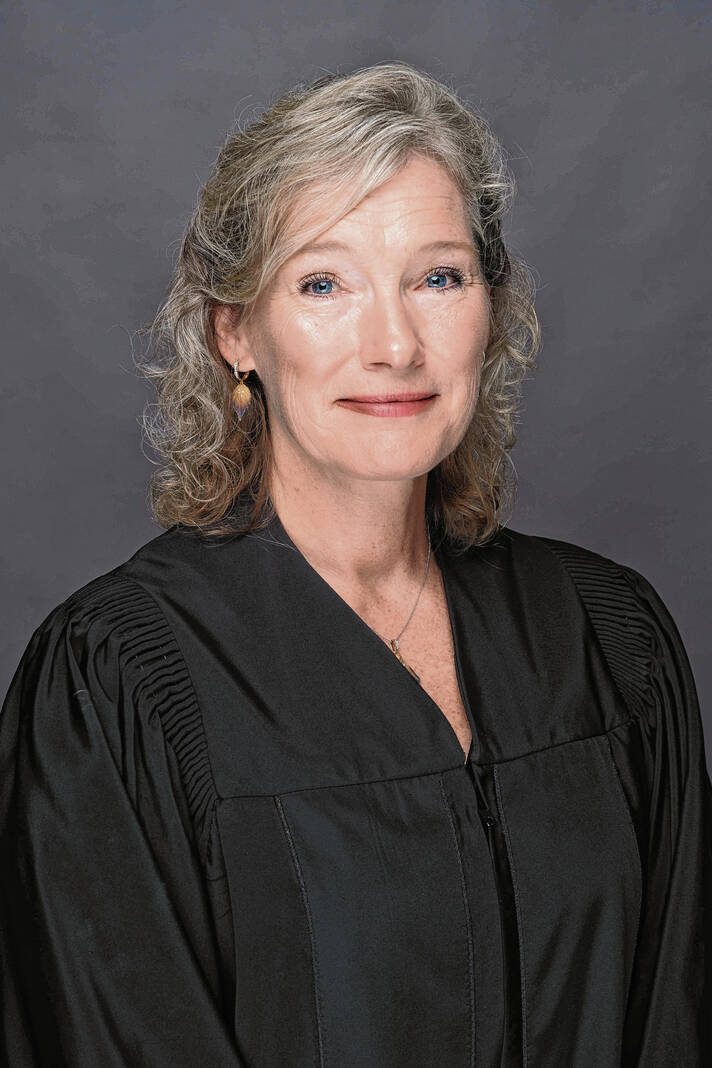
Several community leaders have also been invited to lead discussions on the book. The first session, to be held from from 9 to 10:30 a.m. at Columbus City Hall in the Cal Brand Meeting Room, will have discussions facilitated by First Presbyterian Church pastor Felipe Martinez and Bartholomew Circuit Court Judge Kelly Benjamin.
“I Am Not Sick, I Don’t Need Help” can be purchased at Viewpoint Books or on Amazon. The accompanying book guide can be obtained from Viewpoint Books, the Bartholomew County Public Library or Mental Health Matters. For a full list of dates and locations for book discussion groups, visit mhmbc.org.
Amador’s LEAP method, as explained in the book, can help build trust with someone even if they refuse to acknowledge their illness, communicate effectively without confrontation or power struggles and recognize the signs of anosognosia, according to Mental Health Matters’ website.
Mental Health Matters Action Team Specialist Julie Orben said it provides good examples and tools for how to have a conversation with someone who may be adamant they don’t need help and the frustration that can arise from those conversations.
“Dr. Amador, his own brother, he talks about how this whole process changed their relationship in that he went from, ‘you’re frustrating me, you need to take your medication. If you don’t do this, it’s going to be bad,’ and move from that type of combative conversation to more of having a calm conversation and… a conversation back and forth to acknowledge and show empathy, that you’re listening to the person and not being confrontational with them,” Orben said.
While the primary focus of the class is on mental health, individuals who struggle with substance issues are welcome to attend as well. Even if they haven’t read the book or do not wish to participate in the discussions, community members are still invited to listen in.
“You can still listen, you can still learn something by coming and just listening to the discussion of the individuals that are going to lead the discussion and then there’s a study guide that… a couple other individuals within NAMI that developed this study guide that will have different questions that you can go to and individuals can talk about,” Orben said.
Martinez said he plans to discuss how the book relates to his work as a pastor and Benjamin as a judge in their respective lines of work and how they can be partners to families experiencing mental health issues. Benjamin said she has already changed the way she frames questions and talks to people who may have mental health issues in the courtroom because of the book.
“I’ve noticed that if I change the way I ask or how I have my tone with people with mental illness really changes how they respond,” Benjamin said.
Because it’s a difficult subject, Martinez feels that churches sometimes aren’t well equipped to discuss mental health issues, but he said they are trying to de-stigmatize it, even in his own church. They have partnered with NAMI in the past and, in 2025, started a yearlong mental health initiative with workshops, special speakers and support groups.
Martinez believes these discussions are a good opportunity to further de-stigmatize mental health issues. He said he looks forward to having a conversation with Benjamin as well as the community at large.
“I’m so grateful that we as a church have an opportunity to be supportive of the community, and so I invite other churches and other houses of worship to consider ways in which they can collaborate with NAMI and with CRH and Mental Health Matters,” Martinez said. “Our members in our community will benefit.”
Benjamin hopes the community takes the time and effort to learn more about mental health issues and the LEAP method. She believes it to be a new outlook on how to approach people who may be suffering from a severe mental illness and give them the encouragement they need to seek out help.
“It’s really an important and interesting issue that the more you learn about it and the better we understand it, I think the better we can help people,” Benjamin said.
Curbside tree collection underway

Curbside live Christmas tree collection is underway in Columbus, continuing until Jan. 30.
Trees must be free of ornaments, hooks, lights, nails and stands for curbside collection by the city’s Department of Public Works.
Residents are asked to have trees curbside by 7 a.m. on trash day for your neighborhood.
Big Tech’s fast-expanding plans for data centers are running into stiff community opposition
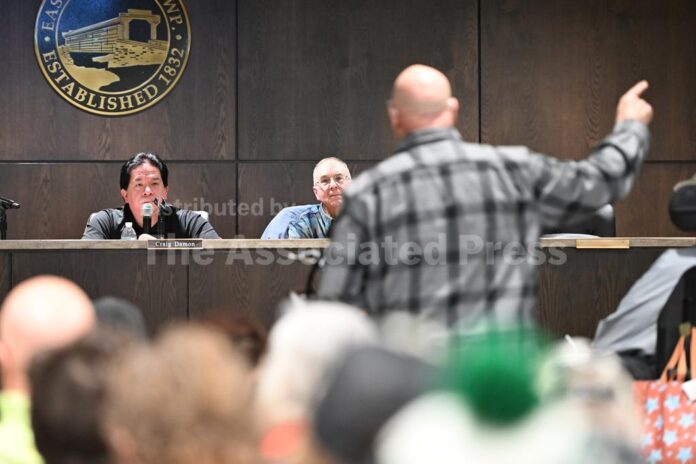
SPRING CITY, Pa. (AP) — Tech companies and developers looking to plunge billions of dollars into ever-bigger data centers to power artificial intelligence and cloud computing are increasingly losing fights in communities where people don’t want to live next to them, or even near them.
Communities across the United States are reading about — and learning from — each other’s battles against data center proposals that are fast multiplying in number and size to meet steep demand as developers branch out in search of faster connections to power sources.
In many cases, municipal boards are trying to figure out whether energy- and water-hungry data centers fit into their zoning framework. Some have entertained waivers or tried to write new ordinances. Some don’t have zoning.
But as more people hear about a data center coming to their community, once-sleepy municipal board meetings in farming towns and growing suburbs now feature crowded rooms of angry residents pressuring local officials to reject the requests.
“Would you want this built in your backyard?” Larry Shank asked supervisors last month in Pennsylvania’s East Vincent Township. “Because that’s where it’s literally going, is in my backyard.”
Opposition spreads as data centers fan out
A growing number of proposals are going down in defeat, sounding alarms across the data center constellation of Big Tech firms, real estate developers, electric utilities, labor unions and more.
Andy Cvengros, who helps lead the data center practice at commercial real estate giant JLL, counted seven or eight deals he’d worked on in recent months that saw opponents going door-to-door, handing out shirts or putting signs in people’s yards.
“It’s becoming a huge problem,” Cvengros said.
Data Center Watch, a project of 10a Labs, an AI security consultancy, said it is seeing a sharp escalation in community, political and regulatory disruptions to data center development.
Between April and June alone, its latest reporting period, it counted 20 proposals valued at $98 billion in 11 states that were blocked or delayed amid local opposition and state-level pushback. That amounts to two-thirds of the projects it was tracking.
Some environmental and consumer advocacy groups say they’re fielding calls every day, and are working to educate communities on how to protect themselves.
“I’ve been doing this work for 16 years, worked on hundreds of campaigns I’d guess, and this by far is the biggest kind of local pushback I’ve ever seen here in Indiana,” said Bryce Gustafson of the Indianapolis-based Citizens Action Coalition.
In Indiana alone, Gustafson counted more than a dozen projects that lost rezoning petitions.
Similar concerns across different communities
For some people angry over steep increases in electric bills, their patience is thin for data centers that could bring still-higher increases.
Losing open space, farmland, forest or rural character is a big concern. So is the damage to quality of life, property values or health by on-site diesel generators kicking on or the constant hum of servers. Others worry that wells and aquifers could run dry.
Lawsuits are flying — both ways — over whether local governments violated their own rules.
Big Tech firms Microsoft, Google, Amazon and Facebook — which are collectively spending hundreds of billions of dollars on data centers across the globe — didn’t answer Associated Press questions about the effect of community pushback.
Microsoft, however, has acknowledged the difficulties. In an October securities filing, it listed its operational risks as including “community opposition, local moratoriums, and hyper-local dissent that may impede or delay infrastructure development.”
Even with high-level support from state and federal governments, the pushback is having an impact.
Maxx Kossof, vice president of investment at Chicago-based developer The Missner Group, said developers worried about losing a zoning fight are considering selling properties once they secure a power source — a highly sought-after commodity that makes a proposal far more viable and valuable.
“You might as well take chips off the table,” Kossof said. “The thing is you could have power to a site and it’s futile because you might not get the zoning. You might not get the community support.”
Some in the industry are frustrated, saying opponents are spreading falsehoods about data centers — such as polluting water and air — and are difficult to overcome.
Still, data center allies say they are urging developers to engage with the public earlier in the process, emphasize economic benefits, sow good will by supporting community initiatives and talk up efforts to conserve water and power and protect ratepayers.
“It’s definitely a discussion that the industry is having internally about, ‘Hey, how do we do a better job of community engagement?’” said Dan Diorio of the Data Center Coalition, a trade association that includes Big Tech firms and developers.
Data center opposition dominates local politics
Winning over local officials, however, hasn’t translated to winning over residents.
Developers pulled a project off an October agenda in the Charlotte suburb of Matthews, North Carolina, after Mayor John Higdon said he informed them it faced unanimous defeat.
The project would have funded half the city’s budget and developers promised environmentally friendly features. But town meetings overflowed, and emails, texts and phone calls were overwhelmingly opposed, “999 to one against,” Higdon said.
Had council approved it, “every person that voted for it would no longer be in office,” the mayor said. “That’s for sure.”
In Hermantown, a suburb of Duluth, Minnesota, a proposed data center campus several times larger than the Mall of America is on hold amid challenges over whether the city’s environmental review was adequate.
Residents found each other through social media and, from there, learned to organize, protest, door-knock and get their message out.
They say they felt betrayed and lied to when they discovered that state, county, city and utility officials knew about the proposal for an entire year before the city — responding to a public records request filed by the Minnesota Center for Environmental Advocacy — released internal emails that confirmed it.
“It’s the secrecy. The secrecy just drives people crazy,” said Jonathan Thornton, a realtor who lives across a road from the site.
Documents revealing the extent of the project emerged days before a city rezoning vote in October. Mortenson, which is developing it for a Fortune 50 company that it hasn’t named, says it is considering changes based on public feedback and that “more engagement with the community is appropriate.”
Rebecca Gramdorf found out about it from a Duluth newspaper article, and immediately worried that it would spell the end of her six-acre vegetable farm.
She found other opponents online, ordered 100 yard signs and prepared for a struggle.
“I don’t think this fight is over at all,” Gramdorf said.
___
Follow Marc Levy on X at https://x.com/timelywriter.
