
Home Blog Page 14035

North Carolina sites halt J&J shots after adverse reactions

RALEIGH, N.C. — North Carolina health officials said on Thursday that they stopped administering Johnson & Johnson doses at a mass vaccination site in Raleigh and at clinics in Hillsborough and Chapel Hill after at least 26 people experienced adverse reactions, including fainting.

Four people were taken to hospitals for further examination, and state and federal health officials are reviewing the matter.

The U.S. Centers for Disease Control and Prevention noted that reactions like fainting are not uncommon after someone is vaccinated, though it is reviewing reports of adverse reactions in North Carolina and three other states. All those taken to hospitals are expected to recover, local health officials said.

“Right now, we are working with NC DHHS (the state Department of Health and Human Services) and the CDC to further evaluate the situation to assure everyone is confident in the continued safety of our vaccine operations,” said a statement from Kim McDonald, medical director at Wake County Human Services.

Wake County announced Thursday evening that it stopped administering Johnson & Johnson doses at PNC Arena after 18 of the more than 2,300 people vaccinated experienced adverse reactions, including four individuals who were taken to hospitals and are expected to be released.

The decision to halt J&J vaccines at PNC Arena was made with less than two hours of appointments left to be administered. People who were at the site were then given Pfizer vaccines or allowed to reschedule their existing J&J appointments.

A pair of clinics in Hillsborough and Chapel Hill also elected to stop offering the Johnson & Johnson vaccine and are in the process of rescheduling 350 appointments for people who were set to receive their single-dose J&J shot on Friday.

In Colorado on Wednesday, 11 people saw adverse reactions after receiving a J&J shot. Two of those individuals were taken to a hospital.

CDC spokeswoman Kristen Nordlund said it is aware of adverse reactions in some people who received the vaccine shots in Iowa, Colorado, Georgia and North Carolina. Those reactions include dizziness, light headedness, feeling faint and rapid breathing.

She said the CDC is working with state and local officials to evaluate the issues and has performed vaccine lot analyses and not found reasons for concern. The CDC is not telling health departments to stop vaccinations.

“COVID-19 vaccines are safe and effective,” she said. “Many people don’t have any side effects after COVID-19 vaccines, but some people will have pain or swelling at the injection site or fever, chills, or a headache. These typically don’t last long and are signs that your body is building protection.”

David Wohl, an infectious disease expert at UNC Health who oversees the UNC vaccination sites, said between eight and 14 of the roughly 1,250 J&J vaccine recipients it injected on Thursday fainted after receiving the shot, though nobody was taken to a hospital.

Because of the timing of the day in which the adverse reactions started occurring, Wohl said UNC Health completed all shots for people who had appointments on Thursday at the two sites.

While his department is still working to analyze the source of the problem, he does not believe most of the cases stem from allergic reactions to the vaccine.

“I’m just concerned that if we have as many people fainting as we do, we need to understand why,” Wohl said. “Everyone that I’ve seen really doesn’t have an underlying medical history that’s of concern, but many of them do report having fainted previously.”

Johnson & Johnson, the vaccine’s manufacturer, said in a statement that “there is no greater priority than the safety and well-being of the people we serve. When we receive reports of adverse events in individuals receiving our medicines and vaccines, we collect necessary information and carefully assess the events.”

——

Associated Press writer Mike Stobbe in New York contributed to this report.


Follow Anderson on Twitter at https://twitter.com/BryanRAnderson.


Anderson is a corps member for the Associated Press/Report for America Statehouse News Initiative. Report for America is a nonprofit national service program that places journalists in local newsrooms to report on undercovered issues.

Local entrepreneur to talk about ‘liberation’

Local entrepreneur and public speaker Ant Blair will be the first African-American from Columbus to speak at a TEDxBloomington event.

The April 17 flagship event, entitled “The Big Questions,” will highlight the questions “being asked by out-of-the-box thinkers, scholars, and citizens seeking to be allies and advocates for positive change.” The event is virtual and will be streamed live from the Buskirk-Chumley Theater in Bloomington.

Blair said he will speak about “how African-Americans can liberate themselves in a modern age.”

That liberty entails “being able to enjoy social, political, economic rights” and noted that the pandemic has a shed a light on inequality, he said. In the talk, he’s proposing a way forward for African-Americans so that they can claim those inherent rights.

In discussing current events, Blair said that while there is a “lot of talk about equity and inclusion” and companies have implemented bias training and other initiatives, an aspect that seems to get left out of the conversation is that of mental liberation.

Liberation, he said, isn’t just about the Underground Railroad or the physical act of escaping.

“For me, I look at the mental effects of this system that has been put in place, the mental effects of the media especially,” he said.

African-Americans are often portrayed in a negative light, he said.

“There’s a mental liberation that needs to be reached, that needs to be gained,” he said. “Because we, as a people, we’ve been brainwashed. We’ve been mis-educated. And we have to liberate ourselves from that mis-education and that brainwashing in order to be able to put ourselves into a position to enjoy these social and political and economic rights that are inherent to every American citizen.”

Speaking at the TEDxBloomington event is not only a great honor and privilege, but also a big responsibility, he said.

Blair, who grew up in Flint, Michigan, said that he sees his talk as an opportunity to provide inspiration to people in his hometown and encourage them to pursue their goals.

“I want to be that beacon of hope for those folks back home who are struggling with keeping hope alive in the face of everything that they’re facing,” he said.

[sc:pullout-title pullout-title=”If you go” ][sc:pullout-text-begin]

What: TEDxBloomington presents "The Big Questions."

When: 6:30-9 p.m. April 17

Cost: $15 for general admission, $10 for students, $50 for "patrons" (includes a general admission ticket and an "Above and Beyond" donation). A link to purchase tickets can be found at www.tedxbloomington.com/the-big-questions/.

How to watch: Once you have purchased a ticket, you will receive a link to the event via email the day of the show. Create a Mandolin account to watch. The broadcast will be available on Mandolin for 48 hours after being recorded. 

[sc:pullout-text-end][sc:pullout-title pullout-title=”Ant Blair” ][sc:pullout-text-begin]

Ant Blair founded and led one of the first African-American-owned online advertising companies. He has won the Dale Carnegie Highest Award for Achievement and many Toastmaster awards for public speaking.

Blair is also the author of "Smart Ads: How To Sell And Make Money Online Using Clever Words And Ideas That Pay."

[sc:pullout-text-end][sc:pullout-title pullout-title=”About TEDx” ][sc:pullout-text-begin]

According to TEDxBloomington’s website, TEDx is a program of "local, self-organized events that bring people together to share a TED-like experience."

"At a TEDx event, TEDTalks video and live speakers combine to spark deep discussion and connection in a small group," the site explains. "These local, self-organized events are branded TEDx, where x = independently organized TED event. The TED Conference provides general guidance for the TEDx program, but individual TEDx events are self-organized."

[sc:pullout-text-end]

Pet sales ban approved in split vote

Columbus has approved banning pet shops from selling cats, dogs and rabbits.

Columbus City Council voted 5-2 Tuesday to approve, on second reading, an ordinance that institutes the ban. Republican councilmen Frank Miller and Tim Shuffett voted against the ordinance. They also did so at the first reading of the ordinance in March.

The ordinance states that no pet shop “shall sell, deliver, offer for sale, barter, auction, give away or otherwise transfer or dispose of cats, rabbits, or dogs.”

Pet shops are allowed to collaborate with Animal Care Services or rescue groups and provide space for those groups to “showcase adoptable dogs, rabbits and cats,” according to the ordinance. However, the pet shop will not have any ownership interest in the animals offered and will not receive a fee for providing the space.

Animal Care Services general manager Nicohl Birdwell Goodin said that the ordinance is a suggested best practice and stated that 375 localities across the country have passed similar legislation.

The ordinance is meant to prevent harmful breeding operations such as puppy mills from coming into the area, as these groups are already present in other parts of the state, she said.

“Currently we don’t have anybody selling puppy mill pets, but it is a huge issue when those places come to town,” she said. “And actually, just in the last year, there has been movement from organizations that move into communities and then start selling those animals.”

Most local retailers already work with the city or other rescue groups to showcase adoptable animals. The only store whose operations would be affected is Rural King, which sells rabbits, she said.

Miller and Shuffett did not comment on the ordinance at Tuesday’s meeting. However, both men voiced their concerns during the city council’s previous discussion of the legislation.

At that time, Miller said that while he agreed that puppy mills should be shut down, he wasn’t sure the ordinance was the best way to achieve that goal. The ordinance somewhat restricts a retailer’s freedom as to how they run their business, he said.

He also cited a Humane Society document from 2019, which showed that most large and successful pet store chains focus on supplies and services rather than selling puppies and kittens. Miller said that this indicates that the marketplace is already “taking care of itself.”

He and Shuffett both said the ordinance will only affect local businesses, and pet stores and puppy mills could still exist in other communities. Miller said that the county and state would be better suited to handle the issue of puppy mills.

Shuffett said he received several emails about the ordinance from people on both sides. One of his main objections was the virtual format of the meeting, as he wanted more opportunity for public input on the ordinance, Shuffett said in March. He suggested tabling the matter until city council could have more of a public forum.

City buildings remain largely closed to the public, except for special circumstances such as appointments. City meetings are being held virtually, with most being conducted via WebEx and livestreamed on the city’s website.

Members of the public can submit comments and questions during city council meetings by emailing Mayor Jim Lienhoop. Prior to the council’s second vote on the ordinance, Lienhoop said he had received no questions.

[sc:pullout-title pullout-title=”Key provisions” ][sc:pullout-text-begin]

Under the approved ordinance, the Columbus municipal code now states that:

— No pet shop shall sell, deliver, offer for sale, barter, auction, give away or otherwise transfer or dispose of cats, rabbits, or dogs. Nothing in this section shall prohibit pet shops from collaborating with Animal Care Services or Rescue Groups to offer space for such entities to showcase adoptable dogs, rabbits and cats, provided the pet shop shall not have any ownership interest in the animals offered for adoption and shall not receive a fee for providing space for the adoption of any of these animals.

— A pet shop that violates this section shall be subject to a fine of $500. Each individual animal shall count as a violation of this section and is a separate fine per animal.

[sc:pullout-text-end]

‘Reman Day’ recognized today in Columbus

The city and a local company are recognizing today as a day to promote the local remanufacturing industry.

Columbus Mayor Jim Lienhoop will visit Lifecycle Specialties today and make a Global Remanufacturing Day (or “Reman Day”) proclamation, said business owners Donna Turner and Kevin Westerson.

Reman Day was launched by the Remanufacturing Industries Council and several partner associations in 2018 as a way to “celebrate remanufacturing and raise awareness about its benefits.”

The American National Standard for remanufacturing defines it as “a comprehensive and rigorous industrial process by which a previously sold or leased product or part is returned through a controlled, reproducible and sustainable process to a ‘like-new’ or ‘better-than-new’ condition in performance level and quality for form, fit and function.”

The remanufacturing industry supports jobs and the environment as well as providing a healthy financial model for businesses, according to the council.

Remanufacturing saves an average of 85% of energy use, 86% of water use, and 85% of material use compared to new goods. It is also “more labor intensive than original manufacturing,” according to the council.

On Reman Day, different businesses typically host their own local events to promote the industry. To date, over 300 locations have participated in 20 countries across six continents.

Due to COVID-19, Lifecycle chose not to hold a larger, public Reman Day 2021 event, Turner said.

“Instead, our people will celebrate within the business, and we invited the mayor to make the Reman Day proclamation with us,” she said.

Turner said they hope to hold a larger event next year, provided that the coronavirus is “under control” by then.

[sc:pullout-title pullout-title=”About Lifecycle Specialties” ][sc:pullout-text-begin]

Lifecycle Specialties was founded in 2017, Turner said, and its services include component remanufacturing and consulting services in the remanufacturing industry.

"We specialize in finding solutions to difficult and challenging remanufacturing problems," she said. "Because we work on very precise components, we have also developed superior capabilities to make precision measurements, and we provide this service to customers."

She added that the company also does "first fit" manufacturing.

[sc:pullout-text-end][sc:pullout-title pullout-title=”Where to learn more” ][sc:pullout-text-begin]

To learn more about Global Remanufacturing Day, visit remanday.org. To learn more about Lifecycle Specialties, visit lifecyclespecialties.com.

[sc:pullout-text-end]

‘Reman Day’ recognized today in Columbus

The city and a local company are recognizing today as a day to promote the local remanufacturing industry.

Columbus Mayor Jim Lienhoop will visit Lifecycle Specialties today and make a Global Remanufacturing Day (or "Reman Day") proclamation, said business owners Donna Turner and Kevin Westerson. 

Reman Day was launched by the Remanufacturing Industries Council and several partner associations in 2018 as a way to "celebrate remanufacturing and raise awareness about its benefits."

The American National Standard for remanufacturing defines it as "a comprehensive and rigorous industrial process by which a previously sold or leased product or part is returned through a controlled, reproducible and sustainable process to a ‘like-new’ or ‘better-than-new’ condition in performance level and quality for form, fit and function."

The remanufacturing industry supports jobs and the environment as well as providing a healthy financial model for businesses, according to the council.

Remanufacturing saves an average of 85% of energy use, 86% of water use, and 85% of material use compared to new goods. It is also "more labor intensive than original manufacturing," according to the council.

On Reman Day, different businesses typically host their own local events to promote the industry. To date, over 300 locations have participated in 20 countries across six continents. 

Due to COVID-19, Lifecycle chose not to hold a larger, public Reman Day 2021 event, Turner said.

"Instead, our people will celebrate within the business, and we invited the mayor to make the Reman Day proclamation with us," she said.

Turner said they hope to hold a larger event next year, provided that the coronavirus is "under control" by then.

[sc:pullout-title pullout-title=”About Lifecycle Specialties” ][sc:pullout-text-begin]

Lifecycle Specialties was founded in 2017, Turner said, and its services include component remanufacturing and consulting services in the remanufacturing industry.

"We specialize in finding solutions to difficult and challenging remanufacturing problems," she said. "Because we work on very precise components, we have also developed superior capabilities to make precision measurements, and we provide this service to customers."

She added that the company also does "first fit" manufacturing.

[sc:pullout-text-end][sc:pullout-title pullout-title=”Where to learn more” ][sc:pullout-text-begin]

To learn more about Global Remanufacturing Day, visit remanday.org. To learn more about Lifecycle Specialties, visit lifecyclespecialties.com.

[sc:pullout-text-end]

Local entrepreneur to talk about ‘liberation’

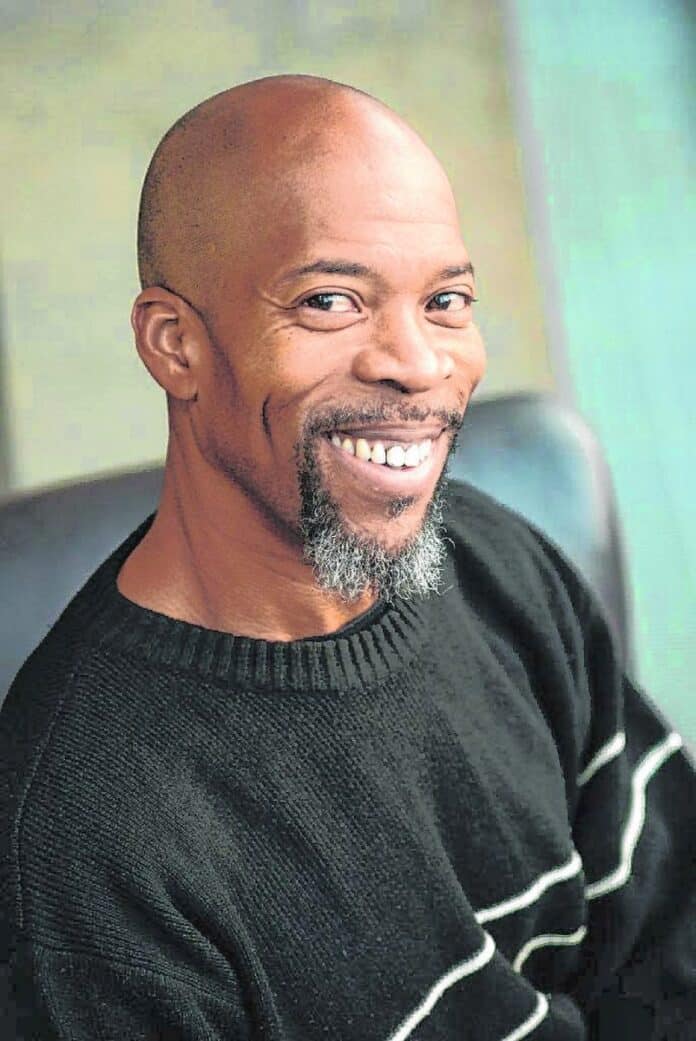
Blair Submitted photo

Local entrepreneur and public speaker Ant Blair will be the first African-American from Columbus to speak at a TEDxBloomington event.

The April 17 flagship event, entitled “The Big Questions,” will highlight the questions “being asked by out-of-the-box thinkers, scholars, and citizens seeking to be allies and advocates for positive change.” The event is virtual and will be streamed live from the Buskirk-Chumley Theater in Bloomington.

Blair said he will speak about “how African-Americans can liberate themselves in a modern age.”

That liberty entails “being able to enjoy social, political, economic rights” and noted that the pandemic has a shed a light on inequality, he said. In the talk, he’s proposing a way forward for African-Americans so that they can claim those inherent rights.

In discussing current events, Blair said that while there is a “lot of talk about equity and inclusion” and companies have implemented bias training and other initiatives, an aspect that seems to get left out of the conversation is that of mental liberation.

Liberation, he said, isn’t just about the Underground Railroad or the physical act of escaping.

“For me, I look at the mental effects of this system that has been put in place, the mental effects of the media especially,” he said.

African-Americans are often portrayed in a negative light, he said.

“There’s a mental liberation that needs to be reached, that needs to be gained,” he said. “Because we, as a people, we’ve been brainwashed. We’ve been mis-educated. And we have to liberate ourselves from that mis-education and that brainwashing in order to be able to put ourselves into a position to enjoy these social and political and economic rights that are inherent to every American citizen.”

Speaking at the TEDxBloomington event is not only a great honor and privilege, but also a big responsibility, he said.

Blair, who grew up in Flint, Michigan, said that he sees his talk as an opportunity to provide inspiration to people in his hometown and encourage them to pursue their goals.

“I want to be that beacon of hope for those folks back home who are struggling with keeping hope alive in the face of everything that they’re facing,” he said.

[sc:pullout-title pullout-title=”If you go” ][sc:pullout-text-begin]

What: TEDxBloomington presents “The Big Questions.”

When: 6:30-9 p.m. April 17

Cost: $15 for general admission, $10 for students, $50 for “patrons” (includes a general admission ticket and an “Above and Beyond” donation). A link to purchase tickets can be found at www.tedxbloomington.com/the-big-questions/.

How to watch: Once you have purchased a ticket, you will receive a link to the event via email the day of the show. Create a Mandolin account to watch. The broadcast will be available on Mandolin for 48 hours after being recorded.

[sc:pullout-text-end][sc:pullout-title pullout-title=”Ant Blair” ][sc:pullout-text-begin]

Ant Blair founded and led one of the first African-American-owned online advertising companies. He has won the Dale Carnegie Highest Award for Achievement and many Toastmaster awards for public speaking.

Blair is also the author of “Smart Ads: How To Sell And Make Money Online Using Clever Words And Ideas That Pay.”

[sc:pullout-text-end][sc:pullout-title pullout-title=”About TEDx” ][sc:pullout-text-begin]

According to TEDxBloomington’s website, TEDx is a program of “local, self-organized events that bring people together to share a TED-like experience.”

“At a TEDx event, TEDTalks video and live speakers combine to spark deep discussion and connection in a small group,” the site explains. “These local, self-organized events are branded TEDx, where x = independently organized TED event. The TED Conference provides general guidance for the TEDx program, but individual TEDx events are self-organized.”

[sc:pullout-text-end]

Pet sales ban approved in split vote

Columbus City Hall exterior is shown in this Republic file photo. Mike Wolanin | The Republic

Columbus has approved banning pet shops from selling cats, dogs and rabbits.

Columbus City Council voted 5-2 Tuesday to approve, on second reading, an ordinance that institutes the ban. Republican councilmen Frank Miller and Tim Shuffett voted against the ordinance. They also did so at the first reading of the ordinance in March.

The ordinance states that no pet shop “shall sell, deliver, offer for sale, barter, auction, give away or otherwise transfer or dispose of cats, rabbits, or dogs.”

Pet shops are allowed to collaborate with Animal Care Services or rescue groups and provide space for those groups to “showcase adoptable dogs, rabbits and cats,” according to the ordinance. However, the pet shop will not have any ownership interest in the animals offered and will not receive a fee for providing the space.

Animal Care Services general manager Nicohl Birdwell Goodin said that the ordinance is a suggested best practice and stated that 375 localities across the country have passed similar legislation.

The ordinance is meant to prevent harmful breeding operations such as puppy mills from coming into the area, as these groups are already present in other parts of the state, she said.

“Currently we don’t have anybody selling puppy mill pets, but it is a huge issue when those places come to town,” she said. “And actually, just in the last year, there has been movement from organizations that move into communities and then start selling those animals.”

Most local retailers already work with the city or other rescue groups to showcase adoptable animals. The only store whose  operations would be affected is Rural King, which sells rabbits, she said.

Miller and Shuffett did not comment on the ordinance at Tuesday’s meeting. However, both men voiced their concerns during the city council’s previous discussion of the legislation.

At that time, Miller said that while he agreed that puppy mills should be shut down, he wasn’t sure the ordinance was the best way to achieve that goal. The ordinance somewhat restricts a retailer’s freedom as to how they run their business, he said.

He also cited a Humane Society document from 2019, which showed that most large and successful pet store chains focus on supplies and services rather than selling puppies and kittens. Miller said that this indicates that the marketplace is already “taking care of itself.”

He and Shuffett both said the ordinance will only affect local businesses, and pet stores and puppy mills could still exist in other communities. Miller said that the county and state would be better suited to handle the issue of puppy mills.

Shuffett said he received several emails about the ordinance from people on both sides. One of his main objections was the virtual format of the meeting, as he wanted more opportunity for public input on the ordinance, Shuffett said in March. He suggested tabling the matter until city council could have more of a public forum.

City buildings remain largely closed to the public, except for special circumstances such as appointments. City meetings are being held virtually, with most being conducted via WebEx and livestreamed on the city’s website.

Members of the public can submit comments and questions during city council meetings by emailing Mayor Jim Lienhoop. Prior to the council’s second vote on the ordinance, Lienhoop said he had received no questions.

[sc:pullout-title pullout-title=”Key provisions” ][sc:pullout-text-begin]

Under the approved ordinance, the Columbus municipal code now states that:

— No pet shop shall sell, deliver, offer for sale, barter, auction, give away or otherwise transfer or dispose of cats, rabbits, or dogs. Nothing in this section shall prohibit pet shops from collaborating with Animal Care Services or Rescue Groups to offer space for such entities to showcase adoptable dogs, rabbits and cats, provided the pet shop shall not have any ownership interest in the animals offered for adoption and shall not receive a fee for providing space for the adoption of any of these animals.

— A pet shop that violates this section shall be subject to a fine of $500. Each individual animal shall count as a violation of this section and is a separate fine per animal.

[sc:pullout-text-end]

Local entrepreneur to talk about ‘liberation’

Local entrepreneur and public speaker Ant Blair will be the first African-American from Columbus to speak at a TEDxBloomington event.

The April 17 flagship event, entitled "The Big Questions," will highlight the questions "being asked by out-of-the-box thinkers, scholars, and citizens seeking to be allies and advocates for positive change." The event is virtual and will be streamed live from the Buskirk-Chumley Theater in Bloomington.

Blair said he will speak about “how African-Americans can liberate themselves in a modern age.”

That liberty entails “being able to enjoy social, political, economic rights” and noted that the pandemic has a shed a light on inequality, he said. In the talk, he’s proposing a way forward for African-Americans so that they can claim those inherent rights. 

In discussing current events, Blair said that while there is a "lot of talk about equity and inclusion" and companies have implemented bias training and other initiatives, an aspect that seems to get left out of the conversation is that of mental liberation. 

Liberation, he said, isn’t just about the Underground Railroad or the physical act of escaping. 

"For me, I look at the mental effects of this system that has been put in place, the mental effects of the media especially," he said.

African-Americans are often portrayed in a negative light, he said.

"There’s a mental liberation that needs to be reached, that needs to be gained," he said. "Because we, as a people, we’ve been brainwashed. We’ve been mis-educated. And we have to liberate ourselves from that mis-education and that brainwashing in order to be able to put ourselves into a position to enjoy these social and political and economic rights that are inherent to every American citizen.”

Speaking at the TEDxBloomington event is not only a great honor and privilege, but also a big responsibility, he said.

Blair, who grew up in Flint, Michigan, said that he sees his talk as an opportunity to provide inspiration to people in his hometown and encourage them to pursue their goals. 

"I want to be that beacon of hope for those folks back home who are struggling with keeping hope alive in the face of everything that they’re facing," he said.

[sc:pullout-title pullout-title=”If you go” ][sc:pullout-text-begin]

What: TEDxBloomington presents "The Big Questions."

When: 6:30-9 p.m. April 17

Cost: $15 for general admission, $10 for students, $50 for "patrons" (includes a general admission ticket and an "Above and Beyond" donation). A link to purchase tickets can be found at www.tedxbloomington.com/the-big-questions/.

How to watch: Once you have purchased a ticket, you will receive a link to the event via email the day of the show. Create a Mandolin account to watch. The broadcast will be available on Mandolin for 48 hours after being recorded. 

[sc:pullout-text-end][sc:pullout-title pullout-title=”Ant Blair” ][sc:pullout-text-begin]

Ant Blair founded and led one of the first African-American-owned online advertising companies. He has won the Dale Carnegie Highest Award for Achievement and many Toastmaster awards for public speaking.

Blair is also the author of "Smart Ads: How To Sell And Make Money Online Using Clever Words And Ideas That Pay."

[sc:pullout-text-end][sc:pullout-title pullout-title=”About TEDx” ][sc:pullout-text-begin]

According to TEDxBloomington’s website, TEDx is a program of "local, self-organized events that bring people together to share a TED-like experience."

"At a TEDx event, TEDTalks video and live speakers combine to spark deep discussion and connection in a small group," the site explains. "These local, self-organized events are branded TEDx, where x = independently organized TED event. The TED Conference provides general guidance for the TEDx program, but individual TEDx events are self-organized."

[sc:pullout-text-end]

Pet sales ban approved in split vote

Columbus has approved banning pet shops from selling cats, dogs and rabbits.

Columbus City Council voted 5-2 Tuesday to approve, on second reading, an ordinance that institutes the ban. Republican councilmen Frank Miller and Tim Shuffett voted against the ordinance. They also did so at the first reading of the ordinance in March. 

The ordinance states that no pet shop “shall sell, deliver, offer for sale, barter, auction, give away or otherwise transfer or dispose of cats, rabbits, or dogs.”

Pet shops are allowed to collaborate with Animal Care Services or rescue groups and provide space for those groups to “showcase adoptable dogs, rabbits and cats," according to the ordinance. However, the pet shop will not have any ownership interest in the animals offered and will not receive a fee for providing the space.

Animal Care Services general manager Nicohl Birdwell Goodin said that the ordinance is a suggested best practice and stated that 375 localities across the country have passed similar legislation.

The ordinance is meant to prevent harmful breeding operations such as puppy mills from coming into the area, as these groups are already present in other parts of the state, she said. 

"Currently we don’t have anybody selling puppy mill pets, but it is a huge issue when those places come to town," she said. "And actually, just in the last year, there has been movement from organizations that move into communities and then start selling those animals.”

Most local retailers already work with the city or other rescue groups to showcase adoptable animals. The only store whose  operations would be affected is Rural King, which sells rabbits, she said.

Miller and Shuffett did not comment on the ordinance at Tuesday’s meeting. However, both men voiced their concerns during the city council’s previous discussion of the legislation.

At that time, Miller said that while he agreed that puppy mills should be shut down, he wasn’t sure the ordinance was the best way to achieve that goal. The ordinance somewhat restricts a retailer’s freedom as to how they run their business, he said.

He also cited a Humane Society document from 2019, which showed that most large and successful pet store chains focus on supplies and services rather than selling puppies and kittens. Miller said that this indicates that the marketplace is already "taking care of itself."

He and Shuffett both said the ordinance will only affect local businesses, and pet stores and puppy mills could still exist in other communities. Miller said that the county and state would be better suited to handle the issue of puppy mills.

Shuffett said he received several emails about the ordinance from people on both sides. One of his main objections was the virtual format of the meeting, as he wanted more opportunity for public input on the ordinance, Shuffett said in March. He suggested tabling the matter until city council could have more of a public forum.

City buildings remain largely closed to the public, except for special circumstances such as appointments. City meetings are being held virtually, with most being conducted via WebEx and livestreamed on the city’s website.

Members of the public can submit comments and questions during city council meetings by emailing Mayor Jim Lienhoop. Prior to the council’s second vote on the ordinance, Lienhoop said he had received no questions.

[sc:pullout-title pullout-title=”Key provisions” ][sc:pullout-text-begin]

Under the approved ordinance, the Columbus municipal code now states that:

— No pet shop shall sell, deliver, offer for sale, barter, auction, give away or otherwise transfer or dispose of cats, rabbits, or dogs. Nothing in this section shall prohibit pet shops from collaborating with Animal Care Services or Rescue Groups to offer space for such entities to showcase adoptable dogs, rabbits and cats, provided the pet shop shall not have any ownership interest in the animals offered for adoption and shall not receive a fee for providing space for the adoption of any of these animals.

— A pet shop that violates this section shall be subject to a fine of $500. Each individual animal shall count as a violation of this section and is a separate fine per animal.

[sc:pullout-text-end]

‘AN EPIDEMIC’: Cummins CEO criticizes bills restricting voting access

Cummins Chairman and CEO Tom Linebarger is criticizing what he described as an “epidemic” of bills proposed in state legislatures across the country that would restrict voting access and disproportionately impact Black and brown communities.

“We’re just feeling like it’s kind of an epidemic of finding ways to limit access or reduce access or reduce voting rights,” Linebarger said in a telephone interview with The Republic. “In our opinion, voting rights are fundamental to our democracy and it’s really a civil rights issue.”

Linebarger is encouraging businesses in every state to defend voting rights and do their part to let state legislators know that restricting voting access is a civil rights issue, saying that it shouldn’t take a “Herculean effort” to cast a ballot in the U.S.

Cummins, which is headquartered in Columbus and employs around 8,000 people in the area, is actively tracking legislation across the country that would make changes to election rules, including in Indiana, company officials said.

Linebarger wouldn’t comment on any specific bills, but his remarks came as public opposition from the ranks of big corporations grows over sweeping elections changes that have been proposed or enacted in at least 40 states, most notably in Georgia and Texas.

On Friday, Linebarger joined a growing chorus of business leaders across the country to issue statements on voting rights, calling efforts to restrict voting access “discriminatory, largely aimed at our Black and brown citizens and have no place in the inclusive communities we are committed to building.”

Similar statements have been made by some of the most prominent corporate leaders in the U.S. — including the CEOs of Apple, Delta Airlines, Dell, Coca-Cola and dozens of others — who are publicly voicing opposition to a wave of GOP-sponsored election bills introduced in states across the country after former President Donald Trump made repeated false claims about election fraud.

Eli Lilly officials criticized an Indiana proposal currently under consideration by the state legislature that the company maintains will make mail-in voting more difficult by requiring voters to submit identification numbers with their ballot applications.

Stephen Fry, Eli Lilly’s senior vice president for human resources and diversity, told a legislative committee Tuesday in Indianapolis that the bill wasn’t needed and that state officials acted correctly to allow no-excuse mail-in voting for the spring 2020 primary because of pandemic concerns.

Indiana’s proposal would require a voter to submit their 10-digit Indiana driver’s license number or the last four digits of their Social Security number on their mail-in ballot application. Bill opponents counter that this will lead to many applications being rejected because voters won’t know which number is on file with their county election office and some older voter registration records don’t include either number.

Indiana’s bill would also prohibit the state election commission from changing and election date or expanding mail-in voting options as they did for the 2020 primary, a move which was supported by Gov. Eric Holcomb and the Indiana GOP and Democratic party leaders.

On Friday, Major League Baseball said it would no longer host the 2021 All-Star Game in Georgia, where tension is mounting over a new voting law that adds a photo ID requirement for voting absentee by mail, cuts the amount of time people have to request an absentee ballot and limits where drop boxes can be placed and when they can be accessed, according to The Associated Press.

It also bans people from handing out food or water to voters waiting in line and allows the Republican-controlled State Election Board to remove and replace county election officials.

In Texas, which already has some of the strictest voting laws in the U.S., the proposed legislation grants more power to partisan poll watchers and eliminates the option to cast a ballot via drive-thru, according to wire reports. The bill also includes a provision requiring a doctor’s note for people with disabilities who want to vote by mail, although Republicans signaled during the debate that language could change.

Republicans have argued that laws like the one passed in Georgia and proposed in Texas are needed to restore voters’ confidence in elections. They also have rejected accusations that the bills were designed to suppress turnout, according to wire reports.

The subject of voter fraud has received increased attention after former President Donald Trump started pushing numerous baseless claims of widespread voter fraud after he lost the 2020 presidential election to Democrat Joe Biden.

However, his claims of voter fraud are not supported by research or historical records.

Election experts widely say that all forms of voter fraud are rare, according to wire reports. The Brennan Center for Justice in 2017 ranked the risk of ballot fraud at infinitesimal 0.00004% to 0.0009%, based on studies of past elections.

“There are very few cases of fraud, very few cases of lack of safety or any of those issues,” Linebarger said. “So the question is: What problem are we trying to solve?”

But deciding whether to speak out, as well as the polarized political climate in the U.S., has put some business leaders in an uncomfortable position in which they face potential backlash no matter what they do.

Civil rights activists blamed influential executives in Georgia for not helping spike the new law that’s become a focal point in the nationwide, partisan fight over voting rights, according to wire reports.

At the same time, some Republicans have criticized executives for speaking out, including Trump, who said in a statement Friday, “Boycott baseball and all of the woke companies that are interfering with Free and Fair Elections.”

Linebarger said he tries to stay out of politics unless legislation goes against the spirit of longstanding Cummins values, but acknowledged that he has felt the need to publicly weigh into politics more often over the last several years.

“I am sensing that more of those lines have been crossed recently than maybe in the past,” Linebarger said. “…I have noticed that. I don’t relish that circumstance (to speak out) to be honest because I worry sometimes that it contributes to politicizing a lot of things and it’s not my intent. My intent is to make sure our communities are places where people are included.”

[sc:pullout-title pullout-title=”Where to learn more” ][sc:pullout-text-begin]

To learn more about Cummins, visit cummins.com.

[sc:pullout-text-end]
