Home Blog Page 17330

Goad inspires many to live healthier, happier life

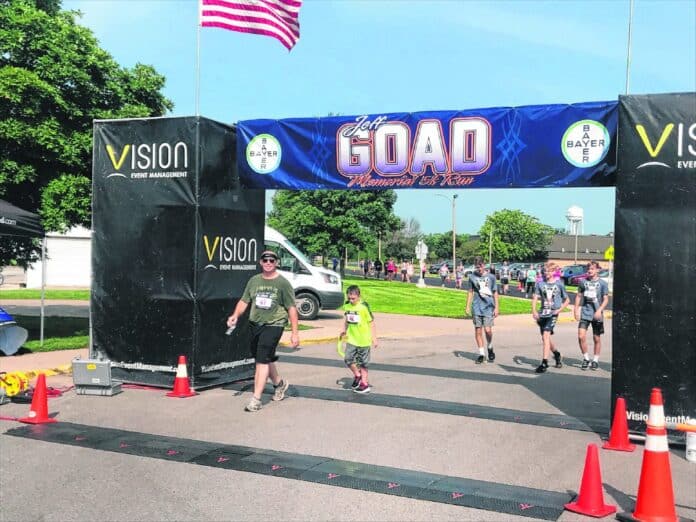
Derek and Henry Butler cross the finish line at the Inaugural Jeff Goad Memorial 5K.

You have to be alive to enjoy the outdoors. A basic truth. But how many people actually think about the fact that investing in your health will most likely allow you to enjoy your passions across the span of a longer life? I ignored my health for too long. Now 40, and ever increasingly aware of my own mortality, I’ve decided to do something about it. Last week, I ran my first 5K race, and I’m not looking back.

The 5K I ran in Rensselaer was to honor of Jeff Goad. He was my cousin’s brother-in-law. I knew him, but not well. We were extended family through marriage. Yet, I was aware of his journey and found it courageous. Jeff’s story is both inspiring and tragic.

Jeff was a big guy. He was very overweight. One day, he said enough is enough and he went to work. He bought a pair of running shoes and hit the road. Walking, then jogging, then running. He didn’t try miracle diets. He didn’t have surgery. He used willpower to eat right and exercise, thus changing his life for the better. Over the course of two years, Jeff lost around 250 pounds.

With his life improved from his enhanced physical and mental health because being in shape and exercising does make you happier, Jeff was living high. You can see it in his smile in every picture taken of him through his journey. He beamed enthusiasm. This was a man who put in the work and was enjoying the outcomes.

One of the results of Jeff’s extreme weight loss was a lot of excess skin that he wanted to have surgically removed. Through a horrible, tragic turn of events, what was supposed to be a simple procedure, ended Jeff’s life. I don’t believe an exact cause has been determined, but after his surgery, Jeff lost consciousness and never regained it. He passed away at 40 years old.

This story hit me hard. I think it bothers me so because of how much I admired him for the work he put in. I am constantly saddened by the ever-declining state of the American work ethic. Our nation was built by incredibly hard-working men and women seeking their best lives. Today, our society has been poisoned by an attitude of instant gratification. Expectations of desired results without effort have turned so many citizens away from the “do it” attitude that built our country to one of whiners crying “give it to me.”

Jeff was a shining example of earning a better life as the result of extremely hard work. I admire him so much for what he did and the attitude he did it with. One of his favorite sayings was, “Don’t talk about it. Be about it.”

My cousin Derek and I talked about taking part in the 5K. Personally, I was just going to show up and participate. Then another inspiring person gave me the final nudge I needed, to stop talking about it, and start being about it.

James “The Iron Cowboy” Lawrence did the unthinkable and finished 50 Ironman triathlon competitions in 50 days in 50 states. That means he completed 2.4 miles of swimming, 112 miles of cycling and a 26.2-mile marathon run every day for 50 days. Include the complexity and logistics of traveling each day to a new state, and the feat is truly hard to fathom. But it was possible.

James did it.

During his motivational speech, James talked about how hard the physical aspects of his accomplishment were, but emphasized the mental struggles were harder to overcome. He said every day, his mind tried to convince him to quit. Yet every day, he beat back those negative thoughts and pushed through to the finish line. The moral of his story was that your biggest obstacle is yourself and overcoming the excuses you provide yourself to not achieve what you desire.

James told a story about an older woman who showed up one day to complete a 5K held in conjunction with one of his Ironman races. He said it was super hard for her just to walk the 3.1 miles, but she did it. Then she showed up the next day at his next race and did it again, then again and again and again. It was his mother, and she put her mind to it and started completing daily 5K walks. This was the final piece of inspiration I needed to finally start my own journey towards a better me. If Jeff could do it, and James’ mom could do it, then I could do it.

To prepare for the Inaugural Jeff Goad Memorial 5K, I started walking, then jogging, then running a 5K every day. I completed 10 in 10 days before the race. In the last three weeks, I have walk/jogged/ran nearly 50 miles. I’m eating healthy, rarely consuming alcohol, and I’ve lost eight pounds. I feel incredible mentality and better physically. I have heard of people feeling this way about exercise, but I never experienced it myself before now.

Thanks to Jeff and the example he set, I am working toward losing 30 pounds and getting into to much better shape. I’m nearly a third of the way there, and I feel greater purpose every day. I hope the tragedy of Jeff’s story motivates many others to do the same. It was certainly evident that he left and impression on many, because nearly 300 people completed the 5K in his honor. What Jeff did was impressive, and I appreciate the work he put in, and I am thankful for his story and the motivation it has provided. Hopefully, his loss of life will be a motivator to extend the years of my life and countless others he inspired.

If you have been putting off the pursuit of a healthier, happier version of yourself, “Don’t talk about it. Be about it.”

See you down the trail.

Club Olympia takes 19th in Senior State meet

In the past two weeks, Club Olympia has competed in four different meets around the state. Thirty-three athletes competed in the Noblesville Enchanted Forest Invitational July 12-14, 21 swam in the Center Grove Aquatic Club Stars & Stripes 12-and-under Invitational on July 16, nine competed in last weekend’s Senior State Championships at IUPUI’s Indiana University Natatorium and 19 competed in the Pike 14-and-under Developmental meet Wednesday at Pike High School.

Starting with the biggest championship meet in Indiana, Senior State, Club Olympia finished 19th overall, with four teams above it made up primarily of college swimmers. Rachel Sabotin led the team with 99 points, placing third in the 400 individual medley, fifth in the 200 IM, sixth in the 200 butterfly, 14th in the 100 butterfly, 15th in the 400 freestyle and 24th  in the 200 freestyle. Sabotin now has four Junior National cuts and will be competing in all four of those events Aug. 6-10 at Stanford University.

Brady Beyer scored 18 points, finishing 12th in the 200 breaststroke and 23rd in the 100 breaststroke. He achieved Futures Championships cuts in both of those events and will be swimming in three events at that meet Thursday through Aug. 4 in Greensboro, North Carolina.

Nick Green scored 14 points, placing 17th in the 400 IM and 20th in the 200 butterfly. He also will be swimming in three events at the Futures Championships in Greensboro.

[sc:text-divider text-divider-title=”Story continues below gallery” ]

Maggie Johnson made it back for finals in the 200 butterfly, winning the 15-16 year old D heat to place 25th overall. Sabotin combined with Nalanie Cortez, Johnson and Erica Samuel) to place 11th in the 800 freestyle relay.

Green swam with Ayush Panda, Evan Patterson and Matthew Stuckwisch to place 16th in the 400 freestyle relay. Green, Panda and Patterson swam with Beyer to finish in 19th in the 800 freestyle relay. Patterson, Beyer, Green and Stuckwisch also took 23rd in the 200 medley relay and Patterson, Stuckwisch, Panda and Green were 24th in the 200 freestyle relay.

Other meets

Advika Badve competing in the girls 10-and-under events, achieved qualifying times for the upcoming Divisional Championships in three events at the Noblesville meet. She also scored (top 20 in each event score points) by placing 11th in the 50 breaststroke, 12th in the 100 backstroke, 13th in the 50 backstroke and 20th in the 200 IM. Badve also bettered the qualifying standard for Divisionals in her first three swims at Center Grove and dropped almost 19 seconds in her 200 IM at Pike.

Pratt Badve made finals and time improvements at Noblesville in the Boys 13-14 100 breaststroke and 200 breaststroke, finishing in sixth and eighth place, respectively. He also placed 13th in the 200 backstroke and 14th in the 100 backstroke. At Pike, he won three of his four races and dropped almost five seconds in his 200 IM.

Avi Banerjee placed eighth in the Boys 8-and-under 50 backstroke at Noblesville, ninth in the 100 backstroke and 15th in the 50 freestyle and 100 freestyle and 50 breaststroke. In the Center Grove 12-and-under meet, he was second in the 100 IM. At Pike, he won two of his four races, the 25 backstroke and 25 breaststroke and dropped almost 18 seconds in his 100 freestyle.

Arjun Bhadoria competed in seven events at Noblesville after being back in the water less than one week after over a month out on a trip to India. Less than two weeks later, he won the 100 freestyle and 100 butterfly at Pike and was third in the 100 backstroke and 100 breaststroke.

At Noblesville, Nicholas Green won the Boys Open 1,500, with Brady Beyer coming in second. Nalanie Cortez dropped almost 33 seconds to win the Girls Open 1,500 at Noblesville, with Sabotin placing second. Cortez also dropped 5.8 seconds in the 200 breaststroke. Erica Samuel scored 24 points in the Girls Open events by placing first in the 400 freestyle and also qualified fourth in the 100 backstroke and 200 freestyle, but scratched out of finals since Senior State was less than a week away.

Abigail Castillo competed in eight events, including the 400 IM in which she dropped almost 25 seconds from her previous-best time. Her younger brother Aidan, also competed in eight events, getting best times in five of his races.

Ivanka Chandelkar swam in six events at Noblesville, dropping 2.4 seconds in the Girls 10-and-under 50 freestyle and 4.8 in her 100 freestyle. She won the 8-and-under 100 IM at Center Grove and fiished third in the 25 breaststroke. At Pike, she was third in the 25 butterfly and dropped around 12 seconds in both the 50 backstroke and 50 freestyle.

Zoie Chandelkar got one more Divisional cut at Noblesville and improved her times in several events at the Center Grove meet. At Noblesville, she led the Club Olympia girls in scoring by finishing in sixth in the 10-and-under 200 freestyle and 50 breaststroke, eighth in the 100 breaststroke, ninth in the 50 backstroke, 10th in the 100 freestyle, 11th in the 50 butterfly; 12th in the 100 butterfly, 13th in the 200 IM, 14th in the 100 backstroke, and 18th in the 50 freestyle. At Center Grove, she bettered her times in all four of her individual races. At Pike, she dropped time in three of her four swims.

Aayush Das swam in four events at Center Grove, including leading off with the backstroke on the winning 12-and-under 200 medley relay with Misha Machavariani swimming the breaststroke leg, Joshua Pendleton swimming the butterfly, and Tony Machavariani swimming the freestyle. The same four also swam the 200 freestyle relay, finishing in third place.

Cassidy Furnish bettered the Divisional time standard in three 11-12 Girls events at Noblesville and one more at the Pike meet, so she will now swim five individual events and two relays at Divisonals. She also achieved personal-best times in five of her six races at Noblesville and in all four of her races at Pike, dropping around 10 seconds in both the 200 freestyle and 200 IM.

Connelly Furnish made the cut for the Age Group State Championships in three events and swam best times in five of her six events at Noblesville, including a 28.5-second drop in the Girls Open 400 freestyle. She was third in the Girls 10-and-under 200 freestyle and 100 breaststroke, fifth in the 200 IM and sixth in the 50 Free.

Maggie Johnson had a big meet at Noblesville, placing first in the Girls Open 200 Freestyle. She also qualified first in the 100 butterfly and 200 butterfly, achieving a Senior State cut in the 200 butterfly, but scratched since the Senior State Championships were in less than a week. Johnson also was second in the 400 freestyle and 400 IM, both in personal-best times.

Arya Kichambare swam five events in the Girls 10-and-under age group at Noblesville and in four at Center Grove, where she dropped almost 16 seconds in the 50 freestyle. She also swam on both the 8-and-under 100 freestyle and 100 medley relays, along with Ivanka Chandelkar, Shaivi Nighojkar and Lily Pendleton, both of which finished in second place. Kichambare also swam in four events at Pike, making significant improvement in three of those races.

Nandini Kondhare swam in 10 races at Noblesville and four at Pike, dropping almost seven seconds in the 100 butterfly at Noblesville. She also swam in four events at Center Grove, achieving personal-best times in all of her races. Nandini anchored the seventh-place 12-and-under B 200 Medley relay, which had Advika Badve swimming the backstroke, Sanaa Kulkarni swimming the breaststroke and Lovely Panda swimming the butterfly.

Kulkarni swam in 10 events over the three days at Noblesville, scoring points by placing 11th in the Girls 10-and-under 100 breaststroke, 12th in the 50 breaststroke, 14th in the 200 freestyle and 16th in the 200 IM. She also dropped time in five or her 10races. At Center Grove, she dropped time in all four of her individual races and achieved the Divisional time standard in the 50 butterfly and 100 backstroke. At Pike, she again dropped time in all four of her races and qualified for the Indiana State Open Water Championships with an 8-second time drop in the 200 freestyle and made the Divisional Championship cut in the 200 IM with an almost 14-second time drop.

Kulkarni’s younger brother Shreyan scored 100 points by placing in the top 20 in all seven of his events at Noblesville. He was sixth in the Boys 8-and-under 100 breaststroke, seventh in the 50 breaststroke and 200 freestyle, ninth in the 50 freestyle, 10th in the 100 backstroke and 100 freestyle and 11th in the 50 backstroke. At Center Grove, he placed third in the 8-and-under 100 IM and 50 breaststroke, as well as eighth in the 50 backstroke and 50 freestyle. He also swam with Banergee, Rey Nighojkar and Xavier Zhang to place second in both the 8-and-under 100 medley and 100 freestyle relays. At Pike, Shreyan Kulkarni was ninth in the 14-and-under 50 backstroke.

Grier Lane also scored points at Noblesville by placing 11th in the Girls 10-and-under 200 freestyle, 14th in the 50 freestyle, 19th in the 200 IM and 20th in the 100 butterfly. She dropped almost eight seconds in the 200 IM and six seconds in the 100 breaststroke, swimming best times in six of her 10 events. She swam in four events at Center Grove, achieving a best time in the 50 breaststroke. She also swam with Brooklyn Pendleton, Zoie Chandelkar and Sanaa Kulkarni to place third on the Club Olympia A relay in the Girls 12-and-under 200 medley and 200 freestyle relays. Lane also improved her best time in two of her four swims at Pike.

Tony Machavariani led all the Club Olympia swimmers in total points at Noblesville with 122. He finished third in the Boys 8-and-under 100 freestyle with a divisional qualifying time; fourth in the 100 backstroke and 200 IM, fifth in the 50 butterfly and 200 freestyle, sixth in the 50 freestlye, seventh in the 50 backstroke and ninth in the 50 breaststroke. He swam in four individual events at Center Grove, placing second in the 8-and-under 50 backstroke and 50 freestyle, as wells as ninth in the 12-and-under 200 IM and 12th in the 12-and-under 100 freestyle. At Pike, he dropped more than five seconds to get his fourth Divisional cut in the 200 freestyle.

Machavaraini’s older brother Misha scored 87 points in the boys 11-12 events at Noblesville by placing third in the 100 breaststroke, fourth in the 100 butterfly, fifth in the 50 backstroke and 200 freestyle. He also was 14th in the open 1,500 freestyle and 16th in the open 400 freestyle. At Center Grove, he placed first in the 100 backstroke, 100 butterfly and 100 freestyle. He also was fifth in the 50 freestyle.

Hannah Manlief swam in seven Girls Open events at Noblesville, getting best times in three of her races, including a 4.5-second drop in the 400 freestyle. Yashika Mehta competed in four events at Center Grove, achieving personal-best times in all of her races, dropping almost nine seconds in the 50 backstroke, more than 10 seconds in the 50 freestyle and more than 12 seconds in the 50 Butterfly.

Shaivi Nighojkar swam in four Girls 8-and-under events, getting a personal-best time in three of those races at Noblesville. At Center Grove, she placed sixth in the 8-and-under 25 breaststroke and 25 butterfly. Nighojkar’s younger brother Reyansh swam in three Boys 8-and-under races at Noblesville, scoring points by placing 14th in the 50 breaststroke and 19th in the 50 freestyle. He also placed fourth in the 8-and-under 25 breaststroke, fifth in the 25 butterfly, ninth in the 25 freestyle and 10th in the 25 backstroke at Center Grove.

Ayush Panda competed in five events, placing second in the Boys Open 400 freestyle, fourth in the 200 freestyle, ninth in the 50 freestyle and 11th in the 100 backstroke. He also qualified for finals in sixth in the 100 freestyle and ninth in the 100 butterfly, but scratched because of Senior State being just four days out.

Panda’s younger sister Lovely swam in nine Girls 10-and-under events at Noblesville, with big time drops in five of her races. She improved in three of her four races at Center Grove and dropped almost 17 seconds in the 200 IM, more than 10 seconds in the 100 backstroke, and two seconds in the 50 butterfly at Pike.

Joshua Pendleton scored 72 points in the Boys 10-and-under events at Noblesville, taking third in the 100 Butterfly, sixth in the 200 IM, 10th in the 200 freestyle, 11th in the 50 backstroke, 14th in the 100 breaststroke and 17th in the 50 freestyle. He just missed Age Group State cuts in two of his four races at Center Grove, and his leadoff time in the 200 freestyle relay made the cut.

Brooklyn Pendleton swam five events in the Girls 11-12 age group, achieving best times in three of those races, including a 6.3-second drop in the 200 IM and an almost 20-second drop in the 100 breaststroke. She also improved her times in two of her four events at Center Grove. Brooklyn and Joshua’s younger sister Lily swam in two events in the Girls 8-and-under age group, the 50 freestyle and 50 backstroke. She placed second in the 8-and-under 25 butterfly and fourth in the 25 breaststroke at Center Grove. At Pike, she swam in four events, competing against swimmers 14 and younger.

Daniella Preston swam in eight events in the Girls 11-12 age group at Noblesville, placing as high as 13th in the 100 backstroke in the preliminaries. She finished fourth in the 12-and-under 100 butterfly, eighth in the 50 breaststroke, 10th in the 100 freestyle and 13th in the 50 freestyle at Center Grove. At Pike, she was fifth in the 50 butterfly and 200 freestyle.

Xavier Zhang joined Club Olympia this summer and swam in four events in the Boys 8-and-under division at Noblesville, placing 13th in the 50 breaststroke and 17th in the 50 backstroke and 50 freestyle. He finished third in the 8-and-under 25 butterfly and 25 breaststroke, sixth in the 25 freestyle and seventh in the 25 backstroke at Center Grove. At Pike, he was second in the 14-and-under 25 breaststroke and third in the 25 backstroke and 25 butterfly.

School registration dates

Staff Reports

Jennings County School Corp. has a few more registration dates before the 2019-20 school year. They are:

July 29 — North Vernon Elementary 11 a.m. to 5 p.m.; Jennings County Middle School noon to 7 p.m.

July 30 — North Vernon Elementary 1 to 7 p.m.; Jennings County High School juniors, seniors and SCC noon to 3 p.m. and 4 to 7 p.m.; Scipio Elementary 8 to 11 a.m. and noon to 3 p.m.; Sand Creek new students noon to 6 p.m.

July 31 — Jennings County High School freshmen and sophomores noon to 3 p.m. and 4 to 7 p.m.; Scipio Elementary noon to 6 p.m.; Sand Creek new students 9 to 11 a.m. and noon to 3 p.m.; Jennings County Middle School new student orientation 10 a.m. to noon.

Aug. 1 — Graham Creek Elementary kindergarten parent night 6 p.m.; Brush Creek kindergarten meet the teacher night 5 to 6:30 p.m.

Pollinator registrations encouraged to document efforts

Although the opening of Tripton Park in North Vernon has been delayed until spring, the pollinator patches already planted are growing all across the grounds.

Jennings County has been a leader in re-establishing a healthy environment for pollinators throughout southern Indiana, but now local officials are encouraging residents to do their part to help recognize the county’s efforts.

Andy Ertel, Jennings County Soil and Water Conservation District director, is encouraging anyone who has planted a pollinator patch in the county — whether big or small — to registerit on a national registration site. Go online at pollinator.org, click on “our programs” and then click on “MPGC map” to register.

“It really literally only takes a minute,” Ertel said.

The registration will record the efforts Jennings County has made to address a crisis shortage of pollinators.

In 2015, the U.S. Department of Agriculture and other agencies said there was a serious shortage nationally of pollinators, such as bees, butterflies humming birds and a few insects. Pollinators are necessary for the growth of food groups for humans and animals.

The Jennings County Soil and Water Conservation District heeded the national call for action to help build healthy habitats for bees and other pollinators. Ertel and assistant Kelly Kent formed a group dedicated to help organize the planting of gardens and patches designed to attract and nurture pollinators across the county.

In less than three years, the Jennings County Share Some Space Committee has assisted in the establishment of over 300 documented pollinated gardens across the county, and also given away over 1,200 packets of seeds to help with the planting of smaller gardens, Ertel said.

The soil and water district and the committee have received state and national awards for their efforts in establishing a healthy environment locally for pollinators, and for helping other counties with pollinator projects.

However, Jennings County currently shows fewer pollinator patches registered than there are in surrounding counties on the national pollinator garden map.

“I have recorded 300 pollinator patches on our own county map, but I would not presume to send names and addresses onto anyone else,” Ertel said.

He added that he understands the need to know at a national level the status of pollinator efforts.

“It’s extremely important to know how many pollinator patches there are in order to know whether things are getting better or worse for the pollinators,” Ertel said.

He estimated there’s an additional 500 pollinator patches that have not been added to the county pollinator map.

“We have had over 1,200 people come in and pick-up seeds to grow plants to help pollinators thrive, so I am saying that at least 500 of those followed through and planted a plot or a container,” Ertel said.

Vernon hosting arts festival Labor Day weekend

An arts festival featuring live demonstrations and contests is planned for Labor Day weekend in Vernon.

The Friends of Historic Vernon’s Festival of the Arts event is scheduled for Aug. 31 and Sept. 1.

Art contests for all ages will take place from 1 to 3 p.m. Aug. 31. Art demonstrations will take place both days.

“We would love to have individuals create works featuring Jennings County and its identity” said Karen Chilman, who is helping to organize the art contest. “Over 700 entries were received last year, and the goal is to increase this number to over 1,000.”

Categories for the art contests will be folk art, painting, photography and scenes of Vernon.

Questions about the art contest can be directed to Chilman at karenchilman@jcsc.org.

The Friends of Vernon Committee is also looking for local artists willing to demonstrate their art both days, and artists who would just like to sell their work.

Artists can rent booth space to sell their work. If an artist agrees to do demonstrations of their work during the festival, they will receive a discount to the price of their booth.

Information and forms about the art contests, vendors, artist demonstrations and a schedule of events can be found at the Friends of Historic Vernon’s Facebook page.

Free legal aid clinic offered

Legal Aid, a nonprofit that provides free civil legal services, will host a clinic from 3 to 5 p.m. Aug. 20 at the Jennings County Public Library, 2375 State Road 3 North in North Vernon.

Local volunteer attorneys will offer free, 10-minute consultations to low-income individuals. Individuals are served on a first-come, first-serve basis. Registration is not required.

Information: 812-314-2720

Work on state roads starting soon

Staff Reports

State Road 7 is scheduled to close on or after Monday, 3.16 miles north of the Jefferson/Jennings County line (south of Turkey Run) for box culvert repair and maintenance.

The closure will be the first of four along State Road 7, south of Vernon, the Indiana Department of Transportation said.

The road will close for about 30 days at each of the following locations, moving south to north:

3.16 miles north of Jefferson/Jennings County line, south of Turkey Run (maintenance/repair)

3.51 miles north of Jefferson/Jennings County line at Turkey Run (replacement)

11.67 miles north of State Road 250, just south of Crosley Fish and Wildlife Area (replacement)

5.71 miles north of Jefferson/Jennings County line, about one mile south of the State Roads 3 and 7 split (maintenance/repair)

Crews will move to the next location following completion of work at each culvert. State Road 7 will be closed one location at a time.

The official state detour for each closure is State Road 3 to State Road 256, INDOT said.

The project is expected to be complete by October 31, INDOT said.

Also, State Road 250 is scheduled to close from State Roads 7 to 3 from 7:30 a.m. to 4:30 p.m. Monday through Thursday for culvert replacement work.

Work will resume where crews left off earlier in July, about four miles west of State Road 7 in Jefferson County and will move toward State Road 3, near the Jefferson/Jennings County line. County roads will be accessible to local traffic only.

The official state detour for the closure is State Road 256.

Also, patching will begin on a 9.7-mile section of U.S. 50 in Jennings County on or after Monday, weather permitting, as part of a $3.1 million patching and paving project, INDOT said.

Work will take place from about two miles east of State Road 3 to nine miles west of U.S. 421.

Patching will be followed by milling and paving. The project is expected to be complete by October 31, 2019.

Motorists should expect delays due to lane closures along the route.

A pivotal point: Manager of state’s startup investments believes returns poised to rise

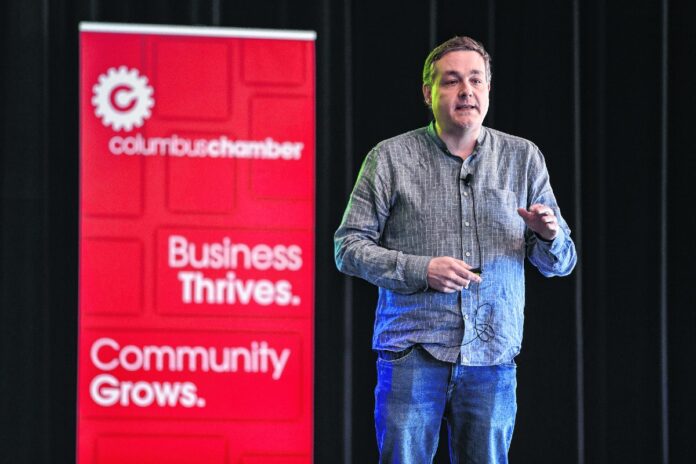
John McDonald, CEO of ClearObject Inc., gives the keynote speech during the Columbus Area Chamber of Commerce annual meeting at The Commons in Columbus, Ind., Thursday, March 28, 2019. Mike Wolanin | The Republic

After nine years of managing the state’s investments in startups, the not-for-profit Elevate Ventures has had some wins, but more losses — as measured by the number of companies that paid back at least as much as they took in.

Overall, Elevate has plowed $17.6 million into 51 companies that reached the exit stage — the time a firm sells, buys out early investors, or even closes.

Through July 16, Elevate had received back more than it invested in just 19 of those companies. In total, it has recouped $20.6 million, which represents a return of 17%.

That doesn’t worry Elevate’s leaders, though, who say the group’s mission goes beyond capturing a high return. They point to a half dozen other metrics that they say show the benefits created from their investments, including the number of jobs created and amount of private investment leveraged.

[sc:text-divider text-divider-title=”Story continues below gallery” ]Click here to purchase photos from this gallery

“It’s a challenge because we’re walking this fine line between encouraging entrepreneurism and doing our economic development mission, but we also have the mission of return,” Elevate Ventures CEO Chris LaMothe said. “So, we want to make sure we’re making thoughtful investments for the taxpayers.”

In 2010, the Indiana Economic Development Corp. delegated management of the 21st Century Research and Technology Fund — which was designed to directly invest in startups — to Elevate Ventures. State and industry officials believed that would be a good way to provide entrepreneurs with the support and resources needed to help startups grow and be successful.

Since then, Elevate has made 508 investments totaling $91.4 million. That money has flowed into 313 companies, with 262 of those remaining in the organization’s portfolio.

IEDC President Elaine Bedel said state officials know there’s always a risk that a startup Elevate invests in on behalf of taxpayers won’t survive.

“We can’t say we’ve had successes across the board,” Bedel said. “But if we don’t do it, who’s going to do it?”

Raising concerns

Leaders in the tech community have raised concerns for years that Indiana is lacking venture capital dollars. In 2018, a total of $112.2 billion in venture capital was invested in U.S. startups, but only 0.22%, or $253 million, of that came to Indiana.

Elevate Ventures is a big fish in that small pond.

In 2018, Elevate participated in more than 67% of all the fundraising rounds for Indiana startups, making it the most active VC firm in the state.

And the number of positive exits realized by Elevate has been growing, albeit slowly. In 2017, Elevate had three positive exits; that increased to four in 2018, although the overall return that year was a 55% loss due to 11 negative or neutral exits.

So far this year, Elevate has already matched last year’s record high of four positive exits and, despite six neutral or negative exits this year, has seen an overall return rate of 17%.

None of that data accounts for any estimated increases in the value of investments.

Elevate only records positive returns when a company successfully exits, rather than counting estimated gains while a company is still in its portfolio. LaMothe said that’s because value is uncertain until a company is sold.

But he expects the number of positive exits to start increasing, given that many companies in Elevate’s portfolio have been operating for years, so they’re more likely to be acquired.

“We’re early in our return metrics,” LaMothe said. “You would expect the very, very early-stage companies that we’re investing in typically to begin reaping or harvesting some of those investments in the seventh through the ninth year, and we’re just right there.”

Moving past controversy

The state created the 21st Century Research and Technology Fund in 1999 to invest in innovation and entrepreneurship.

The IEDC was charged with managing the fund, which initially awarded grants that did not give the state equity in the companies.

But that arrangement changed in 2010 under then-Gov. Mitch Daniels’ administration, which wanted to provide startups with more venture capital opportunities and create a stronger entrepreneurial ecosystem.

“What we found was that a lot of businesses, a lot of investors and a lot of entrepreneurs weren’t excited about using state or federal money because there were so many strings attached to it,” LaMothe said.

Enter Elevate Ventures, a not-for-profit founded in 2010 by Howard Bates that operates independently from state government, even though its sole purpose is acting as a venture capital firm for the IEDC to help create that support system for startups in the technology, medical, manufacturing and agriculture industries.

In 2018, the contract with Elevate cost the IEDC $4.2 million.

Shortly after the partnership formed, Elevate ran into conflict-of- interest problems.

In 2012, it invested almost $500,000 in Indianapolis-based marketing software developer Smarter Remarketer, of which Bates was CEO while still serving as chairman of Elevate.

A federal audit concluded that Elevate “intentionally misused” public dollars by making the investment because then-Elevate CEO Stephen Hourigan was aware of Bates’ controlling interest in the company, now known as SmarterHQ.

Hourigan and Bates both left their roles with Elevate as a result of the controversy.

Bedel said the state’s relationship with Elevate now “is really good.”

Net positive

Overall, Elevate Ventures has had a 17% return on the investments it has made in companies since 2010 that have had exits (been sold, gone public or gone out of business). But only 19 of 51 companies have had positive exits.

“None of those individuals are still active with the Elevate Ventures we’re working with,” Bedel said. “I think it’s much different now.”

LaMothe, who became CEO in 2015 after Hourigan left, said no one on staff or on Elevate’s board is allowed to invest in any company the firm works with, and advisers assigned to represent Elevate on boards of startups are also not allowed to invest in those companies. Advisers are allowed to invest in other companies they are not working with on behalf of Elevate.

“We watch that very, very carefully,” LaMothe said.

Elevate’s contract with the IEDC expires at the end of the year, but officials say they are in the process of negotiating a new one.

What’s enough?

The 21st Century Research and Technology Fund includes multiple funds designed for startups at different development stages and risk levels. Those funds include the 21 Fund direct investments, Angel Fund, High Potential Startup Fund, Elevate Purdue Foundry Fund, Fund of Funds, Community Ideation Fund and a matching fund for companies that receive support through the federal Small Business Innovation Research and Small Business Technology Transfer programs. Elevate now oversees investments made from all those funds.

The state appropriates $30 million every year to the 21st Century Fund, but only part is invested in Indiana startups.

In 2018, for example, Elevate made 94 investments totaling $12.6 million.

The rest of the fund is invested in public-private partnerships, typically involving universities and industries trying to conduct research or develop a new technology.

For example, the state last year used $3 million from the 21 Fund to leverage $54 million in federal and private funds for microelectronics research at Purdue University and the University of Notre Dame.

And the amount directed toward each initiative — investing in startups versus supporting public-private partnerships —

is a moving target.

Bedel said the state does not mandate the amounts each year but stays in regular contact with Elevate to make sure everyone knows current spending levels.

“We’re not forcing them to invest in any companies,” Bedel said. “We want good investments.”

LaMothe said Elevate could always use more money to make investments.

“But I do know that the IEDC is very thoughtful and judicious about how they try to meet the demands that they have,” he said.

Most of the $91 million Elevate has invested since 2010 — $51.5 million — has come through the 21 Fund direct investment program, which is targeted at companies far enough along in development that they can show a product or service has merit in the market.

Those investments are typically Elevate’s highest, ranging from $100,000 to $2 million, because they are considered less risky.

Winners and losers

Some of the companies Elevate has invested in have had high-profile accomplishments, including Fishers-based ClearObject, which has seen significant growth for years and was acquired by two out-of-state private-equity firms this year.

ClearObject CEO John McDonald said the company (originally CloudOne), would “have been dead” without Elevate’s investments, which totaled $3 million from 2012 to 2016. Almost all the money came from the 21 Fund.

“It was absolutely exactly the right thing at exactly the right time,” McDonald said.

But others, like Fishers-based Steady-Serv Technologies LLC, haven’t been as successful.

Elevate invested $1.5 million in Steady-Serv, a beer-service technology firm that gained national attention with a draftbeer management and inventory system called iKeg, through its Angel Fund and 21 Fund direct investments in 2013 and 2014. But the company filed for Chapter 11 bankruptcy in February and a judge approved the company’s sale in June to the biggest creditor after no other bids were made.

Michael Hicks, director of the Center for Business and Economic Research at Ball State University, said he’d be more concerned if Elevate didn’t have any failures.

“If they’re being that cautious,” Hicks said, “then they’re not needed, because banks would make those investments.”

LaMothe said Elevate has a “very deliberate process” for its investment decisions.

That process starts with startups’ pitch to staff and experts known as entrepreneurs in residence. Candidates then go through several rounds of vetting by various committees. For investments made through the 21 Fund direct investments program, an IEDC committee has to sign off on the proposal, too.

LaMothe estimated that, for every company approved for investment, Elevate says no to 13 or 14.

Nearly all the funds require the recipient to raise a matching amount — and oftentimes the outside investments exceed Elevate’s contribution. Since 2010, outside investors have contributed $633 million to funding rounds Elevate has participated in.

Measuring success

After nine years, officials at IEDC and Elevate Ventures say the partnership and the resulting investments have been successful.

But how do they measure that? Is it the return on investment? Number of jobs created? Amount of outside investment leveraged?

All of the above.

That’s because, unlike many venture capital firms, the state’s goals are not all about direct returns. The IEDC has also charged Elevate with building entrepreneurism and innovation by coaching and mentoring startups.

“The goal of this is to cause there to be more technology firms and research and development in Indiana,” Hicks said. “The goal of this isn’t for it to make money for the state in the short run.”

Elevate helps startups in several ways — by hosting events throughout the state to connect entrepreneurs, stakeholders and investors; by assigning an adviser to the board of the startups it invests in; and by connecting companies with one of the organization’s entrepreneurs in residence to help them navigate roadblocks.

Since 2010, the more than 300 companies Elevate has invested in employ nearly 2,500 individuals with average salaries of more than $64,000.

Startup leaders say Elevate’s support has a significant impact and is unlike the money from venture capital firms.

“They’re way more beneficial to have involved with your company than someone just concerned about money,” McDonald said.

Plus, if a company can say Elevate Ventures backs it, that can help attract other investors.

“One of the more subtle but important things they do is, they provide confidence to other follow-on investors,” McDonald said. “That kind of endorsement is really, really beneficial.”

Brian Powers, founder and CEO of Indianapolis-based PactSafe, said Elevate was its first institutional investor and is still the only local one, so its programming and expertise have been especially helpful. PactSafe received nearly $500,000 from Elevate’s Angel Fund from 2014 to 2018.

“Without Elevate’s continued partnership, PactSafe would not be where it is today,” Powers said.

Money does matter

Elevate officials are passionate about the economic development mission, but they don’t deny that they want a return on investment.

In fact, both Elevate and the IEDC say they want the 21st Century fund to someday reap enough in returns to support new investments without annual appropriations from the state.

“We’re not there yet,” Bedel said. “But hopefully someday we will be.”

The returns have fluctuated over the years, as it all depends on when a company has an exit, which can happen in several ways — a bigger company could acquire the startup, another venture capital fund could buy out other investors like Elevate, the company leaders could buy back ownership shares, the company could go public, or it could go out of business.

In 2012, Elevate saw a 91% loss on its exits, but that flipped to a 91% gain the next year.

So, it could be a while before the fund becomes self-sustaining. LaMothe said it will first need some $100 million in returns. “Some people would say it’s less than that, some people would say it’s more than that.”

Hicks said he doesn’t think it’s feasible — or smart, for that matter — to make the fund self-sustaining because that would put too much emphasis on earning profits rather than building the entrepreneurial ecosystem and innovation.

“That differs from the goal of generating commercialization of research that wants to have a home in Indiana,” he said.

LaMothe said Elevate’s work has had an impact to date, but he’s still worried about Indiana’s future.

“We’re still so far behind in our entrepreneurship,” he said. “Indiana has got to pivot to innovation and entrepreneurship in a big way.”

Tech leaders say one way to fuel that is attracting more venture capital dollars, not necessarily by increasing appropriations to the 21st Century Fund, but rather by attracting new VC firms.

McDonald, who is part of the tech industry’s trade group known as the Indiana Technology and Innovation Association, said Elevate Ventures is “one of the very few pathways” for startups to get funding, so, if they get turned down, it “could almost be the end of

the road. … We continue to not have enough pathways.”

But an increase in the 21st Century Fund could help, he added. “We’re on rounding errors in the state budget as opposed to major funding initiatives.”

Rod Reasen, CEO of Springbuk, which received $2.8 million from the 21 Fund direct investments program from 2015 to 2018, described Elevate as “a good bridge” and a “fantastic partner.” But he said the state still desperately needs more funding options for investments of $5 million and above.

“But,” he said, “that’s not an Elevate problem.”

[sc:pullout-title pullout-title=”Columbus connection” ][sc:pullout-text-begin]

In October 2018, Columbus officials announced a three year, up to $2.5 million partnership with Elevate Ventures.

The state of Indiana will be contributing $1.5 million toward the effort that will be shared between the cities of Columbus and Bloomington.

Columbus has committed $300,000 for three years that will be paid using its Economic Development Income Tax funds, while the remaining $200,000 will be covered by Heritage Fund — the Community Foundation of Bartholomew County and private donors, Lienhoop said.

Cindy Frey, president of the Columbus Area Chamber of Commerce, described the partnership with Elevate Ventures as another tool designed to support businesses in the area.

The chamber offers assistance to entrepreneurs through its Fish Tank, while the Service Corps of Retired Executives, or SCORE, also provides training programs at the chamber office, Frey said.

“What this project does that’s different is that it focuses on innovation-driven businesses,” Frey said. “We’re looking for high-growth, high-potential companies.”

More information: elevateventures.com.

[sc:pullout-text-end][sc:pullout-title pullout-title=”About Velocities” ][sc:pullout-text-begin]

Velocities is a partnership between Elevate Ventures, Bloomington-based incubator The Mill and the Columbus Area Chamber of Commerce.

The partnership is designed to develop an entrepreneurship-minded culture and infrastructure in the south-central Indiana area, including investing in local high-potential and high-growth businesses, portfolio services, educational events for entrepreneurs and investors, marketing support coaching and more.

Velocities has hired a entrepreneur in resident, Cy Megnin, Bloomington.

To learn more, visit velocitiesin.com.

[sc:pullout-text-end]

Marketplace: CRH welcomes two new physicians

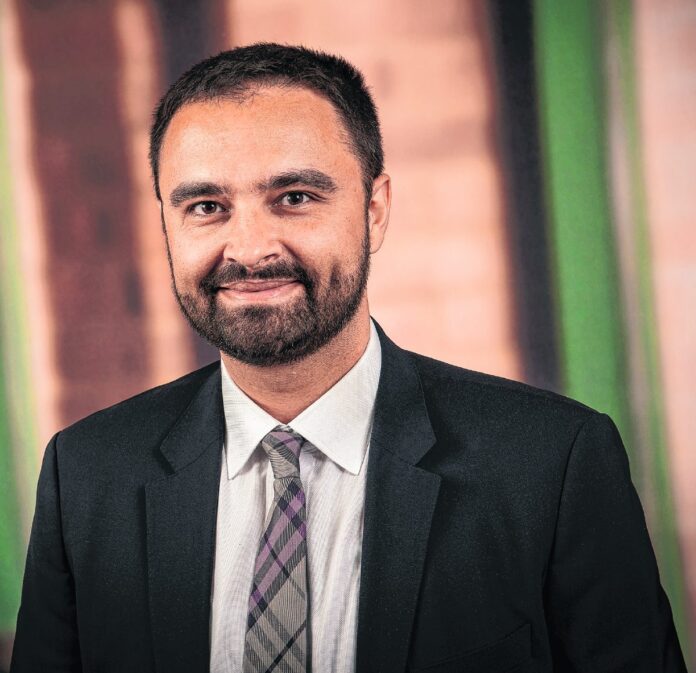
Dr. Amitoj Gill

Marketplace

CRH welcomes two new physicians

Columbus Regional Health has recently hired two new physicians, Dr. Aditya Chada and Dr. Amitoj Gill to the medical staff. Chada specializes in critical care, pulmonary medicine and sleep medicine. Gill specializes in hematology and oncology.

Chada graduated from MNR Medical College in India, in 2011 and completed his internal medicine residency training at Florida Hospital in Orlando, Florida. He completed his pulmonary/critical care fellowship at the University of Arkansas of Medical Sciences in 2018, where he also served as a chief fellow. He completed his sleep medicine fellowship at Emory University in Atlanta, Georgia in 2019.

[sc:text-divider text-divider-title=”Story continues below gallery” ]

Chada’s areas of interests are COPD, asthma, interstitial lung disease, critical care medicine, obstructive sleep apnea and hypersomnia/narcolepsy. He is an active member of American Academy of Sleep Medicine other societies. He can be reached at his office at 812-376-5757.

Gill graduated from Christian Medical College in Ludhiana, India, in 2009. He completed internal medicine residency at Johns Hopkins University/Sinai Hospital of Baltimore in 2015, where he was chief resident from 2015 to 2016. Gill completed a clinical fellowship in hematology and oncology at the University of Louisville in 2019.

He is a member of American College of Physicians and other societies. He can be reached at 812-376-5550.

County computer upgrades welcome news

A county’s residents expect that services provided by their local government offices are delivered promptly and efficiently, and without problems.

Because so many services rely on computer systems for their delivery, local government has to make sure that its systems operate as problem-free as possible.

So, we’re glad to hear that Bartholomew County has already begun upgrades to its computer systems that operate with Microsoft’s Windows 7, which will reach its end of life Jan. 14, and that the city already uses a more advanced operating system.

Microsoft announced that it would stop providing security updates and other support for Windows 7 early next year. That means systems operating on Windows 7 after that date leaves users even more vulnerable to attacks by hackers and malware, and could make Windows 7 computers incompatible with other programs operating on newer software. Considering all the personal information that is stored in local government data bases, and that voting machines rely on computer software, one can understand the urgency for upgrading to a current computer operating system.

Bartholomew County’s voting machines, for example, use Windows 7, but thankfully they are in the process of being upgraded to Windows 10 by the manufacturer of the voting machines.

The county is in the process of upgrading about 600 computers total — a sizable number before Windows 7 reaches its end of life — but it’s good to know that the county has been planning for this upgrade process for two years. It budgeted $91,000 in 2017 and $125,000 in 2018 for an agreement with Microsoft that ensures that the latest operating systems are always available to the county for all Microsoft products.

The fact that the city already operates on Windows 10 and the county has been planning for an upgrade it’s currently conducting should be heartening for Bartholomew County residents, knowing that both government entities are not playing catch-up on this issue.

Send comments to editorial@therepublic.com.