NORTH VERNON
Ceburn Allen Tyler III, 42, died on July 19, 2019.
The funeral will be 1 p.m. Saturday, July 27th, Dove-Sharp & Rudicel Funeral Home. Visitation will be on Saturday, 10 a.m. until service.
View Full obituary on Funeral Home Website.


NORTH VERNON
Ceburn Allen Tyler III, 42, died on July 19, 2019.
The funeral will be 1 p.m. Saturday, July 27th, Dove-Sharp & Rudicel Funeral Home. Visitation will be on Saturday, 10 a.m. until service.
View Full obituary on Funeral Home Website.
NORTH VERNON
Elizabeth Jo “Liz” Guenthenspberger, 63, died on July 19, 2019.
A graveside service will be held at 11 a.m. Saturday, July 27th in Bear Creek Baptist Cemetery in Jennings County.
View Full obituary on Dove-Sharp & Rudicel Funeral Home Website.
ROCHESTER
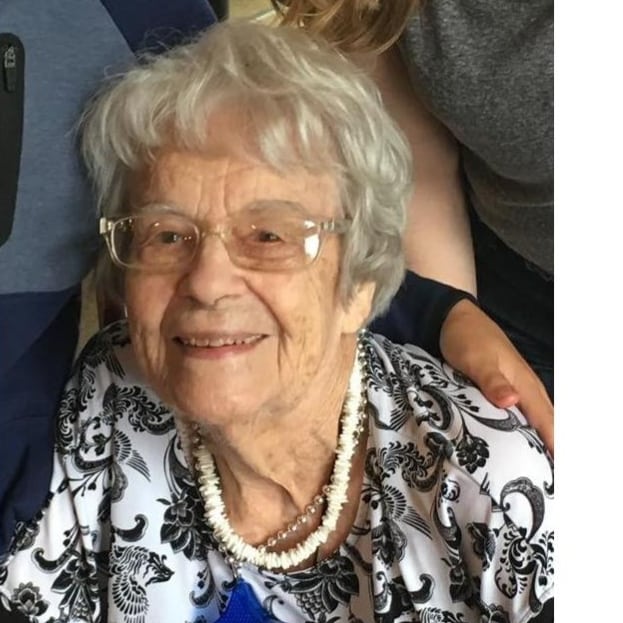
Margaret L. Herkless 100, Rochester, Indiana, passed away at 9:45 p.m. Saturday July 20, 2019 at Our Hospice of South Central Indiana, Columbus, Indiana.
She was born on June 24, 1919 in Rochester, Indiana, the daughter of Charles and Margaret (Plank) Pyle. She graduated from Indiana University with a degree in Business Administration. On August 2, 1941 in Rochester, Indiana, she married Heber C. Herkless. He preceded her in death on February 17, 2009.
Mrs. Herkless started her professional career working for Eli Lilly in Indianapolis, Indiana. She worked many years at the Fulton County Treasurers office, Rochester, Indiana. She was a member of the First Baptist Church, Rochester, Tri-Kappa Sorority and Kappa Kappa Gamma Sorority at Indiana University. She had been an active Bridge Club member and enjoyed reading and doing crossword puzzles.
Survivors include her daughter, Julia and husband Dale Schroeder, Columbus, Indiana, grandsons, William Schroeder, Columbus, Indiana, John and wife Kristin Schroeder, Bloomington, Indiana, great grandchildren, Bailey Schroeder and Taylor Schroeder, both of West Lafayette, Indiana, Levi Schroeder, Bloomington, Indiana. She was preceded in death by her son, Charles Steven Herkless in 2016, sister, Mary Moore in 2010.
Graveside services will be conducted at 1:00 p.m. Thursday July 25, 2019 at Odd Fellows Cemetery, Rochester, Indiana.
Memorial contributions may be made to First Baptist Church or Our Hospice of South Central Indiana. Arrangements by Zimmerman Bros. Funeral Home, Rochester, Indiana.
Online condolences may be expressed at www.zimmermanbrosfh.com
FORT WAYNE
Jeff Addis, 57, of Fort Wayne, passed away on Monday, July 15, 2019. Born on Sunday, July 30, 1961
in Fort Wayne, Indiana to the late William and Wavabelle (Ditzenberger) Addis II.
He enjoyed going to the race track, taking apart and rebuilding cars, and decorating for Christmas. Jeff loved to spend time with his nieces and nephews.
He is survived by his brothers, Greg (Jennie) and Dennis (Debra) Addis; many nieces and nephews; and great nieces and great nephews.
Proceeding him in passing are his sisters, Cindy Addis and Rebecca Addis; and brother, William Addis III.
A funeral service will be held at 1 p.m. on Saturday, July 27, 2019 at the Greenlawn Funeral Home 6750 Covington Road Fort Wayne,
Indiana 46804 with visitation from 9-1 p.m. Memorial contributions may be made to The Rescue Mission of Fort Wayne.
Condolences may be left online at www.greenlawnmpfh.com.
A Bartholomew County ordinance that increases most animal-related fines received final approval Monday from the Bartholomew County Commissioners.
Under the ordinance, the maximum fine for a violation will rise from $35 to $50. The last time these amounts were increased was Oct. 26, 1987, county attorney Grant Tucker said.
There is a separate fine for every animal the violator owns, which means if a $50 fine is levied against the owner of two dogs, the fine would increase to $100.
The increases were made at the recommendation of Bartholomew County Animal Control Officer Mark Case, who told the commissioners most of the increased fines deal specifically with regulations concerning dogs.
"We’ll give violators a verbal and a written warning, and then if it happens a third time, that’s when we fine them," Case told the commissioners on Monday.
Staff Reports
A 14-year-old juvenile who told investigators he was bored and wanted to see a police response was detained on two misdemeanor charges after he was accused of making a false 911 call.
Deputies were sent to the 20000 block of East State Road 46 at 3:17 a.m. Tuesday about a report of three armed subjects attempting to break into a business, deputies said.
Multiple police officers arrived only to find the building secure and no one around the area, deputies said.
During the investigation, deputies obtained the address of the individual who made the report and went to his residence, where the 14-year-old’s mother said her son was staying with a friend in Hartsville.
Deputies located the juvenile at the friend’s home and returned him to his residence where, in the presence of his mother, he told deputies that he made the call because he was bored and wanted to see police respond, deputies said.
The juvenile was arrested and charged with false reporting of a crime, a Class A misdemeanor and placement of a 911 call for prohibited purposes, also a Class A misdemeanor, deputies said.
When taken to the Bartholomew County Youth Services Center to be detained, deputies found the juvenile was concealing tobacco products in his clothing for which he was also charged.
Sheriff Matt Myers said making false 911 calls is a criminal offense. “This young man knowingly made a false call that took our deputies out of other areas where someone might have truly needed their help,” he said. “This is not only against the law, it is extremely dangerous.”
Primary deputy was Deputy Adam Warner with assisting deputies Lt. Gary Knoef, Sgt. Justin Arnholt, Deputy Andrew Dougan, Deputy Nate Nichols, Deputy Brandon Sellers. Indiana State Police also assisted.
What happens when you combine nearly 200 pickleball players with only two city-owned pickleball courts?
Lines.
Drive by the Donner Park pickleball courts between 4 p.m. and dark on any given night and that’s what you’ll find — long lines of eager players waiting for their turn to play one of the fastest-growing sports in the United States.
“Pickleball is huge,” said Nikki Murphy, director of sports programs for Columbus Parks and Recreation. “It has boomed very quickly, becoming one of the country’s fastest growing sports, and we recognize that.”
[sc:text-divider text-divider-title=”Story continues below gallery” ]Click here to purchase photos from this gallery
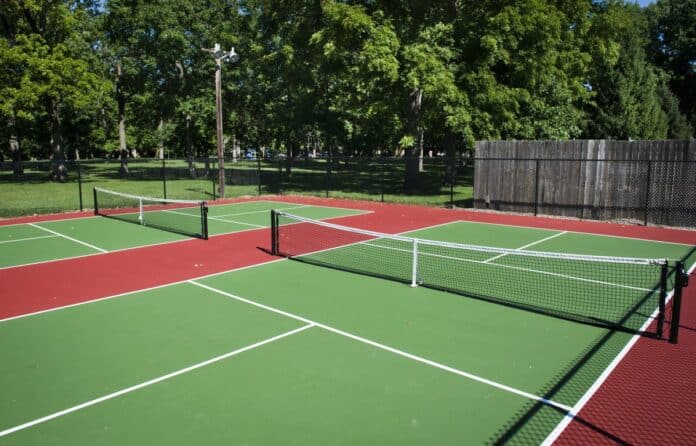
Columbus Parks and Recreation owns the two courts at Donner Park, 1900 Lafayette Ave., but since installing them in 2016, the department soon found it wasn’t enough.
Pickleball has had a 650 percent increase in numbers over the past six years, according to the USA Pickleball Association.
“In 2017, a massive amount of people wanted to play,” Murphy said. “The sport grew overnight.”
Norris and Mary Moore are credited with bringing the sport to Columbus from Florida, and it’s been a “hit” ever since.
So, what is pickleball?
Imagine if tennis, racquetball and ping pong all combined to become one sport. Players use special paddles and a wiffle ball, and games take place on tennis courts with specific pickleball lines. Nets and court sizes are smaller than their tennis counterparts, and the most common game is doubles, although singles is also an option.
Because no more than four people can be on a court at once, that leaves room for only eight people to play on Columbus’ two courts at a time.
Asking for more courts
In 2017, Murphy said Norris and Mary Moore approached the parks department about the possibility of expanding the courts to keep up with the demand for court time.
The estimated cost for three additional courts at Donner Park plus the transformation of the two existing courts into a tournament-capable set of courts is about $60,000 to $70,000, Murphy said.
Columbus Parks and Recreation submitted its prioritized list to the Columbus City Council last year with pickleball courts on the list of requests. Murphy said funding for the courts just missed the council’s cut off for dollars, just underneath other projects on the list such as park expansions and improvements.
The Columbus Pickleball Club formed a fundraising committee last year and created a campaign to raise its own money for additional courts. In 2018, the club kicked off its efforts with its inaugural Discover Columbus Pickleball Tournament, a three-day, non-sanctioned tournament open to any and all pickleball players across the country.
Charlie Day of Columbus said he thought hosting an outdoor tournament would be the perfect way to raise money for the cost of the new courts. After Day competed in a pickleball tournament in 2017, he approached the tournament director about helping Columbus host its own competition.
Day said 119 people between ages 8 and 89 years old participated in Columbus’ first-ever pickleball tournament last September, including participants from eight states outside Indiana. The club raised about $11,300 from the tournament in 2018.
To date, the Columbus Pickleball Club has raised $28,260.19 toward the new court expansion — just over $20,000 short of its $50,000 goal. Murphy said the parks department and the club agreed to split the cost of the new courts and improve by 50 percent if Columbus City Council approves its $30,000 capital project request for the sport this fall.
Columbus Pickleball Club President Cindy Massey said while eight people were playing on the courts, another 19 people were waiting in line one day recently.
“That’s not every day, but that is frequently,” Massey said. “The need for more courts is huge. Most cities and towns with our type of funding available have 10 or 12 courts easily. We don’t want it to die out if people can’t play.”
Day is currently working on taping out pickleball lines on the tennis courts at W.D. Richards Elementary School to give people more options to play pickleball beyond Donner Park. The city owns the two tennis court surfaces at Richards, which Murphy said are in disrepair with wide and deep cracks that make it difficult to play tennis.
The city also painted pickleball lines on the handball court at Harrison Ridge Park.
Interest continues to grow
Massey said the club donates its time and skills to the parks department to promote and teach pickleball at Donner Park, Foundation for Youth and Tipton Lakes, where pickleball court lines have been painted. The $45 clinics are often packed with people of all ages.
Murphy said the parks department takes a small percentage of the money collected from clinics and donates the rest to the the club’s fundraising budget line.
About 25 members of the Columbus club attended the July 11 public meeting at FairOaks Mall to express interest in adding indoor pickleball courts to the nearly vacant property when the mall is redeveloped into a community wellness, recreation and sports center.
The club wasn’t shy about offering input for what they’d like to see in the new development, wearing their pickleball T-shirts and writing their interest of new courts on color-coded sticky notes at the meeting’s interactive stations.
“It’s one thing if you ask (the parks department) for stuff on the side or in emails, but when we give you the opportunity to have a voice, we want you to use it,” Murphy said. “Pickleball never ever, ever stands down when there’s an opportunity to have a voice, and I think that’s incredible. They’ve done their due diligence, they’ve done their civic duty and have shown up and had a voice.”
Murphy said the parks department will know this fall if city council members will approve the department’s final capital dollars request for the new courts.
“We don’t have a dedicated place,” Massey said. “Columbus Parks and Recreation has bent over backwards, but their hands are tied. They have budgets and constraints. There’s politics involved and a lot that they have to do to upkeep things that are already built, and we understand that. We’re just keeping it forward and hoping we can get on that list.”
If new pickleball courts are added to the existing courts at Donner Park, they will be named after Norris and Mary Moore. Norris Moore lost his battle to cancer on May 30. He was survived by by his wife Mary.
[sc:pullout-title pullout-title=”Where to play pickleball” ][sc:pullout-text-begin]
Columbus Parks and Recreation Department has two pickleball courts, located at Donner Park on Sycamore and 17th Street.
The pickleball courts are open year-round, weather-permitting. For a list of recreational and competitive play times, visit columbusparksandrec.com/activities-and-programs/sports/pickleball.
Pickleball lines have also been added to the gymnasium floor at Foundation for Youth, the handball court at Harrison Ridge Park and the tennis courts at W.D. Richards Elementary School.
[sc:pullout-text-end][sc:pullout-title pullout-title=”What is pickleball?” ][sc:pullout-text-begin]
Pickleball is a paddle sport created for all ages and skill levels.
Players use special paddles and a wiffle ball, and games take place on tennis courts with specific pickleball lines. Nets and court sizes are smaller than their tennis counterparts, and the most common game is doubles, although singles is also an option.
The object of a pickleball match is to win the game by scoring more points than your opponent.
[sc:pullout-text-end][sc:pullout-title pullout-title=”How pickleball got its name” ][sc:pullout-text-begin]
Accounts of how the name originated for pickleball differ.
"According to co-creator Joel Pritchard’s wife, she started calling the game ‘pickleball’ because ‘the combination of different sports reminded me of the pickle boat in crew where oarsmen were chosen from the leftovers of other boats.’
However, according to co-creater Barney McCallum, the game was officially named after the Pritchards’ dog Pickles who would chase the ball and run off with it.
Others claim both accounts may actually be true. In the early years, no official name was assigned to the game. However a year or two after the game was invented, the Pritchards purchased a cocker spaniel and named it Pickles. As the game progressed, an official name was needed and ‘pickleball’ was it."
Source: USA Pickleball Association
[sc:pullout-text-end]
Columbus officials have approved an interlocal agreement between the city and Bartholomew County to add a new jail addiction treatment program coordinator to the county jail staff.
The Columbus Board of Public Works and Safety approved the agreement on Tuesday.
Mary Ferdon, the city’s executive director of administration and community development, said the goal is for the Alliance for Substance Abuse Progress (ASAP) to hire a program coordinator this fall to become acquainted with the jail, develop a curriculum and train employees for the program. Inmates would be accepted into the program in 2020.
The city and county councils both approved funding of the program coordinator for 2019 and split the cost in half, each paying $28,750.
“The concept is you have inmates who are sitting in a jail who are sober and have reached the point where they really do want help,” said Ferdon, who also serves as a facilitator for ASAP. “This gives them a start so that when they’re released, they would move to The Hub to continue treatment.”
Bartholomew County Sheriff’s Department Chief Deputy Maj. Chris Lane told the Columbus City Council in June that the idea of the program is to reduce recidivism by offering inmates with substance abuse problems evidence-based treatment and to help them develop life skills to re-enter the community after being released from jail.
Lane said he hopes inmates who successfully complete the program can then enroll into other programs already in place, such as the Women Recovering with a Purpose (WRAP) and Recovery Enables a Life for Men (REALM) programs.
City attorney Alan Whitted said inmates in the jail addiction treatment program will be housed in a segregated part of the jail from the rest of the population, because if they’re dispersed among the general jail population, “the efficacy of the program diminishes.”
“They really need to be in their own kind of group where they can work together and try to achieve sobriety while they’re in jail and learn some of the fundamentals, then be ready at the end,” Whitted said.
“That’s really the time when they’re incarcerated that they’re really thinking about how they should make changes in their lives and be in a position to move into some substantive treatment options once the court determines they’re eligible for release.”
Chuck Doup, a Columbus resident and member of the ASAP board, said asked the Columbus Board of Works if they were sure that they could fit in the participating inmates into a group setting despite current jail overcrowding.
“Talking with the sheriff and his administration, I think they’re working on trying to open up the old section of the jail for this program and to address the overcrowding — mainly to address the overcrowding,” Whitted responded. “This is a happy byproduct.”
Ferdon said this will also help alleviate overcrowding in the main part of the jail by “bleeding off enough people to relieve space issues.”
“Hopefully we can find some success with this as people are released and they can move into another in-treatment or other kinds of treatments,” Ferdon said.
This is one of several programs ASAP, the City of Columbus and Bartholomew County have put in place to address the county’s opioid crisis. The local government entities recently adopted the the Recovery Enables a Life for Men program (REALM) within Community Corrections and the Adult Drug Recovery Court.
REALM is housed in the Bartholomew County Community Corrections Center at the back of the county jail, with 15 individuals in the residential treatment program at a time. It provides comprehensive, evidence-based residential treatment focusing on substance abuse needs.
The Bartholomew County Adult Drug Recovery Court, which took off earlier this year, creates a team focused on rebuilding lives so individuals can re-enter the community rather than continue a cycle of repeated arrests and jail time.
Board member John Pickett applauded the city and the county for stepping up and working jointly to prioritize these programs, calling their initiative within itself a success.
The Bartholomew County Commissioners will consider the inter-local agreement later this month.
[sc:pullout-title pullout-title=”About the program” ][sc:pullout-text-begin]
The idea of the Bartholomew County Jail addiction treatment program is to reduce recidivism by offering inmates with substance abuse problems evidence-based treatment and to help them develop life skills to re-enter the community after being released from jail.
Inmates would be housed in a segregated part of the jail away from the general jail population where they will work together, learn the fundamentals then be ready to transition into another type of treatment once the court determines their release.
[sc:pullout-text-end]
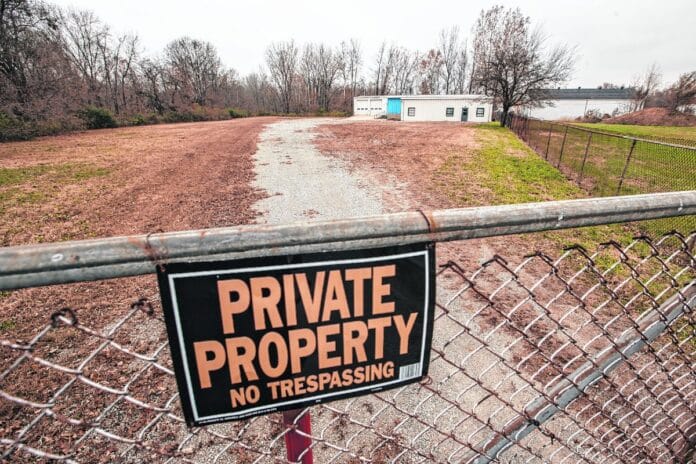
Columbus Parks and Recreation Board members will have a special meeting today to consider buying an environmentally-contaminated industrial building on Jackson Street which is owned by Columbus Mayor Jim Lienhoop’s aunt.
The board will convene for a special meeting at 2 p.m. today at Columbus City Hall’s council chambers to consider the purchase agreement with Norma Lienhoop, an agreement which has been in negotiations since last year.
Columbus Parks and Recreation Department has been hoping to buy the vacant former Machinery Moving building at 1360 Jackson St. for months. Mayor Jim Lienhoop has recused himself from all negotiations or decisions about the building and has repeatedly referred all questions about the transaction to parks officials handling the negotiations.
Parks board members said in March they would not purchase the property unless environmental issues from underground storage tanks were cleaned up without using any local tax dollars. The contamination on the property, revealed in two environmental evaluations from an outside contractor, includes benzene and other petroleum-related chemicals that were found in soil and groundwater on the property.
The city began searching for grants to pay for the chemical contamination cleanup this spring, parks officials said in March. A state grant from Indiana Brownfields, a statewide program that assists in the redevelopment of brownfield properties, agreed to pay for remediation of the site, but only if the property is in the city’s ownership — not owned by a private citizen such as Norma Lienhoop.
Columbus Parks Director Mark Jones said the city is purchasing the property on Indiana Brownfield’s timeline to ensure no local tax money is used to pay for any remediation. Indiana Brownfields gave the city a July deadline to complete the purchase of the Norma Lienhoop property.
Parks officials and Norma Lienhoop reached a purchase agreement price of $205,000 for the property after a final appraisal and environmental study were completed, according to the purchase documents provided to parks board members. The previous asking price would have cost the city $250,000 in city capital funds and one $50,000 payment from its cash reserve.
The price was reduced because of the newly-determined cleanup efforts, meaning the current property owner will get less money for the property because of the necessary remediation, said Mary Ferdon, executive director of administration and community development for the city.
If the parks board agrees to make the purchase today during the special meeting, the city will make payments in the amount of $34,166.67 for six years to pay for it.
Jones said the parks department wants to use the property as a storage facility because of its proximity to downtown Columbus and other city buildings. It would be used to store mowers and other equipment closer to park property around the downtown area.
Soil borings at the property of the former Machinery Moving Inc. property indicated the chemical contamination may have come from underground storage tanks. The property had three underground fuel storage tanks installed between 1972 and 1976. While state records indicate those tanks were removed in 1989, Jones said engineers could find no local documentation that confirmed their removal.
In an executive summary provided by Indianapolis-based Ark Engineering Service in Phase I and Phase II environmental reports, company officials said they did six soil borings to collect soil and groundwater samples. The company also collected wipe samples within the interior of the buildings to “evaluate for the presence and/or absence of chemical impacts to building surfaces associated with historic site maintenance and storage operations.”
Machinery Moving Inc., an industrial rigging facility, set up small and large heavy machinery at off-site factories and manufacturing facilities. Operations included transportation and storage of various types of machinery until early 2018, according to Ark.
The former Machinery Moving Inc. site consists of two, single-story vacant office and warehouse buildings, with an asphalt and gravel parking lot and landscaping on three parcels of land, taking up just over 2 acres.
Ark reported that the soil showed chemical impacts exceeding the Indiana Department of Environmental Management Remediation Closure Guide, Residential Migration to Groundwater Screening Levels and Residential Direct Contact Screening Levels for several petroleum hydrocarbon constituents. These included benzene, ethylbenzene, 1,2,4-trimethylbenzene, 1,3,5-trimethylbenzene, xylenes, 1-methylnaphthalene, 2-methylnaphthalene and naphthalene.
Petroleum hydrocarbon substances in the form of benzene, 1-methylnaphthalene, 2-methylnaphthalene and naphthalene were found in groundwater in amounts that exceeded IDEM’s Residential Screening Levels, the report stated. Benzene was also found exceeding IDEM Residential Vapor Exposure Screening Levels, the report stated.
The wipe samples did not reveal chemical contamination that exceeded applicable IDEM screening parameters, the company said.
Ark officials said the soil contamination was found in two soil borings, and the groundwater contamination in one soil boring in the presumed area where the company may have had the underground storage tanks, the document states.
“Based on the results of this limited investigation, both soil and groundwater impacts do not appear to be widespread and appear to be limited to the area of the historic USTs, (underground storage tanks),” the report states.
“Although this area of impact is not widespread, additional investigation will be necessary to fully characterize the nature and horizontal extent” of the contamination, the report states.
[sc:pullout-title pullout-title=”About the property” ][sc:pullout-text-begin]
The vacant former machinery moving building at 1360 Jackson St. is owned by Norma Lienhoop, aunt of Columbus Mayor Jim Lienhoop.
Soil borings at the property of the former Machinery Moving Inc. indicated the chemical contamination may have come from underground storage tanks. The property had three underground fuel storage tanks installed between 1972 and 1976. While state records indicate those tanks were removed in 1989, Jones said engineers could find no local documentation that confirmed their removal from the property.
[sc:pullout-text-end][sc:pullout-title pullout-title=”If you go” ][sc:pullout-text-begin]
What: Columbus Parks and Recreation Board special meeting
When: 2 p.m. today
Where: Columbus City Hall, 123 Washington St., in the city council chambers
[sc:pullout-text-end]
HOPE — A First Fridays Hope Cruise-In will be from 5 to 8 p.m. Aug. 2 on the east side of the square.
Main Street of Hope is sponsoring the Cruise-In and will be awarding prizes for the car show.
The Hauserboyz will perform starting at 6 p.m.
There will also be a bake contest, with baked items to be dropped of between 5:15 and 5:45 p.m. at the Hope Library Annex, 619 Harrison St., for judging. A grand champion, first runnerup and second runnerup will be named for the best dessert recipe.
Cakes, pies, cookies, cheesecakes and other desserts will be accepted and there is a $5 entry fee per dessert. Items should be submitted for judging in a disposable container.
The winning baked items will be auctioned off from the bandstand during the event.
