Home Blog Page 17421

ASAP Hub on track for August opening

Volunteers demolish the old Arvin safe in the old United Way of Bartholomew County offices in Columbus, Ind., Friday, April 12, 2019. The safe was demolished to make way for the new Alliance for Substance Abuse Progress (ASAP) Hub offices. Mike Wolanin | The Republic

Bartholomew County residents can access a new addiction recovery resource center as soon as Aug. 1 if all goes according to plan, said Nathan Walsh, manager of the Alliance for Substance Abuse Progress Hub.

The county alliance, commonly referred to as ASAP Inc., is an organization formed to provide prevention and recovery services to people affected by the opioid crisis in Bartholomew County.

Since December 2018, the ASAP board of directors has worked to set up the hub, a physical location where people seeking treatment will find referrals and assistance in recovering from addiction. At the board’s Wednesday meeting, Walsh offered an update on the current standing of the facility at Doug Otto Center near downtown Columbus.

Renovation of the 1,600-square-foot space at 1531 13th St. began in March and was originally predicted to be complete by July. Walsh said the construction crew, made up of local volunteers, has faced some setbacks, including the necessary removal of a vault, electrical issues and wet concrete briefly halting operations.

[sc:text-divider text-divider-title=”Story continues below gallery” ]

Nevertheless, Walsh said he’s pushing hard to make the Aug. 1 opening happen.

“This thing is coming to life,” Walsh said. “People are coming to City Hall for it to come to life. It’s not perfect. We’re going to fall and stumble, but people starting to hear about it and using it already.”

ASAP’s interim executive director Jeff Jones said when discussion of the hub originally started, Jones said the ASAP team recognized a need to brand the hub in a way for people who need help to know it was for them.

“We looked at a lot of different options, but we decided with the help of an outside company that the ASAP brand was strong. It needed to be the best way to create awareness and refer to it as the ASAP Hub, but call it a recovery resource center,” Jones said.

“It’s about recovery. We wanted to be a resource. We wanted treatment providers to see it as a resource center. We wanted the courts to see it was a resource center. We wanted the clients to see it as a resource center.”

Already, Jones said the space is shaping up beyond his wildest dreams.

“The effort that’s been made there, the volunteers from Mission Columbus, Cummins, there are superheroes out there — the list goes on and on –making things happen for us,” Jones said. “The community has really stepped it up.”

In alignment with the hub’s estimated opening date, Jones also announced plans to host a community progress report event on Aug. 26 at The Commons. As ASAP emerges into a system of support with increased capabilities and the establishment of the hub, Jones predicts this event could build community awareness of Bartholomew County’s support system.

“One of the things we’re recognizing is people that support us will show up,” Jones said. “That’s great. We want all of our supporters there. But this is just as much aimed at people we’re going to serve. We’re ready to let the community know we’re ready to serve. It’s going to be a major opportunity to accelerate from that point forward.”

[sc:pullout-title pullout-title=”To learn more” ][sc:pullout-text-begin]

To learn more about the Alliance for Substance Abuse Progress (ASAP) in Bartholomew County, go online at asapbc.org.

[sc:pullout-text-end]

Silent no longer: Bartholomew County taking action to reduce youth suicides

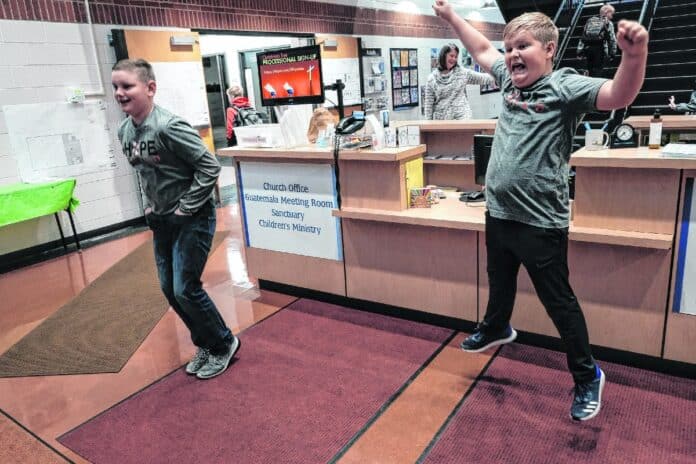
St. Peter’s Lutheran School Hope Squad members Drew Schiefer, left, and Ryan Lienhoop wait to greet students at the start of the school day at St. Peter’s Lutheran School in Columbus, Ind., Wednesday, Nov. 28, 2018. Mike Wolanin | The Republic

The numbers are alarming.

Bartholomew Consolidated School Corp. student assistance coordinator Larry Perkinson acknowledges that.

In 2019, an average of 35 percent of BCSC students in Grades 6-12 reported feeling sad or hopeless for two or more weeks in a row — a nearly 5% increase since 2017, according to the Indiana Youth Survey.

This year, about 17% of BCSC students in Grades 6-12 reported that they had considered suicide at least once. Just over 14% of students in Grades 6-12 said they made a plan about suicide once in their life.

[sc:text-divider text-divider-title=”Story continues below gallery” ]Click here to purchase photos from this gallery

Perkinson knows. School district leaders are aware. Teachers see it in their classrooms. Students notice it in their peers. But BCSC isn’t alone.

Suicide was the second leading cause of death among individuals between the ages of 10 and 34 in 2017, according to the Centers for Disease Control and Prevention. Suicide rates increased in nearly every state from 1999 through 2016. Data from the CDC found that nearly 47,000 people in the United States died because of suicide in 2016.

Perkinson said 2018-19 was the first school year since 2008 when BCSC did not have a youth suicide in its district.

“We have to stay focused on what we can do,” Perkinson said. “It is difficult to understand the inner struggle that so many youth and adults face, isn’t it? Yet schools and communities have chosen not to remain silent.”

Members of the Columbus community are stepping up to the plate to ensure no more lives are lost to suicide. Through peer mentoring, trauma-informed care, counseling programs and even a national initiative called Hope Squad, people of all ages across Columbus are starting the conversation.

Motivated to help

Jennifer Wright-Berryman knew a part of the issue was that communities don’t talk openly about suicide. Berryman, a former professor at IUPUC, started a public conversation in Columbus via social media and was motivated to do community-based work.

Her career focused on teen and youth suicide, and she started searching for programming that local schools could implement. That’s how she discovered Hope Squad, a suicide prevention program.

“Suicide rates, even though they’re increasing, what we don’t understand is that for every one suicide death, there are like 100 attempts,” Berryman said. “What we really want to be thinking about is suicide attempts — the numbers we don’t know.

Berryman said what’s not known is how many kids sustain personal injuries or mental health crisis.

“We look at suicide death rates as a measure, but that measure doesn’t really tell the story of what our youth are going through,” Berryman said. “We put Hope Squad in place so that we don’t have deaths, but what it does over time is it changes the schools so it reduces things like attempts and other suicide-related behaviors.”

The program, which originated in Utah after the death of a high school student in 1998, is now in more than 400 schools across the United States and Canada.

Bartholomew County is home to two Hope Squads, one at Ivy Tech Community College and another at St. Peter’s Lutheran School. The Junior Hope Squad at St. Peter’s is composed of 15 students in Grades 4-6 who were nominated by their peers, said Violet Dickerson, St. Peter’s Lutheran School counselor and Hope Squad coordinator.

Students help classmates

Members of the St. Peter’s squad meet every Tuesday morning during the school year to receive training about how to be a good listener, self care, good secrets versus bad secrets and how to identify someone who may want to harm themselves through body language and phrases.

“It’s very exciting to know students who possess good empathy and are caring and good listeners, that we could equip them to be good connectors. These students are already on the front lines,” Dickerson said. “They’re already getting approached by friends who say, ‘I’m just not happy. What if I never came to school anymore?’

Dickerson said students are feeling isolated and alone, and they tend to tell their peers before they tell any other adults. When a student approaches a Hope Squad member about their feelings, the Hope Squad member is trained to connect them with an adviser who could then talk to them and refer them to additional help.

Five students from each grade level 4 through 6 serve on the St. Peter’s Hope Squad and act as what Dickerson calls the “eyes and ears of the school.” When they see a student eating lunch alone or playing on the playground alone, squad members are encouraged to reach out to those students.

“This year we had more referrals to kids talking about suicide than any other year and I think that was because we have Hope Squad in place,” Dickerson said. “Not every referral was an immediate threat, but now they’re on our radar and we can check in with them.”

Ivy Tech’s Hope Squad is still functioning, but Ivy Tech spokesperson Chris Schilling said it is in a holding pattern as the college fills its vice chancellor of student success position, which oversees the Hope Squad.

BCSC does not have a Hope Squad in any of its 18 school buildings, but Perkinson said the corporation applauds the leadership and help that Hope Squad does bring to the county’s youth.

Peer mentoring is something Perkinson said BCSC has implemented in its high schools to help address the problems that students encounter.

“Developing peer mentors helps young people create the same kind of supports and positive, caring atmosphere that adults are striving to build as well,” Perkinson said. “The numbers indicate that we have to make an effort to connect with those around us. Having people who care and who provide support creates hope.”

Another outreach

The district-wide Counseling Counts initiative is another method that BCSC is using to ensure its students are receiving the care and treatment they need.

Doug Moore, a retired Columbus East counselor and implementer of the Counseling Counts grant, said the corporation applied for the $1.1 million grant from the Lilly Endowment to help students who are dealing with drug and alcohol abuse, suicidal thoughts, homelessness and other issues.

BCSC has used the funding to develop a two-tiered approach focused on prevention and providing resources to prekindergarten through 12th-grade students through a community-based system approach with health partners such as Centerstone, Family Services Inc. and Columbus Regional Health.

Moore said the district identified multiple goals it wants to achieve through Counseling Counts. A major goal was to place mental health workers in each of the district’s 18 school buildings, allowing school counselors to shift their focus from the social and emotional well being of students to the more traditional guidance-counselor support for students.

The district achieved that goal, and Moore said they hope to add more therapists to the schools throughout the remainder of the grant, which ends in 2021.

Through the two-tier system, BCSC has also created a universal recommendation form for students to be recommended to outside mental health providers, birthed a student support hotline designated for BCSC students and families and established an environment for the developmental assets framework.

“We’re a community that recognizes that there are developmental assets — that if we can connect with kids, if we can provide someone they’ll talk to, if they learn to trust teachers, if we can develop those assets that allow them to trust teachers, the neighborhood, the community,” Perkinson said. “School’s not just about school grounds. It’s about who in our community is going to respond to take care of us.”

Youth with more assets are more likely to do well in school, be civically engaged and value diversity. They are least likely to have problems with alcohol use, violence, illicit drug use and sexual activity, according to the Search Institute, a nonprofit organization that founded the developmental assets framework.

Beyond the Counseling Counts grant, the BCSC school board also approved a measure in April to transition the district’s three high schools from a traditional schedule to a block schedule beginning in the 2020-21 school year. A block schedule means students would alternate different classes between two days with longer class periods.

Columbus North principal David Clark stressed in a March 4 presentation that a block schedule is not only about getting more content into longer class periods, but is also about helping students through social and emotional learning opportunities.

More to do

But even with all the new changes that Bartholomew County schools have implemented over the last several years, Dickerson said there’s still work to be done.

“There’s a lot of shame and stigma around mental health illnesses and suicide,” Dickerson said. “It’s not talked about. If it’s not talked about, we don’t know how it’s affecting our school. Put it in the spotlight. If you’re struggling, we’re going to take care of you.”

Perkinson echoed Dickerson’s comments.

“Bartholomew County works together,” he said. “Agencies and schools share language, initiatives and concerns. The schools, the counseling community, law enforcement, court services, our health services, youth agencies — I can’t name all the groups involved, but I can tell you that I hope every other country does the same. No single entity can address the issues alone that our kids and families face.”

[sc:pullout-title pullout-title=”What is Hope Squad?” ][sc:pullout-text-begin]

Hope Squad is a school-based peer support program that empowers selected students to take action to improve the school environment. Hope Squad members are trained to recognize if they or their peers are at risk for suicide as well as how to encourage peers to seek help from a trusted adult.

Source: Hope Squad

[sc:pullout-text-end][sc:pullout-title pullout-title=”National Suicide Prevention Lifeline” ][sc:pullout-text-begin]

National Suicide Prevention Lifeline: 1-800-273-8255

If you’re thinking about suicide, are worried about a friend or loved one or would like emotional support, the National Suicide Prevention Lifeline network is available 24/7 across the United States.

[sc:pullout-text-end][sc:pullout-title pullout-title=”About Counseling Counts” ][sc:pullout-text-begin]

To learn more about Bartholomew Consolidated School Corp.’s Counseling Counts grant, visit bcsc.k12.in.us/domain/3182.

[sc:pullout-text-end]

Service Rewarded / Wrestling coach, rink manager named Cramer Award winners

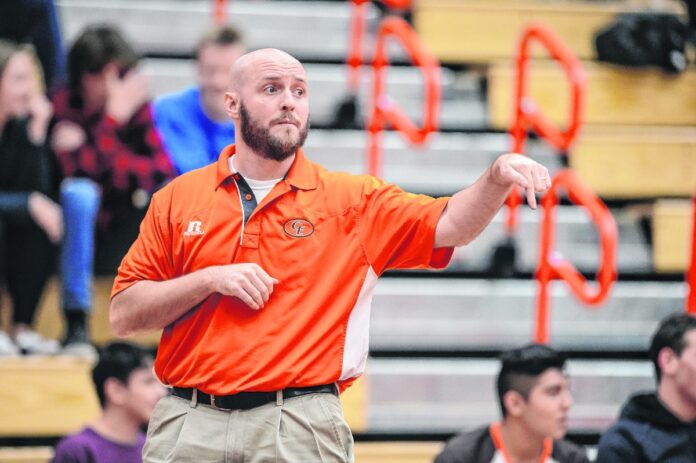
Columbus East wrestling coach Chris Cooper signals for wrestler Kenton Wilson to start the second period in the down position during a wrestling meet against Franklin at Columbus East High School in Columbus, Ind., Thursday, Dec. 6, 2018. Mike Wolanin | The Republic

Chris Cooper was born and raised here in Columbus. Carleen Fry grew up in Champaign, Illinois.

Cooper works in a high profile job. Fry is in more of a behind-the-scenes operation.

While their backgrounds and occupations couldn’t be much different, Cooper and Fry now share a prestigious honor. They were selected earlier this week as this year’s male and female winners of the Jack Cramer Ideals of Athletic Competition Award.

Cooper, 39, has built Columbus East into a state wrestling power. He took over as head coach in the 2003-04 season after two years as an assistant. He led the Olympians to the first Hoosier Hills Conference title in school history in 2011 and has added three more HHC championships the past three years.

[sc:text-divider text-divider-title=”Story continues below gallery” ]

Cooper also has led East to six sectional titles, including the past four, and the past three regional crowns. His teams have finished 11th at state in 2016, seventh in 2017, third at in 2018 and fifth this year.

In 2018, Cooper was named state Coach of the Year by both the Indiana High School Wrestling Coaches Association and the National Wrestling Coaches Association.

“He took over a program that was in real need of an infusion of a get-after-it-type attitude,” said Eric Wohlford, who nominated Cooper for the award. “When he started, they were pretty low on the totem pole, and they were losing continually to Columbus North. It’s got to a point where they’re perennial state contenders.”

Cooper was an All-Conference offensive lineman in football and did not start wrestling until his junior year of high school.

“He was very quiet, unassuming, never heard a word out of him,” Wohlford said. “He led by example and was just a great guy. His whole family is that way.”

Cooper attended Purdue and graduated in 2001 with a degree in flight technology.

“I was in the hiring pool at Chautauqua Airlines, and then 9/11 really put a lot of strain on that market,” Cooper said.

So Cooper worked at Cummins Data Center for four years, and in the meantime, went back and earned a math degree from Indiana University after beginning his coaching career. He landed a teaching job at Central Middle School in 2008, then moved over to East High School two years later.

Cooper learned of his selection while in Orlando, Florida, coaching the Olympians in the Disney Duals. They returned home on Thursday.

“It’s nice to be recognized, but it’s not something necessarily that you expect,” Cooper said. “I’m from Columbus. My entire family is from Columbus. It’s nice to have other people recognize what we’re doing. We work pretty hard, and we’re here trying to build our program for the community, and it’s nice to be recognized for that.”

Meanwhile, Fry, the rink manager at Hamilton Community Center and Ice Arena, found out about her selection a little earlier.

Moments after the selection process took place in the arena’s conference room on Tuesday, Fry’s bosses with Columbus Parks and Recreation, Mark Jones and Nikki Murphy, walked across the lobby to give her the news.

“I was very surprised,” Fry said. “This doesn’t feel like a job to me. It’s just something I really love to do. I have a passion for this rink. I think it’s great, so to me, it’s something I do. I don’t look at it like a job. I look it as a passion that I love to do. I love working with the kids and the adults and helping the kids with the skating and everything.”

Fry, 57, grew up in Champaign, Illinois, and went to Patricia Stevens College in St. Louis when it was an All-Girls school. She moved to Columbus in 1987.

Fry has been the rink manager for eight years. Prior to that, she was a stay-at-home mom to her three kids, who are now grown.

“Hamilton is like a family to all of us,” Fry said. “We kind of all grew up here.”

Murphy nominated Fry for the award.

“I think if you look at the ideals for the Jack Cramer Award, she may not be the traditional nomination in the sense that it is not her necessarily performing athletic feats, but she spends every minute of her day preparing young and adult athletes to go out and live those ideals,” Murphy said.

[sc:pullout-title pullout-title=”Cramer Award winners” ][sc:pullout-text-begin]

Name: Chris Cooper

Age: 39

High school: Columbus East

Colleges: Purdue, Indiana University

Residence: Columbus

Occupation: Math teacher and head wrestling coach at Columbus East

x

Name: Carleen Fry

Age: 57

Hometown: Champaign, Illinois

College: Patricia Stevens All-Girls College in St. Louis

Residence: Columbus

Occupation: Rink manager at Hamilton Community Center and Ice Arena

[sc:pullout-text-end]

Vanguards relishing underdog role

Columbus Vanguards' Tawanna Sanders, center, puts pressure on Maine Mayhem quarterback Paula Beaulieu (9) during a Women's Football Alliance playoff game at Columbus North High School in Columbus, Ind., Saturday, June 15, 2019. Mike Wolanin | The Republic

When the Columbus Vanguards visit the Orlando Anarchy in the Women’s Football Alliance Division III Eastern Conference final Saturday night, the Vanguards will be decided underdogs.

The Anarchy are the defending Division III national champions and are ranked No. 1 in the Massey Rankings. The Vanguards are ranked No. 9.

“Right now, we’re the underdogs, but I don’t think these ladies would have it any other way,” Vanguards coach Kenny Haworth said. “They like being listed as the underdogs. I think they realized that during our Toledo game during the regular season that being an underdog is not a bad thing. We had a 12 percent chance, according to the Massey Rankings, to win that game, and we came out on top 47-7.”

The Vanguards, who advanced with a 14-0 regional win against the Maine Mayhem June 15 at Columbus North, have the No. 3-ranked defense in Division III. The Anarchy have the No. 1-ranked offense and No. 2-ranked defense.

[sc:text-divider text-divider-title=”Story continues below gallery” ]

“They like to throw the ball,” Haworth said. “That is one thing that they do very well. They have a couple great athletes. I’ve been watching film ever since the end of our last game, making sure we take care of their playmakers and working with (offensive coordinator) Drew (Parsley) to make sure we have a good game plan.”

The Vanguards will be missing one of their key players. Running back-strong safety Tyra McGrady, a former Columbus East track standout and national team rugby player, has some fractures in her hand after getting it caught in a facemask in the win against Maine.

“She said she had some issues prior, and that game was just the icing on the cake,” Haworth said. “It broke her heart. She sent us all a message. I’m hoping she can heal, and if we move to the next level, I hope she can join us.”

Haworth said LaEssence Houston Buckner, the other starting running back, will fill in for McGrady at strong safety. Houston Bucker, who scored both touchdowns for the Vanguards against Maine, took a facemask to the forehead after her helmet came off while carrying the ball, but she was able to finish that game.

“She feels like she can pretty much with a couple breaks go the whole way,” Haworth said.

The regional game against Maine was marred by a pair of lightning delays totaling 4 1/2 hours. Parsley, who lives in Shelbyville, delayed a vacation to Myrtle Beach so he could coach in that game, but had to leave during the second lightning delay.

Parsley had negotiated with his girlfriend to push the vacation back a day, and since he was planning to propose to her at the beach, he didn’t want to make her wait any longer to leave. He ended up proposing last week, and she said “Yes.”

Saturday’s game will be at 7 p.m. at Winter Haven High School. The coaches and most of the players are leaving this morning and plan to stop for the night in Valdosta, Georgia. A couple of them, including Haworth’s daughter, free safety Brittney Langley-Haworth, have to work through tonight and will fly to Orlando on Saturday.

The Vanguards, who are in their second year, played their home games at Knightstown High School until securing North for their regional game. Following that game, as the clock approached 1 a.m., North athletics director Jeff Hester congratulated Haworth and told him to consider that their home field going forward.

“I’m so happy about that,” Haworth said. “He said as long as the field is available, we should consider that our home. I would love to see Columbus watch these ladies play.”

Police nab wanted man fleeing on bicycle

Zackary Townsend

COLUMBUS, Ind. — A wanted Columbus man tried to escape arrest on a bicycle, but was apprehended by police.

At about 2:45 p.m. Thursday, a Columbus Police Department officer observed Zackary C. Townsend, 29, 112 Cherry St., Columbus, riding a bicycle near 11th and Chestnut streets, said Lt. Matt Harris, CPD spokesman.

Please read Saturday’s edition of The Republic for more details.

Police recover stolen vehicle, arrest driver

Kyra Anderson

COLUMBUS, Ind. — A Pontiac G6 reported stolen in 2017 from Jackson County was recovered following a traffic stop and arrest Thursday night in Columbus.

Columbus Police Department officers arrested the driver of the vehicle, who was identified as Kyra S. Anderson, 28, of 611 Garden St., Columbus.

Please read Saturday’s edition of The Republic for more details.

CR 400N closure extended through Saturday

newspaper stackSimilar images:

COLUMBUS, Ind. — County Road 400 North, from U.S. 31 east to the bridge, will be closed through Saturday afternoon so the new pavement can be striped and the project completed, the Columbus Engineering Department said.

Milestone is paving the road today. Drivers will need to find an alternate route.

The plan to pave last week was canceled due to the weather.

Deer hunt signups begin Monday

COLUMBUS, Ind. — Deer hunters can begin registering Monday for deer hunts with participating landowners and for reserved deer hunts through programs administered by the Indiana Department of Natural Resources’ Division of Fish & Wildlife.

The new Deer Hunt Registry system connects deer hunters with landowners, golf courses, parks, land trusts, farmers and communities. For more information or to sign up, go online at on.IN.gov/deerhuntregistry.

Deer hunters can apply online for a reserved hunt at on.IN.gov/reservedhunt.Deer. The online method is the only way to apply, the DNR said.

Please read Saturday’s edition of The Republic for more details.


Cummins buying hydrogen fuel cell company

COLUMBUS, Ind. — Cummins Inc. announced today that it has entered into an agreement to purchase a company that develops and manufactures fuel cell modules and hydrogen generation equipment.

Columbus-based Cummins, a global diesel engine maker and power systems manufacturer is continuing its foray into alternative power systems with the purchase of Hydrogenics Corporation.

Cummins has agreed to purchase, through a wholly-owned subsidiary, all the issued and outstanding shares of Hydrogenics for $15 per share in cash, representing a value of about $290 million, Cummins said.

Please read Saturday’s edition of The Republic for more details.

Former mayor wins lawsuit against CPD

Columbus Police department squad car

Kristen Brown

Kristen Brown

COLUMBUS, Ind. — A judge has ruled in favor of former Columbus Mayor Kristen Brown in her lawsuit against the Columbus Police Department involving her public-records request for information related to an incident involving two Bartholomew County government employees, a parole supervisor and jail commander.

Brown filed the lawsuit Feb. 17, 2017 after she said the police department failed to comply with her request for information related to the Sept. 8, 2016 incident.

Special Judge Richard Poynter, from Jackson County, ruled June 17 that “Brown has ‘substantially prevailed’ in her action” and that “CPD shall pay Brown’s reasonable attorney’s fees, court costs, and expenses incurred in this matter,” according to the court document.

In the ruling, Poynter said, “The Court agrees with the Public Access Counselor that the CPD provided ‘insufficient detail’ to Brown in response to her public records request.”

Poynter, however, did not assess a $100 civil penalty that could have been levied, according to state law.

This story will be updated. Please read Saturday’s edition of The Republic for more details.