Home Blog Page 17427

Religion News June 29

Religion News

Services and studies

Dayspring Church Apostolic — Worship begins at 11:15 a.m. at the church, 2127 Doctors Park Drive, Columbus.

Every visitor will receive a free gift.

Bible study will be at 5:30 p.m. Tuesday and takes a deep dive on the message from the previous Sunday.

Prayer of Power starts at 5:30 p.m. Tuesday and takes a deep dive on the message from the previous Sunday. The Celebrate Recovery session starts at 6:30 p.m. for about an hour.

Ignite is the Youth Growth Session that happens every third Friday.

Information: 812-372-9336; dayspringchurch@att.net.

Fairlawn Presbyterian — Worship begins at 9:30 a.m. led by the Rev. Elizabeth Kirkpatrick, followed by fellowship time.

Child care is available during Sunday services and second hour studies.

A men’s breakfast is 7:30 a.m. the second Saturday of every month for men of all ages.

The Last Friday’s Bluegrass event is 7:30 p.m. the last Friday of every month. All are welcome to bring an instrument and play along or simply enjoy the music.

Collections and donations for Love Chapel are canned fruit in June.

The church is located at 2611 Fairlawn Drive in Columbus.

To contact the church or for more information: 812-372-3882 or office@fairlawnpc.net.

First Presbyterian — First Presbyterian and First United Methodist Church are partnering on a Vacation Bible School, so on Sunday the worship and sermon will focus on the VBS theme of “Who is My Neighbor?” (Luke 10:25-37) Worship begins at 9:30 a.m. at First Presbyterian, 512 Seventh St. in Columbus.

Infant and toddler care is available 9:15 a.m. to noon.

The men’s and women’s support groups meet on Fridays at 7 a.m., and a second men’s support group (working age men) meets every Monday at 6:15 a.m.

People in the community in need of a meal are invited to our Hot Meals offered Friday at 5 p.m. (please enter through the glass doors on Franklin).

First Presbyterian is an LGBTQ-friendly church that is open and affirming to all.

Information: fpccolumbus.org

First United Methodist — On Sunday, at the 9 a.m. Traditional Service and the 11 a.m. Celebration Service, Pastor Sarah Campbell will deliver the message, “Inheriting the Mantle,” at the church, 618 Eighth St., Columbus. The scripture will be 2 Kings 2:1-2, 6-14.

Child care is available during both services.

Information: 812-372-2851.

Flintwood Wesleyan — The 9 and 11 a.m. Sunday service will be led by the Rev. Wes Jones, senior pastor, at the church, 5300 E. 25th St., Columbus.

On Thursdays, Cub Scout Pack 588 will meet when events are scheduled and Boy Scout Troop 588 will meet at 7 p.m.

The Prayer Team meets at 8 a.m. Sunday school classes meet in their regular rooms. Choir practice is at 5 p.m.

Celebrate Recovery begins with a meal at 5:25 p.m. in the Friendship Center and the meeting starts at 6 p.m. in the main sanctuary. The public is invited to attend.

Wednesday activities for the summer begin with the Prayer Team meeting at 6 p.m. in the Prayer Room. Bible study is at 6:30 p.m. in The Friendship Center. Parents can still come to Bible study even though GLOW has ended. There will be activities for children pre-school through the 4th grade in the basement of Curry Hall.

The monthly SAM luncheon will be from 11:30 a.m. to 1 p.m. July 11 in The Friendship Center.

Information: 812-379-4287; flintwoodoffice@gmail.com; flintwood.org.

Garden City Church of Christ — Pastor Brian Gilroy is the lead minister and Pastor Brian Graves is the family life minister.

The church is located at 3245 Jonesville Road, Columbus.

Information: 812-372-1766.

Grace Lutheran — At the 8 and 10:30 a.m. services the Rev. John Armstrong will be will bringing the message based on Luke 8:26-39.

Adult Sunday school starts at 9:30 a.m.

A special all-ages Sunday school will 11:30 a.m. to 1 p.m. Sunday. Light refreshments will be served.

Women’s Bible Study resumes at 9:30 a.m. Tuesday.

The church is located at 3201 Central Ave., Columbus.

Memorial Baptist — Worship begins at 9:30 a.m., at 2320 Seventh St., Columbus.

Sunday school classes for all ages follow at 10:45 a.m. There are programs for both children and youth as well.

Information: 812-376-6800.

Old Union United Church of Christ — Sunday service is at 10 a.m.; it is the third Sunday after Pentecost. Sunday school is at 9 a.m., followed by fellowship at 9:40 a.m. Pastor Kirby Rupp will deliver the message, “Hope That Did Not Disappoint,” with readings from 2 Kings 2:1-2, 6-14; Galatians 5:1, 13-25; and Luke 9:51-62.

Wednesday Bible study is on a summer hiatus.

The church is located at 12703 N. County Road 50W, Edinburgh.

Information: Old Union United Church of Christ on Facebook.

Petersville United Methodist — At the 9 a.m. worship service, the Rev. Stormy Scherer-Berry will deliver the message “Leader Esther, Part 3.” Scriptures will be given from Esther 4:12-14 by Karen Mize, at the church, located at 2781 N. County Road 500E, Columbus. Teresa Covert will give the children’s sermon.

The offering of loose change will go to Love Chapel through the last Sunday in June.

A time of fellowship will follow the service.

Thursday morning Prayer Time, led by Barb Hedrick, will begin at 10 a.m. at the church.

The United Methodist Men’s group will meet at 7:15 a.m. July 7 in the fellowship hall.

Information: 812-546-4438 or 574-780-2379.

St. Paul Lutheran — At the 8 and 10:45 a.m. services, Pastor Doug Bauman will be delivering the message at the church, 6045 E. State St., Columbus.

Information: 812-376-6504.

Unitarian Universalist Congregation — At the 10 a.m. service on Sunday, Jeannine Lee Lake will give the message, “Words from Jeannine Lee Lake,” at the church, 7850 W. Goeller Blvd, Columbus.

Jeannine Lee Lake, a 2018 candidate for the U.S. House of Representatives for Indiana’s 6th District, will be with the church to share her experiences and perspectives. Jeannine is the editor, publisher and CEO of “The Good News”, a bi-monthly free publication that highlights the achievements and notable events of minorities and religious leaders in Muncie. She sits on the boards of Big Brothers Big Sisters and the Muncie Matters Alliance.

Information: 812-342-6230.

Westside Community — At 10 a.m. Sunday, Pastor Dennis Aud will lead the service at the church, at State Road 46 West and Tipton Lakes Boulevard, Columbus. The children’s program for children of all ages through sixth grade begins at the same time.

WCC will be hosting a blood drive from 3 to 5 p.m. on July 11. Blood supplies are often depleted in the summer months. Please consider signing up online at donorpoint.org/ donor/schedules/ drive_schedule/127791.

Information: 812-342-8464.

Music

Lowell General Baptist — There will be a hymn sing at 7 p.m. July 6. The featured singers will be The Trinity Gospel Aires.

The church is at 2102 Southline Drive, Columbus.

Information: 812-546-4363

Events

East Columbus Christian — The church presents Fuel on Wednesday nights, which includes a free meal and Bible study from 6 p.m. to 7:30 p.m.

It is located at 3170 Indiana Ave., next to Columbus East High School.

Flat Rock Christian — From 6:30 to 8:30 p.m. July 7 to 12, the church will host its 2019 VBS, “The Incredible Race, for ages 4 through Grade 6. There will be a light meal each evening at 6 p.m.

The church is located at 2854 West Pope St., Flat Rock.

Information: 812-587-5573.

Flintwood Wesleyan — The open market will be the first Saturday of each month through October, from 8:30 a.m. to noon. Local artisans will be set up, plus food booths and produce booths. If you are interested in renting a booth contact Kim Rutan in the church office.

Family Camp at the Orleans Campground is July 14-21. Evangelists are Dr. Tom Hermiz and Rev. Mark Wilson. Worship Leaders are Adams Voice and the Youth Rally speaker at 6 p.m. for July 14 is Pastor Jose Rivera. The closing concert is 4:30 p.m. on July 21 and will be Jonathan White & Sacred Calling.

The church is at 5300 E. 25th St., Columbus.

For more information, call 812-379-4287 or visit flintwood.org.

First United Methodist — The First United Methodist Church youth group will have several upcoming “Dine to Donate” events at local restaurants: 4 to 8 p.m. Sunday at Panera; and 5 to 8 p.m. July 2 at Chicago’s Pizza. Just tell the server/cashier that you are there for the FUMC Dine to Donate event and a portion of your meal will go towards the fundraiser for their trip to Alive this summer.

First United Methodist Church, as part of its Saturday Night Showcase Series, will present a concert at 7 p.m. July 27. This “Sing for Their Supper” concert, which benefits Love Chapel, will feature local artists, and is free and open to the public. Donations are encouraged.

Information: call 812-372-2851 or visit fumccolumbus.org.

First Lutheran — The church will host an Alzheimer’s Support Group meeting on the third Monday of each month from 4:30 to 6 p.m. The group will be led by Mary Ellen Wyman, the former executive director of the local Chapter of the Alzheimer’s Association, and will be open to the public. It is a peer-led group of caregivers who are providing support for those living with Alzheimer’s or a related dementia. This is not a group for individuals or patients diagnosed with dementia.

The church is at 3600 25th St., Columbus.

Heritage Baptist Church — There will be Financial Peace University classes beginning at 6 p.m. Sunday. The church is located at 1075 Second St., Columbus.

Information and registration: fpu.com.

St. Paul’s Episcopal — The church is hosting a Rite III Sunday Service at 9:30 a.m. Sunday.

The service will be followed by a Grand Smoked BBQ Potluck at 10:30 a.m. Bring your own dish to share.

The event is kid-friendly and all are invited to attend.

The church is at 2651 California St., Columbus.
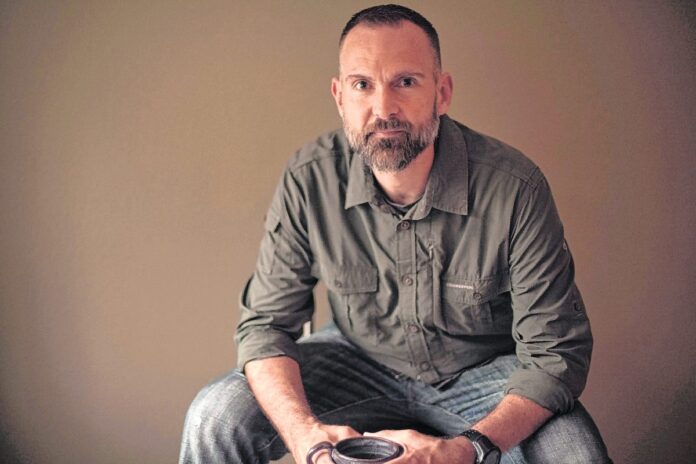
God’s intent for the cross was to restore relationship with us

Brandon Andress

In my previous column, I called into question the idea of God sending people to an eternity burning in hell, also known as eternal conscious torment.

As you can imagine, there were many responses and questions to the post.

There were those who asked, “What about God’s judgment?” And others who asked, “Are you saying that anything goes then?”

All great questions.

And while we will get to those questions later in the series, the most prominent and important question that will actually help us begin navigating this topic of hell is, “If there is no hell, then why did Jesus have to die on the cross?”

For those who asked that question, there is an inextricable connection between the cross and hell.

Within this framework, the cross is the only thing that keeps people from going to hell, because it is where God’s anger and wrath were directed on Jesus rather than us. Jesus literally absorbed all of God’s anger toward us because of our sins and, as a result saved us from God’s judgment and sentence to hell for eternity.

Deep breath.

If you go to any church service on any given Sunday or hang out with Christians long enough, you will very likely hear something like this, “Thank you Jesus for what you did on the cross for us.”

And what that means is, “Thank you Jesus for dying on the cross to save me from my sins.”

Growing up in church, I heard all about sin. I sang all the songs about how the only thing that would “wash away my sins” was the “blood of Jesus.” And I was told that I needed to be saved from my sins so that I wouldn’t go to hell when I die.

I had this idea that there were these sins that were infecting me and I was a terrible person for letting them do their bad work in me.

And if it wasn’t the old hymns that I sang that continued to tell me how “full of sin” I was and how I needed to “be made clean,” it was the Apostle Paul writing in Romans about how sin “rules” me and “enslaves” me. That sin “seized” the opportunity and “sprang to life” in me. That sin was “living” in me and “putting (me) to death.”

The implication was that these entities, these sins, were active and alive and doing something to me. And that to be “saved” I needed to be washed of these sins that I have allowed to rule, reign, enslave, deceive and kill me.

The thing we failed to recognize was that Paul was a writer who used literary devices to teach people and help them understand difficult concepts. In fact, after the section in which he uses personification to bring the concept of sin to life, he writes, “I am using an example from everyday life because of your human limitations.”

Paul straight up tells the people that he is using literary language since they are having a hard time understanding sin.

Paul anthropomorphizes sin, or gives it human characteristics, as a teaching tool.

But as modern day readers, we have a real tendency to read ancient Scriptures flatly and at face-value, taking everything literally. And as a result, we have taken this literary language and created theologies and doctrines about sin as an entity that infects us and enslaves us and that needs to be cleaned, cured, washed away and put into remission.

All the while, we have been told that we are horrible wretches who deserve God’s wrath, punishment and hell because of our sins. And then, we have turned Jesus and the cross into a cosmic magic trick to take away these sins, these dark stains, these evil blemishes so that we will be saved from God’s wrath and escape the flames of hell.

But of course, I have a few questions about all of this.

What if this narrative has been wrong all along? What if our misunderstanding of Paul’s literary language led us to certain conclusions about sin that were just plain wrong? What if sin isn’t something that has to be cured or put into “remission” in order to save us from hell? What if sin is something else entirely? And what if an accurate understanding of it will help us understand what hell really is?

I don’t know about you, but I am eager to find out.

I have previously written about the original Greek word for sin, hamartia, and that it means to be without a share in, or to miss the mark, or to stray. As you have heard before, it is a Greek archery term that indicates “missing the mark.” It is a relational position. In fact, to go a bit deeper, the root words for hamartia are- a/ (not) and /meros (a part, share of), which I find absolutely fascinating.

The word hamartia indicates that in our relational disunion with God, we are not taking part in our part or share of this abundance.

That is the definition of sin.

And it sounds a whole lot different than everything we’ve been told.

When we live out of our relational disunion with that which is life and love, namely God, our lives begin to look less than life and love. And that is truly what sin is. It is living out of disunion with God.

Sin is not a thing. Nor is it an entity that infects us. It is a position of disunion out of which we begin to live our lives. And our sins are simply an outflow of this broken relationship. So when you hear a line like, “For the wages of sin is death,” it is not talking about an entity that infects us and causes us to die. Rather, it is the price we pay for living in disunion from the one who gives life.

So it shouldn’t be a surprise that God’s intention for us has never been about sending us to heaven or hell because of our “sins.”

God’s intention has always been welcoming us back into a relationship, into union. It has always been about reconciliation, or bringing each of us back together with God in wholeness (shalom). It has always been about God offering us life in an abundant relationship and longing for us to enjoy our portion of this abundance.

You don’t believe me? Let’s look at a few parables and stories of Jesus. Because what you will discover is absolutely, positively mind-blowing. And I promise you have never looked at sin, the cross or the idea of hell from this perspective.

Brandon Andress of Columbus is a former local church leader, a Christian book author, a current iTunes podcast speaker and a contributor to the online Outside the Walls blog. His latest book is “Beauty in the Wreckage: Finding Peace in the Age of Outrage.” He can be reached at his website, brandonandress.com.

Assisted-living housing project for seniors underway

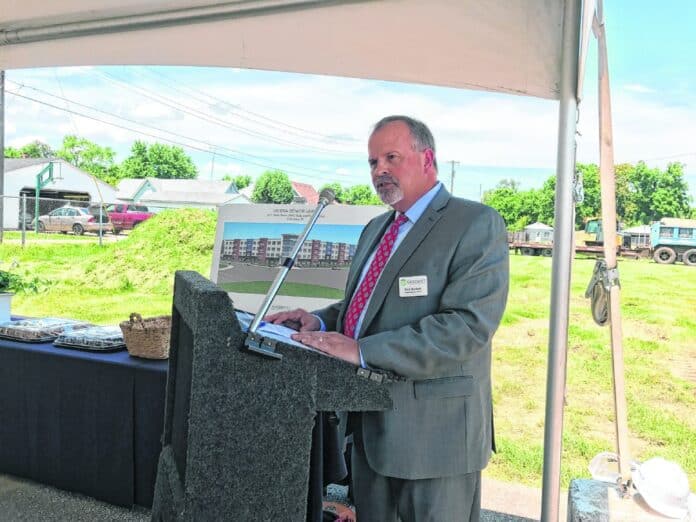
Gardant Management Solutions CEO Rod Burkett speaks during Thursday's groundbreaking ceremony of Vivera Senior Living of Columbus. Burkett's firm will provide various personal services for the elderly who will reside in the 114-unit affordable assisted living community being built at 1971 State St.

A project creating an affordable assisted-living community that will rise above the State Street corridor where the Bartholomew County Annex building used to be is officially underway.

The four-story Vivera Senior Living of Columbus is going up on the 2.37-acre vacant lot near State and Mapleton streets, where the State Street School was originally constructed in 1928. Nearly 30 people attended a ground-breaking ceremony Thursday afternoon at the construction site, which has been a vacant lot since late 2015.

Apartments in the 84,500-square-foot building, which will include 52 efficiency units and 62 one-bedroom units, will be unique in Bartholomew County, said Robin Hilber, Columbus community development programs coordinator.

Vivera will be the only affordable assisted-living facility that accepts government assistance immediately when a tenant moves in, she said.

Columbus Mayor Jim Lienhoop said Vivera Senior Living was exactly the type of investment the city was trying to attract when it launched improvements along the State Street corridor.

The assisted living facility is the first major development to occur along the State Street corridor since the first two phases of the city’s State Street Revitalization Project were completed, Columbus City Council member Dascal Bunch said.

Vivera could become a catalyst for future development on the city’s southeast side, Bunch said.

Available assisted living services will include bathing, grooming, dressing, toileting and personal hygiene. Staff will also be available to help with meals, shopping, medication delivery, transportation, housekeeping and laundry, Vivera said in a news release.

The services will be handled by the Bradley, Illinois-based Gardant Management Solutions, which is the 14th largest assisted living provider in the U.S., Vivera said.

Gardant, which currently provides these services to 61 similar developments in the Midwest, will have nearly a $1.8 million local payroll after hiring up to 60 people, company CEO Rod Burkett said.

All units at Vivera will be eligible to seniors age 62 or older whose income is at or below 60% of the area median income (AMI), according to Vivera. The AMI refers to the midpoint of a region’s income distribution, where half of families or individuals earn more than the median and the other half earn less.

Plans have been in development for the Vivera Senior Living of Columbus for two-and-a-half years, according to Jacob Brown, founder and principal of the Marion Group of Louisville, Kentucky.

The Marian Group, which is developing Vivera, targeted Columbus after a market study determined a local need, Brown said. The study, undertaken by a Chicago firm, determined that Columbus will need 125 to 180 affordable assisted living units by next year.

Brown said his firm was also looking for a municipality with strong city leadership and a strong economy, both of which Columbus has.

Contractors have a 16- to 18-month construction schedule, which means the complex could open its doors as early as October 2020, Brown said.

Brown said the total investment into Vivera will be between $23 and $24 million.

But, the project has public and private financial partners. For example, the Columbus City Council voted last summer to support Vivera’s request for the issuance of up to $15.5 million in revenue bonds to finance the facility.

Beside the bonds, some financing will come through non-competitive tax credits from the Indiana Housing and Community Development Authority, Brown said.

Last September, the vacant lot was designated as an economic revitalization area, which provided Vivera with a 10-year tax abatement.

[sc:pullout-title pullout-title=”About the project ” ][sc:pullout-text-begin]

What: Vivera Senior Living, an affordable assisted-living community for those 62 and older

Where: 1971 State St., Columbus

Units: 114 total (52 studio, 62 one-bedroom)

Amenities: Each unit will include a kitchenette with a sink, refrigerator and microwave. Assisted living services provided.

Project timeline: Estimated to be complete by summer 2020.

[sc:pullout-text-end]

Healing Waters Ministries opening child care center in August

One of the sets of toys in the child care center at Healing Waters Ministries, Wednesday, June 19, 2019. Carla Clark | For The Republic

Walking into a room of multiple, pint-sized couches in bright greens and blues, and whimsical, alphabet-oriented rugs, Pastor Tony Garris smiled as he envisioned the future.

“It’s exciting to get ready to be up and running,” he said.

Garris, pastor of Healing Waters Full Gospel Ministries in Columbus, referred to the church’s new Christian child care center to be named Healing Waters Daycare. The facility is about to open by mid-August at 2330 Midway St., next door to the church. The 7,200 square-foot space — part of that will be completed later as an expansion — previously had been Nancy’s Nook and Nursery for years locally.

Initially, about six trained staff using a pre-kindergarten curriculum will have an initial capacity to care for about 50 children, from 6 weeks old through age 5, according to organizers.

[sc:text-divider text-divider-title=”Story continues below gallery” ]Click here to purchase photos from this gallery

“This looks so awesome,” Garris said, passing credit to Susie Kelley, center director, and a team of volunteers.

Those volunteers have done everything from replacing the facility’s flooring to securing child-oriented decor to even cleaning toys to be used.

“We have had so much help,” Garris said.

Kelley, who taught for 12 years at a Christian school, got the idea for the outreach about seven months ago as a practical way to serve the community. About two weeks after she and Garris initially discussed the idea, they noticed a story in The Republic in which residents and others discussed the serious need for affordable, quality child care.

“I told the pastor that I believed that was confirmation,” Kelley said. “When the Lord gives you an opportunity, you can lose it if you don’t use it.”

“It was a God thing,” Garris said.

Kelley mentioned that she aims for a nurturing atmosphere “in a safe environment where we can teach kids things like right from wrong, how to share and show them positive ways to relate to others.”

Healing Waters church member Sally Cowan already plans to bring her 3-year-old great-granddaughter to the day care. She is familiar with Kelley’s teaching skill and nurturing since Kelley taught Cowan’s granddaughter a few years ago, and praises the instructor’s way with children.

“Obviously, it’s important that she’ll be able to learn basics that relate to reading, writing and arithmetic, so to speak,” Cowan said, acknowledging that preparing for kindergarten is important. “But it’s also very important to me that she be somewhere to learn about Jesus.”

Garris mentioned that the new program will accept child care vouchers. Ideally, he wants to use the church’s 119-acre lake property in conjunction with the day care for outings for the children and parents.

The pastor also said he sees the day care as “another way to open doors” for people needing God’s love.

He does want families of enrollees to know that the church is available to serve them. He is passionate about allowing God to use him for the sake of others after he says Jesus dramatically delivered him from depression, drugs and alcohol in 1995.

“I’m still excited about that,” he said.

And about the future of caring for children.

[sc:pullout-title pullout-title=”About Healing Waters Daycare” ][sc:pullout-text-begin]

Where: 2330 Midway St. in Columbus (at the site of the former Nancy’s Nook and Nursery).

Opening: Probably by mid-August.

Operated by: Trained staff from Healing Waters Full Gospel Ministries next door.

Influence: Christian-based pre-kindergarten teaching and curriculum.

Cost: To be determined. Will accept vouchers.

Initial enrollment: Up to 50 children ages 6 weeks to 5 years old.

Information: Susie Kelly at 812-603-6506 or healingwatersdaycare@gmail.com

[sc:pullout-text-end]

Cummins buying hydrogen fuel cell company

Linebarger

Cummins Inc. announced Friday that it has entered into a an agreement to purchase a company that develops and manufactures fuel cell modules and hydrogen generation equipment.

Columbus-based Cummins, a global diesel engine maker and power systems manufacturer is continuing its foray into alternative power systems with the purchase of Hydrogenics Corporation.

Cummins has agreed to purchase, through a wholly-owned subsidiary, all the issued and outstanding shares of Hydrogenics for $15 per share in cash, representing a value of about $290 million, Cummins said.

“We are excited that Cummins has reached an agreement with Hydrogenics to welcome the employees and innovations of one of the world’s leading fuel cell and hydrogen generation equipment providers to our company,” Cummins Chairman and CEO Tom Linebarger said in a statement. “We look forward to partnering closely with Hydrogenics’ team in the coming weeks as we work toward closing the transaction.”

For more than a year, Cummins has been investing in and ramping up its new electrification business segment, including acquisitions of companies that possess technology and expertise that aid the electrification segment. In May, Cummins announced that it will locate the new headquarters of its new Electrified Power business segment at its Columbus Engine Plant, also known as Plant One, at 500 Central Ave. CEP will serve as the corporate hub and primary North American manufacturing center for Electrified Power.

Linebarger said Cummins will share at a later date more details about the acquisition and its strategy to “offer a broad portfolio of power solutions to meet our customers’ needs.”

Following the unanimous recommendation of the special committee of Hydrogenics Board of Directors, all non-interested directors of Hydrogenics unanimously approved the transaction and recommends that Hydrogenics shareholders vote in favor of the transaction, Cummins said.

As a part of the transaction, The Hydrogen Company, a wholly-owned subsidiary of L’Air Liquide, S.A., and Hydrogenics’ current largest equity shareholder, will maintain its ownership in Hydrogenics.

The transaction is expected to close in the third quarter of 2019, Cummins said.

Public takes peek at CRH’s substance abuse clinic

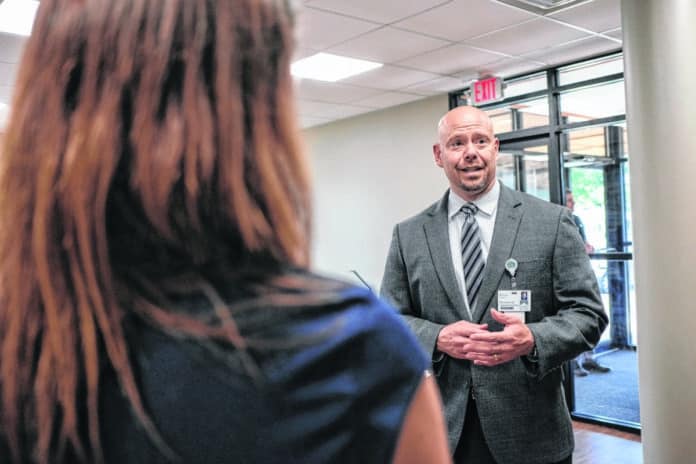
Dr. Kevin Terrell, medical director of the Columbus Regional Health Treatment and Support Center, stands in the lobby of the new Columbus Regional Health Treatment and Support Center on 22nd street in Columbus, Ind., Thursday, June 27, 2019. Mike Wolanin | The Republic

COLUMBUS, Ind. — More than 60 people turned out within the first hour of a public open house at Columbus Regional Health’s new outpatient behavioral health clinic aimed at treating substance abuse disorders in Columbus.

The new 5,208-square-foot facility, called the Columbus Regional Health Treatment and Support Center, or TASC, will open Monday and offer medicated-assisted treatment, behavioral therapy and other services for people who are struggling with substance abuse disorders, including the abuse of alcohol, opioids, methamphetamine, cocaine and other substances.

The facility is located at 2630 22nd St. in the former Southern Indiana Gastroenterology building.

Please read Saturday’s edition of The Republic for more details.

Mill Race Marathon medals feature new design

Rachel Foster shows the new Mill Race Marathon medals at The Republic in Columbus, Ind., Thursday, June 27, 2019. Mike Wolanin | The Republic

COLUMBUS, Ind. — One of the rewards awaiting participants as they cross the finish line of this year’s Mill Race Marathon, half-marathon and 5K competitions is ready.

Mill Race Marathon, the not-for-profit organization that oversees the event, which will be Sept. 28, has released new-look medals that will be given to every participant who finishes one of this year’s races.

The medals for each event feature an engraving of the Robert N. Stewart Bridge, formerly the Second Street Bridge, with the Bartholomew County Courthouse and First Christian Church tower in the background.

Please read Saturday’s edition of The Republic for more details.

ASAP Hub on track for August opening

Volunteers demolish the old Arvin safe in the old United Way of Bartholomew County offices in Columbus, Ind., Friday, April 12, 2019. The safe was demolished to make way for the new Alliance for Substance Abuse Progress (ASAP) Hub offices. Mike Wolanin | The Republic

Bartholomew County residents can access a new addiction recovery resource center as soon as Aug. 1 if all goes according to plan, said Nathan Walsh, manager of the Alliance for Substance Abuse Progress Hub.

The county alliance, commonly referred to as ASAP Inc., is an organization formed to provide prevention and recovery services to people affected by the opioid crisis in Bartholomew County.

Since December 2018, the ASAP board of directors has worked to set up the hub, a physical location where people seeking treatment will find referrals and assistance in recovering from addiction. At the board’s Wednesday meeting, Walsh offered an update on the current standing of the facility at Doug Otto Center near downtown Columbus.

Renovation of the 1,600-square-foot space at 1531 13th St. began in March and was originally predicted to be complete by July. Walsh said the construction crew, made up of local volunteers, has faced some setbacks, including the necessary removal of a vault, electrical issues and wet concrete briefly halting operations.

[sc:text-divider text-divider-title=”Story continues below gallery” ]

Nevertheless, Walsh said he’s pushing hard to make the Aug. 1 opening happen.

“This thing is coming to life,” Walsh said. “People are coming to City Hall for it to come to life. It’s not perfect. We’re going to fall and stumble, but people starting to hear about it and using it already.”

ASAP’s interim executive director Jeff Jones said when discussion of the hub originally started, Jones said the ASAP team recognized a need to brand the hub in a way for people who need help to know it was for them.

“We looked at a lot of different options, but we decided with the help of an outside company that the ASAP brand was strong. It needed to be the best way to create awareness and refer to it as the ASAP Hub, but call it a recovery resource center,” Jones said.

“It’s about recovery. We wanted to be a resource. We wanted treatment providers to see it as a resource center. We wanted the courts to see it was a resource center. We wanted the clients to see it as a resource center.”

Already, Jones said the space is shaping up beyond his wildest dreams.

“The effort that’s been made there, the volunteers from Mission Columbus, Cummins, there are superheroes out there — the list goes on and on –making things happen for us,” Jones said. “The community has really stepped it up.”

In alignment with the hub’s estimated opening date, Jones also announced plans to host a community progress report event on Aug. 26 at The Commons. As ASAP emerges into a system of support with increased capabilities and the establishment of the hub, Jones predicts this event could build community awareness of Bartholomew County’s support system.

“One of the things we’re recognizing is people that support us will show up,” Jones said. “That’s great. We want all of our supporters there. But this is just as much aimed at people we’re going to serve. We’re ready to let the community know we’re ready to serve. It’s going to be a major opportunity to accelerate from that point forward.”

[sc:pullout-title pullout-title=”To learn more” ][sc:pullout-text-begin]

To learn more about the Alliance for Substance Abuse Progress (ASAP) in Bartholomew County, go online at asapbc.org.

[sc:pullout-text-end]

Silent no longer: Bartholomew County taking action to reduce youth suicides

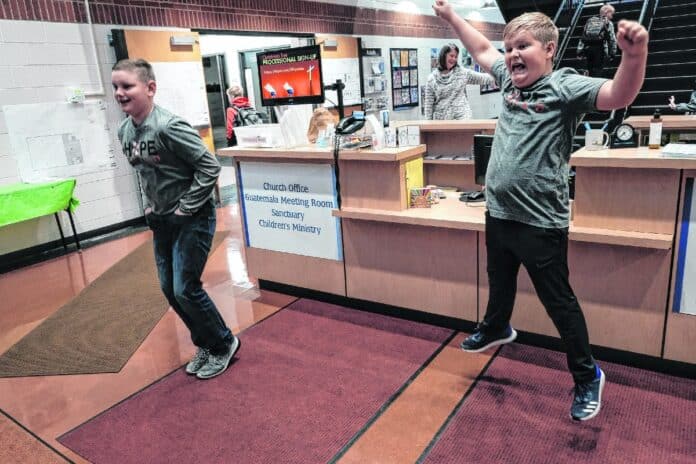
St. Peter’s Lutheran School Hope Squad members Drew Schiefer, left, and Ryan Lienhoop wait to greet students at the start of the school day at St. Peter’s Lutheran School in Columbus, Ind., Wednesday, Nov. 28, 2018. Mike Wolanin | The Republic

The numbers are alarming.

Bartholomew Consolidated School Corp. student assistance coordinator Larry Perkinson acknowledges that.

In 2019, an average of 35 percent of BCSC students in Grades 6-12 reported feeling sad or hopeless for two or more weeks in a row — a nearly 5% increase since 2017, according to the Indiana Youth Survey.

This year, about 17% of BCSC students in Grades 6-12 reported that they had considered suicide at least once. Just over 14% of students in Grades 6-12 said they made a plan about suicide once in their life.

[sc:text-divider text-divider-title=”Story continues below gallery” ]Click here to purchase photos from this gallery

Perkinson knows. School district leaders are aware. Teachers see it in their classrooms. Students notice it in their peers. But BCSC isn’t alone.

Suicide was the second leading cause of death among individuals between the ages of 10 and 34 in 2017, according to the Centers for Disease Control and Prevention. Suicide rates increased in nearly every state from 1999 through 2016. Data from the CDC found that nearly 47,000 people in the United States died because of suicide in 2016.

Perkinson said 2018-19 was the first school year since 2008 when BCSC did not have a youth suicide in its district.

“We have to stay focused on what we can do,” Perkinson said. “It is difficult to understand the inner struggle that so many youth and adults face, isn’t it? Yet schools and communities have chosen not to remain silent.”

Members of the Columbus community are stepping up to the plate to ensure no more lives are lost to suicide. Through peer mentoring, trauma-informed care, counseling programs and even a national initiative called Hope Squad, people of all ages across Columbus are starting the conversation.

Motivated to help

Jennifer Wright-Berryman knew a part of the issue was that communities don’t talk openly about suicide. Berryman, a former professor at IUPUC, started a public conversation in Columbus via social media and was motivated to do community-based work.

Her career focused on teen and youth suicide, and she started searching for programming that local schools could implement. That’s how she discovered Hope Squad, a suicide prevention program.

“Suicide rates, even though they’re increasing, what we don’t understand is that for every one suicide death, there are like 100 attempts,” Berryman said. “What we really want to be thinking about is suicide attempts — the numbers we don’t know.

Berryman said what’s not known is how many kids sustain personal injuries or mental health crisis.

“We look at suicide death rates as a measure, but that measure doesn’t really tell the story of what our youth are going through,” Berryman said. “We put Hope Squad in place so that we don’t have deaths, but what it does over time is it changes the schools so it reduces things like attempts and other suicide-related behaviors.”

The program, which originated in Utah after the death of a high school student in 1998, is now in more than 400 schools across the United States and Canada.

Bartholomew County is home to two Hope Squads, one at Ivy Tech Community College and another at St. Peter’s Lutheran School. The Junior Hope Squad at St. Peter’s is composed of 15 students in Grades 4-6 who were nominated by their peers, said Violet Dickerson, St. Peter’s Lutheran School counselor and Hope Squad coordinator.

Students help classmates

Members of the St. Peter’s squad meet every Tuesday morning during the school year to receive training about how to be a good listener, self care, good secrets versus bad secrets and how to identify someone who may want to harm themselves through body language and phrases.

“It’s very exciting to know students who possess good empathy and are caring and good listeners, that we could equip them to be good connectors. These students are already on the front lines,” Dickerson said. “They’re already getting approached by friends who say, ‘I’m just not happy. What if I never came to school anymore?’

Dickerson said students are feeling isolated and alone, and they tend to tell their peers before they tell any other adults. When a student approaches a Hope Squad member about their feelings, the Hope Squad member is trained to connect them with an adviser who could then talk to them and refer them to additional help.

Five students from each grade level 4 through 6 serve on the St. Peter’s Hope Squad and act as what Dickerson calls the “eyes and ears of the school.” When they see a student eating lunch alone or playing on the playground alone, squad members are encouraged to reach out to those students.

“This year we had more referrals to kids talking about suicide than any other year and I think that was because we have Hope Squad in place,” Dickerson said. “Not every referral was an immediate threat, but now they’re on our radar and we can check in with them.”

Ivy Tech’s Hope Squad is still functioning, but Ivy Tech spokesperson Chris Schilling said it is in a holding pattern as the college fills its vice chancellor of student success position, which oversees the Hope Squad.

BCSC does not have a Hope Squad in any of its 18 school buildings, but Perkinson said the corporation applauds the leadership and help that Hope Squad does bring to the county’s youth.

Peer mentoring is something Perkinson said BCSC has implemented in its high schools to help address the problems that students encounter.

“Developing peer mentors helps young people create the same kind of supports and positive, caring atmosphere that adults are striving to build as well,” Perkinson said. “The numbers indicate that we have to make an effort to connect with those around us. Having people who care and who provide support creates hope.”

Another outreach

The district-wide Counseling Counts initiative is another method that BCSC is using to ensure its students are receiving the care and treatment they need.

Doug Moore, a retired Columbus East counselor and implementer of the Counseling Counts grant, said the corporation applied for the $1.1 million grant from the Lilly Endowment to help students who are dealing with drug and alcohol abuse, suicidal thoughts, homelessness and other issues.

BCSC has used the funding to develop a two-tiered approach focused on prevention and providing resources to prekindergarten through 12th-grade students through a community-based system approach with health partners such as Centerstone, Family Services Inc. and Columbus Regional Health.

Moore said the district identified multiple goals it wants to achieve through Counseling Counts. A major goal was to place mental health workers in each of the district’s 18 school buildings, allowing school counselors to shift their focus from the social and emotional well being of students to the more traditional guidance-counselor support for students.

The district achieved that goal, and Moore said they hope to add more therapists to the schools throughout the remainder of the grant, which ends in 2021.

Through the two-tier system, BCSC has also created a universal recommendation form for students to be recommended to outside mental health providers, birthed a student support hotline designated for BCSC students and families and established an environment for the developmental assets framework.

“We’re a community that recognizes that there are developmental assets — that if we can connect with kids, if we can provide someone they’ll talk to, if they learn to trust teachers, if we can develop those assets that allow them to trust teachers, the neighborhood, the community,” Perkinson said. “School’s not just about school grounds. It’s about who in our community is going to respond to take care of us.”

Youth with more assets are more likely to do well in school, be civically engaged and value diversity. They are least likely to have problems with alcohol use, violence, illicit drug use and sexual activity, according to the Search Institute, a nonprofit organization that founded the developmental assets framework.

Beyond the Counseling Counts grant, the BCSC school board also approved a measure in April to transition the district’s three high schools from a traditional schedule to a block schedule beginning in the 2020-21 school year. A block schedule means students would alternate different classes between two days with longer class periods.

Columbus North principal David Clark stressed in a March 4 presentation that a block schedule is not only about getting more content into longer class periods, but is also about helping students through social and emotional learning opportunities.

More to do

But even with all the new changes that Bartholomew County schools have implemented over the last several years, Dickerson said there’s still work to be done.

“There’s a lot of shame and stigma around mental health illnesses and suicide,” Dickerson said. “It’s not talked about. If it’s not talked about, we don’t know how it’s affecting our school. Put it in the spotlight. If you’re struggling, we’re going to take care of you.”

Perkinson echoed Dickerson’s comments.

“Bartholomew County works together,” he said. “Agencies and schools share language, initiatives and concerns. The schools, the counseling community, law enforcement, court services, our health services, youth agencies — I can’t name all the groups involved, but I can tell you that I hope every other country does the same. No single entity can address the issues alone that our kids and families face.”

[sc:pullout-title pullout-title=”What is Hope Squad?” ][sc:pullout-text-begin]

Hope Squad is a school-based peer support program that empowers selected students to take action to improve the school environment. Hope Squad members are trained to recognize if they or their peers are at risk for suicide as well as how to encourage peers to seek help from a trusted adult.

Source: Hope Squad

[sc:pullout-text-end][sc:pullout-title pullout-title=”National Suicide Prevention Lifeline” ][sc:pullout-text-begin]

National Suicide Prevention Lifeline: 1-800-273-8255

If you’re thinking about suicide, are worried about a friend or loved one or would like emotional support, the National Suicide Prevention Lifeline network is available 24/7 across the United States.

[sc:pullout-text-end][sc:pullout-title pullout-title=”About Counseling Counts” ][sc:pullout-text-begin]

To learn more about Bartholomew Consolidated School Corp.’s Counseling Counts grant, visit bcsc.k12.in.us/domain/3182.

[sc:pullout-text-end]

Service Rewarded / Wrestling coach, rink manager named Cramer Award winners

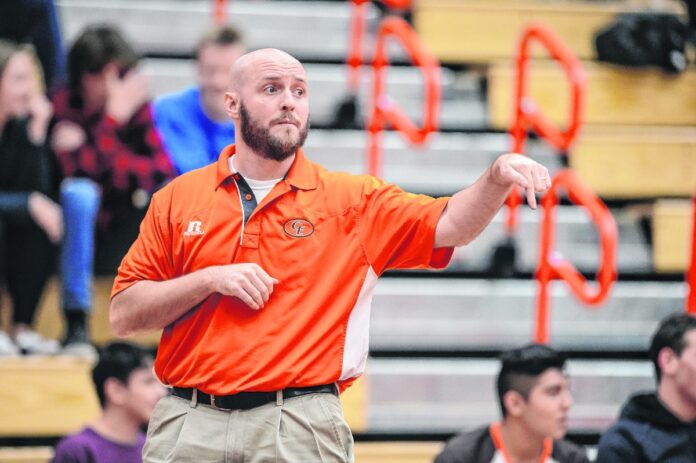
Columbus East wrestling coach Chris Cooper signals for wrestler Kenton Wilson to start the second period in the down position during a wrestling meet against Franklin at Columbus East High School in Columbus, Ind., Thursday, Dec. 6, 2018. Mike Wolanin | The Republic

Chris Cooper was born and raised here in Columbus. Carleen Fry grew up in Champaign, Illinois.

Cooper works in a high profile job. Fry is in more of a behind-the-scenes operation.

While their backgrounds and occupations couldn’t be much different, Cooper and Fry now share a prestigious honor. They were selected earlier this week as this year’s male and female winners of the Jack Cramer Ideals of Athletic Competition Award.

Cooper, 39, has built Columbus East into a state wrestling power. He took over as head coach in the 2003-04 season after two years as an assistant. He led the Olympians to the first Hoosier Hills Conference title in school history in 2011 and has added three more HHC championships the past three years.

[sc:text-divider text-divider-title=”Story continues below gallery” ]

Cooper also has led East to six sectional titles, including the past four, and the past three regional crowns. His teams have finished 11th at state in 2016, seventh in 2017, third at in 2018 and fifth this year.

In 2018, Cooper was named state Coach of the Year by both the Indiana High School Wrestling Coaches Association and the National Wrestling Coaches Association.

“He took over a program that was in real need of an infusion of a get-after-it-type attitude,” said Eric Wohlford, who nominated Cooper for the award. “When he started, they were pretty low on the totem pole, and they were losing continually to Columbus North. It’s got to a point where they’re perennial state contenders.”

Cooper was an All-Conference offensive lineman in football and did not start wrestling until his junior year of high school.

“He was very quiet, unassuming, never heard a word out of him,” Wohlford said. “He led by example and was just a great guy. His whole family is that way.”

Cooper attended Purdue and graduated in 2001 with a degree in flight technology.

“I was in the hiring pool at Chautauqua Airlines, and then 9/11 really put a lot of strain on that market,” Cooper said.

So Cooper worked at Cummins Data Center for four years, and in the meantime, went back and earned a math degree from Indiana University after beginning his coaching career. He landed a teaching job at Central Middle School in 2008, then moved over to East High School two years later.

Cooper learned of his selection while in Orlando, Florida, coaching the Olympians in the Disney Duals. They returned home on Thursday.

“It’s nice to be recognized, but it’s not something necessarily that you expect,” Cooper said. “I’m from Columbus. My entire family is from Columbus. It’s nice to have other people recognize what we’re doing. We work pretty hard, and we’re here trying to build our program for the community, and it’s nice to be recognized for that.”

Meanwhile, Fry, the rink manager at Hamilton Community Center and Ice Arena, found out about her selection a little earlier.

Moments after the selection process took place in the arena’s conference room on Tuesday, Fry’s bosses with Columbus Parks and Recreation, Mark Jones and Nikki Murphy, walked across the lobby to give her the news.

“I was very surprised,” Fry said. “This doesn’t feel like a job to me. It’s just something I really love to do. I have a passion for this rink. I think it’s great, so to me, it’s something I do. I don’t look at it like a job. I look it as a passion that I love to do. I love working with the kids and the adults and helping the kids with the skating and everything.”

Fry, 57, grew up in Champaign, Illinois, and went to Patricia Stevens College in St. Louis when it was an All-Girls school. She moved to Columbus in 1987.

Fry has been the rink manager for eight years. Prior to that, she was a stay-at-home mom to her three kids, who are now grown.

“Hamilton is like a family to all of us,” Fry said. “We kind of all grew up here.”

Murphy nominated Fry for the award.

“I think if you look at the ideals for the Jack Cramer Award, she may not be the traditional nomination in the sense that it is not her necessarily performing athletic feats, but she spends every minute of her day preparing young and adult athletes to go out and live those ideals,” Murphy said.

[sc:pullout-title pullout-title=”Cramer Award winners” ][sc:pullout-text-begin]

Name: Chris Cooper

Age: 39

High school: Columbus East

Colleges: Purdue, Indiana University

Residence: Columbus

Occupation: Math teacher and head wrestling coach at Columbus East

x

Name: Carleen Fry

Age: 57

Hometown: Champaign, Illinois

College: Patricia Stevens All-Girls College in St. Louis

Residence: Columbus

Occupation: Rink manager at Hamilton Community Center and Ice Arena

[sc:pullout-text-end]