Home Blog Page 200

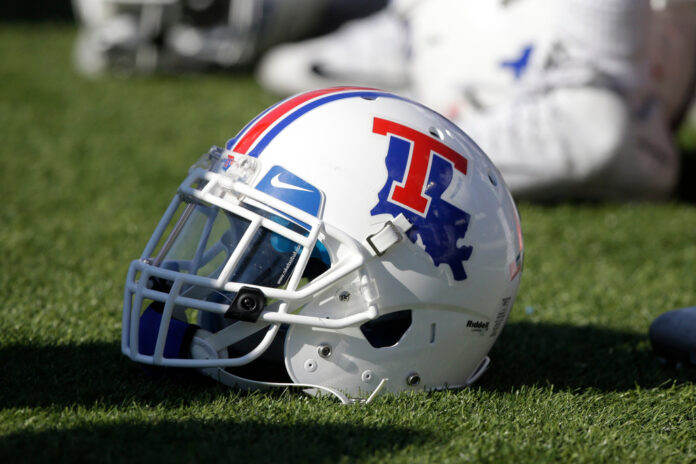
Louisiana Tech football is on 2 league schedules amid its contentious departure from Conference USA

NEW ORLEANS (AP) — Louisiana Tech’s football team is currently listed on both the Sun Belt and Conference USA league schedules as the Bulldogs’ acrimonious departure from Conference USA continues to drag out.

Last July, the Sun Belt extended membership to Louisiana Tech, and the school accepted, citing, among other things, the logic of joining a conference that includes two potential in-state rivals in Louisiana-Lafayette and Louisiana-Monroe, along with other programs in the Gulf South, including Southern Miss and South Alabama.

All of those schools are on the 2026 football schedule that Louisiana Tech released on Friday.

But Conference USA also released a full conference slate this week that includes Louisiana Tech matchups against league members Middle Tennessee, Florida International, Missouri State, Liberty, Kennesaw State and Jacksonville State.

When Louisiana Tech announced its move to the Sun Belt, the school stated that the move would occur no later than July 1, 2027, but left little doubt that it preferred to make the move for 2026-27 academic year.

Since then, Tech and Conference USA have failed to agree on a financial settlement aimed at compensating the league for the Bulldogs’ departure.

Last week, the University of Louisiana System, which includes Louisiana Tech, filed a lawsuit asking a judge to force Conference USA to allow Louisiana Tech to leave the league when the current academic year ends on June 30.

Despite Louisiana Tech’s “good faith efforts to resolve this matter amicably over a period of eight months … CUSA has declined to engage in meaningful resolution and has instead placed Louisiana Tech on its 2026-27 athletic schedule in disregard of Tech’s explicit and repeated written notice that it would not participate in Conference USA competition beginning July 1, 2026,” the lawsuit states.

Louisiana Tech has been a Conference USA member since 2014.

___

Get poll alerts and updates on the AP Top 25 throughout the season. Sign up here. AP college football: https://apnews.com/hub/ap-top-25-college-football-poll and https://apnews.com/hub/college-footballhttps://apnews.com/hub/college-football

US aims for historic clean sweep in Olympic and Paralympic ice hockey

MILAN (AP) — The United States is looking to do something no nation has ever done: Clean sweep the ice hockey tournaments at the Olympics and Paralympics.

Standing in the way? Canada again.

Just like in the men’s and women’s tournaments at the Olympics, Sunday’s gold medal match in Para ice hockey will be between the U.S. and Canada.

“We got to do our part, right? So they got the two done, so now it’s our job and we just got to bring it home for them,” U.S. forward Kevin McKee told The Associated Press.

Naturally, Canada wants bragging rights in the rivalry and to break American Para hearts.

“It is a source of pride for us just to win, like we believe Canada is THE hockey country and we want to prove that,” Canada forward Adam Dixon said.

Both teams dominated the group stage at the Paralympics, each winning all three of their matches. The U.S. then beat the Czech Republic 6-1 in Friday’s semifinals, when Canada struggled at times before overcoming China 4-2.

Canada Para ice hockey captain Tyler McGregor said the two Olympic losses were not playing on his teammates’ minds.

“No. You know what, we’re going to write our own story,” he said. “We watched both our men’s and women’s team compete here a few weeks ago and they played phenomenal.

“Those were two of the best hockey games I’ve ever seen, but this is our story at the Paralympics and we have a chance to bring home a gold medal for Canada. And what an honor that would be.”

Rather than avenge the Olympic defeats, Canada is driven more to avenge losses to the U.S. in the past two gold-medal matches at the Paralympics. It has also lost to the U.S. in four of the past five world championship finals.

“That kind of fuels us,” forward Liam Hickey said. “We’ve learned from those. They’re a great team and we’ve had a great rivalry for as long as this sport’s been around. So for us it’s another kind of chance for redemption and we’re excited for it.”

US domination

If the U.S. achieves the treble, it would be the second straight year it has swept the major tournaments, having won the men’s and women’s world championships and world Para ice hockey championship in 2025.

There is no women’s division at the Paralympics as its classified as an open-gender sport.

U.S. defender Jack Wallace said the group has been talking about the sweep since watching the women’s Olympic final together during a training camp. They were also messaging each other during the men’s final.

Coach David Hoff would prefer his players bury all thoughts of a sweep before Sunday’s final.

“There’s a lot of talk about it,” Hoff admitted. “I think for us it’s really just putting the blinders on and really focusing on what we have to do. Don’t let that outside stuff cloud your preparation or bother you. Sometimes that’s hard to do but I think our guys have really done a good job.”

While the Olympics saw the U.S. men’s team win gold for the first time since the “Miracle on Ice” in 1980, it’s a different story at the Paralympics.

The U.S. has triumphed at five of the past six Paralympics and several players are targeting a fourth straight gold medal. Captain Josh Pauls is incredibly aiming for a fifth.

“You’ve got to enjoy the guys you’re playing with,” Pauls said when asked about the team’s secret to success. “We have such a brotherhood, we just enjoy playing the game, we enjoy competing, we enjoy getting better, but also helping the other guy across from us get better.

“And I mean, I am just so glad to play another team other than our guys, because man, our guys are really tough to play.”

___

AP Winter Paralympics: https://apnews.com/hub/paralympic-games

WADA to weigh barring Trump, US officials from LA Olympics and possibly World Cup over unpaid dues

The World Anti-Doping Agency is considering rewriting its rules to try barring President Donald Trump and all U.S. government officials from attending the LA Olympics in 2028 in a move that could also have implications for the World Cup being hosted by the U.S. this summer.

The proposal, on the agenda for next Tuesday’s meeting of the global drug-fighting watchdog’s executive committee, is the latest maneuver to come out of a yearslong refusal of the U.S. government to pay its annual dues to WADA. The refusal is part of the American government’s unanimous, bipartisan protest of the agency’s handling of a case involving Chinese swimmers and other issues.

The Associated Press learned of the agenda item through correspondence it obtained between WADA and European officials involved in the agency’s decision-making. Two others with knowledge of the agenda confirmed the existence of the rules proposal to AP; they were not authorized to speak publicly about the agenda, which has not been released publicly.

WADA spokesman James Fitzgerald said “there is nothing new here,” noting that discussions related to the issue of what to do about governments withholding funding have been ongoing since 2020 and aren’t directly related to the U.S.

The proposal was, in fact, first brought up in 2024, when U.S. authorities successfully lobbied for its rejection. The U.S. has since lost its seat on the executive committee.

“In spite of WADA’s increasing threats, we continue to stand firm in our demand for accountability and transparency from WADA to ensure fair competition in sport,” said Sara Carter, the director of the U.S. Office of National Drug Control Policy (ONDCP).

The rule, if passed, would figure to be mostly symbolic, given the limits an international sports federation could have on the president of a country attending an event inside his own borders.

“I have never heard of a $50-million-budget Swiss foundation being able to enforce a rule to, for example, prevent the United States president from going anywhere,” said Carter’s predecessor at ONDCP, Rahul Gupta, who was on the WADA executive committee two years ago and led the movement to reject the proposal. “And the next question you have to ask is: How are you going to enforce it? Are they going to post a red notice from Interpol? It’s ludicrous. It’s clear they have not thought this through.”

WADA suggests it could move quickly, but impact on upcoming World Cup hazy

The proposal calls for a three-tiered set of sanctions for countries that don’t pay dues. In the U.S. case, that amounts to around $3.7 million from last year, plus $3.6 million it didn’t pay in 2024. Among the most extreme sanctions include “government representatives being excluded from participation in major events such as World Championships and Olympic & Paralympic Games.”

That would include Trump, Vice President J.D. Vance and members of Congress, who recently approved hundreds of millions in funding for security and other logistics for the World Cup and LA Games.

Fitzgerald said the next meeting of the WADA Foundation Board, which would formally approve any action, isn’t scheduled until November, suggesting the rule would not be in place in time for the World Cup. He did not immediately respond to specific questions about how Trump’s status at the World Cup might be impacted.

But in a response to a question about timing from the European authorities, WADA wrote: “The proposal could be implemented without undue delay. If necessary, the Foundation Board could consider the proposal by circular or within the context of an extraordinary meeting.”

According to a draft of the proposal, the rule would apply to governments that have not paid dues by Jan. 31 of the year after they’re billed. The U.S. hasn’t paid its WADA dues since 2023.

Representatives from the International Olympic Committee, FIFA and the U.S. Olympic and Paralympic Committee did not respond to emails from AP seeking comment on how a ban on Trump and other U.S. officials might be enforced.

US has been asking WADA to undergo independent audits

WADA’s budget was pegged at $57.5 million for 2025. It receives half its funding from the IOC and the other half from governments across the globe. Contributions from the governments are loosely based on the size of their athletic teams, and the U.S. has always paid one of the biggest bills.

This squabble has been festering since the first Trump administration, rooted in America’s distrust of the global anti-doping system, which came under international scrutiny first for its handling of a Russian doping scandal dating to before the Sochi Games in Russia in 2014.

Then, in 2024, news came of 23 Chinese swimmers — some of them on the team that went to the Paris Olympics — who were allowed to compete despite testing positive. WADA accepted the Chinese doping regulator’s theory that the athletes had been contaminated by traces of banned heart medication in a hotel kitchen.

The ONDCP and Congress under both the Trump and Biden administrations have withheld the payments to WADA.

In the most recent flare-up, the government restricted payment until WADA subjected itself to an independent audit. WADA defended its auditing practices and, at the Milan Cortina Games last month, once again called on the U.S. to pay the dues.

Now, the agency looks for more leverage in its attempts to collect.

“This initiative is aimed at better protecting WADA’s funding so that it can deliver on its mission to protect clean sport,” said Fitzgerald, the spokesman for WADA. “If WADA’s funding is cut, it is ultimately athletes who will suffer. Indeed, athletes (including those on WADA’s Executive Committee and Foundation Board) have continuously expressed their support for this initiative.”

___

Associated Press reporter Darlene Superville contributed from Washington.

___

AP Olympics: https://apnews.com/hub/2024-paris-olympic-games

Prosecutor drops vehicular homicide charge against teen charged in death of teacher in prank

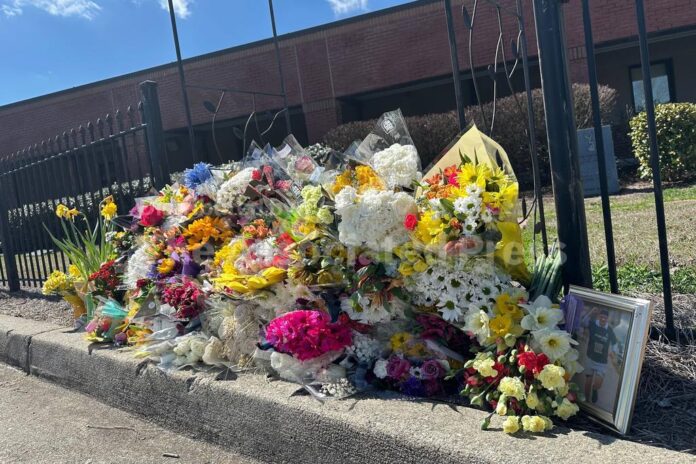
GAINESVILLE, Ga. (AP) — A Georgia prosecutor has dropped the charges against a teenager who police say was driving the truck that struck and killed a beloved high school teacher when a prank turned deadly, the teen’s lawyer said. The victim’s family had asked authorities to drop the charges.

The 40-year-old teacher, Jason Hughes, died after being taken to a hospital late on March 6, the Hall County Sheriff’s Office said. Jayden Ryan Wallace, 18, was arrested on a felony charge of vehicular homicide, and four other teens were charged with misdemeanors.

Graham McKinnon, a lawyer who represents Wallace, said Friday that the charges against his client had been dropped. Hughes’ family said he knew and loved the five students involved and had urged authorities to drop all charges against them.

McKinnon said Wallace and his friends were playing a “competitive game” that has long been a tradition at North Hall High School.

Vehicular homicide charges, he said, didn’t make sense because Jaden didn’t use his car unsafely or improperly.

“Jaden is still grieving deeply, but he’s determined eventually to carry on and live his life in a way that would make Coach Hughes proud.”

Hughes was a “mentor” to Wallace, McKinnon said.

“I pledge to live out the remainder of my life in a manner that honors the memory of Coach Hughes by exemplifying Christ. He will never be forgotten,” Wallace said in a statement released by his family on Wednesday.

US faces elevated terrorism threats against backdrop of Iran war and cuts at FBI, Justice Department

WASHINGTON (AP) — In New York City, two men who federal authorities say were inspired by the Islamic State brought powerful homemade bombs to a protest outside the mayoral mansion.

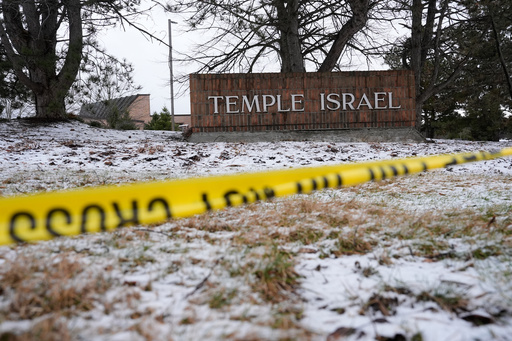
In Michigan, a naturalized citizen from Lebanon rammed his vehicle into a synagogue before being shot by security.

In Virginia, a man previously imprisoned on a terrorism conviction was heard yelling “Allahu akbar” before opening fire at a university in an attack that officials said ended when the shooter was killed by students.

The three acts of ideologically inspired violence in the last week have laid bare the heightened terrorism threat, a concern that comes as the U.S. is at war with Iran and as the counterterrorism system is strained by the departures of experienced national security professionals at the FBI and Justice Department. The firings and resignations, coupled with the diversion of resources and personnel over the last year to meet other Trump administration priorities, have fueled concerns about the capability to head off a potential surge in threats.

“So much experience has been decimated from the ranks,” said Frank Montoya, a retired senior FBI official who led the U.S. government’s Office of the National Counterintelligence Executive. “The folks that were best-positioned to get to the bottom of it before something really bad happened” are in many cases no longer with the government, he said, meaning less experienced personnel assigned to the threat are “starting from way behind.”

The FBI said it would not comment on personnel numbers and decisions, but issued a statement saying “agents and staff are dedicated professionals working around the clock to defend the homeland and crush violent crime. The FBI continuously assesses and realigns our resources to ensure the safety of the American people.”

Iran has a history of plotting attacks, targeted killings inside the US

Iran has vowed revenge for the killing by the U.S. and Israel of Supreme Leader Ali Ayatollah Khamenei, and though the fighting has so far been confined to the Middle East, the Islamic Republic has long professed its determination to carry out violence on American soil.

Iranian operatives responded to the 2020 assassination of Gen. Qassem Soleimani during the first Trump administration with a disrupted murder-for-hire plot against then-national security adviser John Bolton.

A Pakistani business owner who says he was carrying out instructions from a contact in Iran’s paramilitary Revolutionary Guard was convicted in New York last week of trying to hire hit men in 2024 for assassination plots targeting public figures, including President Donald Trump, who was then running for president.

Though much attention has focused on Iran’s use of proxies or hired hands to carry out plots, the country’s capability to organize a large-scale assault on the U.S. remains unclear despite clear angst over the potential. The FBI warned in a recent bulletin to law enforcement about Iran’s aspiration to conduct a drone attack targeting California, but after the warning was publicized, officials emphasized that the intelligence was unverified and no specific plot was known to exist.

The conflict is also playing out in cyberspace, with hackers supporting Iran claiming responsibility for a cyberattack this week against U.S. medical device company Stryker. The Justice Department on Friday announced that it had seized the domains of four websites used by Iran to call for the killings of dissidents.

Lone actors have been a persistent concern for the FBI

The U.S. government, after the Sept. 11, 2001, attacks, overhauled its intelligence and national security apparatus to prevent similarly catastrophic events. But in the years since, lone actors radicalized online have proved harder to stop, carrying out shootings like the 2015 ambush attacks at a pair of military sites in Chattanooga, Tennessee and a rampage at an Orlando nightclub the following year by a gunman who killed 49 people and raged against the “filthy ways of the west.”

Those plots have proved notoriously difficult to prevent and have occurred even when the FBI has not been roiled by firings and internal upheaval, like during the first year of the Trump administration.

“They’re self-directed,” said retired FBI official Edward Herbst. “That’s what makes them really lethal. You never know when they’re going to rise up. You never know when and where they’re going to attack.”

Those concerns typically rise during times of international conflict when military action overseas is accompanied by increased vigilance, including outreach from agents to their sources, more active sharing of tips between federal and local law enforcement and closer coordination among FBI joint terrorism task forces, said Claire Moravec, a former FBI national security official who served as deputy homeland security adviser in Illinois.

Officials have said there is no indication that either the men arrested in connection with the explosives in New York, or the man responsible for Thursday’s Old Dominion University shooting, were motivated explicitly by the Iran war. The man who crashed into Temple Israel synagogue near Detroit on Thursday lost four family members in an Israeli airstrike in his native Lebanon last week, an official in Lebanon said.

Regardless, wars like the one in Iran can function as “accelerants,” raising the volume and intensity of grievances for the disaffected, Moravec said.

“Ultimately, the goal during these periods is not ‘surveillance’ but maintaining a broad awareness of how international events could translate into domestic security risks, so that threats can be identified and disrupted early,” she said in an email.

Resignations, firings at the FBI and Justice Department

The Justice Department’s National Security Division was established in 2006 to address terrorism threats and related concerns. But in the last year, lawyers in the division found themselves assigned to review the Jeffrey Epstein files to prepare them for release, and elite sections dedicated to prosecuting terrorists and catching spies have endured turnover.

About half of the division’s counterterrorism prosecutors have left since the beginning of the Trump administration, along with about a third of its senior leadership, according to estimates from Justice Connection, a network of department alumni.

A Justice Department spokesperson said the division’s singular focus remains “keeping the American people safe from threats foreign and domestic” and that there are no known or credible threats to the homeland.

FBI Director Kash Patel has fired dozens of agents, most recently about a dozen employees who worked on the counterintelligence investigation into Trump’s retention of classified documents at his Mar-a-Lago estate in Florida, including some who worked on Iran cases.

“This is not an exaggeration to say that they are not as capable as they were a year and a half ago,” Matthew Olsen, who led the National Security Division during the Biden administration, said this week on the Lawfare podcast, adding that “they’ve lost, forced out, fired, the most capable, the most experienced FBI agents, FBI officials and DOJ prosecutors, that were working on the Iran threat.”

In the national security realm, where experience and source development are vital, the loss of institutional knowledge and community relationships can be a crushing blow, said Montoya, the former FBI official.

“There was no transition,” Montoya said of the agents who have been abruptly fired. “These guys were just walked out of the building. The new guys can call them and say, ‘Hey, can you tell me what you were doing?’ but even so, “you’re still introducing a brand new face into the equation.”

Live Nation, Ticketmaster trial to resume after 7 states join a Justice Department settlement

NEW YORK (AP) — More than 30 states will resume their antitrust trial against Live Nation and Ticketmaster on Monday in a New York federal court after negotiations this week failed to result in many states joining a tentative settlement reached by the Justice Department.

Judge Arun Subramanian said at a hearing in Manhattan on Friday that the states had dropped their request to restart the trial in coming weeks with a different jury.

Lawyers told the judge that Arkansas, Iowa, Mississippi, Nebraska, Oklahoma, South Carolina and South Dakota were joining the Justice Department in settling.

The other 32 states involved, including many of the nation’s largest and most populated, plan to continue to try to convince a jury that Live Nation Entertainment and its ticketing subsidiary Ticketmaster were squelching competition and driving up prices for fans. They say this was done through threats, retaliation and other tactics to “suffocate the competition” by controlling virtually every aspect of the industry, from concert promotion to ticketing.

The companies say they do not monopolize their industry and that artists, sports teams and venues set prices and decide how tickets are sold.

Judge Subramanian said the trial will resume Monday. He also ruled against Live Nation’s objection to trial exhibits in which a company employee several years ago tells another worker that the prices Live Nation charges to access the VIP area of a Tampa, Florida, amphitheater are “outrageous,” that customers paying the fees “are so stupid” and that “I almost feel bad taking advantage of them” before writing, “BAHAHAHAHAHA.”

Live Nation had argued against their inclusion in the trial, saying the employees were making “passing references to non-ticket ancillary products — such as VIP club access, premier parking, or lawn chair rentals — sold to concertgoers at two amphitheaters” in Florida and Virginia.

The judge said the overall fan experience is relevant to the relationship between performers and their customers and some artists might not want to perform if fans were being charged too much for lawn chairs or other amenities.

Subramanian said it was no different than the harm that might occur to the film industry if movie theaters began charging $50 for concessions such as soda, candy and popcorn.

The jury began hearing evidence in the case only last week before the Justice Department reached a deal over last weekend that it says will save the public money by letting competitors of Live Nation into some ticket markets that they are currently excluded from.

Many states criticized the deal, saying the federal government failed to get enough concessions from Live Nation and Ticketmaster.

Subramanian urged states to negotiate over the past few days to see if they could also settle their claims, but the talks resulted in fewer states settling than the 10 states that a Justice Department official had predicted on Monday were ready to join the federal government’s agreement.

At a hearing on Tuesday, Live Nation attorney Dan Wall told the judge that the chance all states would settle their claims this week was “about zero.”

State lawmakers grill former special prosecutor Nathan Wade over Georgia Trump election case

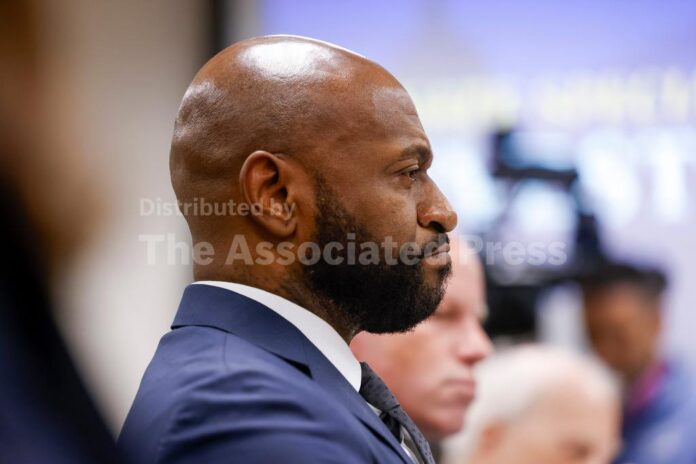
ATLANTA (AP) — State senators on Friday grilled the former special prosecutor who led the Georgia election interference case against President Donald Trump about communications his team had with federal investigators. But their efforts were largely frustrated by his repeated assertions that he couldn’t remember details.

Nathan Wade appeared before a subcommittee of the Special Committee on Investigations, which was created by the Republican-dominated state Senate in January 2024 to examine various allegations of misconduct against Fulton County District Attorney Fani Willis, an elected Democrat, with regard to her prosecution of Trump.

While the committee has met multiple times to hear from witnesses, including a combative appearance by Willis in December, it has unearthed little that wasn’t already known. Republicans expanded the committee’s mission to also look into Democrat Stacey Abrams, but the committee has thus far done nothing publicly with her.

Willis obtained an indictment against Trump and 18 others in August 2023. Using Georgia’s anti-racketeering law, she alleged that they had participated in a wide-ranging conspiracy to illegally overturn Trump’s narrow loss in Georgia. Four people pleaded guilty in the months that followed after reaching deals with prosecutors.

The resolution creating the committee focused on Wade’s hiring as a special prosecutor, saying a romantic relationship between him and Willis amounted to a “clear conflict of interest and a fraud upon the taxpayers” of the county and state. An appeals court in December 2024 removed Willis from the case, finding the relationship created “an appearance of impropriety,” and a new prosecutor dismissed it last November.

While the senators did ask Wade about his hiring — including the timing and how he came to be chosen — there was no mention of his romance with Willis. An opening statement Wade read at the start of the hearing indicated that there had been an agreement beforehand that no personal relationship would be discussed.

Mostly, though, Sen. Greg Dolezal asked Wade about his invoices, particularly several billing entries that seemed to indicate contact with the U.S. House committee that investigated the Jan. 6, 2021, attack on the U.S. Capitol and meetings with U.S. Department of Justice officials. But Wade repeatedly said he could not recall when trips or calls happened, who he met or spoke with, who else from his team had participated or what was discussed.

Wade also pushed back, saying there seems to be a big focus on who the team was talking to, but he asserted that the investigative work was done by the team Willis assembled.

“She led us, I led the team and we did the work,” he said. “We didn’t get assistance, coordination, however you want to characterize it. No one held her hand and guided her through the process. This is her work.”

Speaking to reporters after the hearing, Dolezal conceded that he did not get everything he wanted. “Look, I wish Mr. Wade had a better memory,” he said, adding that he appreciated Wade appearing and answering questions “to the best of his recollection.”

But Dolezal said he was glad to have established that Wade and his team met with someone connected with the Jan. 6 investigation and also that they were in touch with Department of Justice officials. He said it raises questions about how much coordination existed in an attempt to “get Trump.”

“That notion that it was part of some big conspiracy is absolute fiction,” said Andrew Evans, a lawyer for Wade. He accused the Republican senators of trying to use the committee to shift the focus from real issues that are unfavorable to them as midterm elections approach.

Including Dolezal, who is running for lieutenant governor, four of the five Republicans on the committee are running for statewide office in 2026. Bill Cowsert is running for attorney general, while Sens. Blake Tillery and Steve Gooch are also each seeking the Republican nomination for lieutenant governor. Another Republican who had been on the committee, John Kennedy, resigned to pursue his own lieutenant governor bid. Only Dolezal and Cowsert were present for Friday’s subcommittee meeting.

The subcommittee also heard testimony Friday from Fulton County Deputy District Attorney Jeff DiSantis, who handles media relations for Willis’ office. He was asked about Wade’s hiring, which he said he wasn’t aware of until it had been decided, and about the district attorney’s office’s use of a media monitoring service.

The ‘Spieth experience’ is entertaining to fans and frustrating for him at The Players

PONTE VEDRA BEACH, Fla. (AP) — Jordan Spieth was coming off four straight birdies Friday at The Players Championship when he turned to thousands of fans along for the ride and asked them a question that summed up why he rarely lacks for entertainment.

“Did anyone see where that went?” he said.

His hard draw turned into a hook and hit a tree on the par-5 second hole, and he was fortunate it bounced away from a forest and into short grass just 200 yards away. Instead of having a chance to reach in two, he hit 7-iron back into position and 8-iron short of the green.

And then he holed a 50-foot putt for his fifth straight birdie.

This is the essence of the “Spieth experience,” and it was full on before a large crowd that witnessed a little bit of everything in the second round. But it ended the same way it did on Thursday — a double bogey — that made him settle for a 4-under 68 and left him in the middle of the pack.

“It was just a bummer, both days finish with doubles,” Spieth said. “I just played better than that.”

So much of that work came undone on his final hole at the par-5 ninth — another pull off the tee into the woods, a tree restricting his back swing that forced him to punch out, a 3-hybrid hooked so badly to the left he hit a provisional in case he couldn’t find it, a shot from the pine straw that came up short and bounced back into the bunker, a lip-out from 6 feet for double bogey.

He made seven birdies, hit three trees, made two long putts from off the green and twice had to ask the gallery for help finding his golf ball.

“It was really good. I’ve been playing really well, trying to let the course come to me,” Spieth said. “It’s not quite there yet, but it’s, like, close enough to where I can do what I did today for a while. Just kind of stinks because to finish like that … some days you wonder if you shot one stroke worse but you finished with a birdie if you would actually be happier.

“It’s a weird deal, weird game.”

It’s his life at the moment. Behind him is wrist surgery in August 2024 that he thinks cost him six years because he tried for too long to treat it with rest and therapy. He has been out of the top 50 in the world since July. He is not eligible for the U.S. Open yet.

The game is there, just not always, and certainly throughout the entire round. It seems something is bound to happen at some point, and it was like that Friday.

He closed out the back nine with three straight birdies, including that enormous break when his tee shot was headed well right and caromed off a tree into the fairway. He hit that to 6 feet. Then came a wedge to 3 feet on No. 1, and the birdie on No. 2 from that 50-foot putt to make it five in a row.

And then he missed a 4-foot birdie putt. Go figure.

The real drama came on No. 6 when Spieth tugged his tee shot toward a bunker without seeing the white puff of sand.

“Anyone over here see it land?” he said to the gallery.

Turns out it was embedded into the bank of the grass. After a free drop, his wedge from an awkward lie hit the thick of a palm tree and plopped into the fairway. His pitch was too short and didn’t reach the green. He used putter to hole that from 30 feet.

The Spieth experience.

“The goal was to play 7 and 8 normal golf,” Spieth said, a rare choice of words for him. “Don’t play weird golf like I played on 6, just normal golf … fairways and greens, and then try to attack the par 5. So yeah, I did my job on 7 and 8 there.”

And then came the ninth, another tree, another double bogey to finish his round, and more frustration. He was the co-leader after 54 holes in his TPC Sawgrass debut in 2014, and he hasn’t been better than a tie for 19th since then.

“The last two or three tournaments, just feels like things are getting better and better each week,” he said. “This place has gotten the best of me in the past, and I let it get the best of me a couple times this week already. That cost me probably four shots, so hopefully it’s not too much to make up.”

___

AP golf: https://apnews.com/hub/golf

California launches probe after video shows petition gatherers offering money for signatures

SACRAMENTO, Calif. (AP) — California election officials said Friday that they are investigating whether signature collectors in San Francisco illegally offered to pay people to sign ballot petitions using false names.

A video posted Monday on X shows a sign that says “Sign petition for $5” and a line of people waiting along the sidewalk. A woman sitting at a folding table appears to be instructing the name and address to use to fill out the petition. When the person recording asked what the petitions were for, the woman said, “Just sign it.”

The California secretary of state’s office said in a statement that it was “aware of, and investigating, the matter.”

In California, people can place measures on the ballot for voter approval by gathering hundreds of thousands of signatures. Campaigns can pay people per signature they gather, providing an incentive for workers to get as many as possible.

At least one of the petitions seen in the video was for a tech-backed ballot measure to fight a proposed tax on billionaires. It’s funded by Building a Better California, a committee started by wealthy business leaders including Google co-founder Sergey Brin, who gave $20 million.

The signature collectors were not directly working for the campaign, said Molly Weedn, a spokesperson for the effort. The campaign was cooperating with authorities to reject the petitions collected with falsified information, she said.

“Under no circumstance do we tolerate this type of activity,” Weedn said in a statement. “Our campaign took immediate action and campaign attorneys reported to authorities.”

She said the campaign notified elections officials as soon as the video surfaced.

Another ballot petition funded by Building a Better California for a measure to prohibit new tax on retirement savings also appeared in the video. Spokesperson Nathan Click said the campaign “does not tolerate fraudulent activity in any signature-gathering process.”

“As soon as we became aware of the activities in question, we demanded that our signature-gathering firm identify the petition circulator, reject any and all petitions submitted by this circulator,” Click said in a statement.

There were multiple petitions on the table, and it’s unclear whether they were for any additional campaigns.

Offering money or other gifts in exchange for ballot measure signatures is illegal under the state’s election law, the secretary of state’s office said. Signatures on petitions are reviewed and verified against voter registration records, and those that don’t match won’t be counted.

“It is also a crime to circulate, sign and/or file those signed petitions with an election official any initiative petition that is known to include forged names,” the office said in a statement.

__

Associated Press journalist Sophie Austin contributed.

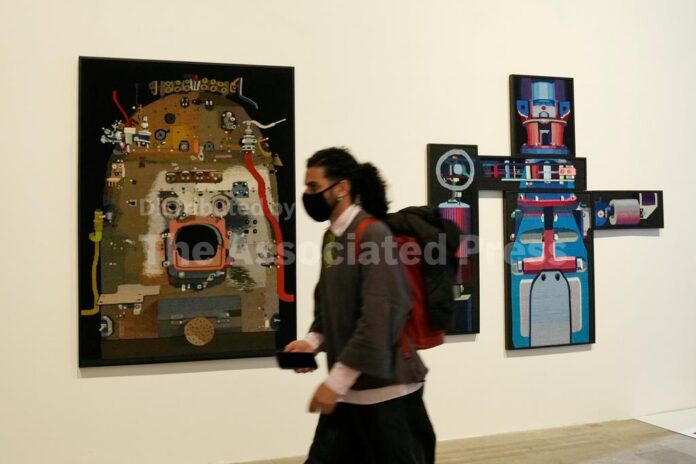
Inclusion of Russia in 2026 Venice Biennale art fair sparks outcry

ROME (AP) — The inclusion of Russia in the line-up of the 2026 Venice Biennale art fair has sparked international outcry, with the European Commission threatening to withhold funding and 22 European countries demanding Moscow stay away again over its war in Ukraine.

The scandal at the world’s oldest and most important contemporary art fair has put Italy’s Culture Ministry in the crosshairs. It comes just weeks after the Italian government had to stand by as the International Paralympic Committee allowed Russian and Belarusian athletes to compete under their national flags at the Milano Cortina 2026 Winter Paralympics.

Culture Minister Alessandro Giuli is trying to manage the diplomatic fallout, voicing clear opposition to the Biennale’s decision but acknowledging that its governing foundation is independent of the government and acted autonomously when it included Russia in the line-up for its 61st arts festival.

Russia has a permanent, historic pavilion in the Giardini exhibition area and under the rules governing the arts fair, has a streamlined process allowing it to participate in the show. But Moscow hasn’t appeared since the Ukraine war began: In 2022, the Russian pavilion was shuttered after its artists withdrew following Moscow’s invasion. In the 2024 edition, the pavilion was loaned to Bolivia for its exhibition.

The Venice Biennale Foundation on March 4 announced the line-up for its 2026 edition, which runs May 9-Nov. 22. Ninety-nine nations are participating, including seven for the first time.

Russia’s return to the fair was not highlighted by the Biennale, but it was merely included in the list of participating countries with an exhibition entitled “The Tree is Rooted in the Sky,” and some three dozen Russian artists participating.

As the outcry mounted, Giuli this week fired the ministry official who sits on the Biennale board, Tamara Gregoretti, accusing her of having failed to disclose to the ministry that Russia had indicated it would be participating and that she had supported its inclusion.

Giuli also launched an investigation to determine if Russia’s participation was compatible with the EU sanctions regime. Specifically, he demanded that the Biennale urgently provide all documentation, including correspondence with Moscow, about Russia’s plan to set up and manage the pavilion during the fair.

He spoke by telephone Friday with his Ukrainian counterpart, Tetyana Berezhna, and “reiterated the Italian government’s commitment to protecting Ukraine’s cultural identity, which has been under threat for over four years due to the Russian invasion, and reaffirmed his personal commitment and that of the government to the reconstruction of Ukraine’s cultural heritage,” the ministry said.

Berezhna, for her part, told Giuli that Russia’s participation was “unacceptable for Kiev and contrasts with the strong support for Ukraine maintained by the Italian government,” Giuli’s office said.

The head of the Biennale Foundation, Pietrangolo Buttafuoco, has defended the decision and framed it as an act opposing censorship.

He announced that this year’s edition will be accompanied by two dedicated exhibition spaces for “dissident” art. And he recalled that last year’s Venice Film Festival featured the world premiere of “The Wizard of the Kremlin,” an unflattering portrait starring Jude Law about Russian President Vladimir Putin’s rise to power.

But 22 European countries wrote a letter to Buttafuoco expressing their “profound concern” over Russia’s participation. They warned that Moscow could exploit it to “project an image of legitimacy and international acceptance that stands in stark contrast to the reality of Russia’s ongoing war against Ukraine and the destruction of Ukrainian cultural heritage, as well as to European and international sanctions.”

The European Commission, for its part, condemned the Biennale decision and threatened to withhold EU funds for the fair, which would amount to some 2 million euros over three years.

“Should the Biennale Foundation proceed with its decision to allow Russia to participate, we will consider further measures, including the suspension or termination of ongoing EU funding to the Biennale Foundation,” said a statement from Commissioners Henna Virkkunen and Glenn Micallef.