Home Blog Page 202

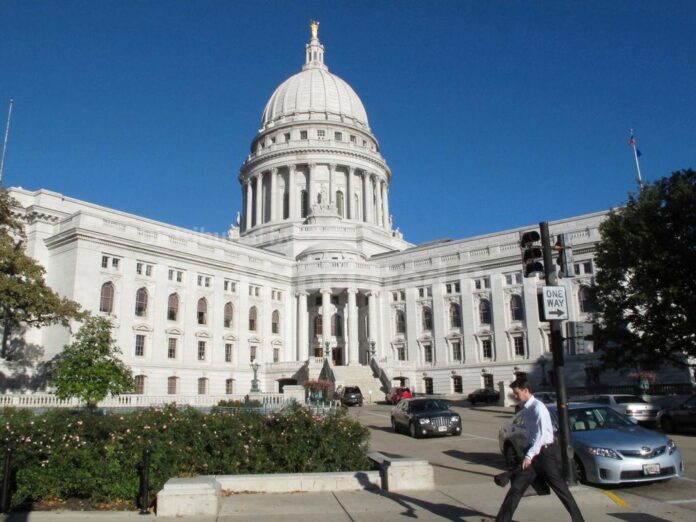
Wisconsin legislator pleads guilty to disorderly conduct in feud over Hispanic resolutions

MADISON, Wis. (AP) — A Wisconsin legislator has pleaded guilty to a misdemeanor count of disorderly conduct in connection with a bitter feud with her caucus over resolutions honoring Hispanics.

Prosecutors in Milwaukee County charged state Rep. Sylvia Ortiz-Velez in February. Online court records show the Milwaukee Democrat entered the guilty plea Friday, and Judge Paul Malloy ordered her to pay a $300 fine and submit a DNA sample. She could have faced up to 90 days in jail.

Ortiz-Velez said in a statement after the sentencing that she will pay the fine and remains focused on her constituents, not caucus infighting.

“My voting choices caused a rift that has been ugly and bitter,” she said. “My constituents did not send me to Madison to litigate internal caucus disputes or be distracted by the personal feuds — they sent me there to deliver results.”

A spokesperson from Assembly Democratic Minority Leader Greta Neubauer did not immediately respond to an email seeking comment.

According to the criminal complaint, the feud began in August as Democratic members of the state Assembly were planning resolutions honoring Hispanic heritage and Hispanic veterans in observance of Hispanic Heritage Month in September.

Ortiz-Velez grew angry because she believed an unnamed lawmaker drafting the heritage resolution had intentionally excluded her from working on it.

The complaint states that she had been invited to work on the resolution in June and chose not to participate but still wanted to help draft the language. She contacted media outlets saying she had been intentionally left out of the resolution work. She also told the resolution’s author that she felt excluded from working on another resolution that same legislator was crafting honoring Hispanic veterans, saying her late husband was a Hispanic veteran.

Two more unnamed lawmakers told investigators that Ortiz-Velez told them in separate phone conversations that she was going to spread “negative personal information” about the resolutions’ author to the media and that “they are going to do what I want them to do, or I’m going to x, y and z,” according to the complaint.

When one of the lawmakers asked her what that meant, she made comments about the resolutions’ author’s personal life and other legislators. The complaint characterized those remarks as “indecent and tended to disrupt the good public order” but does not elaborate or offer any more specificity.

Democratic leaders issued a statement in September saying Ortiz-Velez had made a comment about shooting three caucus members. That statement came a day after another statement announcing that Ortiz-Velez was leaving the Democratic caucus.

In interviews with the news website Wisconsin Right Now and the Milwaukee Journal Sentinel, Ortiz-Velez denied that she threatened her colleagues. But the Legislature’s human resources office barred her from entering the state Capitol for a day. A spokesperson for Assembly Republican Speaker Robin Vos said at the time that she shouldn’t have been banned.

Ortiz-Velez’s attorney, Michael Cernin, said in a telephone interview Friday that Assembly Democrats were already upset with Ortiz-Velez going into September because she had voted for the 2025-27 state budget and for new legislative maps Democratic Gov. Tony Evers drew up in 2024. Democrats opposed the spending plan in part because they felt it doesn’t adequately fund public schools and argued the state Supreme Court should have drawn the new legislative maps.

Rep. Priscilla Prado, another Milwaukee Democrat, wouldn’t allow Ortiz-Velez to participate in the Hispanic resolutions, he said. Two of the lawmakers who went unnamed in the complaint made allegations to investigators that Ortiz-Velez had threatened to expose unsavory elements of Prado’s personal life to the media, he said.

“It’s incredibly petty, and Sylvia didn’t want any part of this,” Cernin said. “Sylvia truly wanted to spare Prado any sort of embarrassment on this.”

No one immediately responded to messages left with Prado’s Capitol’s office seeking comment on Friday afternoon.


Trump signs executive orders aimed at addressing home affordability concerns ahead of midterms

WASHINGTON (AP) — President Donald Trump on Friday signed a pair of executive orders aimed at showing his commitment to improving home affordability — a key issue for many voters going into November’s election for control of the House and Senate.

Under the first order, the federal government would reduce its own housing regulatory burdens and create incentives for best practices by state and local governments, with the goal of making it easier for builders to construct more homes. The second order would reduce the regulatory burdens tied to mortgages and make it easier for smaller community banks to provide home loans.

“Layers of unnecessary regulatory barriers, slow permitting processes, and onerous mandates at all levels of government have delayed construction, restricted development, and driven up the costs of new housing,” said a draft of the order. “These constraints have made housing less affordable for many Americans.”

The executive orders — obtained exclusively by The Associated Press — show how the Trump administration is seeking to put more of a policy emphasis on the importance of home ownership. Housing affordability has emerged as a fundamental political challenge for Republicans and Democrats alike, with lawmakers working on measures to show they’re responding to concerns that buying a first home has become difficult for middle-class families.

On Thursday, the Senate passed a broad bipartisan bill on housing, which seeks to adjust policies to increase construction and limit institutional ownership of home development. The measure’s status path in the House is uncertain. The White House said in a March 2 statement that it supported passage of the measure.

It’s unclear how quickly federal efforts can generate new construction or meaningfully reduce mortgage costs, as the key regulatory issues on home development involve state and local government policy choices and mortgage rates will reflect changes in financial markets.

The multiyear shortage of construction has kept prices high, while mortgage rates spiking in the aftermath of the pandemic have left many renters unable to buy and existing owners unwilling to part with their current properties.

The orders cut environmental regulations and simplify the mortgage process

Under the first order signed Friday by Trump, federal agencies would create incentives to speed up permitting times by state and local government, including the curtailing of “green” building codes, reductions to design and building mandates and making it easier to deploy innovative construction methods.

The order looks heavily at federal environmental regulations, directing the EPA and secretary of the Army to review and update stormwater, wetlands and other water-related permitting requirements to reduce costs and improve the ability to insure homes.

The departments of Commerce, Housing and Urban Development and Transportation, along with the Federal Housing Finance Agency, are instructed to eliminate regulations and update programs that are reducing residential development. Multiple federal agencies would also seek to eliminate environmental and energy efficiency regulations that could increase costs and restrict home construction.

White House officials said the Biden-era energy efficiency mandates in HUD and Agriculture departments’ guidelines could add up to $9,000 to housing construction costs. The officials requested anonymity to outline the details of the orders before their signing, saying that other federal regulations would add even more for participants.

The Advisory Council on Historic Preservation would simplify its guidance for historic reviews, while the federal government would seek to have its New Markets Tax Credit program align with the Opportunity Zone tax breaks created during Trump’s first term.

The order does not seek to change state and local zoning codes, as the administration has sought to preserve suburban housing rather than increase housing density.

The White House officials said federal agencies can incorporate best practices on housing regulations as a criteria for rewarding discretionary grants to state and local governments. One example of a best practice would be local governments having a 60-day deadline for approving building permits. The administration sees this order as having a longer term effect for homebuilders and buyers.

The second order would aim to streamline the mortgage process, directing the Consumer Financial Protection Bureau to change its mortgage guidelines so that smaller banks could engage in more lending. The CFPB would update the requirements under the Home Mortgage Disclosure Act to lessen the regulatory burdens for obtaining a mortgage, among other directives.

The administration’s theory is that the changes to mortgage regulations would increase the number of financial institutions competing to provide home loans, thus reducing the cost of borrowing for buyers. The White House maintains that its changes would preserve the financial safety and stability of the mortgage market.

The White House officials expect that potential homebuyers could see the impact of the changes to mortgage regulations in a matter of months.

GOP election fortunes could be hurt by elevated home prices

High home prices have emerged as a key issue for voters under the age of 40 going into this fall’s midterm elections.

The median price of an existing home sold in February was $398,000, according to the National Association of Realtors. That total is nearly five times the median household income. A historic rule of thumb was that homes generally cost three times the household income.

The average 30-year mortgage rate in February was 6.05%, down from 6.84% a year ago, the National Association of Realtors said as part of its sales data.

The reduction in borrowing costs has made monthly payments more manageable, but rates are still much higher than the sub-3% averages that occurred in 2020 and 2021 as the weakened economy dealt with the coronavirus pandemic and its aftermath.

Trump has primarily sought to address the challenge of home affordability by directing the two mortgage companies under government control, Fannie Mae and Freddie Mac, to purchase $200 billion in mortgage bonds.

He has also called for limiting the ability of financial institutions to buy homes and caps on the interest rates paid on credit cards, arguing that both moves would make it easier to buy homes.

But the president has previously pushed back against the idea of dramatically increasing construction, saying that doing so could bring down home prices and the net worth of existing owners. That has him trying to balance his desire to keep prices rising while also finding ways to boost ownership for people who are now renting.

“People that own their homes, we’re going to keep them wealthy,” Trump said at his January Cabinet meeting. “We’re going to keep those prices up. We’re not going to destroy the value of their homes so that somebody that didn’t work very hard can buy a home.”

Aday Mara helps No. 3 Michigan edge Ohio State 71-67 in the Big Ten tournament

CHICAGO (AP) — Aday Mara scored 13 of his 17 points in the second half, helping No. 3 Michigan hold off Bruce Thornton and Ohio State for a 71-67 victory Friday in the Big Ten Tournament quarterfinals.

Elliot Cadeau had 15 points, seven assists and three steals for Michigan in its fifth consecutive win. Trey McKenney scored 12 points, and Morez Johnson Jr. finished with 11.

Mara anchored a strong defensive effort that shut down Ohio State in the final minutes. It was the first game of the tournament for the top-seeded Wolverines (30-2), while the Buckeyes (21-12) advanced with a 72-69 victory over Iowa on Thursday.

Michigan is going for its second straight Big Ten tourney title and fifth overall. Next up is a semifinal matchup with the winner of the Wisconsin-Illinois game.

___

Get poll alerts and updates on the AP Top 25 throughout the season. Sign up here and here (AP News mobile app). AP college basketball: https://apnews.com/hub/ap-top-25-college-basketball-poll and https://apnews.com/hub/college-basketball

Flu vaccines didn’t work that well in the US, officials find

NEW YORK (AP) — As the U.S. flu season winds down, health officials say the flu vaccine didn’t work very well, with one of its worst effectiveness rates in more than a decade.

A new strain that dominated the early winter was not well matched to the vaccine, leading to an intense early onslaught of flu.

The Centers for Disease Control and Prevention on Friday posted data that showed a continued decline in doctor’s office and hospital visits for flu symptoms through last week. The number of states reporting high flu activity dropped to 16, many of them in a belt stretching from Colorado to Virginia.

“The winter respiratory virus season is slowly coming to a close, and we’re all very grateful for that,” said Dr. William Schaffner, a Vanderbilt University vaccine expert.

This season’s vaccines were around 25% to 30% effective in preventing adults from getting sick enough from the flu that they had to go to a doctor’s office, clinic or hospital, according to a CDC report this week. Children who were vaccinated were about 40% less likely to get treatment at a doctor’s office or hospital.

Officials generally are pleased if a flu vaccine is 40% to 60% effective. Judging from past CDC research, this season saw one of the lowest effectiveness rates in the last two decades.

Flu infections surged in late December and were especially intense in some parts of the country. New York City health officials called it the most intense season in 20 years.

Relatively low flu vaccination rates did not help, but experts also blamed the new flu strain that was causing most infections.

The new strain belonged to a category of flu virus, called A H3N2. This new version, subclade K, seemed to spread more easily — though it did not necessarily cause more severe illness.

The vaccine available for this season was built to address a different version of H3N2, and the new strain’s explosion is a likely explanation for why the vaccine was less effective, Schaffner said.

CDC scientists estimate there have been at least 27 million illnesses, 350,000 hospitalizations and 22,000 deaths from flu so far this season. At the same point last year, the estimates were at least 40 million illnesses, 520,000 hospitalizations, but about the same number of deaths.

At least 101 children have died so far this season. For those whose vaccination status is known, about 85% were not fully vaccinated against flu.

The flu vaccine may not protect everyone from getting sick, but it can prevent people from becoming severely ill and dying. That’s why getting a flu shot remains worthwhile, Schaffner said.

CDC data suggests adult vaccination rates are up slightly this season, to 46.5%, following an unusually bad season last year that set a record for the most child deaths this century.

An estimated 48% of U.S. kids were vaccinated against flu around the end of last month. That’s about the same as last year, but down from the 52% vaccinated at this point in 2024, according to CDC data.

Starting in 2010, the government recommended annual flu vaccinations for Americans 6 months and older. In January, however, the Trump administration stopped broadly recommending flu shots for all children, saying instead that it’s up to parents and family doctors to decide.

Meanwhile, work is already underway for next winter’s flu season. Last month, the World Health Organization announced its recommendations for which virus strains to address in the vaccines for the 2026-27 northern hemisphere flu season. The vaccines should be built to handle subclade K, the organization said. This week, a U.S. Food and Drug Administration advisory committee endorsed the WHO recommendations.

___

The Associated Press Health and Science Department receives support from the Howard Hughes Medical Institute’s Department of Science Education and the Robert Wood Johnson Foundation. The AP is solely responsible for all content.

St. Paul man killed in Decatur County crash

DECATUR COUNTY — A St. Paul man was killed Thursday after a semi hit a pedestrian attempting to cross State Road 3.

At about 4 p.m. Thursday, the Greensburg Police Department requested Indiana State Police respond to State Road 3 at Freeland Road to investigate the accident which resulted in the death of the pedestrian, identified as Denver Jones, 69, St. Paul.

The initial investigation by the Indiana State Police-Versailles Post Crash Reconstruction Team indicated that a 2019 Peterbilt tractor trailer, being driven by Rex Hewitt, 53, Arlington, Indiana was northbound on State Road 3 at the stoplight at Freeland Road. Hewitt began proceeding through the intersection when his vehicle struck Jones, who was a pedestrian attempting to cross State Road 3.

Jones sustained serious injuries in the collision. He was transported to an Indianapolis area hospital where he died as a result of injuries he sustained shortly before 9 p.m. Thursday.

Hewitt was not injured in the collision. He remained on scene and fully cooperated with investigators.

The investigation remains ongoing. Toxicology results are pending at this time.

The Indiana State Police-Versailles Post Crash Reconstruction Team was assisted by the Greensburg Police Department, Greensburg Fire Department, and Decatur County EMS.

Tua Tagovailoa will have an opportunity to compete for the starting job in Atlanta, GM says

Newly signed Falcons quarterback Tua Tagovailoa will have an opportunity to compete for the starting job in Atlanta, where Michael Penix Jr. is recovering from a torn ACL he suffered in November, general manager Ian Cunningham said Friday.

“For Tua coming in here, he knows he’s coming in to compete, just like Michael knows he’s coming in to compete. Quite frankly, not just those two at the quarterback position, but everybody’s coming in to compete,” Cunningham told reporters. ”We’re excited to have Tua, but we’re excited to have all the players that we were able to get in this free agent class.”

Cunningham said he spoke with the agent for Penix before signing Tagovailoa, who was released this week by the Miami Dolphins, and new coach Kevin Stefanski talked to the young quarterback personally.

“You don’t want to blindside somebody,” Cunningham said. “We want to have open conversations and communication, and we feel like we did that in regards to Michael and Tua.”

Penix, who was drafted by the Falcons in 2024, threw for 1,982 yards, nine touchdowns and three interceptions last season before going down with the season-ending torn ACL in November. He was replaced by Kirk Cousins, who was released this week.

Penix is expected to be sidelined through the start of the 2026 season, giving Tagovailoa a potential opportunity to prove himself early.

Tagovailoa is coming off an up-and-down six-year stint in Miami, where the Dolphins signed him to a four-year, $212.4 million contract extension after he led the league in passing yards in 2023. Miami will owe him $54 million in 2026 as a result.

The following two seasons were turbulent, as the quarterback suffered his fourth documented concussion and his play regressed. He was benched for the final three games in 2025, signaling his time in Miami was over.

Tagovailoa threw for 2,660 yards, 20 touchdowns and 15 interceptions last season.

___

AP NFL: https://apnews.com/hub/NFL

US eases some Russian oil sanctions but crude prices stay high

The U.S. is temporarily easing some sanctions on Russian oil shipments, reflecting global concerns over sharply higher crude prices due to supply shortages stemming from the Iran war.

The move, intended to soothe jittery markets over the disruption of Middle Eastern oil and gas supplies, underlines how the war has boosted Moscow’s ability to profit from its energy exports, a pillar of the Kremlin’s budget as it presses its invasion of Ukraine.

U.S. sanctions will not apply for 30 days on deliveries of Russian oil that’s been loaded on tankers as of Thursday, U.S. Treasury Secretary Scott Bessent said on X. That would give reluctant purchasers a green light to take the oil without worrying that they will run afoul of U.S. sanctions rules.

The Trump administration earlier had granted a 30-day reprieve to refineries in India.

Bessent said the “narrowly tailored, short-term measure” was part of President Donald Trump’s “decisive steps to promote stability in global energy markets” and to “keep prices low.”

Allowing the sale of stranded Russian oil would provide no additional financial benefit for the Russian government because the Kremlin already taxed the oil when it was extracted from the ground, Bessent said. Washington has sanctioned Russia’s two biggest oil companies, Lukoil and Rosneft, as part of efforts to end the fighting in Ukraine. Except for the 30-day reprieve for floating oil, those sanctions remain in place.

Kremlin spokesman Dmitry Peskov said Friday the move will help stabilize global energy markets, adding it was impossible to do so “without significant volumes of Russian oil.”

But Ukrainian President Volodymyr Zelenskyy said the action “does not help peace.”

“This easing alone by the United States could provide Russia with about $10 billion for the war,” Zelenskyy said. “It spends the money from energy sales on weapons, and all of this is then used against us.”

Oil prices stayed high after the announcement

The price of international benchmark Brent crude eased 1.5% to $98.76 per barrel as of 1300 GMT (9 a,m. EDT) Friday in the wake of the announcement. That is still well above $72.87, where Brent traded on Feb. 27, the eve of the war.

The fighting has choked off most tanker transport through the Strait of Hormuz at the mouth of the Persian Gulf, through which 20% of the world’s oil supply typically passes. That has dealt a massive energy shock to the global economy and threatened increased inflation around the world.

“In the short term this slightly increases available supply on the global market, which helps contain the current spike in oil prices,” said Simone Tagliapietra, an energy expert at the Bruegel think tank in Brussels. “The impact on prices should therefore be modestly downward, or at least stabilizing.”

Analysts estimate about 125 million barrels of Russian oil are currently being shipped. That equals five or six days’ worth of normal shipments through the Strait of Hormuz, or a bit over one day’s worth of global consumption of about 101 million barrels per day.

Sanctions have cut into Russia’s oil revenues.

After President Vladimir Putin ordered his full-scale invasion of Ukraine in 2022, the European Union — once Moscow’s biggest customer — stopped taking Russian oil, and many Western customers also shunned it.

Instead, the oil flowed to China and India, where it sold for a discount due to efforts by the U.S., the EU and Kyiv’s other allies to impose a price cap on Russian oil that was enforced through shipping and insurance companies.

Over time, Russia was able to dodge the cap by lining up a fleet of used tankers with obscure ownership and insurance based in countries that weren’t observing the cap.

Along with the sanctions on Lukoil and Rosneft, Ukraine’s allies penalized more and more of the individual vessels in Russia’s “shadow fleet.” Customers in China and India started demanding even bigger discounts to compensate for the risk of running afoul of sanctions, for the hassle of concealing the origin of the oil, or for finding workarounds that skirted banks reluctant to handle payments for sanctioned oil.

In December, Russia’s Urals blend traded under $40 per barrel, some $25 below Brent. That slashed the Kremlin’s oil revenues to their lowest levels since the invasion. Oil and gas exports typically supply 20% to 30% of the federal budget.

Rising oil prices boost Russia’s market position

Russian oil has risen along with oil prices generally and now trades at over $80 per barrel — a boost to its financial fortunes if disruptions continue in the Strait of Hormuz and keep prices high while refineries in Asia need to replace supplies no longer available from the Middle East.

Russia’s daily revenue from oil sales during the Iran war has been on average 14% higher than in February, according to the nonprofit Centre for Research on Energy and Clean Air. Russia has been earning 510 million euros ($588 million) every day this month from oil and liquefied natural gas exports, according to Isaac Levi of the CREA.

But there’s still a big discount to Brent due to sanctions. The latest U.S. move “likely narrows the Urals discount somewhat” by reducing sanctions risk, Tagliapietra said. But since it’s limited, the U.S. move “does not fundamentally change the structure of longer-term Russian oil flows or sanctions pressure.”

Former Russian Central Bank official Sergei Aleksashenko said the move “will not be a very significant boost” to the Russian budget because the oil was going to find buyers anyway — especially given the disruptions to the Strait of Hormuz.

The Trump administration may not have been ready for such a dramatic spike or for a prolonged war, said Aleksashenko, head of economics at the NEST Centre, founded by exiled Russian tycoon and opposition figure Mikhail Khodorkovsky.

Now that gasoline prices in the U.S. have risen along with oil, “the president should say something, that ‘I’m dealing with the problem,'” he said. That includes the break for India and the release along with other countries of 400 million barrels of strategic oil reserves..

“In my view it’s more rhetoric and perception,” he said.

German Chancellor Friedrich Merz said leaders of the Group of Seven democracies discussed Russian oil with Trump this week and that “six member expressed a very clear view that this is not the right signal to send.”

—-

Kostya Manenko in Tallinn, Estonia, and Kwiyeon Ha in London contributed.

The NCAA is warning schools about travel issues ahead of March Madness. It’s not the first time

PITTSBURGH (AP) — Atlantic 10 commissioner Bernadette McGlade skimmed through the 12-page memo the NCAA sent out last month that highlighted potential travel issues ahead of the men’s and women’s basketball tournaments and couldn’t help but feel a bit of deja vu.

McGlade spent time on both the men’s and women’s selection committees earlier in her career, including a stint as the tournament director for women’s March Madness. What she read in that memo was nothing new.

“We had the same conversations, ‘Oh, these charters are hired (away). We might not be able to travel all the teams the way we want to travel,’” McGlade said Friday ahead of the A-10 quarterfinals at PPG Paints Arena. “It is a very real reality.”

One that, through the years, has avoided any sort of real nightmare scenario. The NCAA is hoping to do the same this time around, even if the headwinds working against them might be a little stronger than they’ve been in the past.

The ongoing partial government shutdown that is forcing some federal airport employees to work without getting paid — leading to massive lines at security checkpoints in some places — the conflict in the Middle East that is spiking energy prices and the typical uptick in demand when the weather gets warmer are a potential tinderbox that could make the Madness in March Madness bleed into new territory.

“We certainly understand that there are pressures on the system, but we hope they’re not going to be too disruptive and really impact people’s experiences. We’ll do everything we can to mitigate that,” men’s committee chair Keith Gill said Wednesday. “One of the things that I’ve heard is ICE is taking up a lot of charter planes. I think the charter market is just demonstrably different than it has been.”

The number of deportation flights carried out by U.S. Immigration and Customs Enforcement have hit record highs during President Donald Trump’s second administration and while it wasn’t an issue last March, it might be now.

The NCAA is trying to take a “business as usual” approach, stressing this week it will not let outside factors play a role in determining the seeding but added that priority will be given to teams that have success in their respective conference tournaments.

With host sites for the opening weekend stretching from Buffalo to San Diego in the men’s bracket, the math could still get a little complicated. (The on-campus sites for the women’s field won’t be determined until the bracket is released on Sunday).

The NCAA has specific parameters on how teams get to their venues. Any team that has to travel at least 400 miles during the opening weekend is eligible to take a flight chartered by the NCAA. That drops to 350 miles for the regional finals and the Final Four.

Schools that are closer than those parameters can receive up to $1,500 per day for ground transportation.

Teams from one-bid leagues that figure to be lower seeds may have to bear more of a travel burden than higher seeds, who can sometimes — but not always — play much closer to home.

Wright State athletic director Joylynn Brown said the travel logistics are “something to think about” but added that it isn’t top of mind. The Raiders, who won the Horizon League title this week, play a few miles from downtown Dayton, Ohio, where the men’s tournament will get underway on Tuesday night.

“If you drive, it is a little bit easier,” Brown said. “It is exciting to fly. I don’t really care where we’re going, I’m just excited that we’re going and I’m thankful, I hope that and I think that the NCAA was proactive on getting that travel set up. So, hopefully, everything will go really, really smoothly.”

The visibility that the tournaments provide, particularly for lesser-known schools, is so great that they’d probably walk to get where they need to go if it came down to it. If they hop on a plane, even if they have to wait? Great. If they sit on a bus for a while? Great.

“I think without hesitation, that every institution wants to see their name go up on the board on Selection Sunday,” McGlade said, later adding, “the value long-term for programs and institutions in terms of enrollment, fundraising, etc., of being selected into March Madness is so significant right now that I know there’s not anyone in the A-10 concerned about that.”

That might change once the dream of reaching the tournament becomes reality, which can lead to a frantic 24-72 hours for schools as they scatter across the country in hopes of an extended stay in the dance. Any delays that may pop up are basically college basketball’s version of a first-world problem.

“It’s different all of a sudden now when the teams get in you (might) start to hear some people complaining,” McGlade said. “But I don’t think there’s a hesitation (to be a part of it.).”

___

AP Sports Writer Mike Marot in Indianapolis and AP Airlines & Consumer Travel Reporter Rio Yamat contributed to this report.

___

Get poll alerts and updates on the AP Top 25 throughout the season. Sign up here. AP college basketball: https://apnews.com/hub/ap-top-25-college-basketball-poll and https://apnews.com/hub/college-basketball

Jury finds ex-NY trooper guilty of manslaughter in 2020 chase that killed 11-year-old

KINGSTON, N.Y. (AP) — A former New York state trooper accused of ramming his vehicle into an SUV during a high-speed chase leading to the death of an 11-year-old girl was convicted of manslaughter Friday at his second trial.

Prosecutors say Christopher Baldner rammed the SUV twice on the New York State Thruway, causing it to lose control and flip over. Eleven-year-old Monica Goods, who was in the SUV, was killed in the December 2020 crash. Baldner’s attorneys said the accident occurred after the SUV cut the trooper off as he pulled alongside during the pursuit.

A jury acquitted Baldner of murder and reckless endangerment charges in November, but they deadlocked on a second-degree manslaughter charge. Judge Bryan Rounds declared a mistrial and a second trial on the lone remaining charge began last month.

Assistant State Attorney General Jennifer Gashi told jurors during Baldner’s latest trial that he chose to “recklessly use his patrol car as a weapon” during the chase north of New York City. Defense attorney Anthony Ricco argued it was the driver of the SUV — Monica’s father, Tristin Goods — who acted recklessly and caused her death, according to the Daily Freeman.

Baldner pulled Tristin Goods over for speeding on the highway near Kingston the night of Dec. 22, 2020. Goods, his wife and two daughters were heading north from New York City to visit family.

Baldner and Goods argued, and the trooper pepper-sprayed the inside the vehicle. Goods drove off and Baldner pursued.

Defense attorneys said Goods collided with Baldner’s trooper car twice during the pursuit. An accident reconstruction expert for the defense testified that Goods lost control of the SUV when he overcorrected after “a very minor impact,” the newspaper reported.

The ex-trooper retired in 2022 after almost 20 years with the state police.

Radko Gudas faces up to a 5-game suspension for kneeing and injuring Auston Matthews

NEW YORK (AP) — Anaheim Ducks defenseman Radko Gudas faces a suspension of up to five games for his knee-on-knee hit that injured Toronto Maple Leafs captain Auston Matthews.

Gudas is having a hearing Friday with the NHL’s Department of Player Safety. Because the hearing is a conference call and not “in-person” — now on Zoom — the league cannot suspend Gudas for more than five games.

With just over four minutes left in the second period of the teams’ game Thursday night, Gudas’ left knee made contact with Matthews’ left knee and sent the 28-year-old American star to the ice in pain.

Gudas was given a 5-minute major penalty and ejected. Matthews needed assistance from an athletic trainer and a teammate to leave the rink, and he did not return.

Toronto coach Craig Berube called it a dirty play, and forward Matthew Knies said Gudas has “done a few of those before in his career.” Anaheim coach Joel Quenneville defended Gudas, saying there was no premeditation and that it was the result of reflexes.

Gudas, a 35-year-old bruising defender who is 6-foot and 208 pounds, was also involved in the play that knocked Canada’s Sidney Crosby out of the Olympics, while representing Czechia. He was not penalized, and opponents did not publicly take issue with Gudas’ role in the situation.

Although not a repeat offender under the terms of the collective bargaining agreement, which counts supplemental discipline over the past two years, Gudas has a long rap sheet from his decade-plus NHL career. He was suspended four times between 2015-19: three games for an illegal check to the head, six for interference, 10 for slashing and two for high-sticking.

With those added up, Gudas has been suspended for 21 games and docked $751,360 in salary. He’ll forfeit roughly $20,800 for each game he is suspended this time, up to a maximum of $104,167 if he gets five.

Matthews last month captained the U.S. to its first men’s hockey gold medal at the Olympics since 1980. The Arizona native is in his 10th season in the league and leads the Maple Leafs in goals with 27.

___

AP NHL: https://apnews.com/hub/nhl